
Heel construction determines comfort, stability, and return rates in bulk heels. This technical guide explains stiletto, block, and ankle-strap structures and maps a three-stage QC process—incoming material, in-line, and finished-shoe inspection—so buyers know exactly what to verify before a wholesale heels order ships.
When a bulk order of women's heels arrives with detached heel caps, wobbly block bases, or ankle straps that pull loose after a few wears, the cost is not just the return. It is the reorder that never comes. Heel structure is the single most common failure point in wholesale heels shoes, and it is also the hardest to verify from a sample pair alone. This guide breaks down how stiletto, block, and ankle-strap heels are built, and what a buyer should expect to see during a three-stage inspection before the order leaves the factory.
Key Takeaways
- Heel core reinforcement, attachment method, and weight distribution differ by heel type; each has its own QC check.
- A three-stage inspection—incoming material, in-line, and finished-shoe—catches heel defects at the point where they can still be corrected.
- Forefoot flex testing and heel attachment checks are the two most direct indicators of whether a heel will survive normal wear.
- Ask for shareable inspection reports and confirm whether third-party inspection is welcome before placing a bulk order.
Why Heel Structure Decides Bulk Order Outcomes
In a single pair, a slightly loose heel may be tolerable. Across 500 or 2,000 pairs, the same tolerance becomes a pattern: returns, marketplace flags, and a buyer who has to explain to their own customers why the product did not hold up. Heel structure affects three things that matter to wholesale buyers—comfort (how the foot is supported), stability (how weight is distributed during walking), and durability (how the heel stays attached to the sole and upper). Each heel type solves these in different ways, and each requires different checks on the production line.
Heel Structure Choices and What They Mean for QC
Stiletto heels: reinforced core and point loading
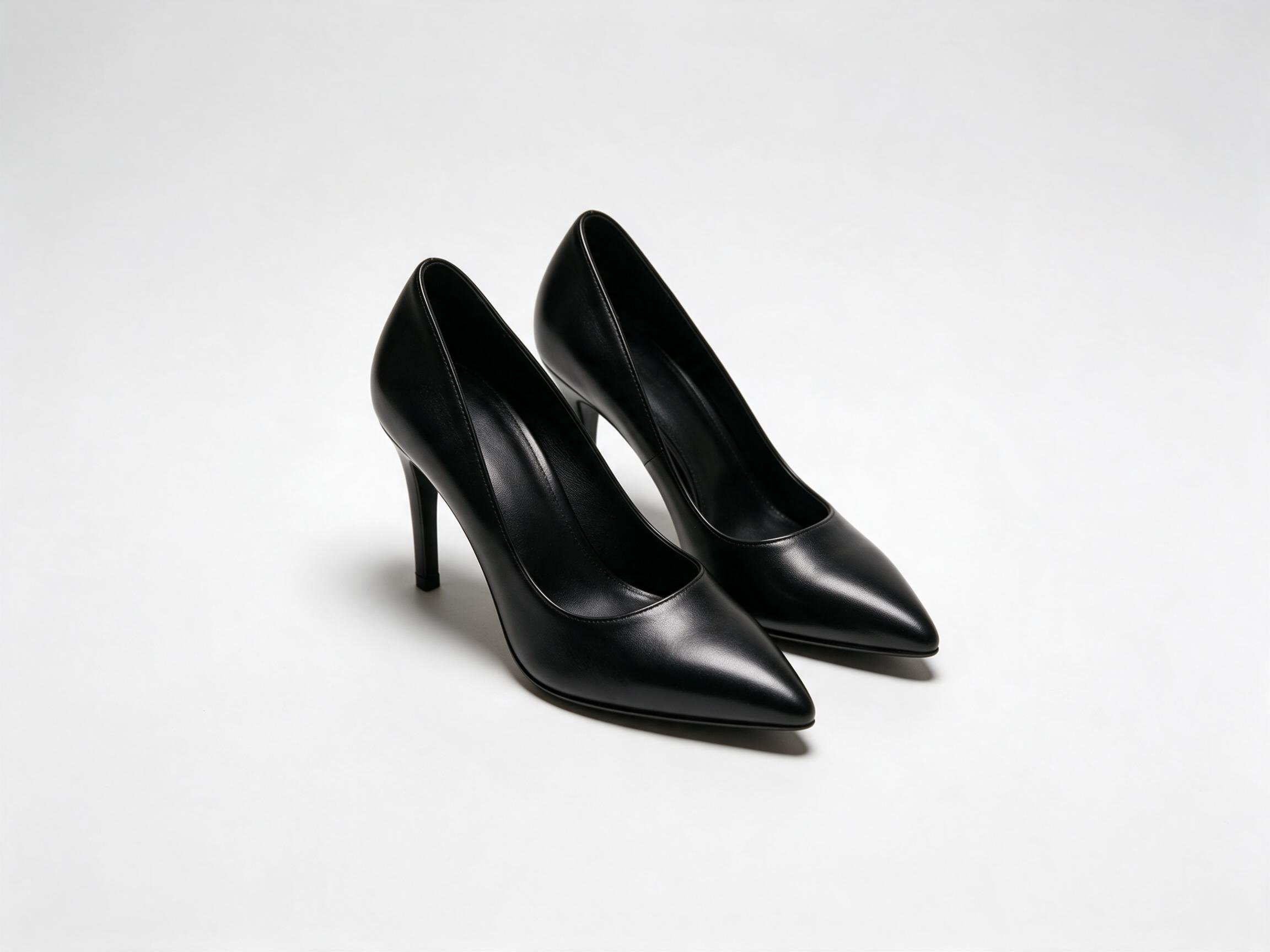
A stiletto concentrates body weight on a very small tip area. That makes the internal heel core the critical component. In the Black Leather Stiletto Heels, a polished kid leather upper sits over an approximately 10 cm stiletto heel built with a reinforced core, a padded insole, and a rubber anti-slip outsole. The shoe uses cemented construction and is available in EU 34–41 / US 4–10. For a buyer, the reinforced core is the difference between a heel that holds its shape and one that bends or cracks under load. The rubber outsole also affects slip resistance at the heel tip, which is where many walking-related complaints start.
During bulk QC, stiletto heels should be checked for heel attachment strength, core alignment (a heel that leans slightly off-axis will feel unstable), and the bond between heel and sole. In-line inspection is the right stage to catch alignment drift, because once the cemented construction is finished, correcting a misaligned heel means reworking the shoe.
Block heels: weight distribution and base stability
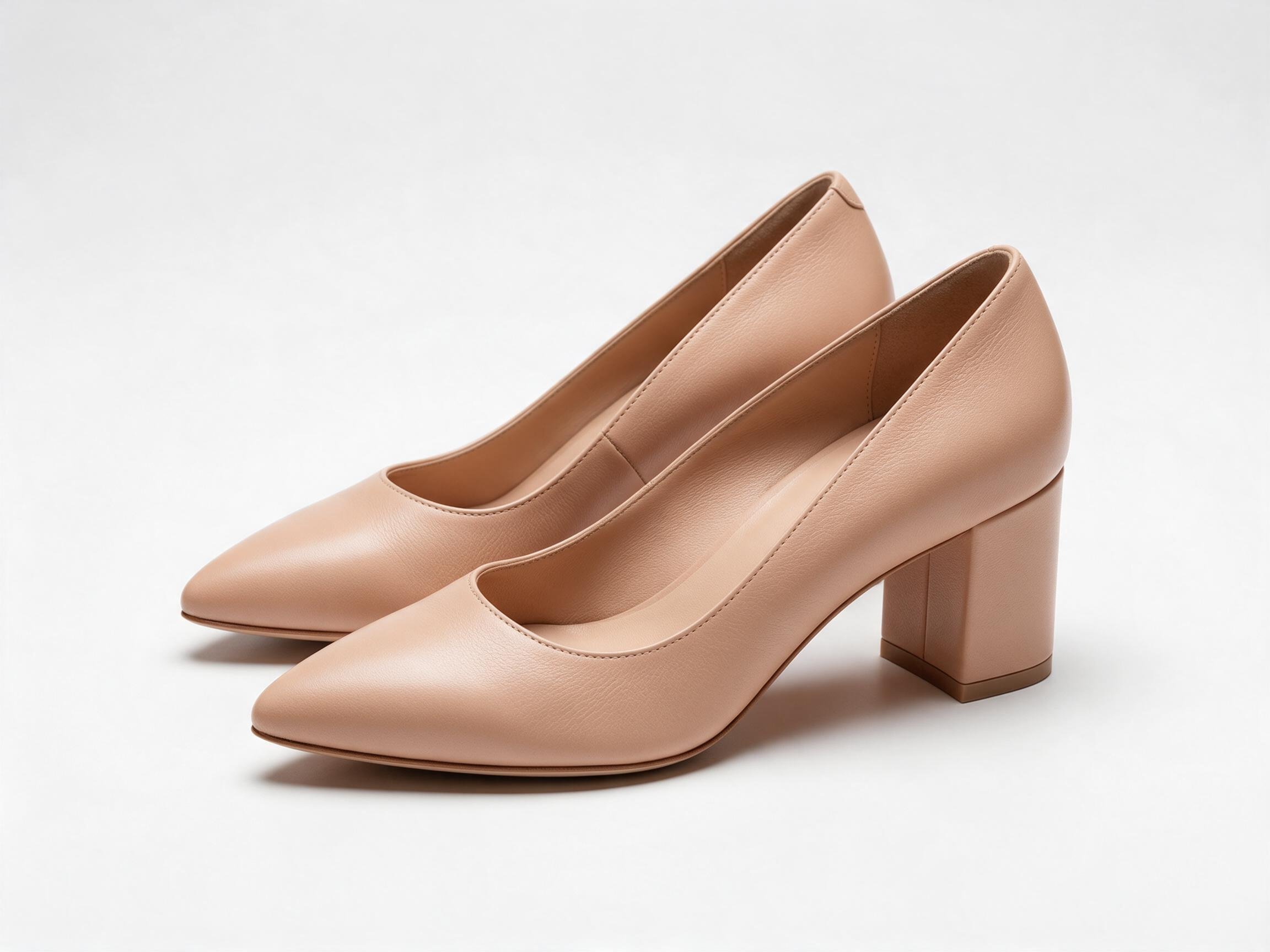
A block heel spreads load across a wider footprint, which changes what can go wrong. The Nude Block-Heel Shoes use an approximately 5 cm block heel with a reinforced core, a rounded toe, and a design focused on weight distribution for stability. Available in EU 34–41, they are a useful reference for buyers who need a lower, more stable heel profile in the assortment.
For block heels, QC attention shifts to the heel base: whether the block sits flat and level, whether the core is properly anchored, and whether the heel-to-sole bond covers the full contact area. A block heel that is not level will cause the wearer to roll outward or inward, and that complaint often reaches the buyer after the product is already in the market.
Ankle-strap heels: strap strength and multiple attachment points
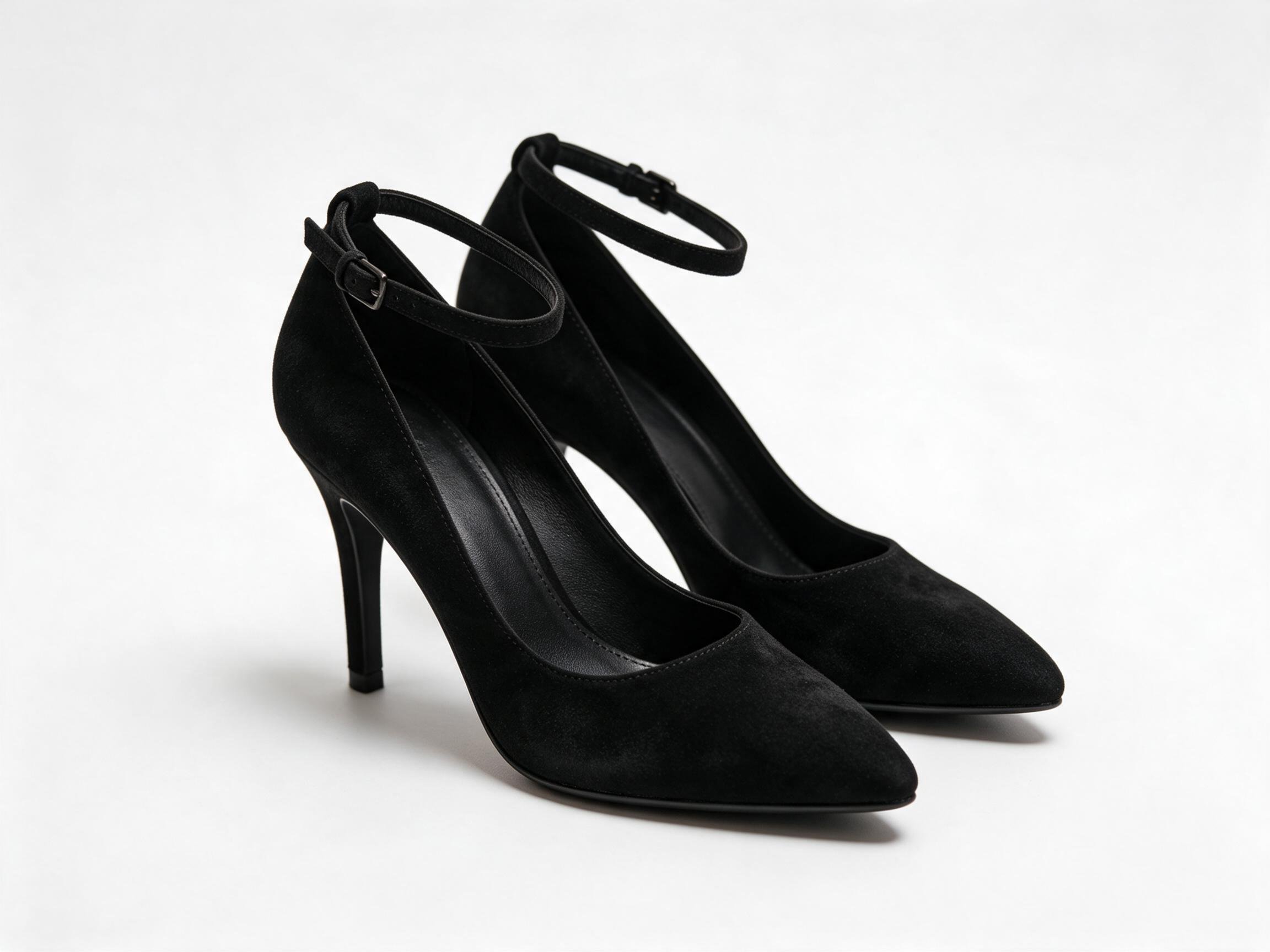
Ankle-strap heels add a retention system, which introduces two new failure points: the strap itself and where it attaches to the shoe. The Black Suede Ankle-Strap Heels use premium kid suede, an adjustable ankle buckle strap, and an approximately 8.5 cm heel. The product data specifically calls out strap strength and heel attachment checks—two areas that deserve their own line in any QC plan.
For this construction, inspect the buckle for engagement and release, test the strap at its attachment points, and verify that the heel remains secure when the strap is tensioned. A strap that holds in a sample but uses inconsistent stitching in bulk is a common source of field failures.
Three-Stage Inspection for Wholesale Heels Shoes
Heel defects are cheapest to fix early. A three-stage inspection process—incoming material, in-line, and finished-shoe—places a check at each point where heel quality can still be controlled.
Stage 1: Incoming material inspection
Before production begins, incoming materials are checked. For heels, this covers the heel core, the upper material, the insole padding, and the outsole. Color fastness is checked here for leather and suede uppers, because a shade variation discovered after the shoes are built is far more expensive to resolve. Incoming inspection also confirms that the heel cores match the specified dimensions and reinforcement.
Stage 2: In-line inspection
During production, in-line inspection monitors operations that affect heel structure: heel attachment, alignment, and the cemented bond between heel, sole, and upper. Forefoot flex testing is part of this stage—it checks how the shoe bends at the ball of the foot, which is where comfort is won or lost in a high heel. In-line inspection catches drift before the shoe is finished, when adjustments are still possible without scrapping the pair.
Stage 3: Finished-shoe inspection
After assembly, finished-shoe inspection verifies the whole product: heel attachment strength, strap strength on ankle-strap styles, color fastness, and overall appearance. This is the stage where a buyer's own specification sheet can be checked item by item. Inspection reports are shareable, and third-party inspection is welcome, which gives buyers an independent route to verify heel structure before shipment.
| Inspection Stage | Heel-Related Checks | Why It Matters for Bulk Orders |
|---|---|---|
| Incoming material | Heel core dimensions, upper material, color fastness, insole and outsole | Catches material defects before they are built into finished shoes |
| In-line | Heel attachment, alignment, cemented bond, forefoot flex testing | Detects process drift while correction is still possible |
| Finished shoe | Heel attachment strength, strap strength (ankle-strap styles), color fastness, appearance | Confirms the shipped product matches the approved specification |
What Buyers Should Verify Before the Order Ships
A specification sheet alone does not guarantee heel quality. The checks below convert the structure discussion above into questions a buyer can put to any high heel manufacturer.
- Heel core: Ask whether the heel uses a reinforced core, and request the incoming material check record for the core.
- Heel attachment: Confirm that heel attachment checks are performed in-line and again on finished shoes.
- Weight distribution: For block heels, ask how base levelness and contact area are checked.
- Strap strength: For ankle-strap heels, confirm buckle and attachment point testing.
- Forefoot flex: Ask whether forefoot flex testing is part of in-line inspection.
- Color fastness: Confirm it is checked at incoming material and finished-shoe stages.
- Verification: Request shareable inspection reports and confirm whether third-party inspection is accepted.
FAQ
Not directly. The heel type and construction determine the checks. A 10 cm stiletto and a 5 cm block heel both need heel attachment verification, but the stiletto places more emphasis on core alignment and point loading, while the block heel emphasizes base levelness and weight distribution.
Yes. Third-party inspection is welcome, and inspection reports from the factory are shareable. Buyers can use both to verify heel structure and attachment before shipment.
The most common issues relate to heel attachment and alignment. Both are addressed by in-line and finished-shoe inspection, which is why the three-stage process matters more than a single final check.
In-house design and pattern teams mean heel specifications can be adjusted at the pattern stage, before production. That makes it easier to align the heel structure with the buyer's requirements from the start.
Planning a Wholesale Heels Order?
Share your heel type, target heel height, and inspection requirements. Our team exports to Europe, North America, and the Middle East, and can provide inspection reports or arrange third-party verification.
Request product details