
A step-by-step evaluation checklist for buyers screening wholesale mens boots suppliers — covering leather grade and surface consistency, outsole construction and stitching, size ranges and size-run capability, sampling through mass production, replenishment and communication rhythm, and confirmed samples as the acceptance benchmark.
B2B Sourcing
Most supplier screening fails not because the questions are hard, but because they are asked in the wrong order. This checklist walks through the six points where a wholesale mens boots program is actually decided — from leather inspection to a signed confirmed sample — and shows what a usable answer looks like at each step.
Key takeaways
- Evaluate leather, outsole and size range before discussing price; these three determine whether a program can be repeated at all.
- Ask for the sampling-to-production timeline as a sequence, not a single number, and keep the confirmed sample as the written acceptance basis.
- Compare MOQ and lead time side by side across the models you actually intend to buy — they vary by construction.
- Replenishment and communication rhythm are testable in the quotation stage, before money moves.
In this checklist
- Leather grade and surface consistency
- Outsole structure and stitching method
- Size range and size-run capability
- Sampling through mass production
- Replenishment cycle and communication rhythm
- The confirmed sample as the acceptance benchmark
- Comparing stated MOQ and lead time
Why the order of evaluation matters
A supplier that answers price questions quickly but cannot describe its leather grading is a different risk from one that answers slowly but can show how it matches panels across a pair. Price is comparable only after the material, construction and size coverage are fixed, because those three change the cost of every pair that follows. Screening in the wrong order usually ends with a cheap quote attached to a specification nobody can reproduce.
1. Leather grade and surface consistency
Surface consistency is what buyers notice first in a delivered lot, and it is the hardest thing to fix after cutting. Ask how the supplier sorts hides before cutting and how panels from different hides are matched within a pair and across a size run.
Useful questions to put in writing:
- Which leather grade is quoted as standard for this model, and what changes if a different grade is requested?
- How are grain, color and thickness checked before cutting — by eye, by gauge, by both?
- For a pair, are the two boots cut from matched hides, or cut independently and matched afterwards?
- What happens to panels rejected at cutting, and does that rejection rate appear in the quoted price?
A supplier who can describe the sorting step in concrete terms — who does it, at which station, against what reference — is describing a process you can later audit. A supplier who answers only “good quality leather” has told you nothing you can put in a purchase order.
2. Outsole structure and stitching method
Outsole construction determines how a boot behaves in use and how repairable it is. Rather than asking which method is “better,” ask which method is used on the specific model and how it is controlled.
| Point to confirm | What a usable answer includes |
|---|---|
| Outsole attachment | The attachment method named for this model, and whether it is consistent across the size run |
| Stitching | Stitch type, stitch density, thread specification and where the seam sits relative to flex points |
| Outsole material | The compound or material as listed, and how it is identified on the order |
| Insole and midlayer | What sits between foot and outsole, and how it is bonded |
If a specification is not in the product sheet, write it into the confirmed sample comment rather than leaving it to the factory's default. Defaults differ between suppliers, and a default is not a specification.
3. Size range and size-run capability
A size range on a chart is not the same as the ability to deliver that range in the quantities you need. The real question is how the supplier plans a size run: which sizes it can produce, the minimum quantity per size, and how grading changes across the range.
Ask for the size run as it would be planned for your order, not as a generic table. Then check three things:
- Whether the sizes at the extremes of the range carry the same minimum as the middle sizes.
- Whether last and pattern changes are needed at the ends of the range, and whether those affect lead time.
- Whether the size run is quoted per color, since color and size are usually planned together.
For buyers ordering more than one colorway, the per-color MOQ is the number that governs the order, not the total. Confirm it explicitly for each model.
4. Sampling through mass production
Ask for the sequence, not a single lead time: sample development, sample approval, material booking, cutting, assembly and packing. A supplier that can break the process into stages is showing you where delays occur and where you have a decision to make.
Match each stage to a document you will receive — sample photo set, measurement sheet, approval sign-off, packing list. If a stage produces no document, ask what evidence you will get instead.
5. Replenishment cycle and communication rhythm
Replenishment is where a good first order becomes a good program, or does not. Two questions test it early:
- Repeat-order conditioning. Does a repeat order use the existing patterns, lasts and materials, and does it require a new sample round? A supplier that can repeat without re-sampling shortens your next cycle substantially.
- Response rhythm. Who answers your questions, in which time zone, and how often are production updates sent? Ask for the reporting interval and the format — photo updates at defined stages are more useful than a status email.
You can test this before ordering. Send a specific technical question and note how long the answer takes and whether it addresses the question asked. That is a sample of the communication you will rely on during production.
6. The confirmed sample as the acceptance benchmark
The confirmed sample is the document that settles most future disputes, provided it is complete. A boot sample alone is not enough. Before signing off, make sure the confirmed sample record carries:
- Leather grade, color reference and grain direction
- Stitch type and density, thread color
- Outsole specification and attachment method
- Measured dimensions at agreed points, in writing
- Size run and per-size quantities
- Packing configuration and carton marking
- Any tolerances accepted at approval, stated explicitly
Keep one signed sample with the supplier and one with you. Acceptance then becomes a comparison against a fixed object rather than a discussion about expectations.
7. Comparing stated MOQ and lead time
MOQ and lead time are model-specific, not supplier-wide. Two boots from the same factory can carry different minimums and different production windows because the construction and material planning differ. Compare them per model, and treat the numbers below as the listed specification for these two products — buyers should confirm current MOQ and lead time with the sales team before ordering, since these are the terms that change most often.
| Model | MOQ | Lead time | Product page |
|---|---|---|---|
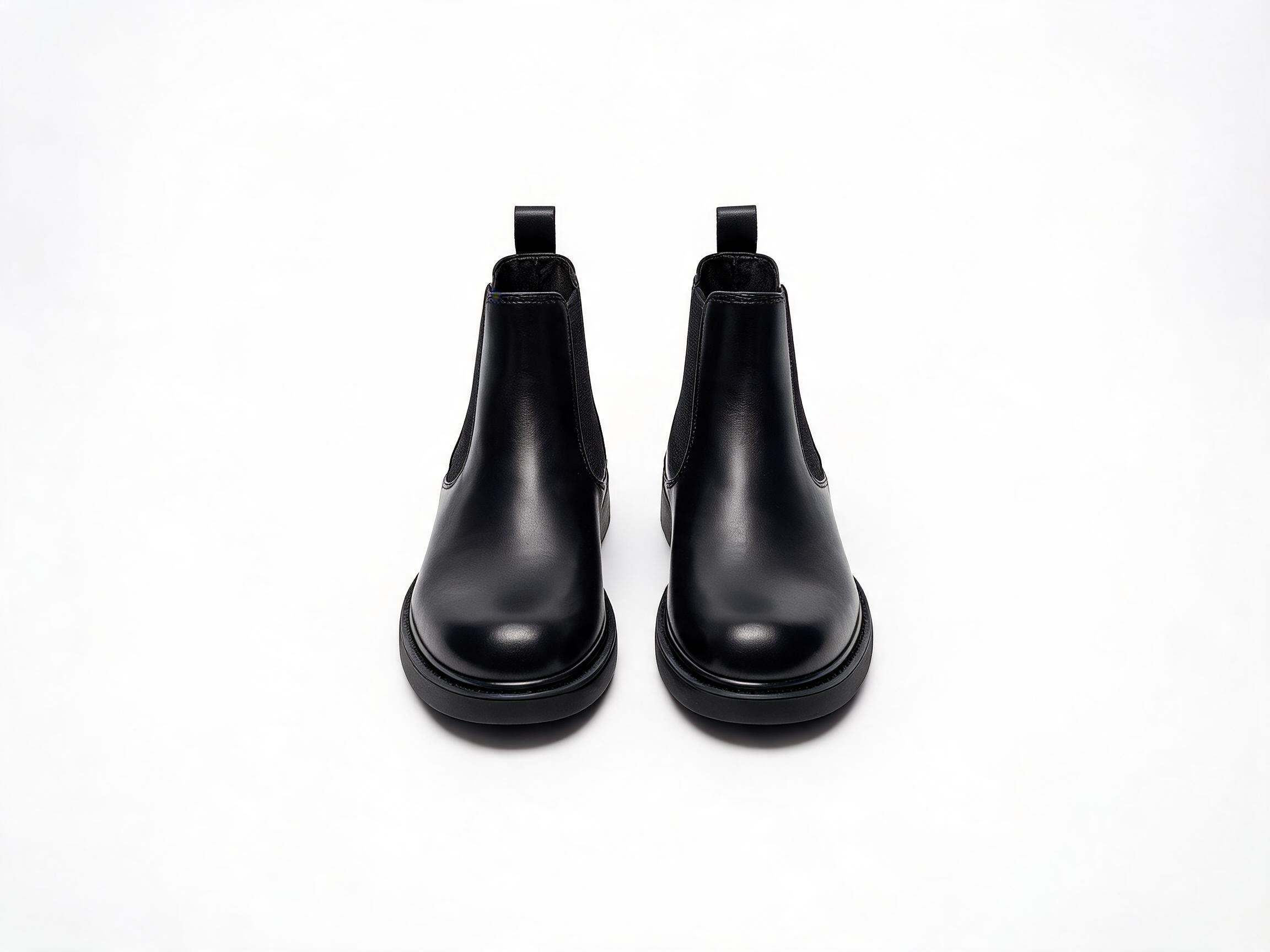
| Black Chelsea Boot Shoes | 100 pairs per color | 30–40 days | Black Chelsea Boot Shoes |
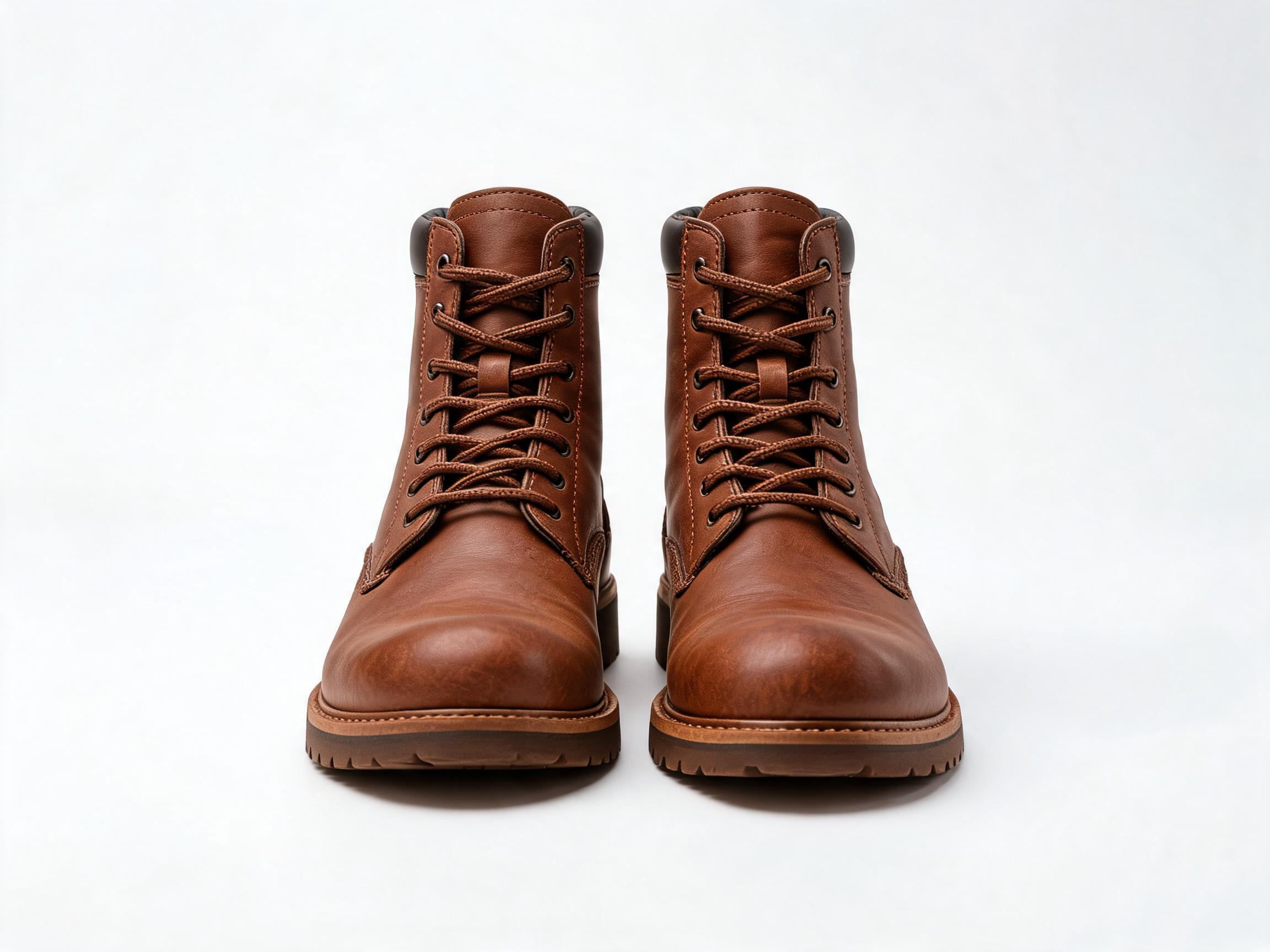
| Brown Leather Work Boots | 200 pairs per color | 35–45 days | Brown Leather Work Boots |
A mixed order across both models will usually be planned around the longer window and the higher per-color minimum, but confirm how the supplier combines them — some plan models separately, some together. Ask which applies to your order.
Putting the checklist to work
Run the seven evaluation points in order and record each answer in writing. Suppliers that answer points 1 to 3 concretely are worth a sampling round; suppliers that answer only at the price stage are not yet evaluable. Once a sample is confirmed against the list in section 6, the MOQ and lead time comparison in section 7 gives you the commercial picture on a fixed specification rather than on an assumption.
The checklist does not tell you which supplier to choose. It tells you which suppliers have given you enough to choose between them.