
A buyer-focused walkthrough of the wholesale private label shoe workflow after the sourcing decision is made: how style selection and modification work with an in-house design and pattern team, how branding details on insole, box and hangtag get confirmed, what happens between sample approval and factory floor scheduling, and how three-stage bulk QC supports delivery acceptance. Includes real production steps and reference products from Aurevia Footwear Co., Ltd., a Quanzhou-based B2B manufacturer founded in 2011.
You have already decided to place a wholesale private label order. Now the questions are practical: how does a style actually get modified, where does your logo physically land on the shoe, what decisions lock before the line starts, and what do you check when the cartons arrive? This article follows that sequence from start to finish, using the real workflow of Aurevia Footwear Co., Ltd.
Key takeaways
- Style selection feeds the in-house design and pattern teams, who turn a reference, sketch or tech pack into a production-ready sample in about 7–12 days for customized work.
- Private label branding is confirmed as physical detail: logo on insole, box and hangtag, plus any leather Pantone match, sole material, trim or size-grading changes.
- Bulk production runs a fixed sequence — pattern grading, cutting, upper stitching, lasting, cementing or sole stitching, cooling, de-lasting, inspection, packing.
- Three-stage QC covers incoming material, in-line assembly and finished shoes, with forefoot flex, color fastness and sole adhesion checks. Inspection reports are available on request and third-party inspection is welcome.
- Confirm MOQ, pricing and lead time per program — they are not fixed figures and depend on style, materials and order composition.
On this page
Style selection and modification
Wholesale private label shoes rarely start from a blank page. Buyers usually arrive with one of three inputs: a reference shoe they want to reinterpret, a sketch with proportions and detailing, or a full tech pack with measurements, materials and construction notes. All three can move forward at Aurevia, where design and pattern work sit in-house rather than being outsourced — which is what keeps a modification loop tight instead of turning every change into a new round of back-and-forth.
The useful distinction at this stage is between a modification and a redesign. A modification keeps the core construction — the last shape, the sole unit, the overall silhouette — and changes what sits on top of it: leather type and finish, color, trims, stitching detail, lining, insole treatment, size grading. A redesign changes the silhouette itself and usually means a new last and new tooling. Knowing which one you are asking for tells you a lot about what the sample will cost you in time and how much of the original style you keep.
For a customized sample built from your sketch, reference or tech pack, expect roughly 7–12 days to reach a sample you can evaluate in hand. Use that first sample the way a pattern maker would: check the last against your target fit, check the leather grain and hand-feel, check the sole edge and adhesion line, check the stitching density at the toe and heel where most of the shaping happens. Send back one consolidated set of comments rather than a trickle of small notes — it protects the sample cycle for both sides.
Where real product lines give you a starting point
It helps to see what a finished private label program looks like across categories, because your modification requests will be described against a specific base. Three reference styles from the current line show the range:
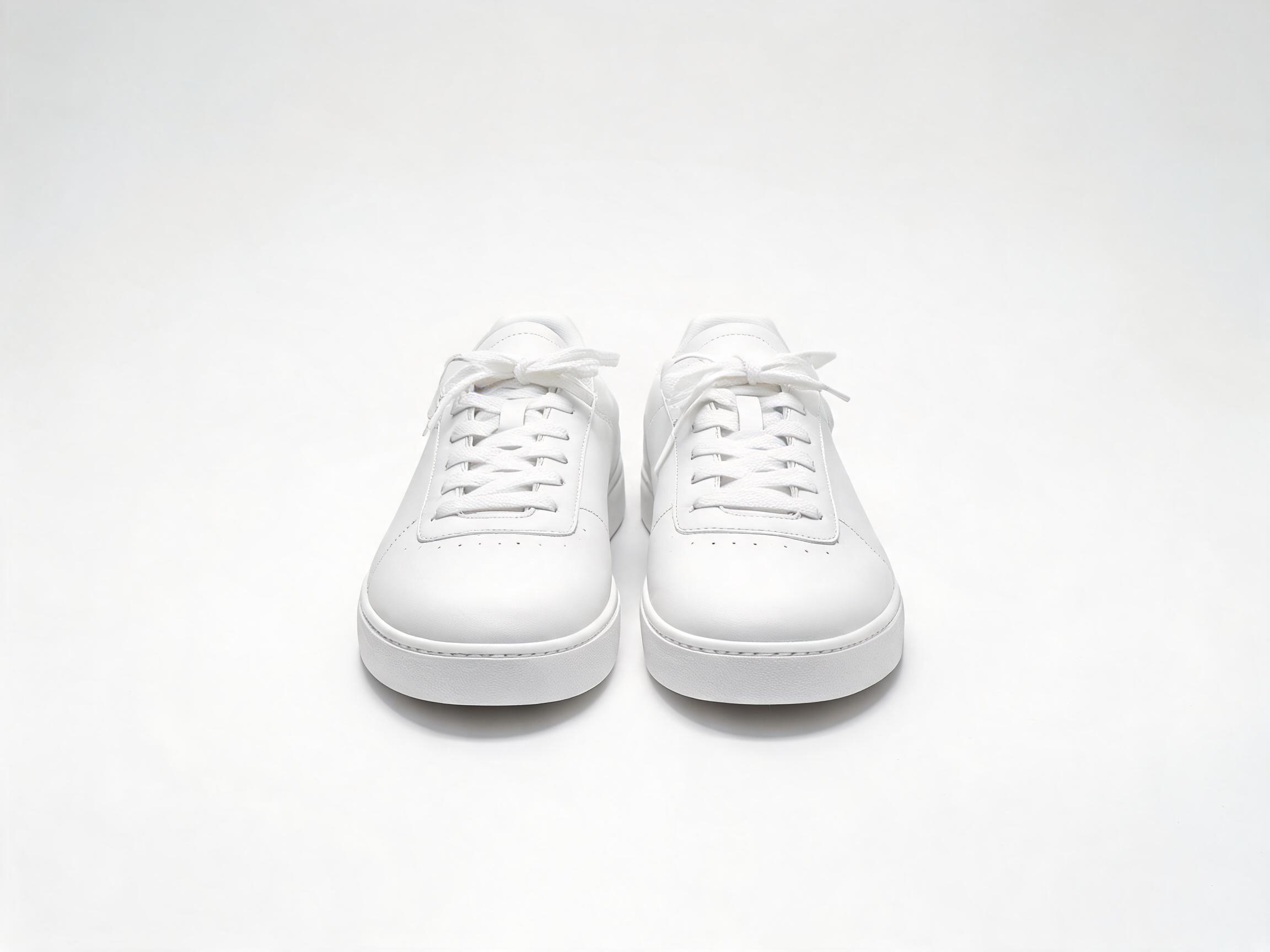
- White Leather Low-Top Sneakers — full-grain leather upper, EVA midsole, rubber cupsole, offered in EU 39–45 / US 6.5–12 in white, black or custom colors.
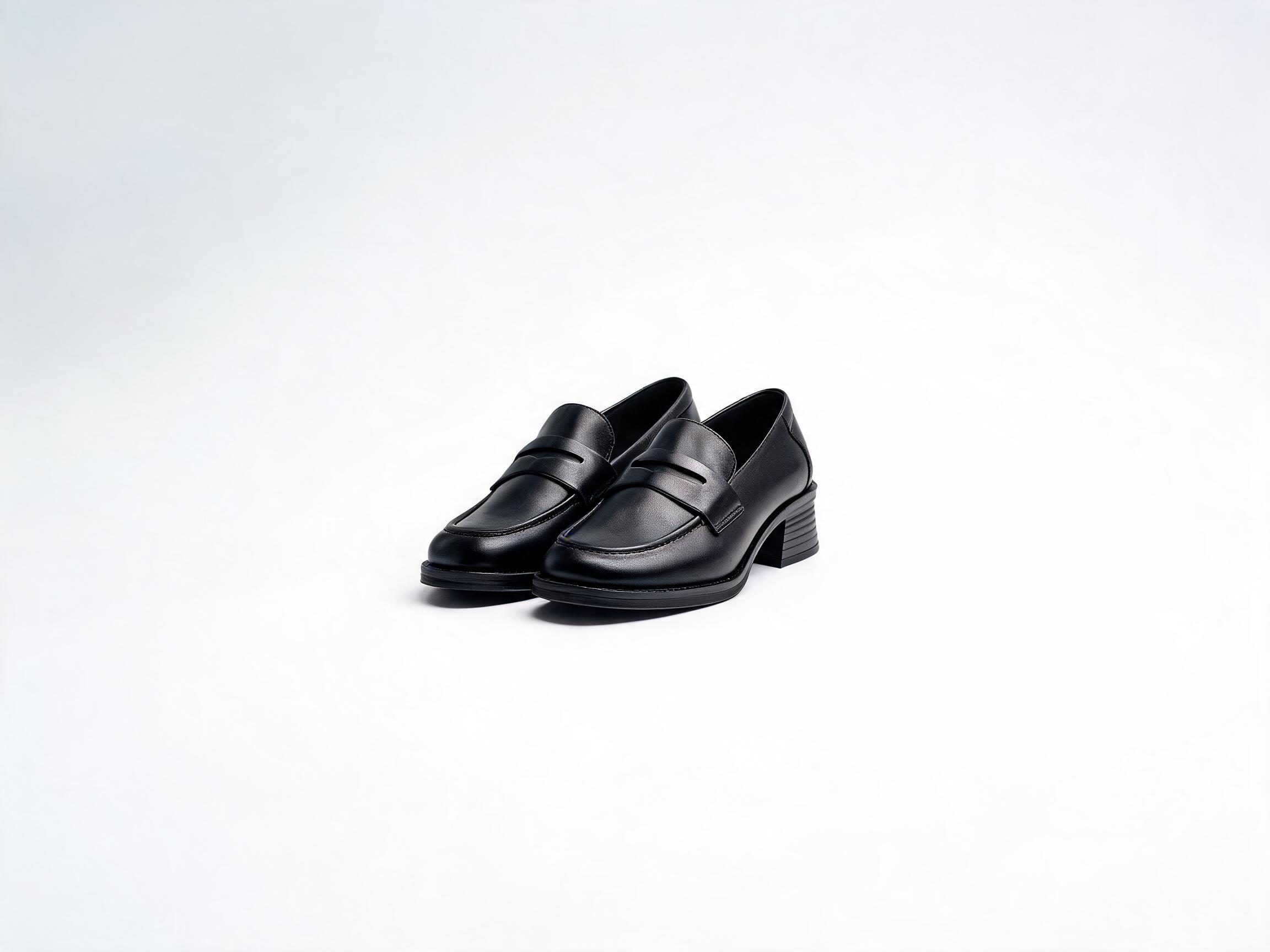
- Black Leather Loafers — polished calf leather with an approximately 3 cm block heel, offered in EU 35–41 / US 5–10 in black, brown, burgundy or custom colors.
- Brown Derby Dress Shoes — open lacing with a stitched sole, offered in EU 39–45.
These are useful anchors for style discussions: a sneaker program talks about sole unit and upper material, a loafer program talks about heel height and leather finish, a derby program talks about lacing system and sole construction. When you describe your modification, speak in those terms and the sample room can price and schedule it without guessing.
Branding and customization confirmation
Private label means the branding is yours and it has to be physically correct on the shoe, not just in the artwork file. For wholesale private label shoes, confirm exactly where the logo appears: on the insole, on the box, on the hangtag, or some combination of the three. Each placement has its own production step and its own verification point, so treat them as separate line items rather than one blanket "branding" instruction.
Materials, color and grading
Beyond branding, private label customization covers the parts buyers most often want to control:
- Leather color matching — matched to a Pantone reference so the upper, any trim and the insole presentation stay consistent across the run.
- Sole material — selected to suit the intended use and price positioning of the program.
- Trims — eyelets, laces, stitching thread, edge finishing and similar detailing.
- Size grading — the run of sizes you actually need, including any half sizes or extended sizes in your market.
One production detail worth knowing because it affects what you see in the finished shoe: cutting is done on matched hides, so the left and right of a pair share grain and shade. That is the kind of thing that is invisible when it is right and very visible when it is wrong, and it is a normal part of leather cutting, not a premium add-on to specify.
From approved sample to production scheduling
Once you approve the sample and the branding detail is locked, the program moves into scheduling. This is the point where two things happen in parallel: the production team plans the run against the confirmed specification, and the materials — leather, sole units, insole components, boxes, hangtags — are ordered to match it. Because the pattern and grading work was already settled at the sample stage, the factory floor receives a package it can execute rather than a package it has to interpret.
The manufacturing sequence itself is fixed and worth understanding, because each stage is a place where a problem can either be caught or carried forward:
| Stage | What happens |
|---|---|
| Pattern grading | Confirmed size range is graded from the approved pattern. |
| Cutting | Leather and components are cut, using matched hides for left/right grain and shade. |
| Upper stitching | Upper panels are assembled and stitched to specification. |
| Lasting | The upper is pulled over the last to set the shape. |
| Cementing / sole stitching | Sole is attached by the method specified for the style. |
| Cooling | Bonded shoes are allowed to set before further handling. |
| De-lasting | Finished shoes are removed from the last. |
| Inspection | Finished-shoe QC before packing. |
| Packing | Branded insole, box and hangtag come together with the shoe. |
The exact schedule for a given program depends on style complexity, material availability and order composition, so confirm it per program rather than assuming a standard number. What you can rely on is the order of operations above — and, in particular, that inspection is a defined stage rather than an afterthought at packing.
What is checked before packing
Bulk QC at Aurevia runs in three stages: incoming material inspection, in-line inspection during assembly, and finished-shoe inspection. Splitting it this way matters to a buyer because the three stages catch different problems. Incoming material inspection catches a defective hide or a wrong sole unit before it enters the line. In-line inspection catches assembly errors while the shoe is still workable. Finished-shoe inspection is the final gate before the product goes into a branded box.
The finished-shoe stage includes functional checks: forefoot flex testing, color fastness, and sole adhesion checks. For a buyer, forefoot flex relates to how the shoe behaves in wear; color fastness matters most on darker leathers and on any contrasting trim; sole adhesion is the check that keeps a bonded sole from separating in service. These are the checks that sit behind the phrase "the shoe held up" when you open a carton.
Inspection reports are available on request, and third-party inspection is welcome. If your buying process requires an independent inspector on site, plan that into the schedule so the inspection can happen at the right stage — typically during production and again at pre-shipment — rather than being bolted on after packing is complete.
Delivery acceptance and documents
Delivery acceptance is where the whole flow is validated. When the shipment arrives, check it as a sample of the approved specification rather than as a generic batch of shoes: are the sizes in the graded run you confirmed, are the colors matching the approved leather reference, is the branding present in all three positions you specified — insole, box and hangtag — and does the shoe in hand correspond to the sample you approved?
Pair that physical check with the paperwork. If you requested inspection reports, they should reach you ahead of or with the shipment, and any third-party inspection report you commissioned should be compared against the same specification. Where a discrepancy appears, having the approved sample and the confirmed specification on file turns a disagreement into a specific, resolvable question about one attribute rather than a general dispute about the whole order.
A practical habit: keep one approved reference pair and the confirmed branding specification as the acceptance benchmark for the program. It costs nothing and it makes every future repeat order faster to check.
FAQ
Can we start from our own sketch or tech pack?
Yes. Aurevia's in-house design and pattern teams work from sketches, references and tech packs and turn them into production-ready samples. Customized samples generally take about 7–12 days.
Where can our logo be placed?
Private label branding covers the insole, the box and the hangtag. Which positions you use is a program decision, and each should be confirmed as a separate placement.
Can we match a specific leather color?
Leather color matching can be done against a Pantone reference. Sole material, trims and size grading are also customizable.
What does QC cover on a bulk order?
Three stages — incoming material, in-line and finished-shoe — with forefoot flex testing, color fastness and sole adhesion checks at the finished stage. Inspection reports are available on request, and third-party inspection is welcome.
What are the MOQ, unit price and lead time?
These vary with style, materials and order composition, so confirm them per program with the supplier. They are not fixed across product lines.
Next step
If you are ready to move from style selection to a production-ready sample, send the reference, sketch or tech pack together with your target size range, branding placement and preferred leather or color direction. That is enough for Aurevia Footwear Co., Ltd. to come back with a sample plan and a program-specific confirmation of MOQ, pricing and schedule.