
A practical buying guide for importers and retail chains assembling a prom and evening shoe range: how to split the style mix between statement heels and versatile mid-heels, plan colours with Pantone matching, settle size runs against your target market's chart, and specify the bulk QC checks that matter before shipment.
Buying guide
Prom season is short, and the range you commit to in the spring is the range you sell with. This guide covers the three decisions that set the shape of a wholesale prom shoes programme — which styles to carry and in what proportion, how to lock colour and material against a reference, and how to plan size runs and bulk QC so that the shipment that reaches your warehouse matches the samples you approved.
What this guide covers
- How prom and evening buyers split a range between statement heels and sellable mid-heel core styles.
- Colour planning with Pantone references, and what leather colour matching can and cannot guarantee.
- Size-run and fit planning built on your target market's size chart rather than the factory's default.
- The bulk QC checks to write into the purchase order before production, not after.
- Sampling and private-label steps, with the timings a buyer can plan around.
What prom buyers actually need from a factory
Prom is a dress-driven category. The customer arrives at your listing with a specific dress, a specific date and a specific budget, and the shoe either completes the outfit or it does not. That gives the range a different commercial logic from everyday womenswear footwear: fewer deep repeats, more colour stories, and a visual hero in the window.
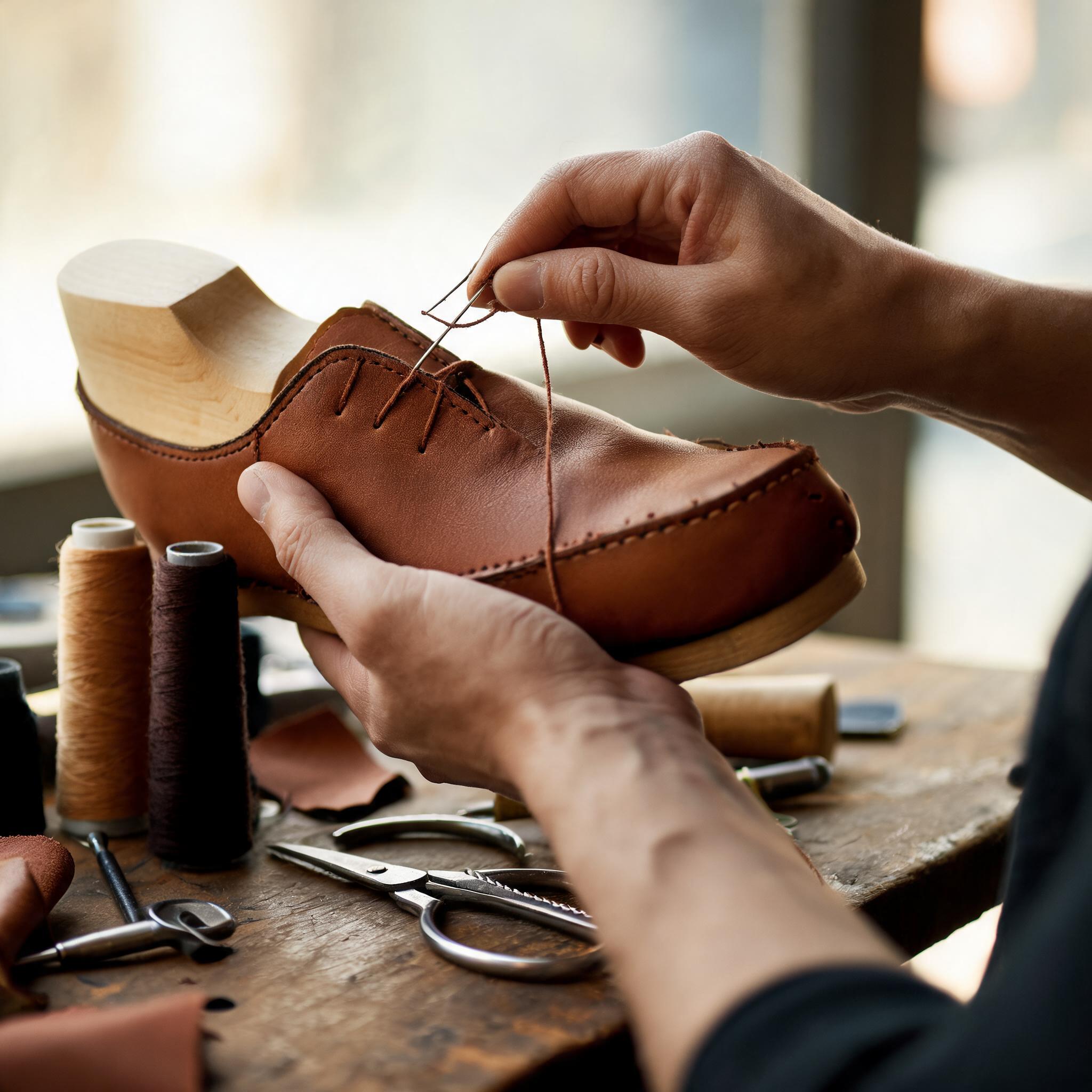
From a supply side, that means the factory has to be able to hold a colour reference across a run, keep a size curve that fits your market, and deliver a left and right shoe that look like a pair under shop lighting. A manufacturer working on prom and evening lines should be able to match leather to a Pantone reference, run its own in-house design and pattern teams so trend references can be turned into a production-ready sample, and inspect the finished shoe rather than only the materials going in.
Aurevia Footwear Co., Ltd. is a B2B manufacturer and exporter of high-end footwear, founded in 2011 in Quanzhou, China, with a 260-person team, genuine leather craftsmanship, dedicated women's heel lines, and OEM/ODM and private label programmes. The company exports to Europe, North America and the Middle East — three markets whose size conventions and colour preferences differ enough that a single default size run rarely serves all three.
Building the style mix: one or two statement heels plus versatile mid-heels
A prom range that is all statement heels looks exciting on a mood board and underperforms at the till. Buyers who stock prom and evening categories for retail chains tend to work with a split: a small number of visually strong statement styles that carry the season's look, and a broader base of mid-heel styles that sell across more dresses, more age groups and more of the season.
Statement heels: the visual anchor
These are the shoes in your campaign shoot. They justify a higher retail price and give your buyers a reason to feature the category. Two concrete examples of the type:
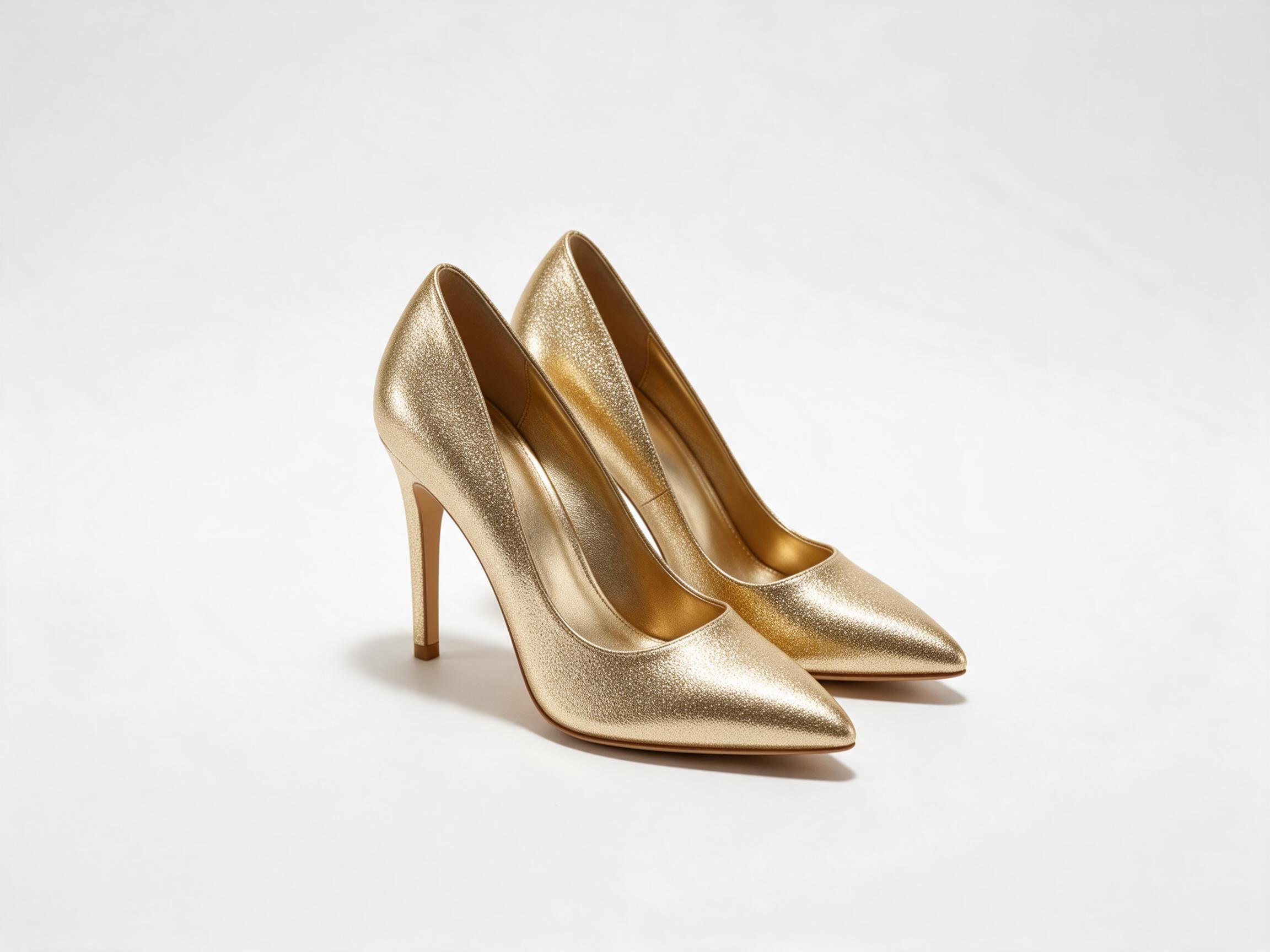
- Gold Metallic Evening Heels — gold metallic-finish leather, pointed toe, approx. 9 cm heel with a reinforced core, padded insole and anti-slip rubber outsole, built on cemented construction. Metallic finishes photograph well and suit the warm palette many prom collections lean on.
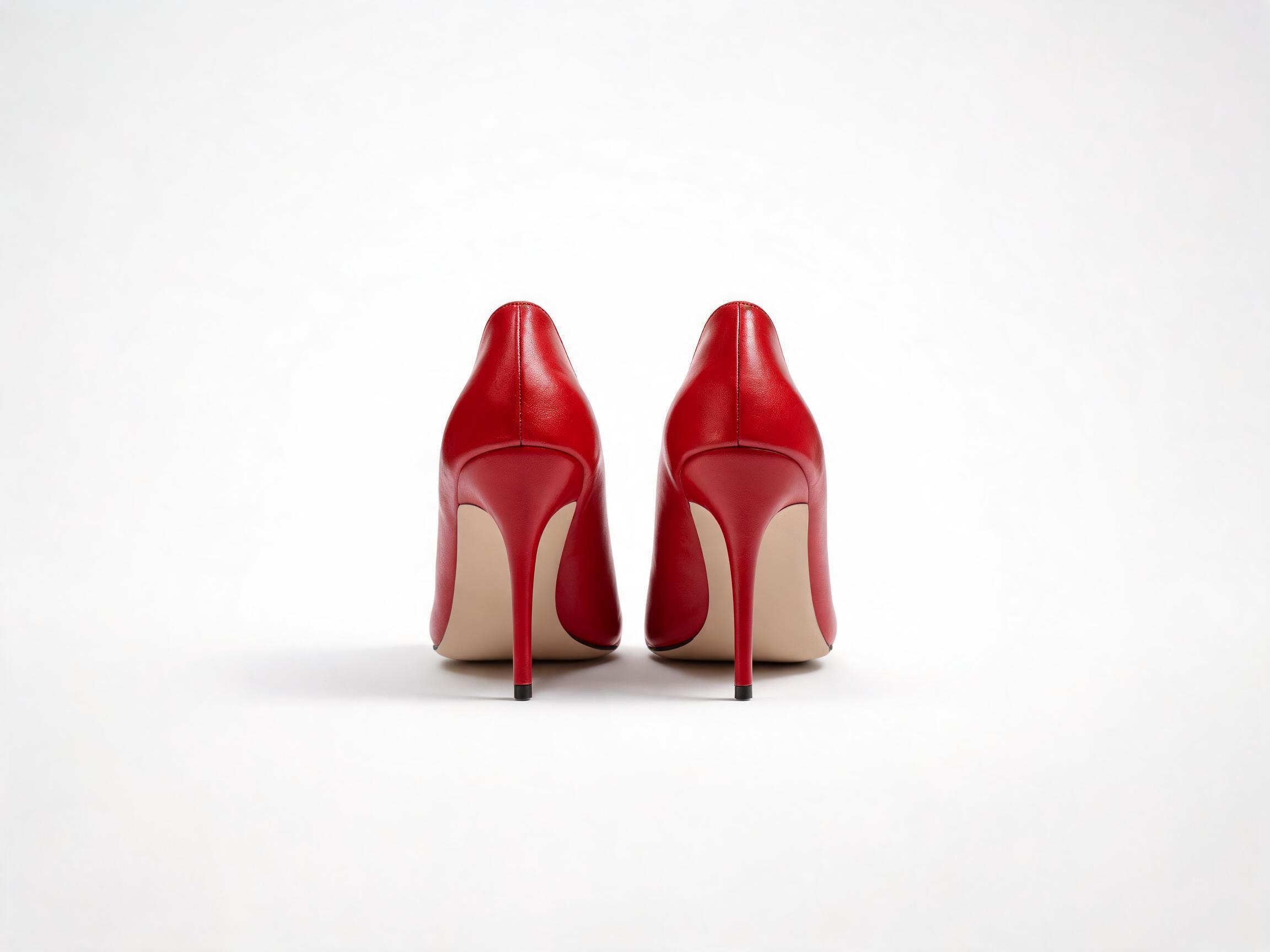
- Red Leather Classic Pumps — smooth red calf leather, pointed toe, approx. 8 cm heel, padded insole, available in red, black, nude or a custom colour. A red pump is a range essential precisely because it is repeatable across seasons with a colour change.
One or two of these per range is usually enough. Carrying five statement styles in the same colour family splits the buy without widening the customer base.
Mid-heel core: the volume layer
The rest of the range should be built for wearability. Practical considerations that shape this layer:
- Heel height that a customer can wear for a full evening, including stairs and photographs.
- Pointed and almond toe shapes so the range covers different dress silhouettes.
- Neutral colour anchors — nude, black, soft metallics — that work with multiple outfits.
- Padded insoles and a stable outsole, since comfort complaints are what turn a prom sale into a return.
If the same last can carry both a statement and a core style, you reduce pattern development and get more colourways out of one fit. That is a genuine cost lever, and one worth raising early with the supplier's pattern team.
Colour and material planning with Pantone matching
Colour is where prom ranges are won or lost, and it is also where specification vagueness creates the most claims. A brief that says "dark red" or "champagne" can be read many ways by a tannery. A Pantone reference cannot.
Aurevia matches leather colour to a Pantone reference, which means you supply the reference you want and the colour is developed against it rather than chosen by the factory. For buyers this changes the sampling conversation in a useful way:
- Send the Pantone reference for each colourway, plus the material you expect it on (smooth calf, metallic-finish leather, and so on).
- Confirm which colourways are standard and which are custom, because custom colour development sits on a different timeline from existing colours.
- Approve the colour on the actual material, not on a screen or a paper swatch. Metallic finishes in particular read differently on a curved shoe than flat.
- Keep the approved reference on file for repeat orders, and reference it on the purchase order.
Two colour-planning habits worth adopting for prom specifically: anchor the range in neutrals plus one or two trend colours, rather than five fashion colours that all date together; and check that the same reference looks consistent on the insole, box and hangtag if you are using OEM branding, since branding elements and upper leather are different substrates and will not match perfectly by default.
Size runs and fit planning for prom customers
Prom customers skew young, and their feet are often at the end of growth rather than settled. That has two implications for a wholesale programme.
First, the size chart matters more than the size labels. A size 38 in one market's expectation is not the same foot length as in another. Before mass production, confirm which size chart the range is being built to — your target market's chart, or a chart you supply — and get the conversion agreed in writing alongside the sample approval. Sizes that are correct against the wrong chart still generate returns.
Second, fit options beyond the base run are worth arranging early. Half sizes and width options can be arranged after the sample is confirmed; the confirmation stage is where you should raise them, because the fit is locked at that point. Discussing half sizes after production has started gives you no room to move.
A practical sequencing for the size decision:
- Define the target market and the size chart you want the range built to.
- Approve the fit on a confirmed sample, in the sizes most representative of your curve.
- Raise half sizes and width options at that approval stage.
- Agree the size run and the packing ratio on the purchase order.
Size ranges themselves are set per programme. Confirm the specific run with the supplier rather than assuming a default, especially if you sell across more than one of Europe, North America and the Middle East.
Bulk QC to require before shipment
Sample approval confirms what one pair can be. Bulk QC confirms what several hundred pairs actually are. For prom footwear, where the shoe is bought for a single occasion and returned quickly if it disappoints, the following checks should be written into the order rather than left to goodwill.
| Check | What it catches | When it applies |
|---|---|---|
| Incoming material inspection | Leather shade drift, surface defects, inconsistent finish batch to batch | Before cutting |
| In-line construction inspection | Stitching faults, uneven lasting, sole attachment problems on cemented construction | During assembly |
| Final finished-shoe inspection | Cosmetic defects, heel height consistency, insole and lining faults | Before packing |
| Forefoot flex testing | Stiffness and cracking risk where the shoe bends | On finished shoes |
| Heel-attachment checks | Loose or misaligned heels — particularly on the approx. 9 cm and approx. 8 cm styles where the heel carries real load | On finished shoes |
| Colour fastness | Dye transfer to hosiery or to the opposite shoe in the box | On finished shoes |
| Matched left/right finish | Pairs that read as two different shades under shop lighting | At pairing and packing |
Aurevia runs multi-stage inspection covering incoming material, in-line construction and final finished-shoe stages, plus forefoot flex testing and heel-attachment checks. Inspection reports are shared on request, and third-party inspection is welcome — which matters if your compliance team needs an independent report before the container ships rather than after.
Two checks on that list deserve emphasis for prom specifically. Colour fastness is often skipped on evening footwear and then becomes a complaint on the first wear with pale tights. Matched left/right finish is the check that decides whether the customer perceives a quality problem in the box; a pair that is individually acceptable but visibly mismatched will still be returned.
Sampling and private-label workflow
The sampling stage is where a prom range is actually designed, so the timeline should be planned around it rather than treated as an administrative step.
- Existing samples ship in about 3–5 days. Useful for range selection before you commit to development.
- Customised samples are typically ready in about 7–12 days, based on sketches, references or trend boards. Aurevia's in-house design and pattern teams turn those inputs into production-ready samples.
For private label, the branding touches to specify are the insole, the box and the hangtag, all of which can carry OEM branding. Agree them at sample stage with the colourway, because the branding elements are produced against the approved colour reference and a late change ripples through the whole packaging run.
A workable sequence looks like this: select from existing samples, brief the custom styles with Pantone references and target market size chart, approve fit and colour on the confirmed sample, then confirm the size run and branding. Each of those steps produces something the next one depends on, which is why compressing them late in the season is expensive.
FAQ
Can the heel height be changed from the sample?
Heel height is part of the last and pattern, so it is settled at sample development rather than after approval. The Gold Metallic Evening Heels run at approx. 9 cm and the Red Leather Classic Pumps at approx. 8 cm; if your range needs a different height, raise it when briefing the custom sample so the pattern team can build for it.
How do we handle a multi-market colour range?
Match leather to a Pantone reference per colourway and keep each approved reference on file. Where Europe, North America and the Middle East want different neutrals or trend colours, treat them as separate colourways in the brief rather than expecting one shade to travel. The Red Leather Classic Pumps, for example, are offered in red, black, nude or a custom colour.
Who inspects before shipment?
The factory runs multi-stage inspection and will share inspection reports on request. If your own QA team or a nominated third-party inspector needs to attend, that is welcome — arrange it so the inspection lands after final packing is complete but before the container is loaded.
What do we need to send to start a custom sample?
Sketches, reference images or a trend board, the Pantone reference for each colourway, the target market and its size chart, and your branding requirements for insole, box and hangtag. With those in hand, customised samples are typically ready in about 7–12 days.
Next step
If you are building or refreshing an evening and prom range, the fastest way to test the fit of a supplier is to start with existing samples for range selection and move to a custom sample for the one or two styles that will define the season. Send your colour references and target market size chart with the brief, and confirm the size run and branding at sample approval.