
An occasion-based range planning guide for buyers building a wholesale women's high heel shoes program: which heel type suits each wear occasion, the comfort construction that makes it sellable, and the factory questions that decide the order.
Assortment planning
Most women's heel ranges do not fail because the shapes are wrong. They fail because the range is planned by heel height instead of by occasion. A buyer picks 6cm, 8cm and 10cm silhouettes, then discovers that three of them compete for the same weekday customer while the bridal and evening slots are still empty.
An occasion grid fixes that. For each wear occasion you decide four things: the heel type that reads correctly, the comfort construction that keeps it wearable, the upper material, and the price position. Then you check whether one factory can produce the whole grid under consistent QC and lead times. This guide walks through that grid for wholesale women's high heel shoes, using published product examples for each slot.
Key takeaways for buyers
- Plan by occasion first, heel height second — height alone duplicates slots.
- Each occasion implies a heel type, an upper material and one dominant comfort feature.
- Visible comfort construction (cushioned insole, ankle strap, wider block base) is a sellable feature, not a specification footnote.
- Sample speed and bulk lead time differ; confirm both against your launch calendar before committing the grid.
In this article
The four-slot occasion grid
Four occasions cover most of a women's heel line sold through fashion brands, importers and retail chains: workday, evening/event, bridal, and all-day retail or travel. Each slot has a different tolerance for heel height and a different reason the customer keeps or returns the shoe.
Keep the grid tight. Two or three silhouettes per occasion is enough to test the range; you can widen the best slot in the second order once sell-through data exists. What matters at the first order is that no two slots overlap in heel type and material and height at the same time.
Workday and office: the mid-heel slot
The workday slot is the volume slot. It sells on all-day wearability, so the practical range is a 5–7cm heel with a covered upper and a closed or modestly open toe. Buyers who start here usually anchor with two shapes: a classic pump and a lower block heel.
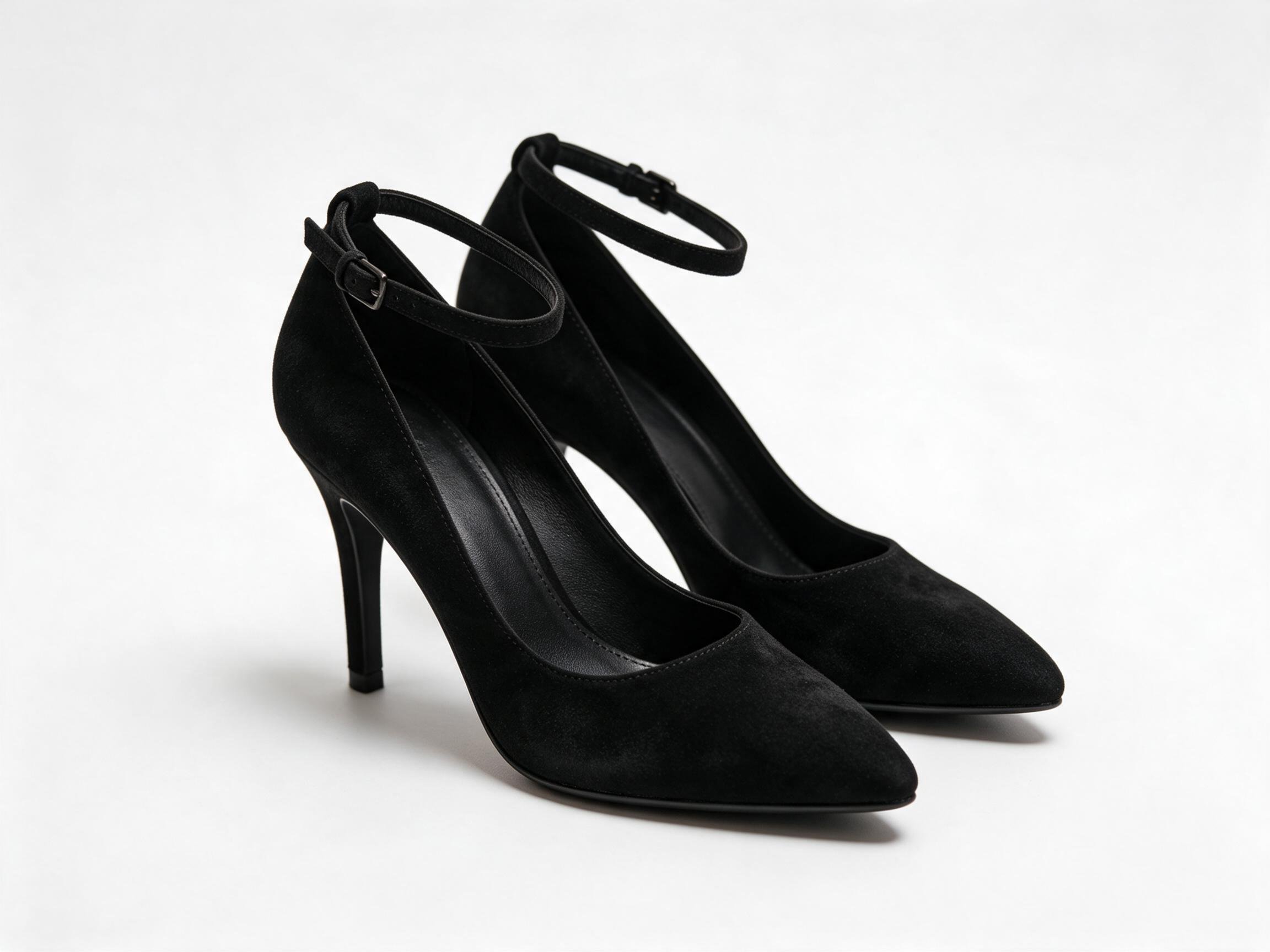
A 7cm leather pump such as the Black Leather Classic Pumps handles the office dress-code end of the slot: leather upper, structured silhouette, heel high enough to read as a heel and low enough to wear through a working day. Pair it with a lower, more casual second silhouette so the slot has both a dressy and a commuter option.
Comfort construction for this slot is mostly about the insole and the forepart. A cushioned insole and a forepart that flexes without a hard break are what convert a try-on into a repeat purchase — this is exactly the kind of construction buyers should ask the factory to describe before sampling, not after.
Buying decision
Use a 7cm leather or suede pump for the dressy end and a block heel for the commuter end. Confirm with the factory which insole construction is standard and whether the forepart is built to flex in the 5–7cm height range, then request both in one sample round.
Evening and event: the stiletto slot
Evening sells on silhouette, so this is where the stiletto belongs. The upper is usually smooth leather, suede or a metallic finish, and the customer accepts a higher heel because the shoe is worn for hours, not days.
The Black Leather Stiletto Heels at approx. 10cm sit at the top of the height range, while the Gold Metallic Evening Heels at approx. 9cm do the same job in a metallic leather finish. Carrying one of each lets you serve both the classic evening customer and the seasonal party customer without adding a third shape.
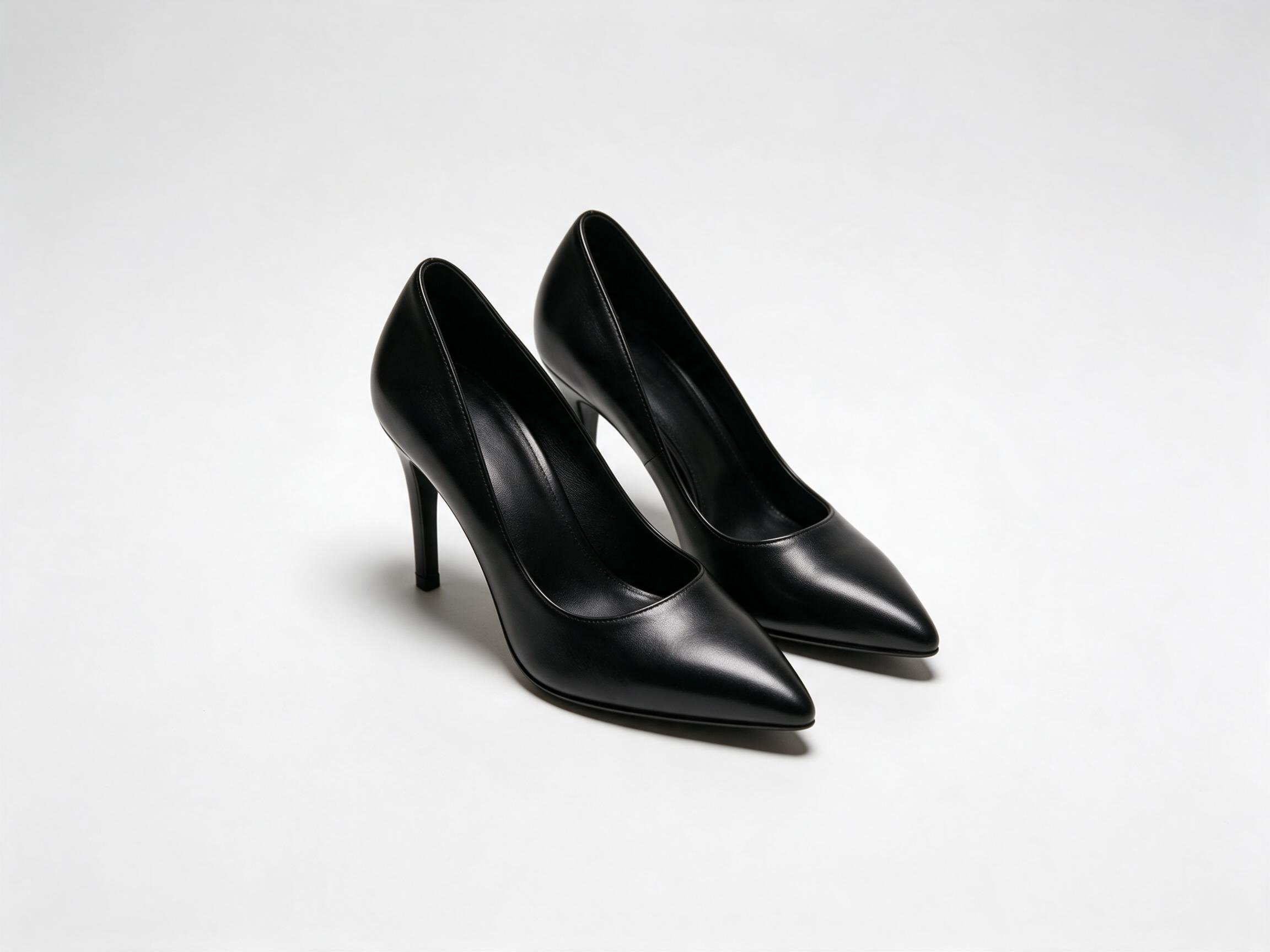
For this slot the sellable comfort feature is an ankle strap rather than a softer insole. An ankle strap keeps the foot seated on a high heel, which is the difference between a shoe a customer wears once and a shoe she buys in a second colour. A suede ankle-strap style at approx. 8.5cm, such as the Black Suede Ankle-Strap Heels, can also bridge evening and dressy occasions at a lower height.
Buying decision
Reserve the 9–10cm stiletto or metallic heel for evening, and specify an ankle strap wherever the heel exceeds 8cm. Confirm strap hardware finish and how the strap is attached, then check both in the pre-production sample.
Bridal: the satin slot
Bridal is not just a colour choice. Wedding shoes are photographed, worn for long hours and often bought in a dyeable or ivory-adjacent finish, so the slot needs a satin or satin-look upper and a mid-to-high heel around 8cm.
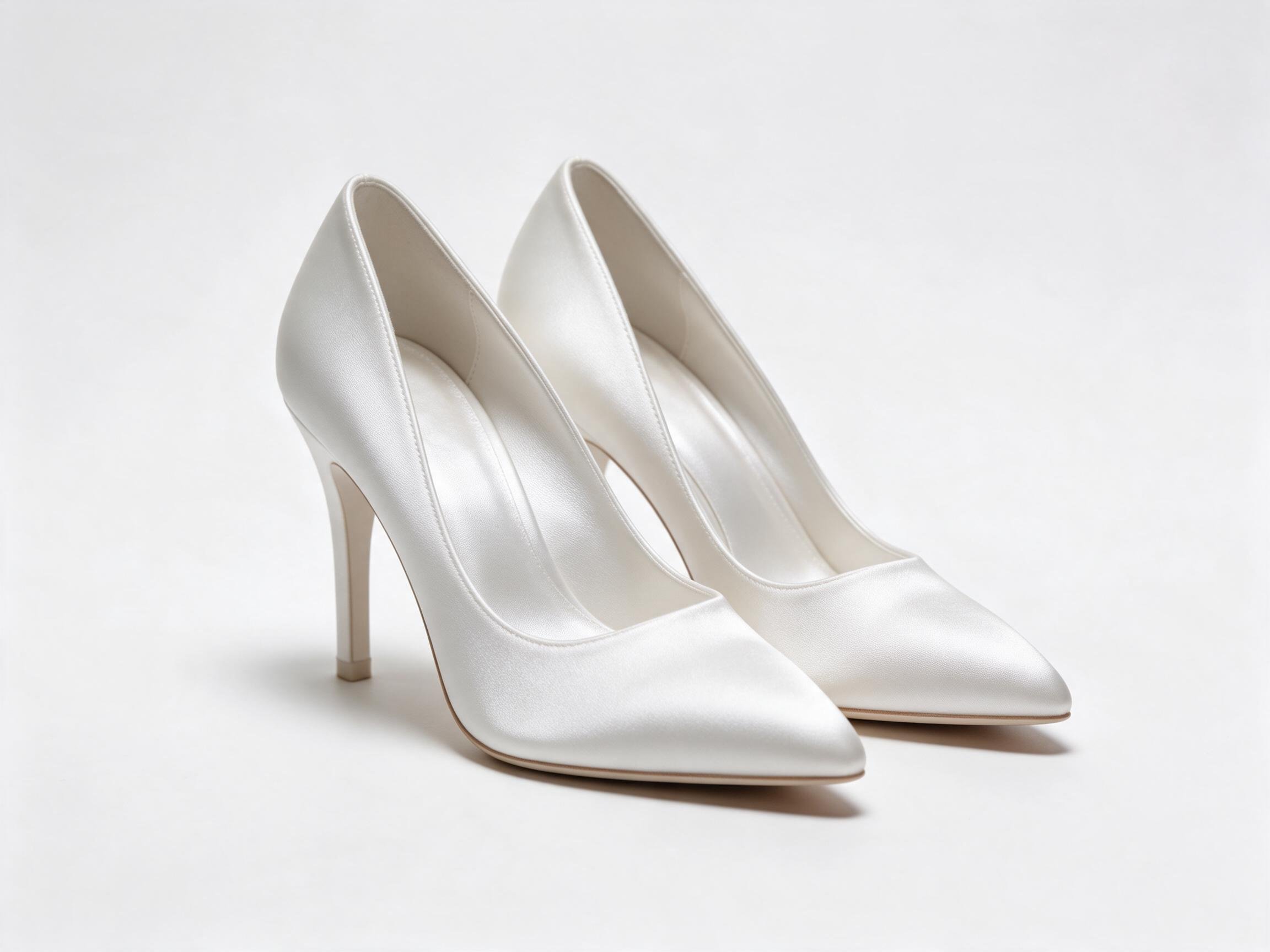
The White Satin Wedding Heels at approx. 8cm are the reference for this slot: high enough for the silhouette, low enough that a bride can stand through a ceremony and reception. Satin also drives a QC conversation that leather styles do not — colour consistency and surface handling on the upper matter more when the shoe will be photographed.
Comfort here is a combination of a cushioned insole and a well-seated ankle or sling construction, because the bride wears the shoe for many consecutive hours. Ask the factory how satin uppers are stabilised and whether the insole is cushioned as standard.
Buying decision
One satin silhouette at approx. 8cm is usually enough to open the bridal slot. Confirm satin colour consistency and insole cushioning before approving the sample, and decide whether the same last can be reused for a dyeable variant.
All-day retail and travel: the block-heel slot
All-day and travel buyers want one thing: a heel that does not punish walking. That slot belongs to the block heel, and the wider base is the feature, not a compromise.
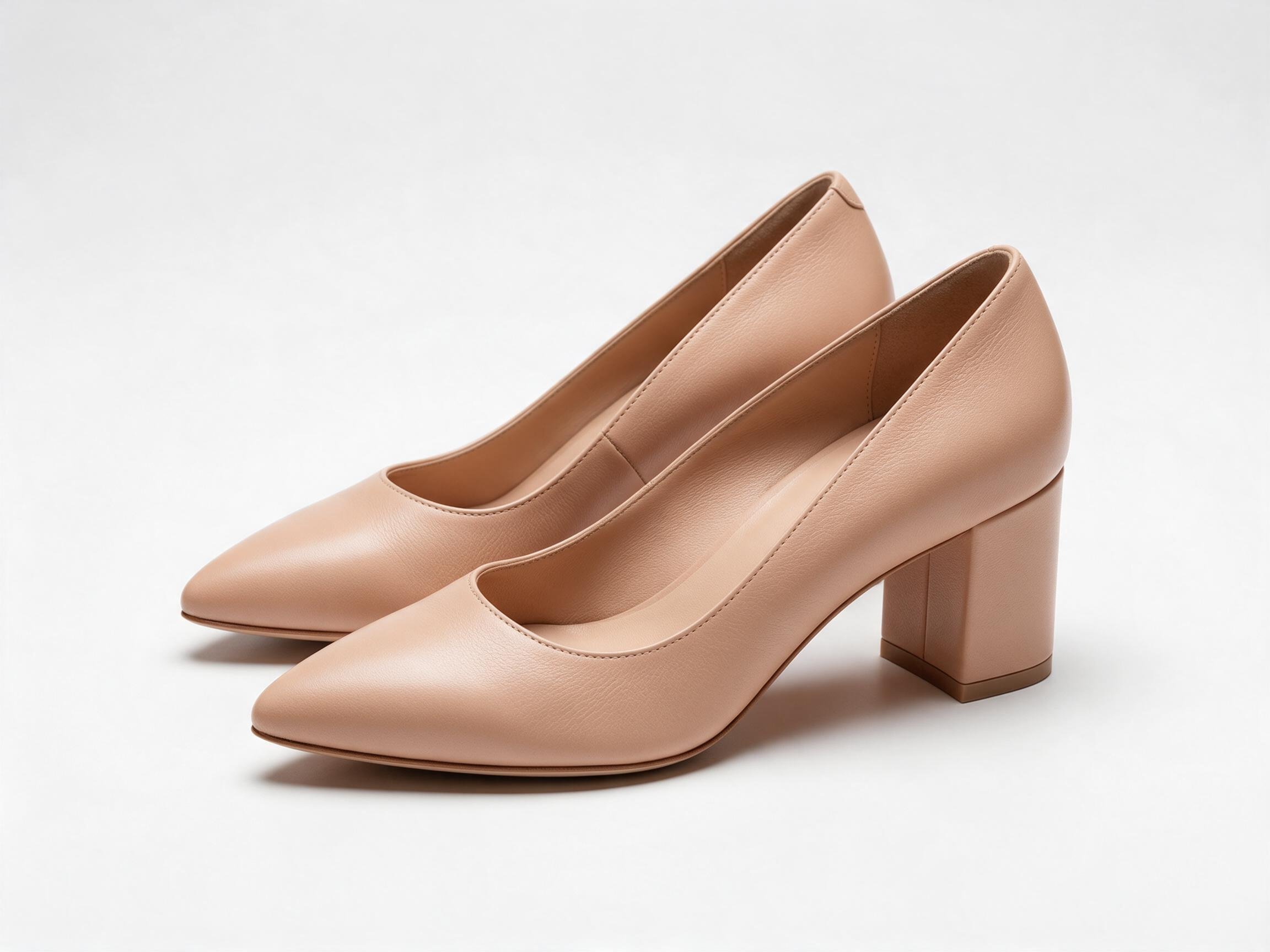
The Nude Block-Heel Shoes at approx. 5cm are typical of the slot: a wider heel base distributes weight more evenly, a cushioned insole supports longer wear, and the nude colour extends the shoe across more outfits and seasons. This is often the highest-volume single SKU in a wholesale women's high heel shoes range because it is bought for work, travel and everyday wear at once.
Because the block heel is a shape rather than a finish, it takes upper variety well — suede, leather and synthetic finishes can all sit on the same heel base, which keeps tooling cost down across colours.
Buying decision
Open the all-day slot with one block heel at approx. 5cm and plan colour as the main variant axis. Confirm block base dimensions and insole construction, and ask whether additional colours can use the existing heel base.
Slot comparison table
| Occasion | Heel type & height | Typical upper | Dominant comfort feature | Reference product |
|---|---|---|---|---|
| Workday / office | Classic pump, approx. 7cm | Leather | Cushioned insole, flexible forepart | Black Leather Classic Pumps |
| Workday / commuter | Block heel, approx. 5cm | Leather or synthetic | Wider block base, cushioned insole | Nude Block-Heel Shoes |
| Evening / event | Stiletto, approx. 9–10cm | Leather, metallic leather | Ankle strap stability | Black Leather Stiletto Heels; Gold Metallic Evening Heels |
| Evening / dressy day | Ankle strap, approx. 8.5cm | Suede | Ankle strap stability | Black Suede Ankle-Strap Heels |
| Bridal | Satin heel, approx. 8cm | Satin | Cushioned insole, seated construction | White Satin Wedding Heels |
Read the table as a slot map, not a fixed menu. A range does not need every row; it needs no two rows competing for the same customer at the same time.
What to confirm with the factory
Once the grid is set, the conversation moves from silhouettes to construction and schedule. These are the points that decide whether the range lands on time and stays consistent across reorders.
Comfort construction, in plain language
Ask the factory to describe, per slot, the insole construction, the forepart build, and how the ankle strap or block base is attached. You do not need a test laboratory to ask these questions — you need answers specific to your styles, not a general statement about quality.
Quality control across the grid
A range built from several heel types still passes through one production line, so ask how QC is staged. A three-stage process — incoming materials, inline, and final inspection — with checks on forepart flexing, colour fastness, bonding and heel attachment covers the failure points that matter most in heels. Confirm whether third-party inspection is welcome, and what warranty period the factory offers, before you place the first bulk order.
Sampling and bulk lead times
Plan two timelines, not one. Existing samples typically ship in 3–5 days, while custom samples take about 7–12 days; bulk production runs about 25–45 days. If your launch calendar needs custom colour or a new last, the custom sampling window sits in front of the bulk window, so build it into the schedule.
Commercial terms
Trade terms such as EXW, FOB and CIF affect your landed cost calculation and who carries the risk at each stage, so agree the term per shipment rather than assuming it. An OEM/ODM footwear exporter working from a production base in Quanzhou with about 260 staff and exports to Europe, North America and the Middle East will typically quote under these terms, so align them with your own logistics plan.
Before you request quotes: send the factory your occasion grid — one row per slot, with heel height, upper material and the comfort feature you want. A grid makes sampling faster because each sample answers a specific slot instead of repeating the same brief.
FAQ
Should the first order cover all four occasions?
If your channel sells across all four, yes — but keep it to one or two silhouettes per slot and use colour as the main variant. The occasion grid is there to prevent duplication, not to force breadth.
Is a higher heel always harder to sell in wholesale?
No. What matters is whether the heel height matches the occasion and whether the construction supports it. A 10cm stiletto with an ankle strap can sell well in the evening slot, while the same height in a workday slot would not.
Can one heel base be shared across styles?
Often yes, particularly for block heels, where the base can carry different uppers and colours. Ask the factory which of your chosen styles can share tooling; that answer usually affects both sampling time and unit cost.
What should be checked on the pre-production sample?
Insole cushioning, forepart flex, ankle strap attachment, block base dimensions, and colour consistency on satin or suede. These are the construction points that carry across the whole range, so confirming them once saves rework later.
The next step
Build the occasion grid first, match each slot to one heel type and one comfort feature, then send it to your supplier as the sampling brief. If you are selecting a partner for a women's heel range, ask for the standard insole and forepart construction, the QC stages your styles will pass through, and the sample and bulk lead times in writing — those three answers tell you whether the factory can hold your grid across reorders.