A factory-side look at the three stages that decide whether a wedge or espadrille program succeeds: turning your reference image into a producible last, understanding what the jute braid actually is, and running material, structure and finished-pair QC across a bulk order.
Factory Notes for B2B Buyers
A wedge or espadrille program in China rarely fails at the sewing machine. It fails earlier — on the last, on a misunderstood braid, or on a QC plan that only looks at finished pairs. Here is how those three stages actually run from the factory side.
Buyers searching for a China castaner wedges manufacture partner usually arrive with a mood board, a competitor sample, or a photo set. What they need next is a supplier who can explain how that image becomes a producible shoe and where quality risk sits in a bulk order. That conversation has three distinct phases, and each has its own failure modes.
What this article covers
- Last development: from buyer reference to a producible sample
- Braiding craft: what a jute-wrapped wedge actually is
- Bulk order QC: material, structure, and finished-pair inspection
- FAQ
Key takeaways
- A reference image is a starting point, not a specification. The last is the first real engineering decision.
- The core structure for this category is a jute-wrapped sole combined with a rubber base — that combination, not the outer look, defines the product.
- Bulk QC is a sequence: incoming material, in-process structure checks, then finished-pair review. One stage alone will miss defects.
Stage One: Last Development
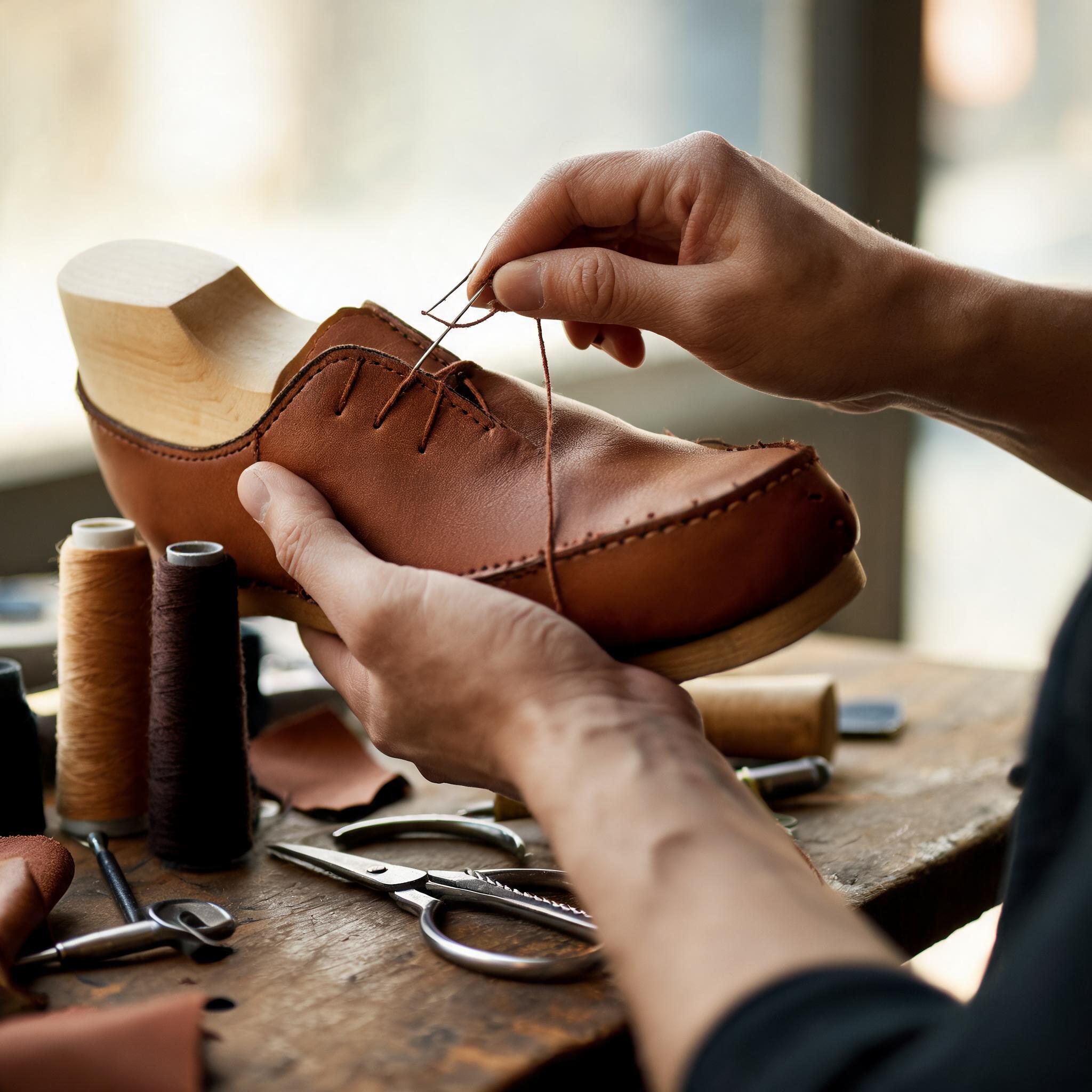
Everything downstream depends on the last — the shaped form the shoe is built over. When a buyer sends a reference image, the design and sampling team's job is to translate a two-dimensional picture into a three-dimensional, wearable, producible form. That translation is where programs either get a realistic timeline or get stuck.
What the factory needs from you at this stage
Reference images alone are workable but slow. Progress accelerates when the buyer supplies a few additional inputs. None of these are optional luxuries; each one removes a guess.
- Multiple angles of the reference — top, side, three-quarter, and sole. A single hero shot hides the heel curve and the platform taper.
- Target fit context — whether the buyer's market runs narrow, standard, or wide, and the size range the program will cover.
- A physical reference sample where possible — a competitor pair or a prior-season shoe tells the team more about heel height and platform proportion than any rendering.
- Design intent versus precision — which details are signature features and which can flex during sampling.
From reference to sample
The output of last development is a sample the buyer can evaluate for proportion, fit and construction — not a decorative mock-up. In practice the sequence moves through a few checkpoints:
- Interpret the reference and define the last shape, heel height and platform proportion.
- Build the last and produce an initial sample pair.
- Review with the buyer on fit, silhouette and construction.
- Revise the last or the pattern based on that review.
- Approve the sample before any bulk commitment.
The most common cause of delay is not the factory's speed — it is feedback arriving in rounds, with fit comments separated from proportion comments separated from construction comments. Consolidate remarks into one review pass and the last development cycle shortens noticeably.
Where buyers get this wrong
Two mistakes recur. The first is treating the first sample as a production commitment; it is a development artifact, and its purpose is to expose what needs correcting. The second is changing the reference mid-development — a new inspiration image after the last is built typically resets the work rather than refining it.
Stage Two: Braiding Craft — What the Structure Really Is
The espadrille wedge category is full of confident-sounding technical language. Buyers should be precise about what the construction actually involves, because generic descriptions invite mismatched expectations during sampling and bulk. For this product family, the structure is a jute-wrapped sole on a rubber base.
The two structural elements
Understand the sole as two distinct components working together:
- The jute wrap — jute braid wrapped around the sole edge or platform, producing the signature rope texture and the natural fiber tone that defines the espadrille look. The visible craft lives here.
- The rubber base — the outsole beneath, providing the ground-contact layer and the structural foundation the jute wrap sits on.
This combination — jute edge over a rubber base — is the honest description of the construction. It is also why the wrap and the base must be inspected separately at QC: a clean jute braid over a compromised base is still a defective shoe.
Why a jute edge warrants extra attention
Natural fiber wrapping is a craft step, so consistency is judged by eye and by hand as much as by measurement. During sampling, buyers should look at:
- Tension and spacing of the wrap — whether the braid sits evenly around the edge without gaps, bunching, or distortion of the sole line.
- Termination points — where the wrap begins and ends, and whether those transitions look intentional.
- Color and texture consistency between the sample and the approved reference, since natural fiber tone varies at the material level.
- Alignment with the rubber base — the wrap should not create an uneven edge that affects stance or ground contact.
If a buyer's brief assumes a different construction — a fully braided platform, for instance, or a braid integrated through an internal layer — that difference should be surfaced before the last is finalized. It changes the sole assembly and therefore the sample timeline.
One concrete reference point for this construction in a finished product: the Beige Espadrille Flats pair a cotton canvas upper with a jute-wrapped sole on a rubber base, a soft textile lining and a cushioned insole. As an OEM/ODM item, the fabric, color, trim and logo are customizable. It is a useful comparison when a buyer wants to see how jute edging behaves in a flat rather than a wedge, and where the upper material changes but the sole structure does not.
Stage Three: Bulk Order QC
Sampling proves a design can be made once. Bulk QC proves it can be made repeatedly. For a wedge sandals manufacturer China buyer, the practical question is not whether inspection happens, but at which points and against which criteria. A credible program runs checks across material, structure, and finished product.
Material inspection
Material checks happen before assembly, because no amount of good stitching rescues a bad input. Typical focal points include:
- Upper material — confirms the fabric, color and hand feel against the approved sample or buyer specification.
- Jute and braid stock — consistency of tone and texture, and freedom from visible flaws that would show once wrapped.
- Rubber base components — dimensional consistency and surface condition, since base variance propagates through the whole sole assembly.
- Linings, insoles and trims — checked for the specified material and finish.
In-process structure inspection
This is the stage buyers most often underestimate, because it is invisible in the final product. Checks occur during assembly, before the shoe is closed and finished:
- Confirm the jute wrap sits evenly around the sole with acceptable tension.
- Verify the bond between jute-wrapped sole and rubber base.
- Check upper-to-sole attachment at the lasting and seat area.
- Review heel and platform proportion against the approved sample.
Defects found here are correctable. The same defects found at final inspection are not, which is the entire argument for in-process checks.
Finished-pair inspection
The final pass treats the shoe as the buyer will see it, and includes both workmanship and consistency criteria:
| Check area | What is being verified |
|---|---|
| Upper and stitching | Clean lines, secure seams, no visible defects on the finished surface |
| Jute edge | Even wrapping, consistent tone, no gaps or bunching across the pair |
| Rubber base | Correct attachment, level stance, no separation at the edge |
| Pair matching | Left and right consistent in proportion, color and finish |
| Fit and finish | Lining and insole as specified; overall appearance matches the approved sample |
Aurevia has operated from Quanzhou since 2011 as an OEM/ODM footwear supplier, with an in-house design and sampling team and multi-stage inspection. For buyers comparing suppliers, the useful question is not whether a factory claims QC, but whether it can name the stages and the criteria at each one — material, in-process, and finished pair — and show where each check sits in the production flow.
Bringing the Three Stages Together
These phases are sequential for a reason. A last that is not approved makes braid sampling unreliable. A braid construction that was never pinned down makes bulk QC criteria arbitrary. When buyers and factories align on all three, the program has a defined sample, a defined structure and a defined inspection plan before the first bulk unit is cut.
A short buyer checklist
- Send multiple reference angles plus, where possible, a physical sample — not a single image.
- Confirm the sole construction explicitly: jute-wrapped sole on a rubber base, unless you have agreed otherwise.
- Consolidate sample feedback into one review round.
- Ask the supplier to describe material, in-process and finished-pair checks separately.
- Agree on what a defect looks like at each stage before production begins.
Frequently Asked Questions
Can a factory develop a last from a reference image alone?
Yes — design and sampling teams can convert buyer sketches and reference images into producible samples. Progress is faster and revisions fewer, however, when the buyer also provides multiple angles, target fit context and, where possible, a physical reference sample.
Is the jute braid the whole sole?
No. For this product family the structure is a jute-wrapped sole combined with a rubber base. The jute braid forms the visible wrapped edge and platform surface; the rubber base is the ground-contact layer and structural foundation beneath it.
Why does bulk QC need multiple stages instead of one final inspection?
Material and structural defects — an inconsistent jute wrap, a weak bond to the rubber base, a misaligned upper — are correctable during assembly but not after finishing. In-process checks catch them while correction is still possible; the finished-pair pass confirms the shoe as the buyer will receive it.
What can be customized in an espadrille wedge OEM order?
For OEM/ODM programs, custom fabric, color, trim and logo are typical customization points. Buyers should confirm the specific options for their model with the supplier at the sampling stage, along with any program-specific terms.
If you are developing a wedge or espadrille program and want to discuss last development, sole construction or a QC plan for your order, contact Aurevia with your reference materials and target market details to begin the sampling conversation.