面向启动贴牌鞋项目的 B2B 买家的准备清单,涵盖产品范围界定、规格表、品牌资料和打样周期。
Decide the Range Before You Ask for a Sample
Private label shoes fail at the sampling stage for one reason more often than any other: the buyer has not decided what the product is. A factory can build almost anything, but it cannot guess your price point, your size curve or your packaging. Before the first sample request, settle the range.
Start with the commercial frame. Work out your target landed cost — factory price plus freight, duties and any warehousing — then work backwards to the maximum factory price you can accept. That number shapes every material decision that follows. A full-grain leather upper with a stitched sole belongs in a premium line; a cemented casual style with a rubber outsole belongs in a volume line. Mixing the two produces a sample that fits neither.
Write a Specification Sheet the Factory Can Build From
"A brown leather loafer" will produce a sample you did not want. A specification sheet removes the ambiguity. Cover the visible and the invisible:
- Style name and reference for internal tracking.
- Last shape and size range — for example an almond toe graded EU 35–41 for women's styles or EU 39–45 for men's.
- Upper material — exact type, colour and finish, with a Pantone reference or a physical swatch where possible.
- Lining — leather, textile or synthetic, and any breathability requirement.
- Sole and heel — material, heel height in centimetres, tread and any branding.
- Hardware — buckles, eyelets, zippers and logo placement.
- Packaging — box type, tissue, barcode and retail-ready requirements.
- Quality tolerances — acceptable variation in colour, stitching and surface finish.
A factory that comes back with clarifying questions is engaged. A factory that says yes to everything has not read your sheet.
Choose the Construction Method Deliberately
Construction drives cost, lead time and the sample fee. Cemented construction is the most common and cost-effective route for fashion-led styles. Stitched constructions take longer and need more skilled labour, which raises both the sample cost and the minimum order quantity. Decide which one your price point can carry before you request quotes, because the answer changes the factory shortlist.
Prepare the Brand and Compliance Inputs Early
Private label means your identity goes on the product. Gather these before sampling so the first sample is genuinely representative:
- Logo files in vector format, plus placement and size instructions.
- Size grading and any width options your market expects.
- Label and hangtag artwork, including care and material labelling.
- Packaging artwork and barcode data.
- Any market-specific labelling or documentation your destination requires.
Confirm with your supplier which of these they can produce and which you must supply. Getting this wrong means a second sample round and a delayed launch.
Understand the Sample Cycle and Its Cost
Ask what the sample fee covers and how many revision rounds are included. A structured process normally runs through a development sample for fit and design, a revision after your feedback, and a pre-production sample built from the approved materials and construction. Budget for at least two rounds — the first sample rarely matches the brief exactly.
Confirm the sample lead time separately from bulk lead time, and add shipping time on top. If the sample is needed for a trade fair or a buyer presentation, start early enough that a revision round still fits.
Review the Sample Against the Sheet, Not the Photos
When the sample arrives, inspect it against your specification rather than against the factory's marketing images. Check the fit on a fit model, verify the leather type and colour, examine stitching evenness and edge finishing, test sole adhesion, and confirm the packaging and branding. Photograph every issue and send a written list rather than a general comment. Approve only when the sample meets the sheet — approving a known defect to save a week usually costs a season.
What a Private Label Program Looks Like in Practice
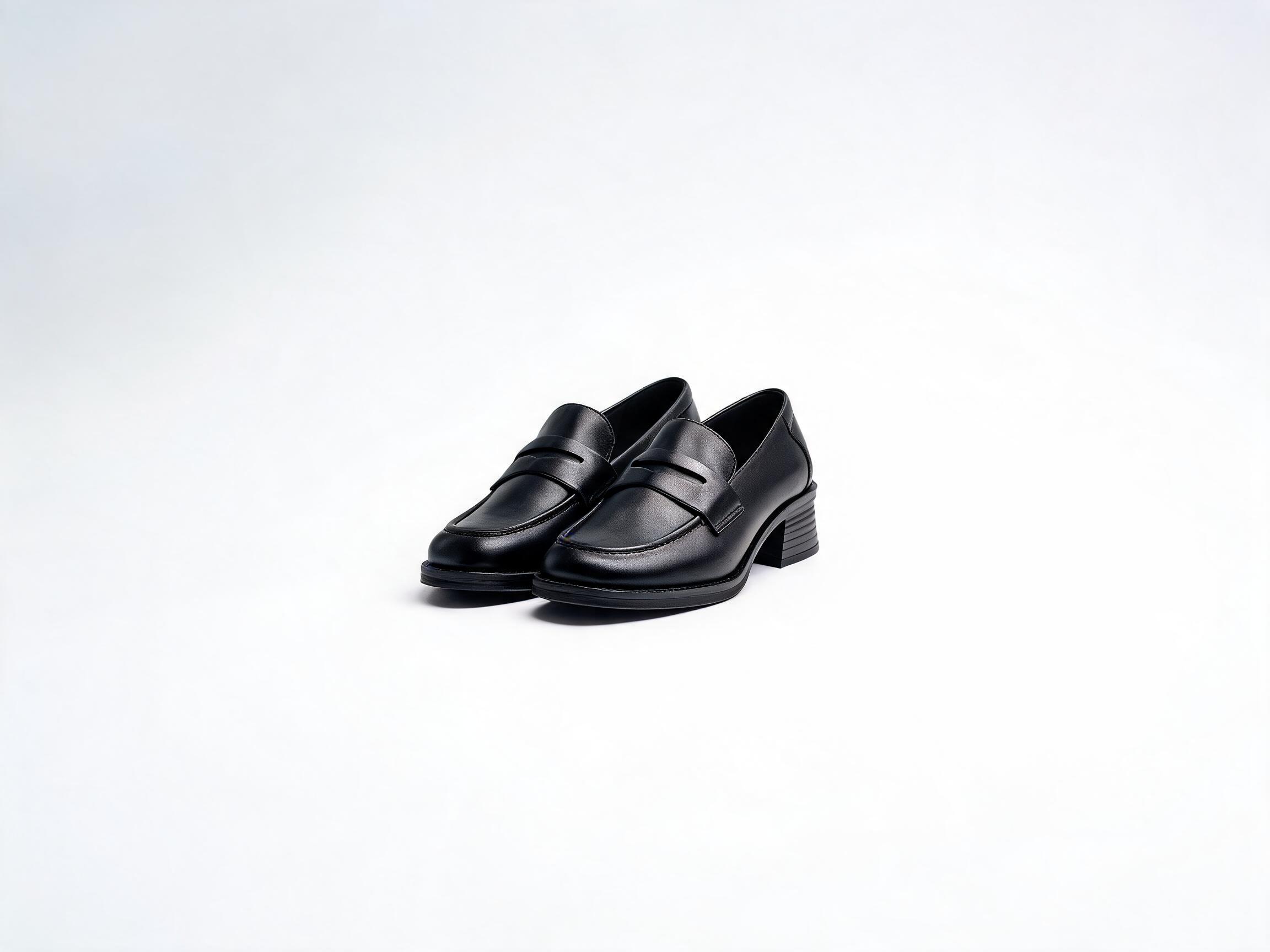
It helps to see the finished standard before you brief a factory. Aurevia's private label programs cover women's, men's and kids' footwear, including leather boots, loafers, sandals, sneakers and heels. A men's dress line might build on a black Chelsea boot in polished leather with a leather lining and a 3 cm block heel. A women's line might start from black leather loafers with a cushioned footbed, or a seasonal style such as black leather knee-high boots with a 6 cm block heel.
These programs run on a minimum order quantity of 300 pairs per model, with bulk production of approximately 30–45 days after sample approval and a 6-month quality warranty covering manufacturing defects. Half sizes and width options can be arranged on request for bulk orders.
Frequently Asked Questions
What should I prepare before requesting a private label shoe sample?
Prepare your target landed cost, a written specification sheet, your size range, logo and label artwork, packaging requirements and any market-specific labelling needs. These inputs let the factory quote and sample accurately.
How many sample rounds should I budget for?
Plan for at least two: an initial development sample and a revised sample after your feedback, followed by a pre-production sample built from the approved materials.
What is the minimum order quantity for private label footwear?
Aurevia's private label programs use a minimum order quantity of 300 pairs per model, with half sizes and width options arranged on request for bulk orders.
Can the factory handle our own branding and packaging?
Yes. Aurevia supports OEM and ODM programs with an in-house design and engineering team, including full private label support for logos, packaging and size grading.
Start Your Private Label Program
Send your target market, size range, quantities and branding requirements. Our team will confirm the specifications that apply to your order and outline a sampling plan.
Request product details