
A specification guide for B2B buyers sourcing leather shoe uppers, covering leather type and thickness, cutting direction and panel layout, stitching standards, colour and batch control, and what belongs in the spec sheet.
The Upper Is Where Most Quality Complaints Start
The upper is the part of the shoe the buyer sees, touches and judges. It is also where most sourcing disputes begin, because "leather upper" is not a specification. It is a category. Two suppliers can both quote a leather upper and deliver products that differ in thickness, grain, stretch, colour consistency and stitching quality.
This guide covers what to specify when you source leather shoe uppers, so the factory builds to your standard rather than to its own default.
Specify the Leather Type and Thickness
Start with the leather itself. The type sets the look and wear behaviour, and the thickness affects how the upper holds its shape and how it stitches.
| Specification | Why it matters |
|---|---|
| Leather type | Full-grain keeps the natural surface and ages with character; corrected grain and split leathers cost less and finish differently |
| Thickness | Thicker leather holds structure in dress shoes and boots; thinner leather suits softer, more flexible silhouettes |
| Grain and finish | Smooth polished grain, suede or nubuck each change the visual result and the finishing steps |
| Colour reference | A named colour is not enough; agree a physical reference the factory can match against |
Put the type, thickness and colour reference in the spec sheet, not in a conversation. A written specification is what makes a quotation comparable and a bulk order checkable.
Define Cutting Direction and Panel Layout
Leather has a direction and a stretch. How the panels are laid out on the hide affects how the finished shoe behaves: a vamp cut against the natural stretch can sag or distort in wear, while a panel cut with it holds its shape.
Ask the factory to confirm the cutting direction for the main panels and how the pattern is nested to control waste. This is also where cutting yield is decided, and yield is a real cost line. A layout that saves leather but compromises the vamp is not a saving.
Set the Stitching Standard
Stitching is the most visible sign of build quality on an upper, and it is easy to specify precisely. Define:
- Stitch density, so seams look consistent across the run
- Alignment along the topline, the seam and any decorative perforation
- Thread type and colour, matched to the leather or deliberately contrasted
- Acceptable deviation, so a disagreement becomes a measurement rather than an opinion
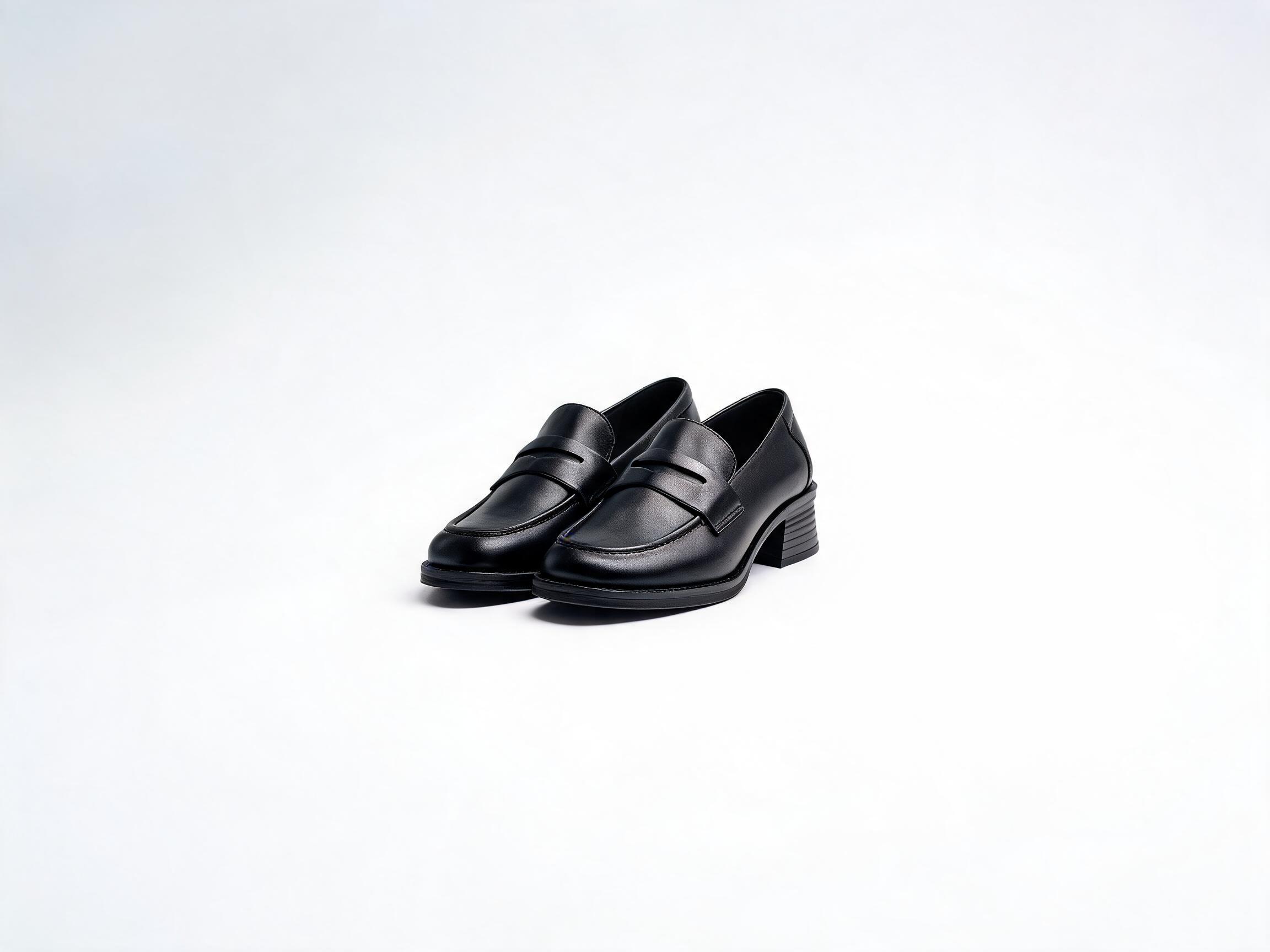
Decorative detailing is part of the upper specification too. A dark brown full brogue carries perforation across the toe cap and quarters, which adds both a design requirement and a stitching-accuracy requirement. A cleaner upper such as a black leather loafer puts more weight on grain consistency and edge finishing.
Control Colour and Batch Consistency
Leather is a natural material, and shade can vary between hides and between batches of the same grade. For a production run, that variation has to be managed rather than discovered.
Ask how the factory matches shade across the run, whether the leather for your order is reserved as a single lot, and what happens if that lot runs short. A supplier that buys leather per batch without reserving your lot can deliver uppers that are individually correct but visibly different from each other on the shelf.
Match the Upper to the Silhouette
The same upper specification behaves differently across silhouettes, so specify against the model you are actually building. A structured boot such as a black Chelsea boot needs an upper that holds its shape around the elastic gores. A softer slip-on such as a cognac leather mule depends more on edge finishing and a clean top line. A warm-weather style such as black leather casual sandals shifts the requirement to strap edges and buckle attachment.
Reviewing real models against your own range shows you how a factory handles the specific upper risks your product carries.
What to Put in the Upper Spec Sheet
A complete upper specification lets a factory quote accurately and lets you check the bulk order against something concrete. Include:
- Leather type, thickness and colour reference
- Panel layout and cutting direction for the main components
- Stitch density, thread type and alignment requirements
- Lining material and how it is attached
- Size range the upper must be graded across
- Acceptable tolerances for colour, stitching and surface defects
For reference, Aurevia's leather footwear programs run on a minimum order quantity of 300 pairs per model, with bulk production lead time of approximately 30–45 days after sample approval. Half sizes and width options can be arranged on request for bulk orders. Bulk orders are checked at the material, construction and finished-shoe stages before shipment, with the inspection scope and acceptance criteria agreed with the buyer for the order.
Frequently Asked Questions
What should a leather shoe upper specification include?
Leather type, thickness and colour reference, panel layout and cutting direction, stitch density and thread type, lining material, the size range to be graded, and acceptable tolerances for colour, stitching and surface defects.
Why does leather thickness matter for shoe uppers?
Thicker leather holds structure in dress shoes and boots, while thinner leather suits softer, more flexible silhouettes. Thickness also affects how the upper stitches and how it holds its shape in wear.
What is a typical minimum order quantity for leather footwear?
It varies by factory and model. Aurevia's leather footwear programs use a minimum order quantity of 300 pairs per model, with half sizes and width options arranged on request for bulk orders.
How long does bulk production take after sampling?
At Aurevia, bulk production runs approximately 30–45 days after sample approval, with EXW, FOB and CIF terms available for shipments to Europe, North America and the Middle East.
Request an Upper Specification Review
Share your target market, the silhouette you are developing, your leather preference and your expected order volume. Our team will confirm the specifications that apply to your order and outline a sampling plan.
Request product details