A category-level sourcing guide for wholesalers and retail brands replenishing the black wedge sandal colorway. Covers wedge and platform material options — cork, wood-look EVA, jute-wrapped, leather straps — comfort and stability considerations, and the private-label production flow with a China-based OEM/ODM manufacturer.
Black wedge sandals are a colorway category, not a single shoe. Wholesalers and retail brands that reorder this style repeatedly need a supplier who can hold a construction across seasons — the same wedge height, the same strap width, the same finish — while swapping in new seasons' private-label branding. This guide covers the material choices buyers can specify, the comfort and stability points that decide whether a wedge sells through, and how the private-label production flow runs from sketch to bulk.
What this guide covers
- Wedge and platform materials — cork, wood-look EVA, jute-wrapped platforms — as options you specify or confirm with the factory, not fixed specs.
- Leather strap construction — sourcing and inspection stages that matter for the upper.
- Comfort and stability — the wedge geometry questions that get asked in returns.
- Private-label flow — how a buyer's sketch or reference becomes a production-ready sample and a bulk run.
Why the black colorway deserves its own sourcing conversation
The keyword black wedge sandals draws roughly 12,100 monthly searches — a volume that reflects a steady, replenishable category rather than a trend spike. Buyers searching it are usually not shopping for a one-off style. They are refilling a slot that already sells: a black wedge that moves in spring and summer, pairs with almost anything, and does not date the way a printed or brightly colored wedge does.
That changes what a supplier needs to deliver. When a buyer is chasing a trend, the priority is speed and novelty. When a buyer is replenishing a proven black colorway, the priority is consistency: the same last, the same wedge density, the same strap width and finish, batch after batch. A supplier who can hold that consistency across private-label runs is worth more to this buyer than one who can produce a single flashy sample.
Wedge and platform materials: what buyers can specify
The wedge is the part of the sandal that buyers most often want to differentiate — it sets the visual character and much of the weight and feel. The materials below are standard manufacturing options in this category. Treat them as a menu to discuss with the factory, and confirm the exact construction, finish and tolerances for your order.
| Wedge material | Typical character | What to confirm with the factory |
|---|---|---|
| Cork | Natural grain, lightweight, warm matte appearance | Grain grade, density, whether the cork is a solid block or a composite layer, and edge finishing |
| Wood-look EVA | Consistent shape and color, lighter weight, easier to mold to a specific wedge profile | Density and hardness grade, surface texture, and whether it is painted or molded in the final color |
| Jute-wrapped platform | Textured, natural look, common in espadrille-influenced wedges | Wrap direction and tightness, glue method, and how the wrap is sealed at the heel and toe |
| Leather-strap upper | Clean finish, adjustable fit, suitable for private-label branding | Leather thickness, strap width, edge treatment, and buckle or elastic closure type |
These are category material options. Confirm the exact specification for your order with the factory — a sample is the reliable way to lock a construction.
Cork vs. moldable platforms
Cork and wood-look EVA are the two most common directions for a black wedge, and they solve different problems. Cork gives a natural, slightly textured surface that reads as quality in a black sandal, and it keeps the wedge relatively light. Moldable material such as EVA gives the factory more control over the wedge curve and the repeatability of that curve from one pair to the next, which matters when you are replenishing a colorway over several seasons.
The question to settle before sampling is whether your positioning rewards natural grain or repeatable shape. A cork wedge put on a shelf next to a molded wedge looks different, wears differently, and photographs differently. Ask the factory for samples of both directions before committing a bulk run.
Jute-wrapped platforms
A jute-wrapped platform brings a woven texture into the black colorway. The construction detail that usually decides quality is the wrap: how tightly the jute is wound, whether the wrap direction stays consistent, and how the ends are sealed at the heel and toe. A loose or inconsistent wrap is one of the first things to inspect on a sample, because it tends to worsen with wear rather than settle down.
Leather straps and upper construction
The upper is where private-label buyers usually have the most freedom. A black wedge sandal commonly uses leather straps — sometimes a single wide band, sometimes two or three narrower straps with a buckle or elastic closure. Leather sourcing is a multi-stage process: hide selection, thickness grading, color matching against a reference swatch, and inspection for surface defects before cutting.
For buyers, the practical questions are:
- Strap width and count. Wider straps cover more of the foot and read more substantial; narrower straps look lighter. This affects the entire visual balance of the shoe.
- Edge treatment. Raw, painted or folded edges each give a different finish. Confirm which one your sample uses and hold it across the run.
- Closure type. Buckle, elastic gore or slip-on. This is a sizing and fit decision as much as a design one.
- Color matching. Black sounds simple, but leather dye lots vary. Ask how the factory matches strap color to your reference and how that is checked at inspection.
Genuine leather sourcing with multi-stage inspection is the part of the process a buyer cannot easily verify from a photograph. The reliable way to judge it is to review samples from at least two production periods and compare grain, color and thickness.
Comfort and stability: the questions that become returns
A wedge looks simple. The reasons it gets returned are usually mechanical, not aesthetic. Buyers who understand these points can brief the factory before sampling rather than after a bulk run.
- Wedge height and pitch. How steeply the wedge rises from toe to heel affects how the foot sits. A softer pitch is generally easier to walk in; a steeper pitch changes posture and the visual line of the leg. Confirm the pitch against your target customer, not just against a competitor's product.
- Weight distribution. Cork, EVA and jute-wrapped wedges carry weight differently. A heavy wedge on a thin strap can feel unstable. Ask about the wedge material's density and the total pair weight of a sample.
- Strap-to-footbed fit. If the strap is too loose, the foot slides; too tight and it cuts in. This is where strap width, closure type and last shape interact.
- Footbed surface. Whether the footbed is leather-lined, synthetic or bare is a comfort and durability decision, and it also affects how the black interior wears against the foot.
- Heel and toe contact. Check how the wedge meets the ground at the heel and how the toe tip is finished. These small points show up quickly in returns data.
None of these can be settled from a specification sheet alone. They are reasons to request a wear sample — ideally in the target customer's size range — before approving a private-label run.
Private-label production flow: from sketch to bulk
For a black wedge sandal private-label program, the flow typically runs through several stages. The stages below describe how an OEM/ODM manufacturer such as Aurevia Footwear Co., Ltd. approaches this work; exact timing and terms are set per project.
- Brief and reference. The buyer provides sketches, reference shoes, photographs or a tech pack. The clearer the reference — including wedge height, strap dimensions and branding placement — the faster the sample aligns.
- Material selection. The buyer and factory agree on wedge material (cork, wood-look EVA, jute-wrapped), upper material and lining. This is where a cork-versus-molded decision gets made, often by comparing physical swatches.
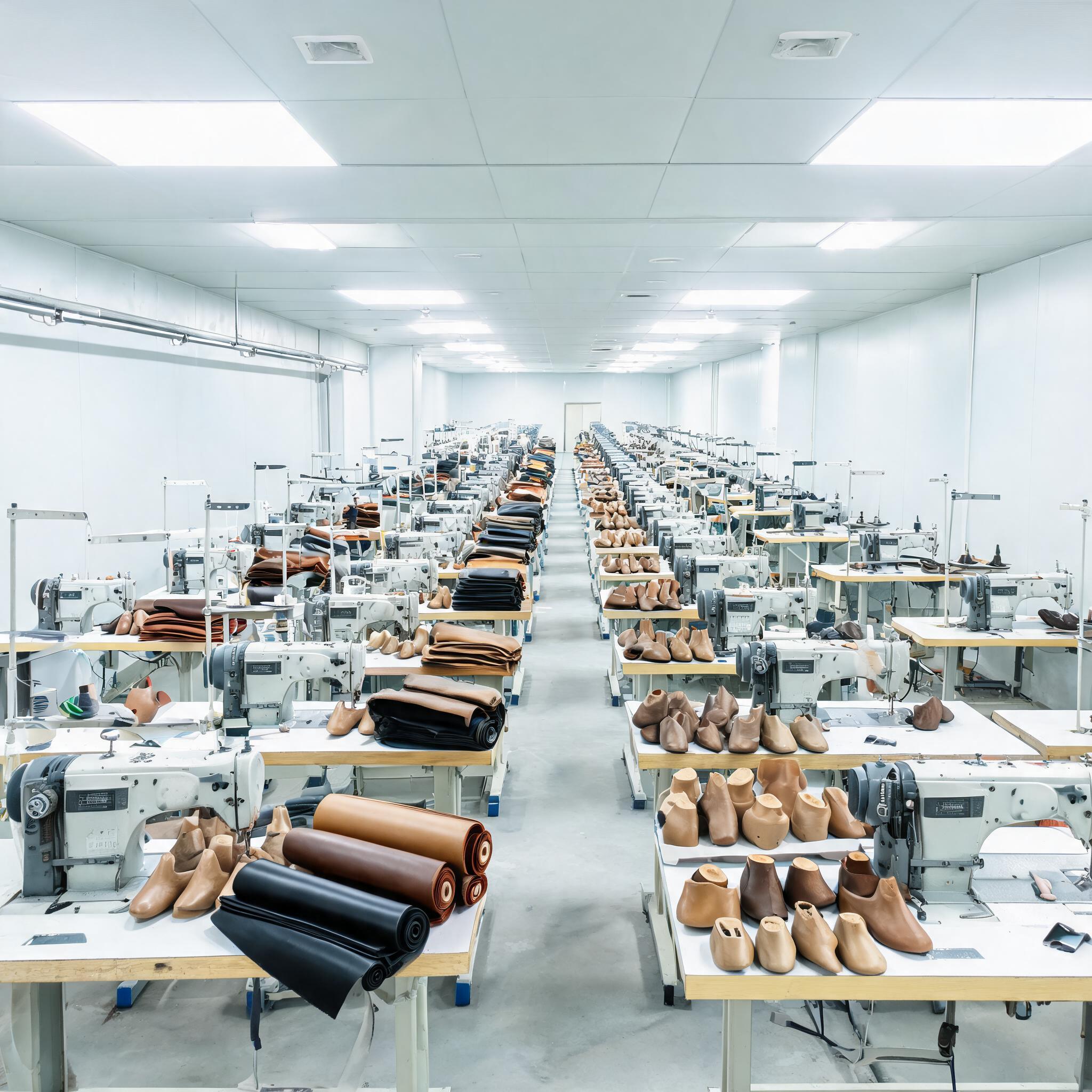
- Pattern and sample development. In-house pattern teams turn the brief into a production-ready sample. The sample is the point where design intent becomes a physical object you can fit and wear.
- Sample review and revision. The buyer assesses fit, wedge pitch, strap width, branding placement and finish. Revisions are made before any bulk cutting begins.
- Bulk production. An organized workshop runs cutting, stitching and lasting lines in sequence. Private-label branding — logos, labels, packaging — is applied at the appropriate stage rather than added at the end.
- Inspection. Every bulk order passes material inspection, construction inspection and finished-shoe inspection. This three-stage check is where a black colorway program protects its consistency across batches.
Aurevia Footwear Co., Ltd. is a B2B footwear and fashion accessories manufacturer and exporter founded in 2011, based in Quanzhou, China, with a 260-person team, exporting to Europe, North America and the Middle East. Its in-house design and pattern teams work directly from buyer sketches and references, which shortens the path from brief to sample.
FAQ for black wedge sandal buyers
Can I order black wedge sandals under my own label?
Yes — private-label production is standard in this category. Buyers typically supply sketches, references or tech packs, and the manufacturer develops a sample with your branding. Confirm logo method, label placement and packaging expectations at the sampling stage.
Which wedge material should I choose — cork or molded?
Choose based on positioning. Cork gives a natural grain and warm matte finish; a moldable material gives more repeatable shape and easier profile control. Request physical samples of both before deciding, because the difference is visual and tactile, not just textual.
Can the wedge height and pitch be customized?
Wedge height and pitch are construction variables. Their availability depends on the factory's tooling and the material chosen. Confirm the specific height and pitch you want during the brief — this is one of the first things a pattern team needs to lock.
How do I check leather quality without visiting the factory?
Request samples from more than one production period and compare grain, color consistency and strap thickness. A multi-stage inspection process will be described by a capable factory; the samples are what you can actually compare.
What should I confirm before placing a bulk order?
The approved sample construction, wedge material and density, strap specification, branding placement, packaging format and the inspection points that matter to your market. Ask the factory what MOQ and lead time apply to your specific order — these are project-specific and should be confirmed directly rather than assumed.
Planning a black wedge sandal program?
Send your sketches, reference shoes or tech pack, and the factory's in-house design and pattern teams will turn them into a production-ready sample. Discuss wedge material options, strap construction and private-label branding for your order.
Quanzhou, China · OEM/ODM footwear and fashion accessories · exporting to Europe, North America and the Middle East