
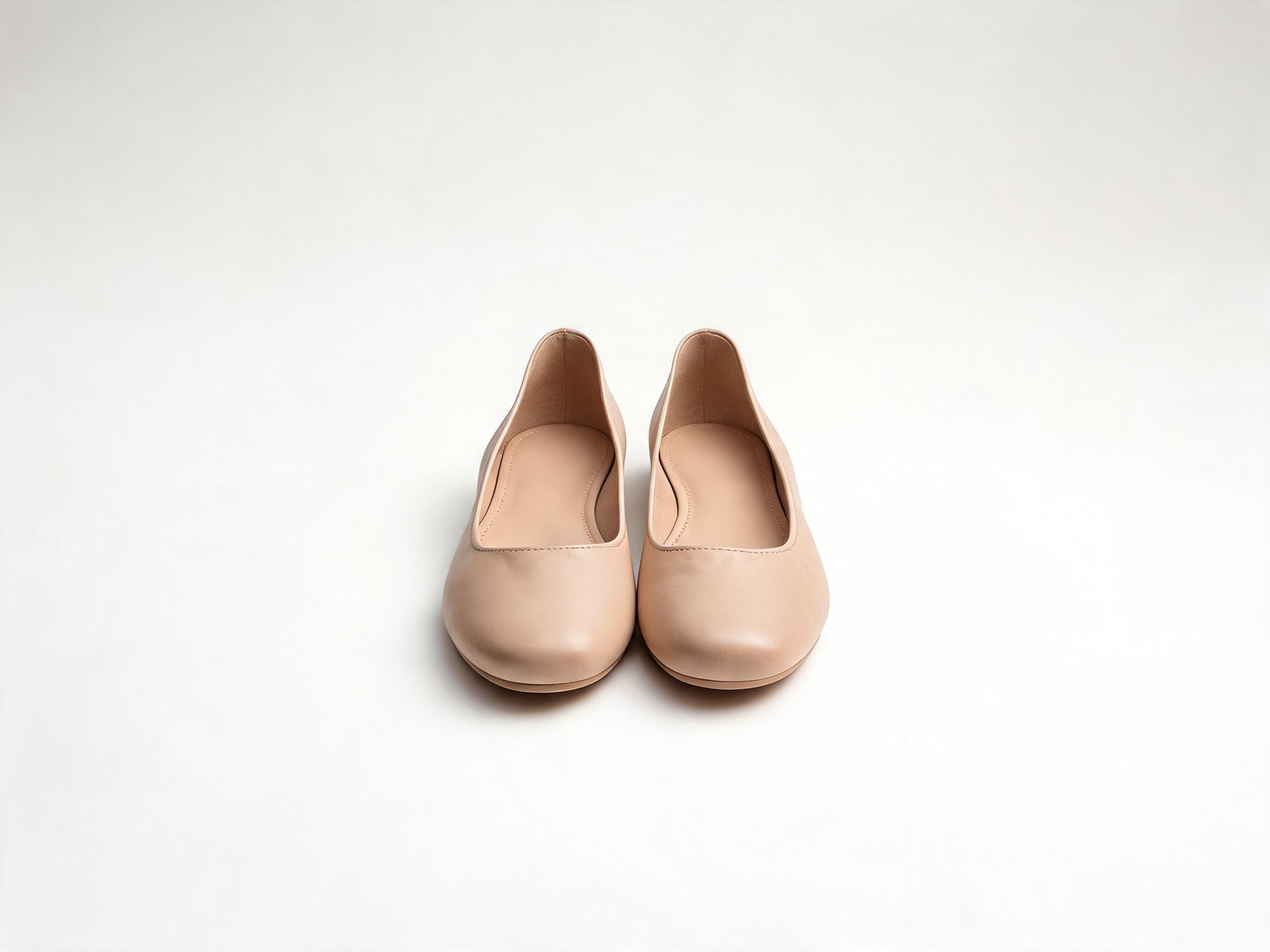
A selection-to-QC guide for retail chains, event suppliers, and private-label brands buying bulk ballet flats. Covers upper, lining, and sole options for volume orders; how to plan size runs for retail shelves versus event and wedding party orders; what to check in bulk QC; and how sampling and customization work with a manufacturer.
B2B Sourcing Guide
Ballet flats sell in predictable volumes but variation comes from the order type. A retail chain reorders the same style season after season and needs dependable size curves from season to season. An event or wedding supplier buys one color in one delivery window and needs small sizes that sell first. Both buyers care about the same three things: what the shoe is made of, how the size run is built, and how the finished batch is checked. This guide covers those decisions from a manufacturer's side of the table.
Why Ballet Flats Suit Bulk Programs
Ballet flats have a simple upper, a flat heel, and few components compared with heeled styles. Repetition is easier to control, and quality issues surface clearly during pressing and finishing. Aurevia Footwear Co., Ltd., a Quanzhou-based manufacturer founded in 2011, runs dedicated flats and slip-on lines for this reason: the last, the stitch pattern, and the topline insertion are stable across production runs, so a size curve repeats reliably.
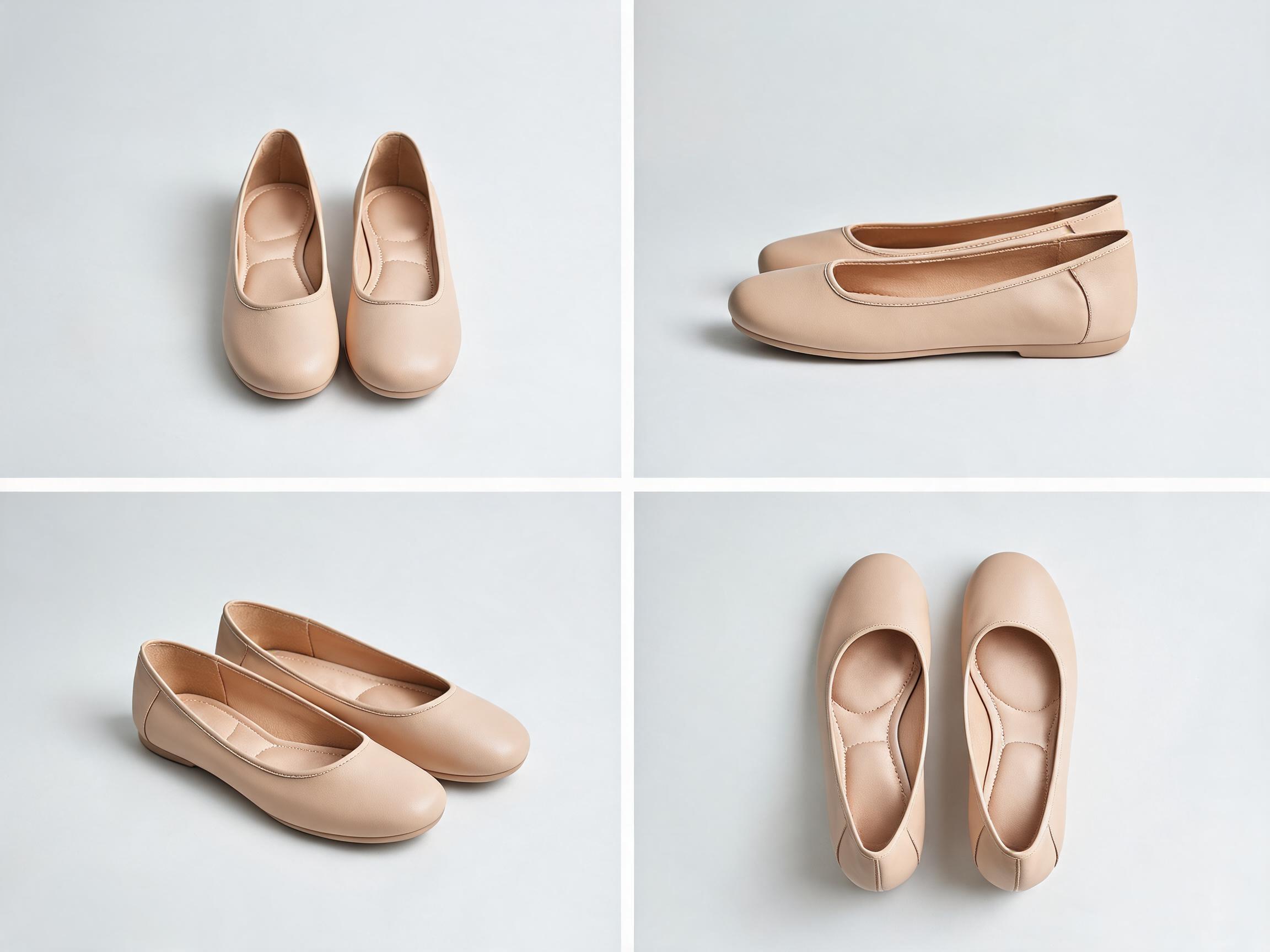
That stability matters for buyers. A retail program can be planned around one core style with seasonal color updates. An event program can be planned around a single stock style in one color, delivered once. The reference style for both is the Nude Leather Ballet Flats, which shows the construction baseline: soft nappa leather upper, elastic topline with reinforced stitching, soft leather lining, a cushioned insole with arch-support contour, a flexible rubber outsole, and cemented construction. Size range is EU 35–41 / US 5–10, with a flat heel of approximately 1 cm. The same size range applies to the pointed-toe and Mary Jane options below.
Three published styles cover most bulk briefs:
- Classic round-toe ballet flat — the volume staple; nude, black, white, or custom color. See the Nude Leather Ballet Flats.
- Pointed-toe flat — for retail buyers who want a dressier silhouette; the White Pointed-Toe Flats use a scuff-resistant white finish.
- Mary Jane flat — an adjustable buckle strap adds a retail differentiator; strap strength testing is part of the build. See the Brown Mary Jane Flats.
Material and Construction Choices for Volume Orders
Material decisions in bulk come down to how the upper, lining, and sole behave across a full production run — not just on a single sample. The following options are the ones buyers ask about most.
| Component | Option | Where it fits |
|---|---|---|
| Upper | Soft nappa leather | Retail and private label; takes color consistently across panels |
| Upper | Nappa with scuff-resistant finish | White or light colorways; high-touch retail floors |
| Lining | Soft leather | Premium feel for retail; pairs with breathable socks |
| Insole | Cushioned with arch-support contour | Both retail and event; supports all-day wear |
| Outsole | Flexible rubber | Grip and forefoot flex; suitable for indoor and light outdoor use |
| Construction | Cemented | Stable shape retention in bulk; standard for flats |
| Topline | Elastic with reinforced stitching | Keeps the shoe on the foot; reduces heel slip in event wear |
Two material points need attention before a bulk order is confirmed. First, when a color is matched to a brand standard, Pantone color matching keeps the shade consistent across panels and across repeat orders. Second, on leather styles, hides are matched left and right for grain direction and shade — this is done at cutting, not after assembly, which is why it belongs in the material brief rather than the finishing brief.
Buyer takeaway: Lock the upper, lining, and sole combination in the sample before bulk. Changing the lining after sampling can change how the upper sits on the last and how the topline behaves.
Planning Size Runs: Retail Shelves vs Event and Wedding Orders
The size curve is where retail and event programs diverge, and getting it wrong shows up as broken sizes at the end of the season.
Retail programs
Retail needs a full run. The size range EU 35–41 / US 5–10 is the practical frame, and a shelf-ready program usually carries the complete run so a customer who finds her size on one visit can find it again. In planning terms:
- Build the initial order around the full EU 35–41 run, then adjust quantity per size based on sell-through from the first delivery.
- Keep color as a second variable — one core color in the full run, then seasonal colors in the sizes that sell fastest.
- Reserve part of the order for reorders before the season closes; repeat runs are easier when the last and upper material are unchanged.
Event and wedding party orders
Event orders are narrower in color and heavier in small sizes. A wedding party usually orders one color in a single delivery, and the sizes requested cluster toward the smaller end of the run rather than spreading evenly across it. Planning guidance:
- Confirm the size list before production, not after. Event buyers usually know the wearers; a confirmed list avoids leftover sizes that cannot be resold.
- Treat a single color as one colorway. Splitting an event order across two shades creates dye-lot risk, so confirm Pantone matching for the full quantity.
- Add a small number of the largest sizes only if the party list calls for them — do not pad the run evenly.
For mixed programs, separate the retail size curve and the event size curve into two order lines even when the style is the same, so each can be graded and packed independently.
Bulk QC Checkpoints
Quality control at the factory level is a process, not a single final look. The production flow runs pattern grading, cutting, stitching, topline insertion, lasting, cementing, pressing, inspection, and packing. Inspection is built into three stages: incoming materials, in-line, and finished shoe. For a bulk ballet flat order, these are the checkpoints a buyer should expect to see documented.
- Matched hides at cutting — left and right panels checked for grain direction and shade before stitching.
- In-line topline check — elastic tension and reinforced stitching reviewed while the upper is still on the line.
- Forefoot flex testing — the finished shoe is flexed at the forefoot to catch stiff or poorly cemented assemblies.
- Color fastness checks — run on random pairs drawn from each batch.
- Sole adhesion checks — run on random pairs from each batch, since cemented construction depends on the bond.
- Finished-shoe inspection — final review of shape, stitching, lining, and insole before packing.
Inspection reports are available on request, and third-party inspection is welcome. For Mary Jane styles, strap strength testing is included because the buckle strap is a functional part, not a trim. A buyer who wants a specific defect classification or AQL level should put that in the purchase order so the inspection is run against the agreed standard.
Sampling and Customization
Sampling is the step that decides whether a bulk order proceeds. Existing samples ship in 3–5 days. Customized samples take 7–12 days after details are confirmed, which means the clock starts when the specification is closed: upper material, lining, sole, color reference, size range, and any logo placement.
Customization available for bulk programs includes:
- Pantone color matching on the upper
- OEM logo on the insole, box, or hangtag
- Private-label packaging arrangement
- OEM/ODM development through the in-house design team
Review the sample as a production reference, not a display piece. Check the topline tension, the flex point at the forefoot, the shade against the approved Pantone, and the logo placement. Once the sample is approved and signed off, bulk production runs against it. Lead time is confirmed per order after sample approval, because it depends on the final quantity, color split, and material availability.
Before you request a quote: have the style, size run, color reference, and logo requirement ready. Those four items let a manufacturer quote against a real specification instead of an estimate.
Next Step
If you are planning a bulk ballet flat order for a retail chain, a private-label range, or an event and wedding program, send the style, size run, color reference, and logo requirement to Aurevia Footwear Co., Ltd. The team can match your brief against the existing nude, white pointed-toe, and brown Mary Jane styles, or develop an OEM/ODM sample from your specification. Sampling and inspection details are confirmed directly with each buyer so the production run matches the approved sample.