
A practical verification guide for importers and wholesalers who want to buy shoes direct from manufacturers. Learn how to separate a real footwear factory from a trading company using business licence checks, video and on-site audits, sample confirmation, quotation behaviour, and communication patterns.
Most buyers who decide to buy shoes direct from manufacturers are not short of factory names. They are short of certainty. A trader can present a factory-style website, a factory-style catalogue and a factory-style quotation, and the first indication that you are not dealing with the producer often arrives only when a shipment goes wrong. The steps below are the checks that reliably separate the two before you commit an order.
Key takeaways
- Verify the legal entity and its registered business scope before discussing price, and cross-check the address against the site you are shown.
- Ask for live video or an in-person visit; a factory can walk you through its own cutting, stitching and lasting lines.
- Confirm samples against a written specification, and ask who physically made them.
- Compare how quotations are built, not just the totals. Factories quote process detail; traders quote finished-goods summaries.
- Read communication patterns: production questions, material substitutions and scheduling changes expose who actually controls the floor.
Step 1: Verify the legal entity and business scope
Start with documents, not with photos. Ask for the company's business licence and check that the registered name matches the name on the quotation, the proforma invoice and the bank account. A mismatch between the contracting entity and the beneficiary account is one of the clearest warning signs in direct sourcing, and it is much easier to resolve before payment than after.
Look at the registered business scope. A footwear manufacturer's licence will list shoe manufacturing or production-related activities. A trading company's licence typically lists sales, import and export, or general merchandise. Neither document alone proves where the shoes are made, but a scope that contains no manufacturing activity means you are dealing with an intermediary, whatever the website suggests.
Checklist for this step:
- The business scope contains manufacturing wording — for example footwear manufacturing, shoe production or leather goods manufacturing — not only trading, import-export or general merchandise.
- The company name is identical on the licence, the quotation header, the proforma invoice and the bank account.
- The registered address matches the production site you are told about, or the difference is explained in writing before you proceed.
If two or more of these items fail, treat the supplier as an intermediary for verification purposes until the gaps are closed.
Then cross-check the registered address against the facility address you are given. If the two differ, ask why and ask for a clear explanation of which site will produce your order. A genuine factory answers this directly because it has nothing to reconcile.
Step 2: Confirm the physical facility with live or on-site evidence
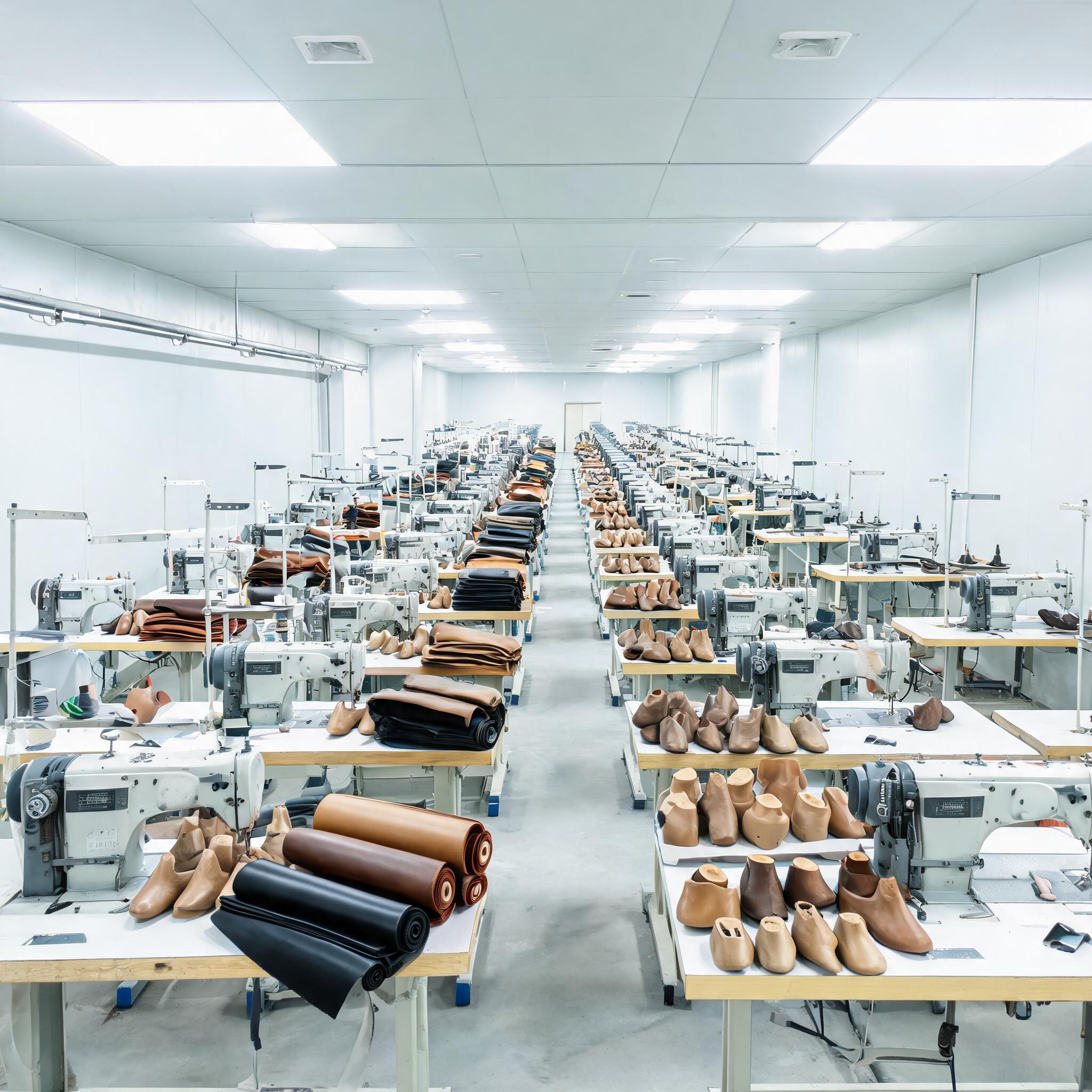
Photographs on their own prove little, because production lines are widely photographed and stock images of cutting tables circulate through the trade. What is harder to fake is a scheduled, unedited video call in which someone walks from the raw material store through cutting, stitching and lasting, and answers questions about what is on the floor that day.
Define the route before the call so the session is comparable across suppliers: raw material store, cutting tables, the stitching line for your product type, lasting and sole attachment, and the finished-goods staging area before packing. Ask for the walk-through to be continuous, note the date and the line references mentioned, and keep those notes for cross-checking later. The person walking you through should be able to explain what each line is running at the time. Questions worth asking during the call:
- Which order is currently on this line, and what stage is it at?
- Where are the uppers being stitched for this style, and who supervises that section?
- Which components are made in-house and which are bought in?
- Where does finished footwear wait before packing, and who inspects it?
An on-site visit, if your volume justifies it, closes most of the remaining doubt. Walk the floor without a prepared route, ask to see the in-line inspection point, and look at whether the facility is working at a normal pace rather than staged for your arrival.
For context on what a manufacturer's own production organisation looks like, Aurevia Footwear Co., Ltd. operates a production base in Quanzhou with organised cutting, stitching and lasting lines for leather footwear, supporting bulk OEM and ODM orders. That is the kind of structure you should be able to see, question and follow during a facility check — and it is a supplier's own description, so ask any candidate factory, Aurevia included, for a live walk-through and recent inspection reports to verify it.
Step 3: Confirm samples against a written specification
Samples are where direct-from-factory buying succeeds or fails quietly. A sample that looks right but was made by a different team, in a different workshop, with substituted material tells you nothing about bulk production.
Before a sample is made, put the specification in writing: upper material and thickness, lining, sole construction, hardware, colour reference, labelling, packing and the size set you expect. Ask the supplier to confirm each line back to you. Vague confirmations in reply to a detailed specification usually mean the details were never checked against a real bill of materials.
When the sample arrives, ask two direct questions: who made it, and on which line will the bulk order run? A factory can name the sampling team and the production line. A trader often cannot, and may answer with a general statement about their partner factory. Ask for the sample to be retained as the reference standard, and confirm that the bulk order will be matched against it.
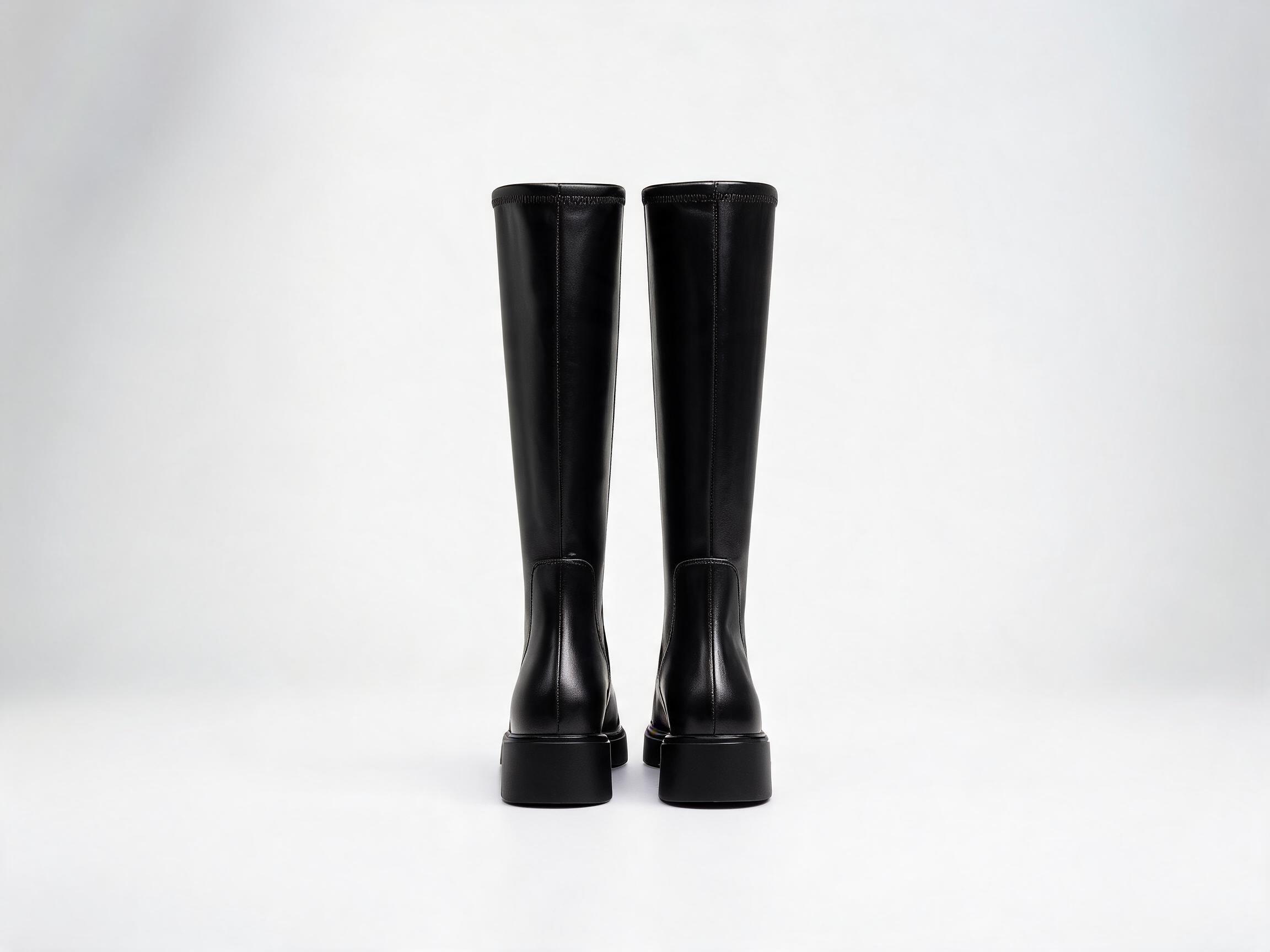
For repeat styles, the sample reference carries more weight than any brochure. Buyers sourcing core boot shapes, such as the women's black leather knee-high boots with a full inside zipper, or the women's brown leather ankle boots with a side zipper, usually re-confirm construction details each season rather than assume continuity. That re-confirmation is a normal part of dealing with a factory that runs many styles.
Step 4: Compare how quotations are built, not just the totals
A price comparison on totals alone hides the most useful evidence. Factories and trading companies structure quotations differently because they understand cost differently, and the quotation document itself tells you which one you are reading.
| Observation | What a genuine factory typically shows | What a trader typically shows |
|---|---|---|
| Cost breakdown | Material, component, labour and process steps separated | Single finished-goods price, or a brief split |
| Material specification | Named upper, lining and sole materials with sources | Generic descriptions or "as per sample" |
| Change response | Explains the cost effect of a material or construction change | Asks the factory and returns a revised total |
| Tooling and development | Describes what is needed and who owns it | Quotes a lump sum without detail |
| Trade terms | States terms it can actually execute, such as EXW, FOB or CIF | Offers terms without explaining the logistics behind them |
What makes a quotation comparable: before you compare totals, require these lines. A quotation missing two or more of them is not comparable, whatever the price.
- Upper, lining and sole materials named by article and thickness, not "as per sample".
- Cost lines separated by stage — materials, components, labour and finishing — rather than one finished-goods figure.
- Tooling, last or mould costs listed separately, with ownership stated in writing.
- Packing specified per carton (pairs per carton, box type, marking).
- The trade term stated with what it includes, so EXW, FOB and CIF quotes are compared on the same basis.
Test this with a small change. Ask what happens to cost and lead time if the lining is upgraded, or if the sole construction changes. A factory answers with the specific effect on material consumption and production time. A trader either repeats the original figure or comes back later with a number that has no explanation attached. You are not looking for the cheapest answer; you are looking for one that reflects real production knowledge.
Step 5: Read communication behaviour for ownership signals
Communication patterns are the cheapest verification tool available, because they cost nothing and cannot be prepared in advance. Over a few weeks of technical discussion, note how the supplier handles these situations:
- Production scheduling questions. A factory can tell you which week your order is planned for and what else is running alongside it. A trader has to ask someone else and often returns with a vague window.
- Material substitution requests. A factory knows which alternatives are workable and which will affect lasting or finishing. A trader tends to agree to whatever you ask and discovers the problem later.
- Quality queries. Ask how defects are recorded and what happens to a rejected lot. A factory describes its inspection stages and shares reports. A trader describes a general quality policy.
- Technical drawings and pattern questions. A manufacturer engages with pattern and construction detail directly; a trader redirects the conversation back to appearance and price.
Inspection practice belongs in this step as well. Ask what is checked at incoming material, during production and before shipment, and whether you can appoint a third-party inspector. A manufacturer with an established three-stage inspection process will answer with specifics and can provide reports on request. Aurevia Footwear runs incoming material, in-line and finished-shoe inspection before shipment, shares inspection reports on request and welcomes third-party inspection — ask for a sample report to see what that answer looks like in practice. If the response is reluctance or a fee structure designed to discourage inspection, treat it as information about the supplier.
Step 6: Use trade fairs and references as a final cross-check
Trade fair presence is useful but easy to misread. Exhibiting means a company invests in export sales; it does not by itself prove who manufactures. Use a fair meeting to ask the same facility questions you would ask by email, and follow up with a scheduled video walk-through afterwards. Companies that exhibit regularly, as Aurevia Footwear does at international footwear trade fairs, are usually comfortable being asked to continue the conversation at the factory.
References work the same way. If a supplier offers a reference, ask that reference about production issues rather than satisfaction in general — how changes were handled, how a quality problem was resolved, whether the factory was reachable during peak season.
Frequently asked questions
Is a trading company always a worse choice?
No. A good trading company can add value in coordination, consolidation and small mixed orders. The problem is only when you believe you are buying from a factory and are not, because you lose visibility of production and the ability to verify quality at source.
Can I verify a factory without travelling to China?
Usually yes, to a reasonable degree. A business licence check, a scheduled live video walk-through, documented sampling and a quotation that shows process detail together give a strong signal. A third-party inspection before shipment adds a physical check on the actual goods.
What is the single strongest signal?
Consistency across independent sources: the legal entity matches the invoice and the bank account, the facility address matches the showroom and the video call, and the technical answers match the sample. Traders can satisfy any one of these; satisfying all of them typically requires an actual factory.
Next step: if you are qualifying a footwear manufacturer for direct sourcing, prepare your specification and size set first, then request a scheduled video walk-through of the production lines and a sample against that specification. Comparing suppliers on the same written brief is what makes the verification results comparable.