
A buying guide for importers, wholesalers and private-label brands: how stiletto, block and ankle-strap heels differ in construction, what a reinforced heel core and heel attachment check actually cover, how to structure a comfort-testing protocol with your supplier, and which supplier capabilities decide whether a heel program holds up from sample to bulk.
Bulk Sourcing Guide
Bulk high heels fail in the field for predictable reasons: a heel that separates from the seat, a footbed that compresses after a few weeks, or a strap that moves because the last was built for a different buckle position. None of those problems show up in a photo. They show up in construction choices, in a comfort-testing protocol agreed before sampling, and in how consistently a supplier reproduces the approved sample. This guide covers all three, from the perspective of importers, wholesalers and private-label brands placing volume orders.
What decides a heel order
- Construction: stiletto, block and ankle-strap heels differ in stability, tooling and fit, not just silhouette.
- Testing: forefoot flex, heel attachment and anti-slip checks are run to a protocol you agree with the supplier.
- Supplier: dedicated heel lines, matched hides, sample-to-bulk consistency and inspection evidence matter more than catalogue range.
Heel Types and What Changes in Construction
Heel height and shape determine how load travels through the shoe. That single fact drives tooling, sole design and fit, so it is the first thing to fix before quoting.
Stiletto
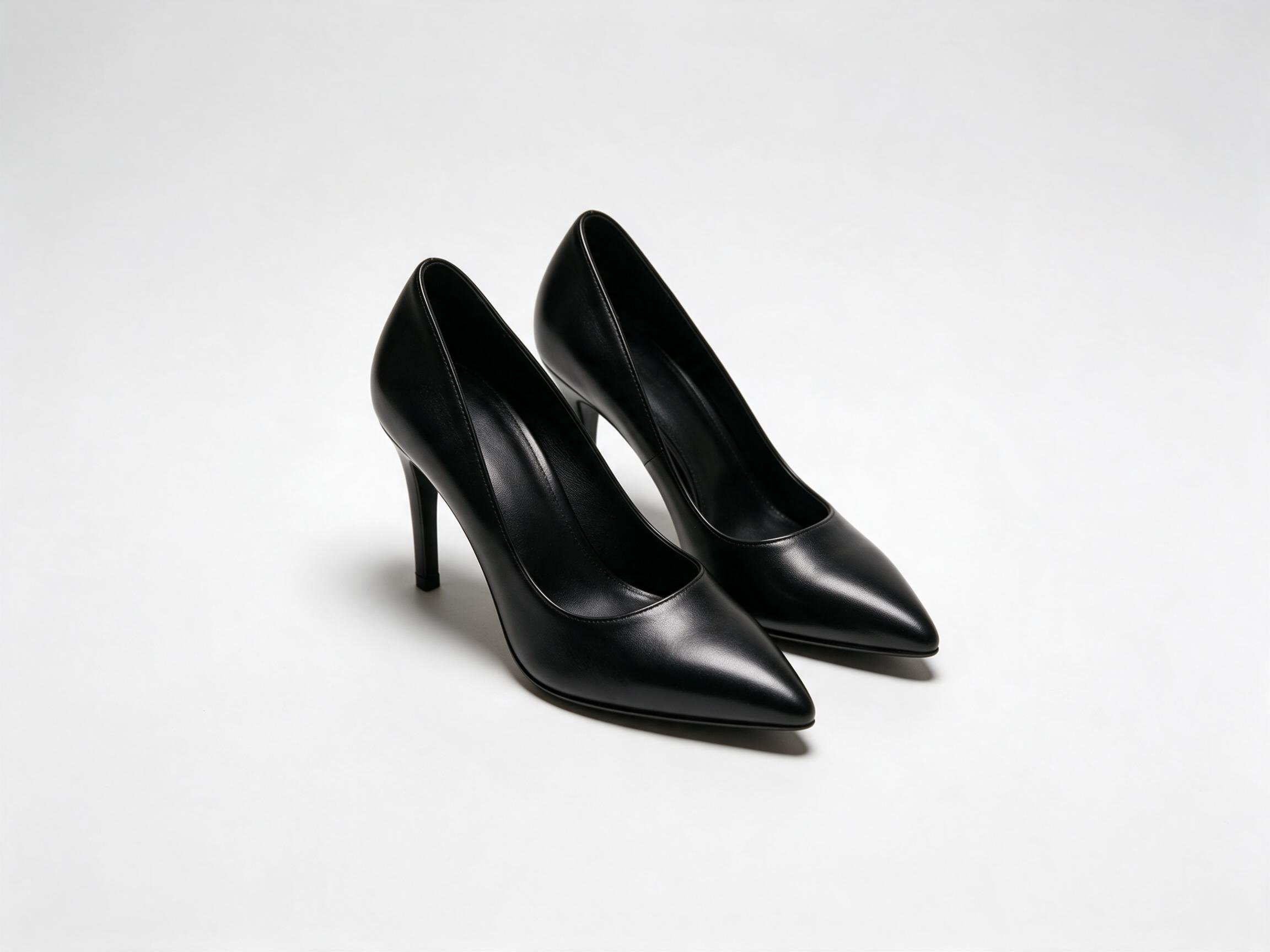
A stiletto concentrates body weight on a narrow base, so the heel needs a reinforced core running through it and a seat that holds that core firmly to the insole. A published example from our range is the Black Leather Stiletto Heels: roughly 10 cm stiletto heel with a reinforced core, pointed toe, polished kid leather upper, padded insole and rubber anti-slip outsole. Heel attachment checks and forefoot flex tests are part of its inspection routine, in EU 34-41 / US 4-10 across black, nude, red and custom colours.
Block heel
A block heel spreads the load over a wider footprint, which changes the tooling: the heel is a moulded or built component rather than a slender post, and the sole is shaped to match its base. Stability at standing height improves, and the foot sits closer to level, which usually means less forefoot pressure. See the Nude Block-Heel Shoes at roughly 5 cm with a reinforced core, rounded toe and all-day comfort positioning, also EU 34-41.
Ankle strap
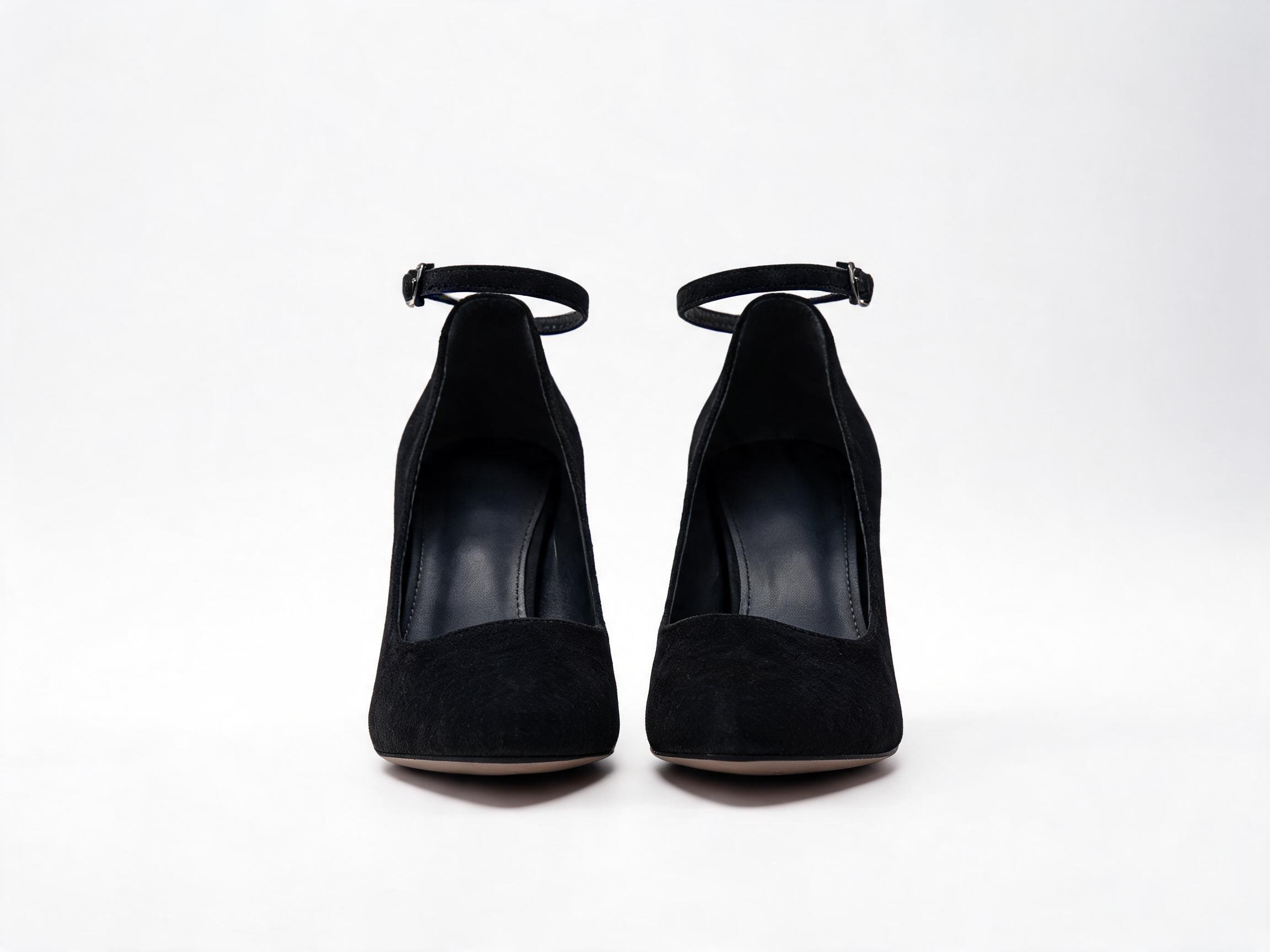
An ankle strap is a retention feature rather than a load-bearing one. It keeps the foot seated during walking, which lets buyers use a slightly higher heel than the same last without a strap. The construction cost moves to the buckle and strap: strap strength testing is part of inspection, because a buckle that pulls free ends the wear life of the shoe. The Black Suede Ankle-Strap Heels use a roughly 8.5 cm heel, adjustable ankle buckle strap and premium kid suede in EU 34-41.
Fit implications across all three
Heel height changes the angle of the foot inside the shoe, so the same nominal size does not fit the same way across a stiletto and a block heel. If you order several heel heights in one programme, expect to approve separate fit comments per height rather than one size curve for the whole range. Heel height changes are possible per buyer specification, which is useful for private label, but each height change should re-trigger a fit review.
| Heel type | Load path | Tooling / construction focus | Fit implications |
|---|---|---|---|
| Stiletto (approx. 9-10 cm) | Concentrated on a narrow base | Reinforced heel core, firm heel seat, anti-slip outsole | Higher forefoot angle; fit comments per height |
| Block heel (approx. 5 cm) | Spread across a wider footprint | Moulded or built heel matched to sole shape | Flatter foot position; easier all-day wear |
| Ankle strap (approx. 8.5 cm) | Heel carries load, strap adds retention | Strap and buckle strength, adjustable fit | Foot stays seated while walking; strap tension varies by wearer |
Decorative finishes add a separate check. Metallic finishes, for instance, are checked for colour fastness rather than structural strength; the Gold Metallic Evening Heels pair a roughly 9 cm stiletto with metallic-finish leather and colour-fastness checks. If your line mixes suede, smooth leather and metallic finishes, ask how each surface is matched, because Pantone matching behaves differently on each.
What a Reinforced Core and Heel Attachment Actually Cover
"Reinforced core" and "heel attachment" are the two phrases buyers see most often and can verify least often. In practice they describe a chain of operations, not a single component.
- Reinforced core: a stiffening element runs inside the heel so it resists bending under load. The material and method vary by heel shape and height; what matters at buying stage is whether the supplier can describe the core they use for the height you have specified and whether that specification is fixed once the sample is approved.
- Heel attachment: the heel is fixed to the insole and sole through a seating process. Heel attachment checks are run during final inspection to confirm the heel is properly seated and has not loosened during handling.
- Stability testing: the assembled shoe is assessed for how the heel behaves under load, rather than inspecting the heel in isolation.
- Forefoot flex: the front of the shoe flexes with the walking motion. A sole that is too stiff or too soft changes the feel of the whole shoe, and forefoot flex tests are included alongside heel attachment checks on stiletto styles in our programme.
This is where supplier documentation matters. At a minimum, ask which checks are run, at what stage, and whether results are recorded per order. Our own programme runs three-stage inspection and welcomes third-party inspection, which lets a buyer verify heel seating and flex behaviour independently rather than relying on a written statement.
A Comfort-Testing Approach You Can Request
Comfort is not a feeling you can audit, but it can be broken into checks that buyers and suppliers can agree on and repeat. The point of writing these into the sample approval is to make bulk shoes comparable to the approved sample rather than to a verbal description.
Fit trials
Wear the sample on both feet, in the intended size, and record where pressure falls: toes, ball of the foot, heel seat, strap edge. Ask for the size range EU 34-41 / US 4-10 to be evaluated at the ends as well as the middle, since fit comments from a single size rarely predict the full curve. If you plan private-label packaging or a specific size distribution, state it before sampling so the trial reflects your actual order.
Forefoot flex
Ask the supplier to demonstrate how the forefoot flexes under hand pressure and how that behaviour is checked on the line. Note whether the sole returns to shape. If your market expects a softer or firmer walking feel, say so at specification stage, because it is a design input rather than an inspection fix.
Heel attachment and stability
Request that heel attachment be checked on finished pairs and that the supplier describes what they look for. For stiletto orders, ask that this check be part of the final inspection record so a batch can be reviewed later. Where a buyer wants independent confirmation, third-party inspection is the practical route, and it should be arranged before shipment rather than after arrival.
Anti-slip outsole
Rubber anti-slip outsoles are specified on styles where floor grip matters, including the Black Leather Stiletto Heels. Confirm the outsole material at sampling stage and check that the tread pattern has not changed in bulk. Outsole changes are easy to miss visually but obvious on a smooth floor.
One practical caution: do not convert these checks into invented pass numbers. The useful output is a written protocol, a record of what was checked, and a sample you have physically worn and approved. Numbers that are not measured at the factory or by a third party create disputes rather than prevent them.
Supplier Evaluation Criteria for Heel Programmes
Heels are less forgiving than flat footwear. A supplier who handles pumps and boots well may still struggle with a 10 cm stiletto if the heel line is not set up for it.
- Dedicated heel lines. Ask whether women's heels run on dedicated lines with their own tooling and operators, or share capacity with other constructions. Aurevia Footwear Co., Ltd. runs dedicated women's heel lines in Quanzhou, China, where the company was founded in 2011 and employs 260 staff.
- Matched hides and materials. Suede, smooth leather and metallic finishes are matched separately. Confirm the supplier offers Pantone colour matching, including on suede and metallic surfaces, and ask to see matching on the actual material you plan to order.
- Sample-to-bulk consistency. The most common complaint in heel programmes is a bulk shoe that is subtly different from the approved sample: core stiffness, strap tension, heel pitch. Ask how the approved sample is held as a reference and what happens on the line when a component changes.
- Inspection reports. Request a documented inspection routine per order. Our programme uses three-stage inspection and heel attachment checks in final inspection, with results available to the buyer.
- Third-party inspection welcome. A supplier who resists independent inspection is telling you something. Ask early, agree who arranges it and at what stage, and budget the time into the schedule.
- In-house design and development. OEM/ODM capability matters when your colourway, height or toe shape is not in the catalogue. Aurevia has an in-house design team and exports to Europe, North America and the Middle East.
Run the evaluation against your own order rather than the catalogue: ask for the heel height, size range and finish you intend to buy, and judge the answers on those specifics.
Sampling, Customisation and What to Fix Before Bulk
Heel programmes are usually decided at sample stage. Existing samples ship in 3-5 days; customised samples take 7-12 days, which makes the sampling round the point where construction and comfort questions should be closed.
Customisation options in the heel programme include heel height changes per buyer specification, colour matching against Pantone references, and upper material selection across leather, kid suede and metallic finishes. Because each height change affects fit and tooling, plan one approval round per height rather than assuming a single approval covers the range.
Before releasing bulk, confirm in writing: agreed heel height and shape, core specification, strap and buckle details where applicable, outsole material and tread, colour references, size range (EU 34-41 / US 4-10), the comfort-testing protocol, and the inspection arrangement including any third-party inspection. How long production then takes is confirmed per order, since it depends on volume, materials and finishing.
Next Step
If you are comparing suppliers for a bulk high heels programme, the fastest way to a useful quotation is to send the heel height, heel type, upper material, colour reference, size range and target market, plus any comfort or inspection requirements you want written into the order. Samples can be arranged for review before commitment, and specifications can be adjusted against your feedback. Share your requirement with Aurevia Footwear Co., Ltd. and we will come back with construction options, sampling timing and a documented inspection plan.