A buyer's guide to sourcing dress shoes for retail or private label: how last shape changes fit and silhouette, why oxford vs derby lacing is the structural fork in a range, and how an existing ODM style library shortens development before you commit to a production run.
If you are sourcing dress shoes to stock or to sell under your own label, three decisions frame the whole program: the last the shoe is built on, the lacing structure, and whether you develop a new pattern or start from a proven one. Get those in order first and most specification questions answer themselves.
Key takeaways
- The last sets fit and silhouette; two shoes with the same upper pattern can fit differently if the last changes.
- Closed lacing (oxford) and open lacing (derby) are structural, not decorative — the choice should match the formality level of the range and the foot shapes you plan to serve.
- An ODM style library gives you a physical reference point for fit and finish before you commit to tooling and a full run.
- Aurevia Footwear Co., Ltd. lists both a black cap-toe oxford and a brown derby in EU 39-45, each at MOQ 100 pairs and a 30-40 day lead time — confirm current MOQ and lead time with the sales team before ordering.
On this page
What a last actually is, and why it matters first
A last is the foot-shaped form a shoe is built over. It determines the internal volume of the shoe, the toe shape you see from the side and from above, the heel fit, and how the upper sits across the instep. When buyers talk about a dress shoe feeling "narrow" or "roomy" at the same marked size, they are almost always describing a difference in the last rather than a different size.
For a sourcing program, that has a practical consequence: last shape is the least negotiable part of a range once patterns, materials and quality checks are built around it. Changing the last after sampling usually reopens the pattern, the fitting and the grading, so it is worth settling early.
Three properties of a last are worth describing to a supplier in your brief:
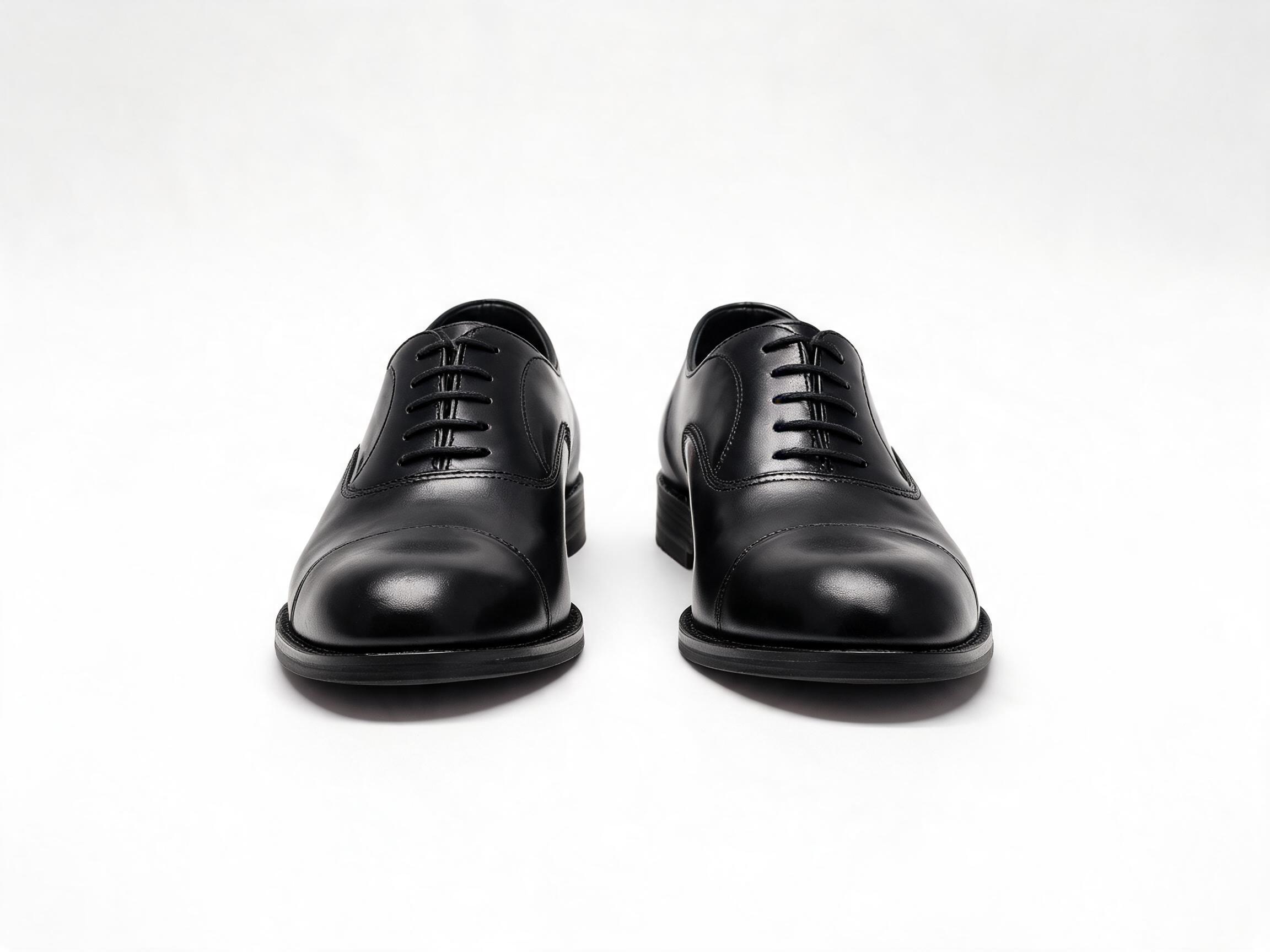
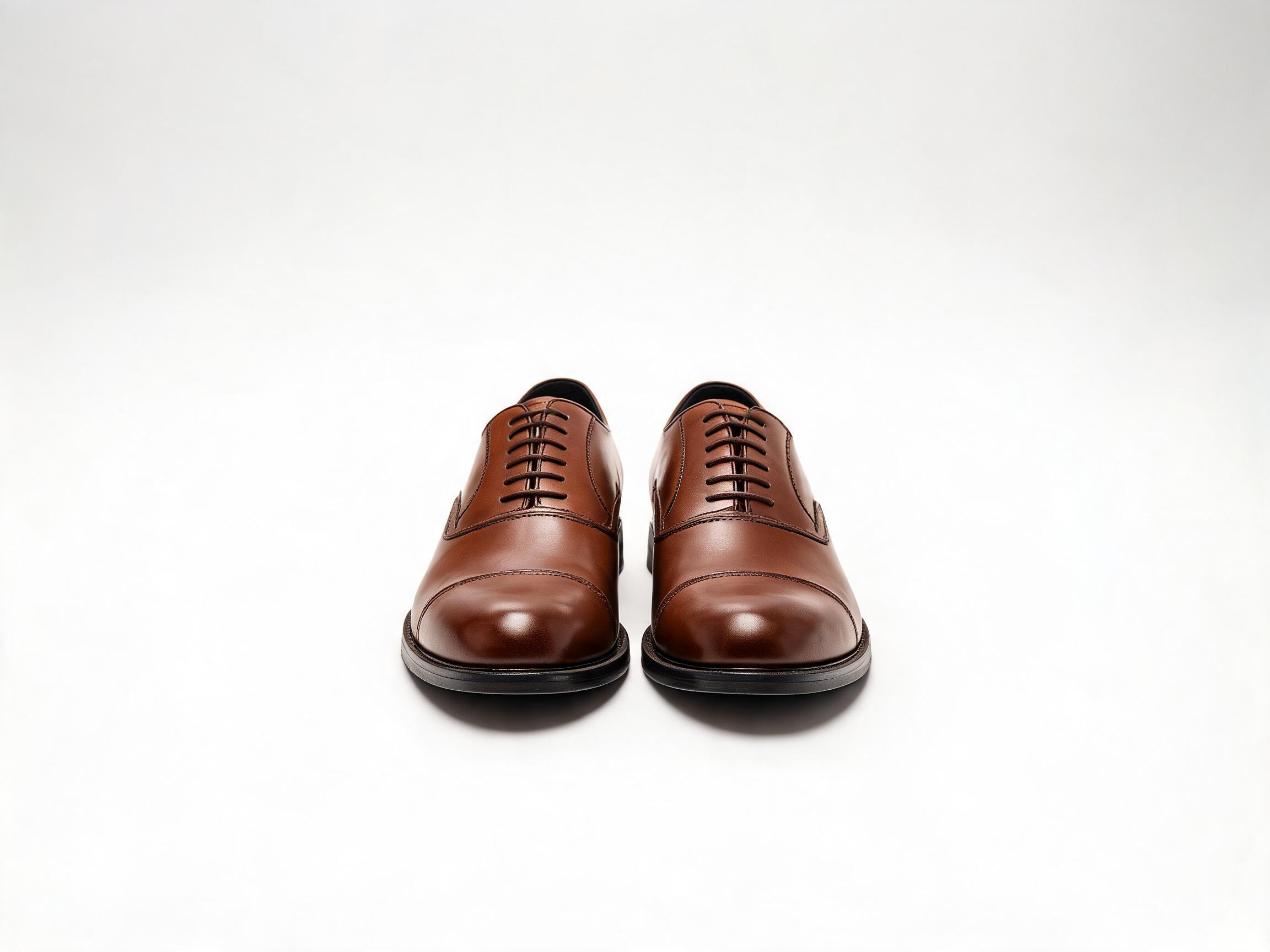
- Toe form. A tapered or elongated toe reads formal; a rounded toe reads slightly less so and generally suits a wider range of wearers. The catalog distinguishes the black oxford by its polished full-grain leather and closed lacing, and the brown derby by its open lacing — the toe shapes shown on both should be read directly from the sample or the product page rather than assumed from the style name.
- Instep height. Affects how the lacing closes and whether the vamp sits flat across the top of the foot. Two people with the same foot length can need different instep volume.
- Width at the ball and heel. The widest part of the foot and the way the heel is held determine whether a shoe feels stable in wear.
Both catalog styles are offered in EU 39-45. That range is the starting point for a conversation about last you plan to offer, not a substitute for fitting: your target market's size distribution should be matched to actual fitting data before a size break is fixed.
Oxford vs derby: the structural fork in your range
The difference between closed lacing and open lacing is in how the upper is cut, not just how the laces look. In closed lacing, the quarters are sewn underneath the vamp, so the shoe closes over the tongue. In open lacing, the quarters sit on top of the vamp and the lacing opens up like a pair of flaps. The first is conventionally the more formal construction; the second allows more adjustment across the instep.
The two catalog products sit on either side of this fork, and the difference is worth stating plainly because it affects what each shoe can do for you.
| Aspect | Black Cap-Toe Oxford Shoes | Brown Derby Dress Shoes |
|---|---|---|
| Lacing structure | Closed lacing | Open derby lacing |
| Upper material | Polished full-grain leather | Leather; see the product page for the listed upper details |
| Toe treatment | Cap toe | See product page |
| Size range | EU 39-45 | EU 39-45 |
| Minimum order | 100 pairs | 100 pairs |
| Lead time | 30-40 days | 30-40 days |
MOQ and lead time are as listed; confirm current MOQ and lead time with the sales team before ordering.
The oxford belongs in the more formal end of a men's range: business dress, formal occasions, uniform programs where a closed shoe is specified. The cap toe breaks up the length of the vamp and is the most common way to make a formal shoe look considered rather than plain.
The derby is the more adaptable shoe. Open lacing lets the quarters move, so the same marked size accommodates a wider spread of insteps than a closed-lacing shoe built on a comparable last. That makes it a sensible anchor for a range serving feet you have not measured directly, and it sits comfortably between business and smart-casual in most Western markets.
If you are building a small initial range rather than a full collection, one of each gives you a formal option and an adjustable one on a single sourcing conversation. If your buyers are skewed formal, the oxford leads; if they are skewed to all-day wear, the derby does.
Construction details buyers should state explicitly
Construction is where sourcing briefs tend to go vague, and vague briefs produce ambiguous samples. Rather than relying on a supplier's default, write the requirements you care about into the brief and ask for them back in writing on the quotation.
- Upper material and finish. The oxford is listed as polished full-grain leather. If you specify leather for your own label, state whether it must be full-grain and what finish you expect.
- Sole and attachment. The catalog pages list the shoe as it is offered; if sole material or attachment method is fixed for your program, name it in the brief.
- Lining and insole. Relevant to wear comfort and to labelling requirements in your market.
- Colour and finish consistency. Particularly for brown leather, where batch colour varies more visibly than on black. Ask how colour is controlled across a run.
- Size grading. Confirm how the EU 39-45 range is graded and whether half sizes or additional widths are available.
Every one of these is a question, not an assumption. What a supplier can offer on sole attachment or grading depends on their line, and the answer should come back from the factory, not be inferred from a style name.
How an ODM style library shortens development
The long pole in private-label footwear is usually not manufacturing — it is the loop between a design idea and an approved sample. Each iteration consumes tooling time, material and shipping, and the loop repeats until fit, finish and price converge.
An ODM style library changes the starting point. Instead of beginning with a drawing, you begin with an existing, built style: a last that already exists, a pattern that already closes, and construction details that are already known. Your development effort then goes into the parts that make the shoe yours — upper material, colour, hardware, lining, labelling, packaging, and the size break you need.
For a buyer, the practical steps look like this:
- Shortlist from the library. Pick the styles that match the formality level and price positioning of your range. The men's leather shoes collection is the natural place to start.
- Confirm the base specification in writing. Last, lacing structure, upper material, size range, MOQ and lead time.
- Define your own modifications. Keep them separate from the base specification so both sides can see what is standard and what is custom.
- Sample and fit. Evaluate the sample on the last as built, with the wearers you intend to serve.
- Place the production order only once the sample, the specification sheet and the commercial terms agree.
This is where a working relationship with an established exporter helps. Aurevia Footwear Co., Ltd. is a genuine-leather footwear OEM/ODM exporter founded in 2011, with about 260 staff, serving buyers in Europe, North America and the Middle East. That market mix is relevant to a sourcing decision mainly in one respect: it means the styles in the library were developed for those markets' sizing and taste, which is a more useful starting point than a library built for a different region.
A short specification checklist
What to put in front of a supplier before you ask for a quotation, in the order that resolves fastest:
- Intended market and retail positioning (formal business, smart-casual, uniform)
- Lacing structure: closed oxford, open derby, or both
- Last: existing library last, or a described toe form and volume
- Upper material and finish, including colour standard
- Sole, lining and insole requirements
- Size range and size break (EU 39-45 is the listed range on both catalog styles)
- Target quantity per style and per size
- Labelling, packaging and any market-specific marking
- Required delivery window
Two of these — quantity and delivery — are commercial rather than technical, and they are the ones most likely to move. The listed MOQ is 100 pairs per style and the listed lead time is 30-40 days; confirm current MOQ and lead time with the sales team before ordering, since these are the figures that decide your cash flow and your launch date.
Questions that come up at sampling
Can I order one style to test the market before committing to a range?
Yes — each catalog style is listed at a 100-pair minimum, so a single-style trial order is possible within that. Confirm current MOQ and lead time with the sales team before ordering.
Which shoe should I start with if I only have room for one style?
It depends on who you sell to. If your buyers are mostly formal or uniform, start with the black cap-toe oxford. If they buy for all-day business wear and you want the widest fit tolerance from a single last, the brown derby's open lacing is the more forgiving structure.
Is the listed size range fixed?
Both styles are listed as EU 39-45. Whether half sizes or additional widths can be added is a question for the factory and depends on the last and the grading, so raise it in the brief rather than assuming.
How does private labelling work with a library style?
You start from an existing style and change what makes it yours: upper material and colour, hardware, lining, labelling and packaging. State those modifications separately from the base specification so both sides know what is standard and what is custom.
Where to go next
If you have a market, a formality level and a target quantity, the fastest way to a realistic quotation is to name the style you want to start from and the modifications you need. Start with the men's leather dress shoe range, then send the specification checklist above to the sales team with your size break and target delivery window, and confirm MOQ and lead time for your specific order before you commit.