A practical guide for B2B sourcing managers on customizing espadrille wedges with a China manufacturer—covering braided jute styling, wedge and platform construction options, and how to plan spring-summer production runs without guesswork.
Sourcing Guide
Buyers searching “China castaner wedges Customized” usually have a sample pair in hand and a seasonal calendar to hit. The questions are practical: can a China factory reproduce a braided rope trim in a specific colour and diameter, what platform heights are achievable, and when do I need to lock the order so goods land before spring selling season? This guide answers those questions for custom espadrille wedges, from braiding and platform construction to production-run planning.
Key Takeaways
- Braided jute and rope trim can be customized in diameter, colour and density, but braid pattern must be agreed on a physical sample before bulk.
- Wedge and platform heights, sole materials and lining are the main structural variables that affect cost and fit; confirm tolerances with your factory before committing.
- Spring-summer runs are driven by tooling, material lead times and shipping windows; plan backward from the retail on-shelf date, not forward from the order date.
Why Buyers Choose Espadrille Wedges from China
Espadrilles are a labour-intensive category: the braided rope trim, the stitched or wrapped wedge, and the multi-step assembly mean skilled handwork matters. China factories that specialise in this category combine handcraft with consistent grading and packing for export. For buyers, the appeal is control over the two things that make or break an espadrille wedge line — the braid and the platform — plus the ability to scale a proven style into multiple colourways for a single season.
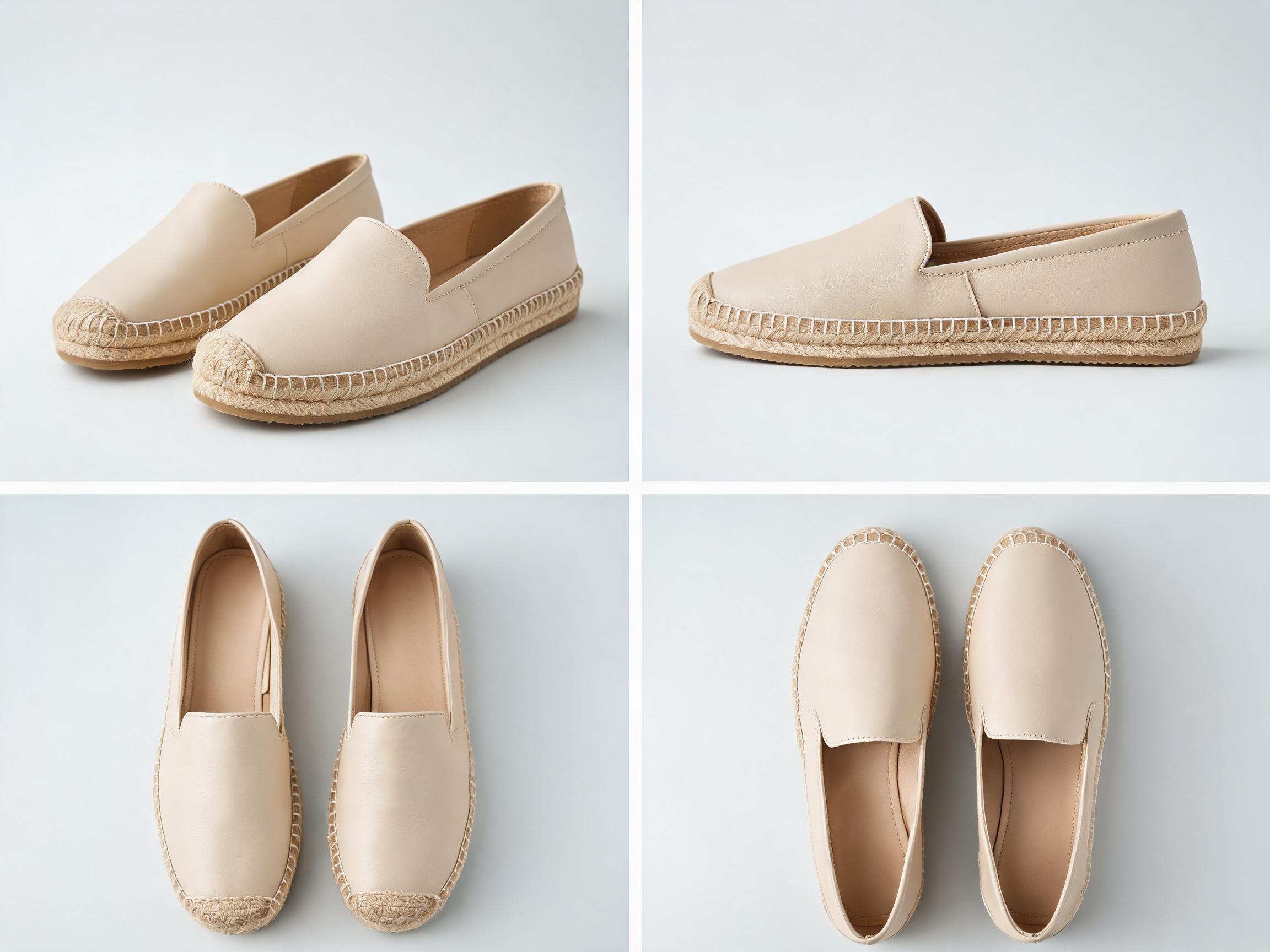
Aurevia Footwear Co., Ltd. is a high-end footwear and fashion accessories manufacturer-exporter working in genuine leather craftsmanship, offering OEM/ODM and private-label customization to B2B buyers in Europe, North America and the Middle East. For buyers seeking custom espadrille wedges, that combination of leather and handcrafted trim is the relevant capability: the braided rope detailing and upper construction are produced as a coordinated set, not sourced separately. The company also produces an espadrille-style flat with braided jute-style rope trim, which shows the same trim craft applied across different sole heights.
Customizing the Braided Espadrille Trim
The braid is the signature of the espadrille wedge, and it is also where most customization requests land. Buyers typically want to match an existing style, adapt a colour to a brand palette, or adjust density so the wedge reads heavier or lighter. These are all achievable, but each has a variable that must be locked before production.
Variables to Specify in the Braid
- Rope diameter: Thicker braids create a chunkier, more structured silhouette; thinner braids give a flatter, dressier wedge. Diameter affects how many wraps fit around the platform.
- Colour and finish: Natural jute tones, dyed colours, and flat or glossy yarn finishes change the visual weight of the shoe. Confirm whether the requested colour is achievable on your chosen fibre.
- Braid density and turn count: The number of visible turns around the wedge determines the finished look and the labour time per pair.
- Joins and finishing: Where the braid starts, ends and conceals its join affects both aesthetics and durability. This should be shown on the sample.
How to Approve a Braid Sample
A photo is not enough for braid approval. Ask for a physical sample, or at minimum a material swatch plus a photo taken under neutral light. Check the braid for consistency along its length, colour evenness, and how tightly the turns sit against the wedge. If you are matching a reference shoe, send the reference and state which features are fixed and which are flexible. Your factory can then confirm whether the braid is reproduced by hand or machine-assisted, and how that choice affects lead time.
Platform and Wedge Options
Platform height is the second major customization axis. Buyers often start from a reference wedge height and then adjust for a specific market — lower for comfort-focused retail, higher for fashion-forward lines. The factory can typically work from a height range, but the practical limits depend on sole construction and material.
| Feature | Consideration | What to Confirm with Your Factory |
|---|---|---|
| Wedge height | Comfort vs. silhouette; affects walking stability | Achievable height range for the chosen sole construction and upper design |
| Platform (front) | Raises the toe box; must relate to wedge height for a natural stance | How front platform and heel height are matched to keep the foot angle comfortable |
| Sole material | Rubber, EVA, or leather-look soles vary in weight, grip and finish | Available sole options, weight per pair, and whether a custom sole mold is required |
| Lining and insole | Affects breathability, comfort and premium positioning | Leather and non-leather lining options, and how they interact with braid placement |
| Upper construction | Canvas, leather or mixed uppers change the overall feel | How the upper is attached to the wedge and whether the braid covers the join |
Designing Around Braid and Platform Together
The braid and the wedge are not independent choices. A tall platform may need a wider braid to look proportionate, and a thin sole may not carry a heavy rope wrap cleanly. When you brief the factory, describe the total look you want rather than specifying each part in isolation. Ask for a proposed construction that reconciles height, braid diameter and upper design, then evaluate that proposal on a sample.
Planning Spring-Summer Production Runs
Seasonal runs are where buyer and factory most often fall out of step. The sequence below is a general planning framework; your actual dates depend on your factory’s schedule, material availability and your shipping method. Use it to build a calendar specific to your order.
- Design freeze: Lock braid colour, rope diameter, wedge height and upper material. Late changes here push every later step.
- Sample rounds: Expect at least one or two rounds — initial sample, then revisions. Each round adds time; factor it in before the season window closes.
- Material procurement: Braid fibre, sole components and upper materials have their own lead times. Confirm which materials are stocked and which are made to order.
- Bulk production: Handwork-intensive braiding is slower than cut-and-sew steps. Ask for a realistic production capacity per week for your style.
- Quality inspection and packing: Build in time for inspection and any custom packaging, shoe boxes or hangtags.
- Shipping window: Sea freight saves cost but adds transit time; air freight shortens it at higher cost. Decide the method before you finalise the production date.
A Practical Backward Calendar
Start from the date your goods must be on shelf, subtract shipping transit, subtract inspection and packing, subtract bulk production, subtract sample rounds, and subtract material procurement. The result is your latest design-freeze date. If that date is already close, discuss with your factory whether any step can be compressed without compromising the braid quality or fit — and be honest about what can realistically move.
Quality Checks Buyers Should Build In
- Braid consistency across pairs, not just within one pair.
- Braid-to-wedge adhesion and finish, especially at joins.
- Sole weight and flexibility relative to the agreed specification.
- Colour matching between the braid, upper and any trim, checked under neutral light.
- Grading and sizing accuracy across the size run.
- Packaging integrity and labelling against your market’s requirements.
What to Send Your Factory for an Accurate Quote
To move from inquiry to a reliable quotation, provide as much of the following as you have:
- Reference shoe or technical sketch, with notes on which features are fixed and which are flexible.
- Target braid colour, diameter and finish, or a colour reference if matching a palette.
- Wedge and platform height targets, plus any preferred sole material.
- Upper material and lining preferences.
- Size range, size run breakdown and target market.
- Quantity per colourway and required delivery window.
- Packaging and labelling requirements.
Where a specification is not yet decided, say so and ask the factory to propose options. That gives you a comparison point rather than a single quoted construction.
FAQ
Can a China factory match a braided trim to my reference shoe?
In most cases, yes, if the reference is provided and the braid is physically evaluated. Confirm the achievable colour and diameter against the fibre available, and approve a physical sample before bulk production.
How high can a custom espadrille wedge be?
This depends on sole construction and upper design. Ask your factory for the achievable range for the construction you have chosen, rather than assuming any height is possible.
How early should I place a spring-summer order?
Work backward from the on-shelf date, allowing for sample rounds, material procurement, bulk production, inspection and shipping. Your factory can confirm its current schedule and capacity for your style.
Can I mix braid colours and wedge heights in one order?
Colourways and height variations are common requests, but they affect production planning. Confirm minimum quantities per variant and how the factory groups them into a production run.
Custom espadrille wedge projects move fastest when the braid, platform and season timing are treated as one brief. If you are evaluating a China factory for this category, prepare the reference, specification and delivery window described above, and ask your supplier to propose a construction you can compare. That gives you a clear basis for a decision rather than a catalogue of promises.