
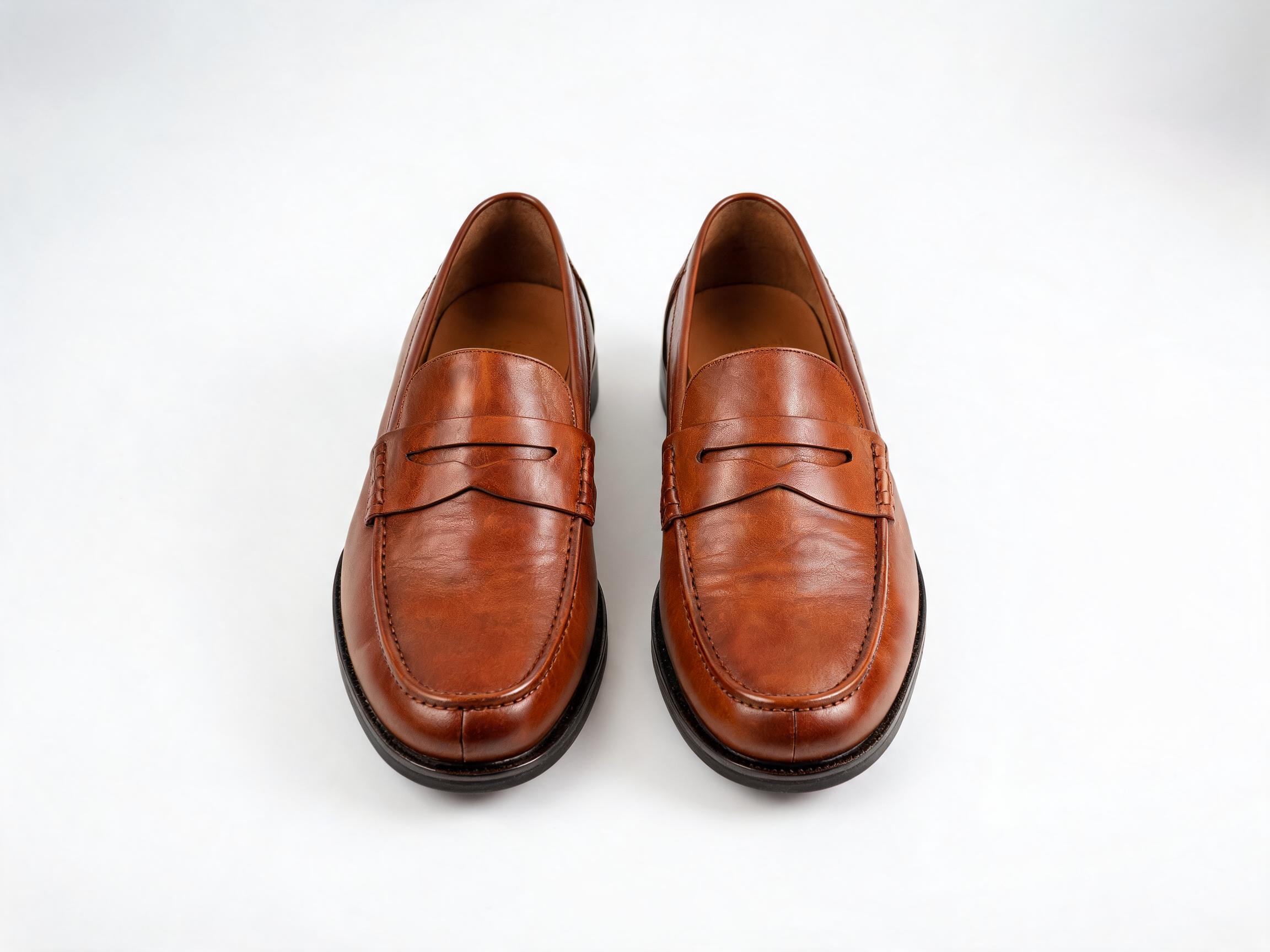
A component-by-component guide for B2B buyers on customizing loafers—last shapes, strap styles, leather grades, soles—plus a concrete OEM sampling workflow from spec to bulk.
This is not a general guide to buying wholesale loafers. It is a component-level breakdown for buyers who already know they want a loafer program and need to decide what can be customized, what it costs in sampling time, and where the common friction points sit between a tech pack and a bulk order.
Key takeaways: Last shape, strap style, leather grade, and sole construction are the four levers that change fit, cost, and production risk. Sampling for a customized loafer runs about 7–12 days after details are confirmed; stock samples ship in 3–5 days. MOQ on both referenced products is 100 pairs per color, with bulk lead time of 25–35 days after order confirmation. Confirm the current figures with the sales team before ordering.
What actually gets customized on a loafer
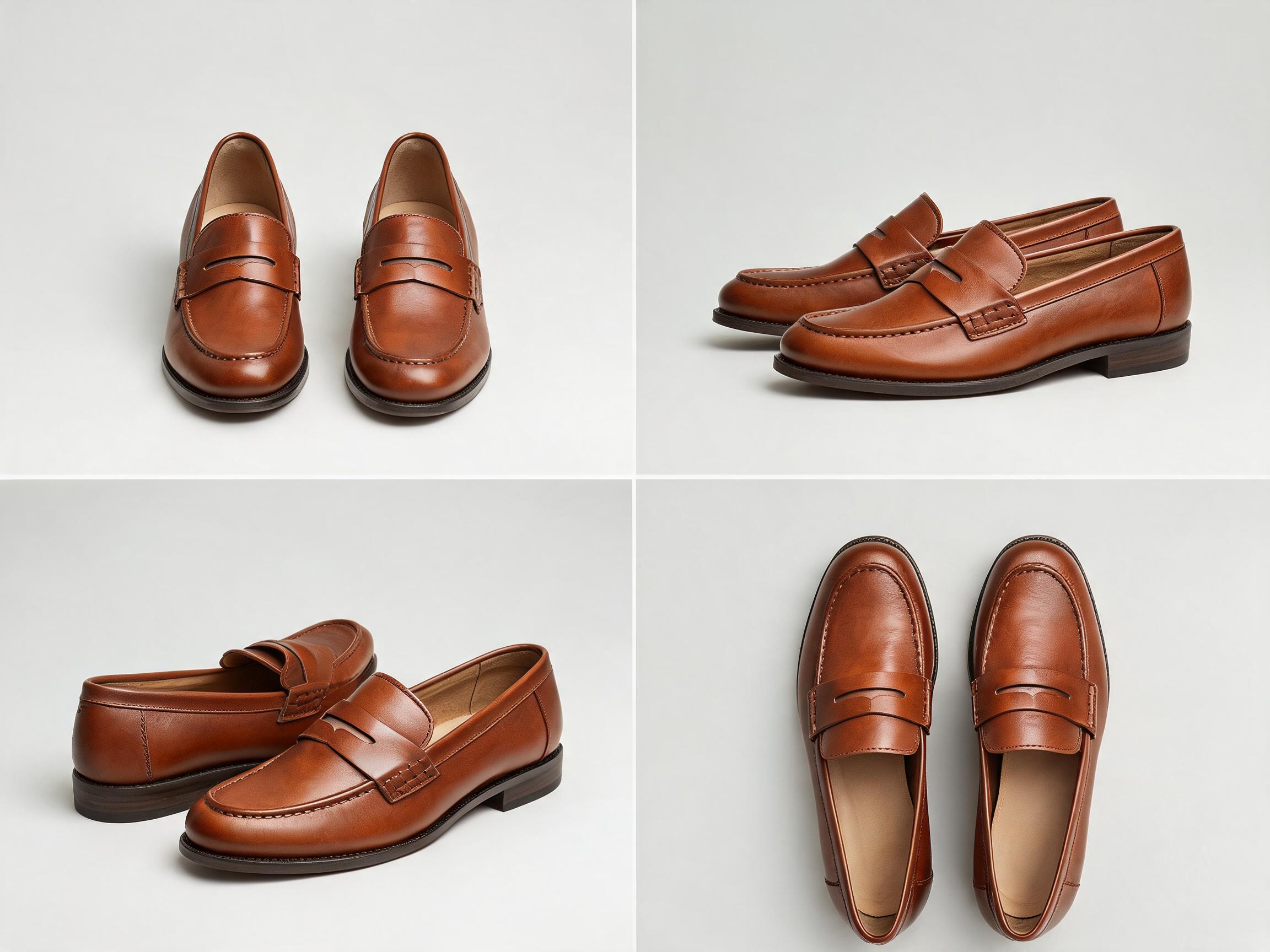
Custom loafers for private label or wholesale programs are rarely a blank-sheet design. Most buyers start from a base construction the factory already runs and modify specific components. That approach shortens sampling and keeps tooling costs predictable. The four components below are where the real decisions happen.
Lasts: the foundation of fit and silhouette
The last determines whether the loafer reads as a rounded classic, an almond-toe dress style, or a more squared casual shape—and it sets the width and instep that your end customers will feel first. On the women’s side, a real product example is the Women's Black Leather Loafers, built on an almond toe with a 3.5 cm block heel and offered in EU 35–41. That almond last is a distinct starting point; if your range needs a rounder or more tapered toe, the last change is the customization to discuss first, because it affects every downstream pattern piece.
For men’s programs, the Cognac Penny Loafer Shoes run on a last with a 2.5 cm heel and EU 39–45 sizing. A common buyer request is to adjust the last for a specific market’s width preference, but width grading is a tooling decision, not a pattern tweak. Ask for the base last measurements and confirm whether your target width can be met by adjusting the existing last or requires a new one.
What to bring to the last discussion
- Target market sizing distribution (EU 39–45 vs. 35–41, or a custom range).
- Toe shape reference—almond, round, or squared—with photos or physical samples.
- Heel height preference: 2.5 cm on the penny loafer reference, 3.5 cm block on the women’s reference.
- Whether the last must accommodate a removable insole or orthotic (this changes internal volume).
Strap styles: penny, apron, moc-toe and beyond
The strap is the most visible customization and the one buyers ask about most. The penny loafer reference uses a hand-stitched apron toe and penny strap—two separate construction elements that can be specified independently. In practice, buyers choose among:
- Penny strap: the classic slotted saddle across the vamp. Works for both men’s and women’s programs; the slot width and strap height are pattern variables.
- Apron toe: the raised seam running around the toe. On the reference product this is hand-stitched, which is a construction choice that affects labor time and the visible stitch line.
- Moc-toe: a hand-sewn apron that wraps the toe box; often used on casual and driver-style loafers.
- Plain vamp / unadorned: no strap; the leather and last do the work.
When specifying a strap change, send a marked-up photo or a physical reference shoe. Strap height, slot length, and stitch density are not standardized across factories, so a verbal description (“make the penny strap wider”) is the most common source of sample rejection.
Leather grades and finishes
Both reference products use leather uppers and leather lining—the penny loafer in polished full-grain, the women’s loafer in smooth calf. For custom loafers, the leather conversation usually covers three points:
- Grade: full-grain vs. corrected-grain vs. calf. Full-grain keeps more of the hide’s natural surface; corrected-grain is more uniform. The choice affects both hand-feel and how the leather ages.
- Finish: polished, matte, or brushed. The penny loafer reference is polished; a matte finish on the same last reads as a different product.
- Color: the penny loafer is offered in cognac, black, brown, and custom; the women’s loafer in black, brown, burgundy, and custom. Pantone matching is supported, which matters if your brand has a fixed color standard.
If you are matching a Pantone, confirm whether the match is to the finished leather or to a swatch—finished leather can shift slightly under polish. Ask for a physical leather swatch before approving color.
Soles and footbed construction
The penny loafer reference uses a stitched rubber sole with a cushioned footbed. That combination is a practical default for wholesale programs because it balances durability and comfort without the cost of a leather sole. Customization here usually means:
- Sole type: stitched rubber (as on the reference) vs. cemented or leather. Stitched construction is a visible quality signal but adds labor.
- Footbed: cushioned standard vs. removable. A removable footbed changes internal volume and must be coordinated with the last decision above.
- Outsole pattern: if your market needs a specific tread or non-marking compound, raise it at sampling—outsole molds are a tooling item.
The OEM sampling workflow, step by step
Sampling is where most custom loafer programs either lock in or stall. The sequence below reflects how Aurevia handles it; timelines are the ones confirmed for this factory.
| Stage | What happens | Timing |
|---|---|---|
| 1. Spec review | Buyer submits last, strap, leather, sole, color, and branding requirements. Factory confirms feasibility and flags tooling items. | Before sampling |
| 2. Stock sample (if needed) | Existing samples ship so the buyer can confirm base construction before customizing. | 3–5 days |
| 3. Customized sample | Sample made to the confirmed spec, including Pantone color and logo placement on insole, box, or hangtag. | Approx. 7–12 days after details confirmed |
| 4. Sample approval | Buyer reviews fit, color, strap placement, and branding. Revisions, if any, are specified here. | Buyer-dependent |
| 5. Bulk order | Production runs after order confirmation. | 25–35 days after order confirmation |
On both referenced products, the MOQ is 100 pairs per color and the bulk lead time is 25–35 days after order confirmation. Buyers should confirm current MOQ and lead time with the sales team before ordering, as these can vary by specification.
Where samples usually need a second round
- Strap height or slot length not matching the reference.
- Leather color drifting from the approved Pantone swatch.
- Last fit at the heel or instep—especially when a removable footbed was added late.
- Logo placement or size on the insole or hangtag.
Each of these is cheaper to fix at sample stage than after bulk cutting. A clear tech pack with marked-up photos reduces the back-and-forth. Sample fees and any tooling costs for last or outsole changes are quoted per project; confirm them with the sales team when submitting your spec.
Branding and packaging customization
Logo on insole, box, and hangtag is supported. For private-label programs, decide early whether the logo is embossed, printed, or a woven label—each has a different tooling and approval path. Pantone matching applies to packaging color as well if your brand has a fixed standard.
Quality and after-sales terms
Aurevia Footwear Co., Ltd. is based in Quanzhou, China, founded in 2011, with 260 staff and an in-house design team; the company exports to Europe, North America, and the Middle East. A 6-month quality warranty applies, with after-sales response within 48 hours. For buyers evaluating a custom loafer program, these terms are worth confirming in writing alongside the spec sheet.
FAQ
Can I customize the last shape, or only the upper?
Both are possible, but they carry different cost and timing. Upper changes (strap, leather, color) are pattern-level. Last changes are tooling-level and should be discussed before sampling. The factory’s in-house design team can advise on which path fits your target fit and silhouette.
How long does a customized sample take?
Approx. 7–12 days after details are confirmed. Existing samples ship in 3–5 days if you want to review base construction first.
What is the MOQ for a custom color?
MOQ on the referenced products is 100 pairs per color. Confirm the current MOQ with the sales team, as it may depend on the specific customization.
Can you match a Pantone color?
Yes—Pantone color matching is supported, and logo placement on insole, box, and hangtag is available. Request a physical swatch for approval.
Ready to spec your custom loafer program? Send your last, strap, leather, and branding requirements to the Aurevia team for a sampling plan and current MOQ confirmation.
View the Cognac Penny Loafer reference