
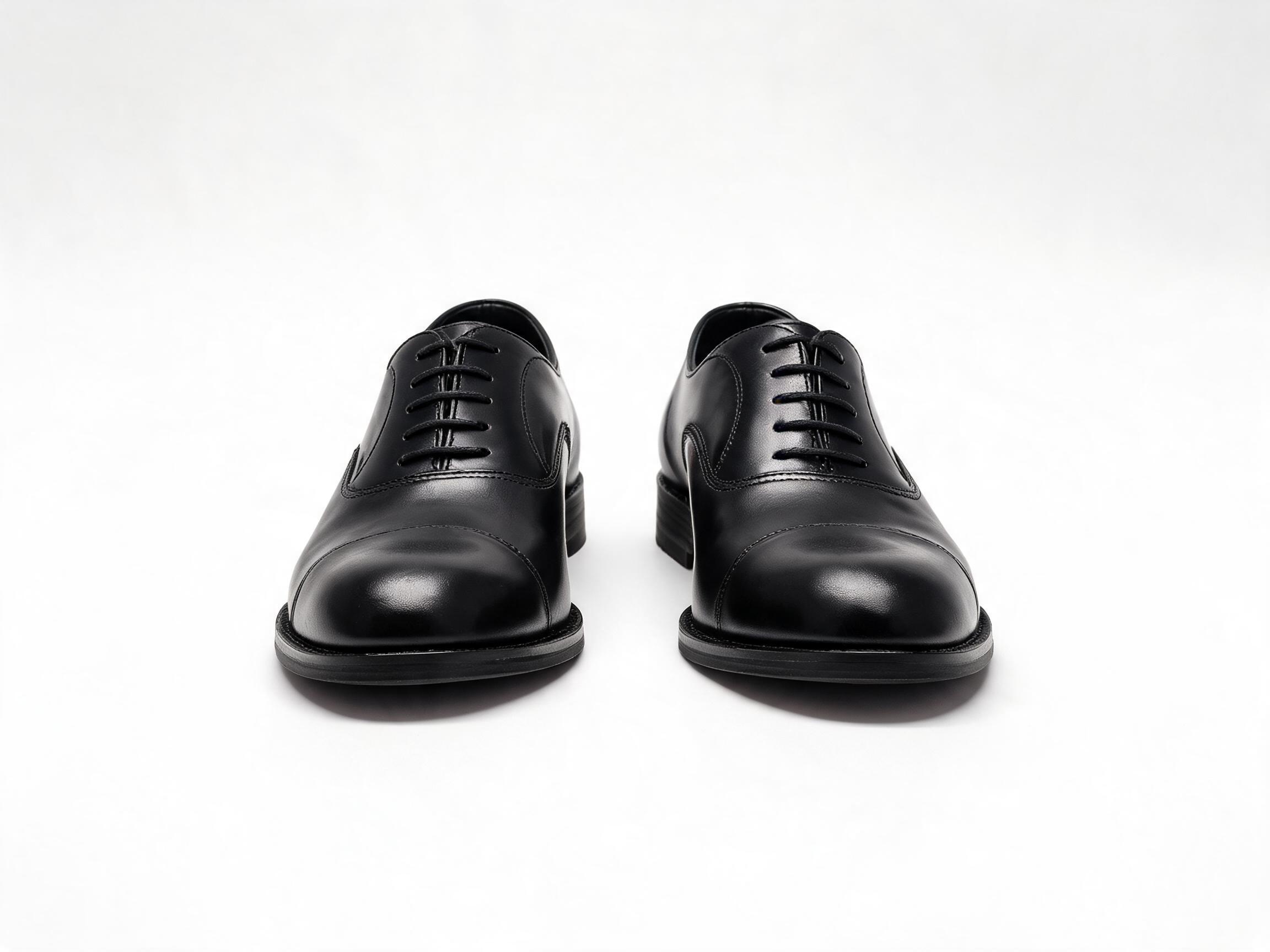
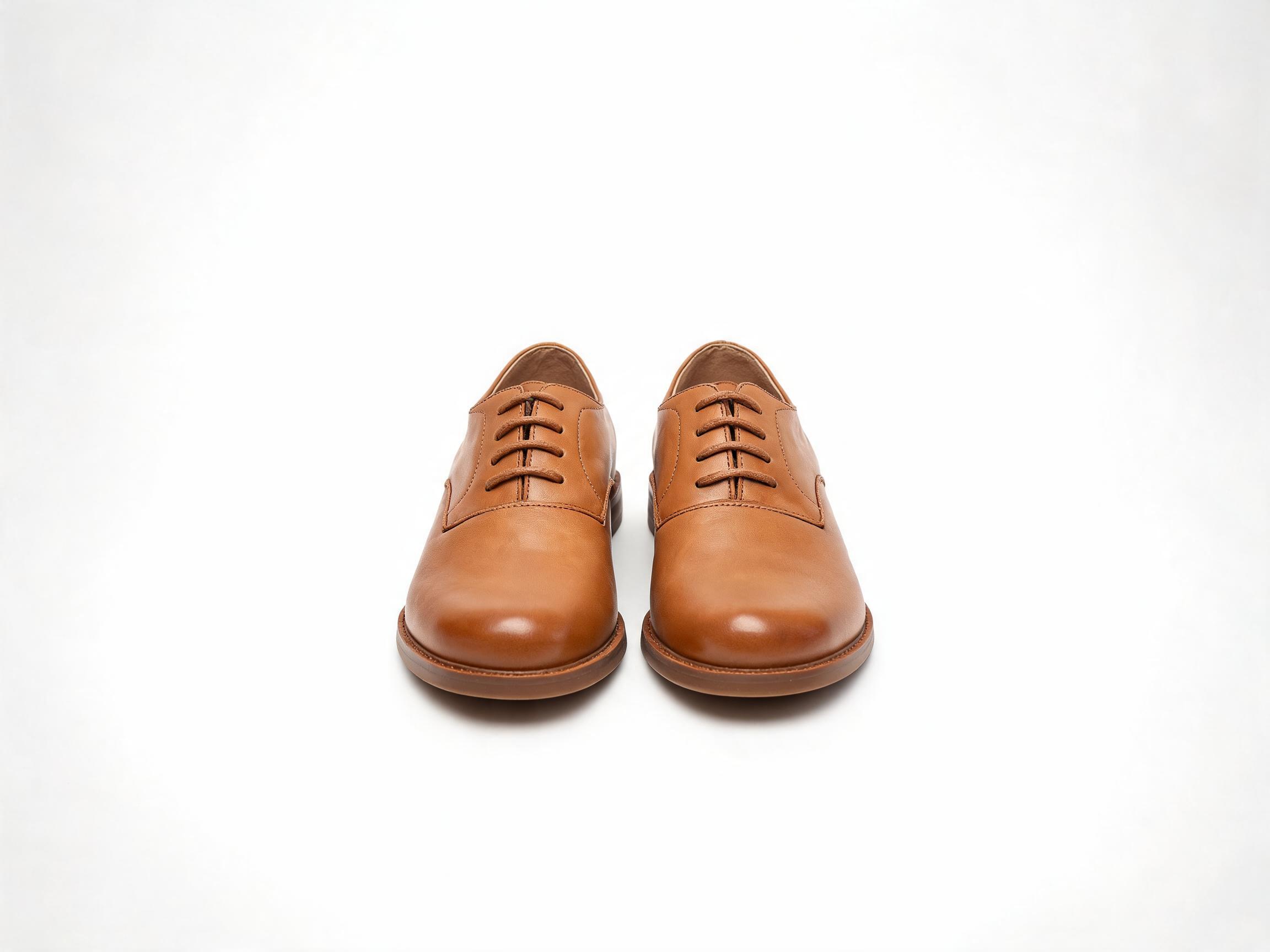
A buyer-side confirmation workflow for made-to-spec oxfords: design brief inputs that shape the last, how to confirm last fit before bulk, what to check on the custom sample, and how to release and inspect mass production. Includes the men's black cap-toe oxford and women's tan oxford as working examples.
Buyer Confirmation Workflow
Ordering custom made oxford shoes is not one decision. It is four gates, and each gate has a different failure mode. Get the last wrong and you re-cut patterns; approve a sample without checking the fit trial and you discover the problem after the first bulk order. This article maps what a buyer should lock down at each gate — brief, last, sample, bulk — using the men's black cap-toe oxford as the classic custom program and the women's tan leather oxford to show the same workflow across genders, with a different size range and width base.
- Design brief inputs that determine the last
- Confirming the last: reference vs new, size grid, fit trial, your size chart
- The sample gate: what to check on the custom sample
- Bulk release and inspection handover
- Toe shape, width, heel height and target-market fit expectations are brief inputs, not last-room variables to be left open.
- Reference lasts cut development time; a new last is justified when grading, fit or aesthetics can't be matched by an existing one.
- Half sizes and width options are arrangeable after sample confirmation — they are not assumed in the base spec.
- Send your own size chart before mass production. The factory can produce against your size grid and grade the pattern accordingly, and confirm your target-market size chart before bulk.
- MOQ and lead time are confirmed per program; they depend on last choice, size range and width grading.
Gate 1 — Design brief inputs that determine the last
The last is the shape the shoe is built on, and it is decided long before cutting. Four brief inputs have the most influence, and each one should be resolved in writing before the factory builds anything new.
Toe shape
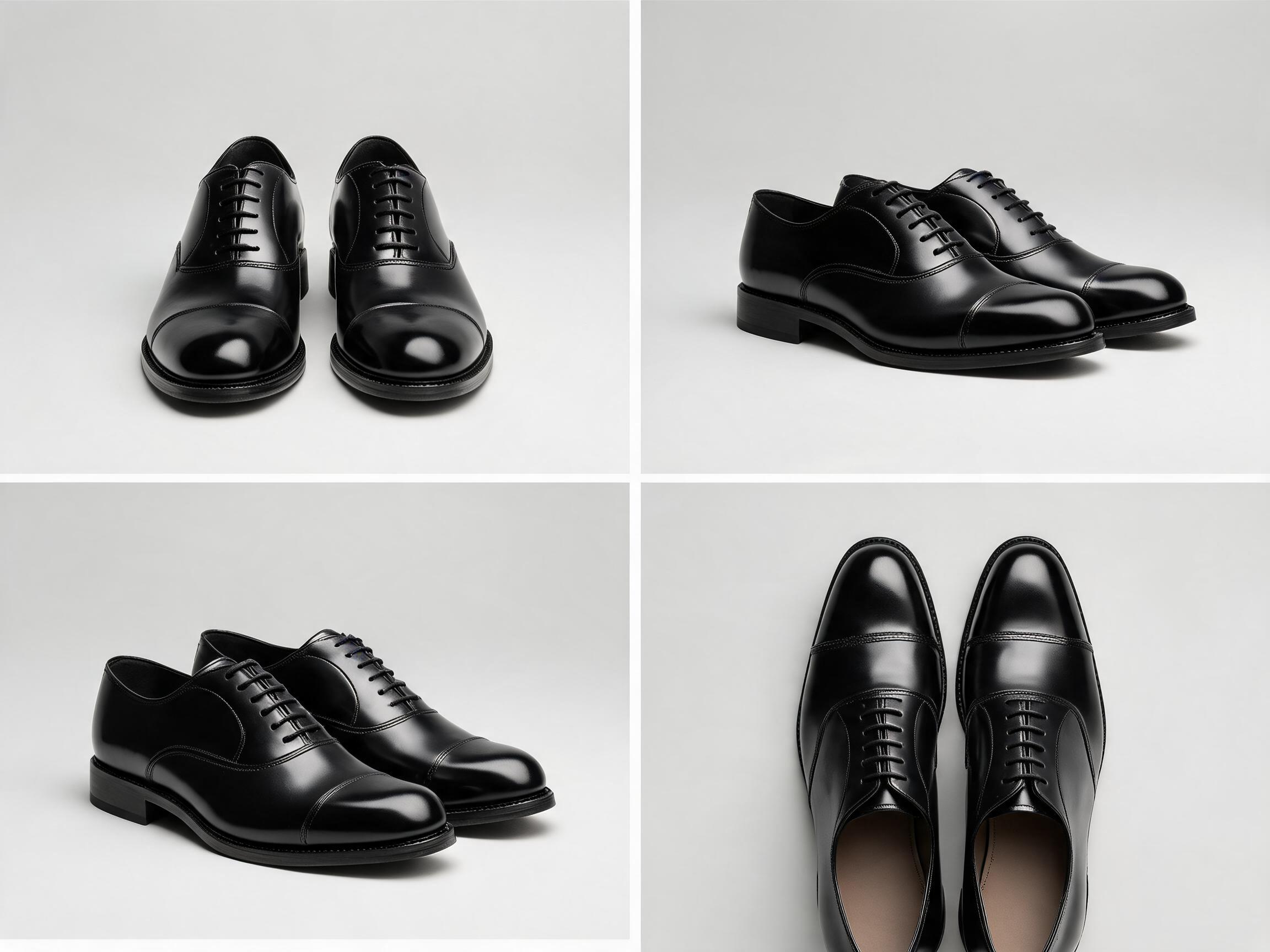
Toe shape sets the visual identity of the program and interacts directly with the cap-toe seam. On the men's black cap-toe oxford, the cap-toe seam is stitched by hand — a cap line placed on a round toe reads differently from one placed on a tapered or squared toe. If the brief says "classic round cap toe," say whether the cap position should sit further back or closer to the toe tip. That single placement decision affects both the pattern and the visual balance at the forefoot.
Width and last width base
Width is a fit decision, not a cosmetic one. The men's program runs a standard D width fit across EU 39–45 / US 6.5–12. The women's tan oxford runs a standard B width fit across EU 35–41 / US 5–10. If your market expects a different width base, that belongs in the brief — because width is one of the inputs the factory grades against your size grid.
Heel height
Both example programs use a heel of approximately 3 cm. If you specify the same heel height, say so explicitly rather than assuming it. Heel height affects the last bottom and the relationship between forefoot and rearfoot, so it should be fixed in the brief, not adjusted casually at sampling.
Target market fit expectations
This is the input buyers most often leave implicit. A market that expects a roomier forefoot and a market that expects a snug fit can be served by the same upper pattern but not the same last. State the fit expectation in plain terms — roomy, standard, snug — and state the reference market. The factory can then confirm your target market size chart before mass production, which is the point at which most fit mismatches are caught.
Gate 2 — Confirming the last
Last confirmation is a decision process, not a single approval. Four questions need answers in order.
Reference an existing last, or build a new one?
Reference existing lasts when your brief can be met by an established shape — this is the faster route and is why reference lasts exist. A new last is justified when grading for your size range, your width base or your toe-shape requirement cannot be matched by an existing one. The right question is not "new or existing" in the abstract; it is whether an existing last can carry your size grid and your width expectations without distortion.
Size grid and width grading
Give the factory the size grid you actually sell, not the grid that is easiest to produce. The factory produces against the buyer's own size grid and grades the pattern accordingly, which means the grading has to follow your grid — including how width progresses across sizes. If your grid is EU 35–41 / US 5–10 for women or EU 39–45 / US 6.5–12 for men, the grading path is set by that range. Half sizes and width options can be arranged after sample confirmation; treat them as a second-phase extension of the grid, not part of the base assumption.
Fit trial on the sample
The fit trial happens on the sample, and it is the only reliable check of the last. Two practical points:
- Trial the sample in a middle size and, if you can, both ends of your grid. Last problems often appear at the extremes, not the middle.
- Compare the sample against your target market size chart, not against an old shoe on a different last.
Share your own size chart before mass production
This is the step buyers skip most often. If you have a size chart — your own measurements, your own width progression, your own in-house fit standard — share it before bulk. The factory can produce against your size chart and grade accordingly. Doing this after sampling is cheap; doing it after bulk is not.
Gate 3 — The sample gate: what to check on the custom sample
Customized samples are typically made in 7–12 days after details are confirmed. Existing samples take 3–5 days. The sample is not a formality — it is the last chance to change the last, pattern or grading before it becomes expensive.
| Check | What to look at |
|---|---|
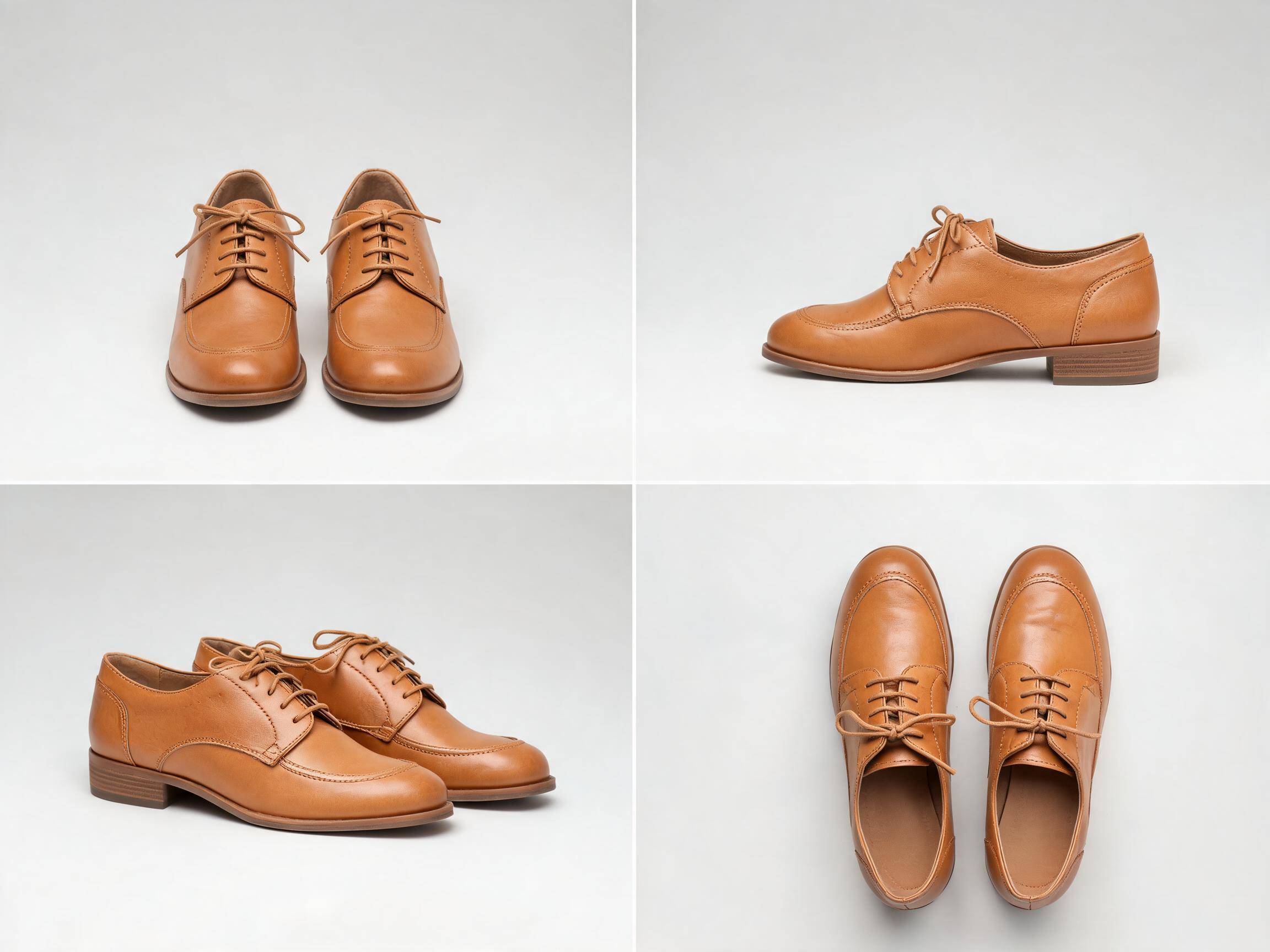
| Last and fit | Toe shape as briefed, width base as briefed (standard D for the men's program, standard B for the women's), heel height as specified (approx. 3 cm in both examples). |
| Cap-toe seam | If the design has a cap toe, confirm seam placement and that it is stitched by hand on the men's cap-toe pattern. |
| Lacing | Closed oxford lacing — the defining construction of an oxford. Confirm the facing closure sits correctly when laced. |
| Upper and lining | Polished full-grain leather upper and leather lining on the men's black cap-toe; smooth tan calf leather and leather lining on the women's tan oxford. Color against the Pantone target if you specified one. |
| Footbed | Cushioned leather footbed on the men's program; cushioned insole on the women's. Check it does not shift when the shoe is flexed. |
| Sole attachment | Stitched leather/rubber sole on the men's shoe; stitched rubber sole on the women's. Confirm stitching is even and that the sole edge is clean. |
| Build | Stitched-and-cemented construction on the men's; cemented construction on the women's. Check the bond line at the forefoot. |
| Size and half sizes | Confirm the sample size against your grid; decide whether to activate half sizes and width options now. |
If any item on this list changes after sampling, treat it as a new confirmation gate. A toe-shape change is a last change; a grading change is a pattern change. Half sizes and width options are the two extensions most commonly asked for at this point, and they are arrangeable after sample confirmation.
Gate 4 — Bulk release and inspection handover
Bulk release is a handover: you hand over the frozen spec, the factory hands over the inspection record. Two things should be closed before release.
- The frozen spec. Last, size grid, width grading, color (including any Pantone leather color match), and the sample itself as the reference. OEM/ODM support covers producing against your grid and grading accordingly — the spec is what makes that work.
- MOQ and lead time for this program. These are confirmed per program and depend on last choice, size range and width grading. Confirm them for your specific configuration rather than assuming a number.
What the inspection handover covers
Production runs through pattern grading, leather cutting, upper stitching, cap-toe assembly, toe lasting, cementing, sole stitching, cooling, de-lasting, inspection and packing. Inspection is three-stage:
- Incoming material inspection — leather and components checked before cutting.
- In-line inspection — checked during lasting and assembly.
- Finished-shoe inspection — including forefoot flex testing and sole adhesion checks.
Third-party inspection is welcome, and buyers who use it should schedule it against the finished-shoe stage so the flex and adhesion checks can be observed or repeated independently. Ask the factory to hold the frozen sample on file through the run; it is the reference against which the finished-shoe inspection is meaningful.
Why the workflow is the same across the two programs
The men's black cap-toe oxford and the women's tan oxford differ in upper, width base and size range, but the confirmation sequence does not change: brief determines last, last determines pattern and grading, sample confirms both, and bulk releases against the frozen reference. If you are running both, build one confirmation sheet and run each program through it separately — the gates are identical, the inputs are not.
MOQ and lead time are confirmed per program, since they change with last choice, size range and width grading. Customized samples typically 7–12 days after details are confirmed; existing samples 3–5 days.
FAQ
Can the factory produce against our own size grid?
Yes. OEM/ODM support includes producing against the buyer's own size grid and grading the pattern accordingly, and confirming the target market size chart with the factory before mass production.
When should we send our size chart?
Before mass production — ideally before the sample so the first sample already reflects your grid. Sharing it after sampling is still workable; sharing it after bulk is not.
Are half sizes and width options possible?
They can be arranged after sample confirmation, once the base last and size grid are fixed.
Can we match a specific leather color?
OEM/ODM support includes Pantone leather color matching. The men's cap-toe program also offers black, dark brown and custom colors.
Who inspects the bulk order?
Inspection is three-stage — incoming material, in-line, finished-shoe — with forefoot flex testing and sole adhesion checks. Third-party inspection is welcome.