
A practical walkthrough of the custom silver trainer order process for private-label buyers: how metallic color matching works, how counter and approval samples are developed from tech packs, and how OEM/ODM production handles logos, packaging, and size grading with a Quanzhou-based manufacturer.
Order Process Walkthrough
For private-label buyers, the difficulty with metallic silver trainers is rarely the silhouette. It is getting the finish, the sample, and the bulk order to stay aligned. This walkthrough covers how a Quanzhou-based OEM/ODM manufacturer handles color matching for metallic silver, sample development from your references and tech packs, and the private-label production process — in the sequence you will actually encounter it.
Key Takeaways
- Metallic silver finishes are coated films, not dyed leather — reference matching depends on coating system and light angle.
- Counter samples and approval samples serve different purposes; approve the sample you will actually repeat in bulk.
- Logo method, packaging, and size grading should be locked before bulk production starts, not after.
- Multi-stage inspection is a process checkpoint, not a substitute for your own approval sample.
What This Covers
- Color Matching for Metallic Silver Finishes
- How Buyers Send Color References
- Sample Development from Tech Pack to Approval
- The OEM/ODM Order Process for Private Label
- Size Grading and Pre-Production Checks
- FAQ
Color Matching for Metallic Silver Finishes
Metallic silver on a trainer upper is usually a coated surface — a metallic pigment layer or foil transfer over a base material. That matters because the color you see is not the material itself. It is a film that reflects light differently depending on angle, texture, and the base underneath.
This is the main difference from dyed leather or dyed textile. A dyed material carries color through its thickness; a metallic coating sits on top. Two consequences follow for buyers:
- Light angle changes the read. A metallic silver that looks correct under daylight can shift cooler or warmer under indoor lighting. Reference matching should account for the lighting the buyer cares about.
- The base affects the finish. The same metallic coating over a smooth base and a textured base will not look identical. If your reference sample uses a specific base, say so.
No supplier can promise an exact match to a physical reference under all lighting. What a manufacturer can do is match a target under agreed conditions, then show you a physical sample for approval. Treat that sample as the standard for bulk.
How Buyers Send Color References
Most private-label buyers start with one of three reference types. Each has limits, and being clear about which you are sending saves a round of sampling.
| Reference Type | What It Communicates | Practical Limit |
|---|---|---|
| Physical sample or swatch | Actual surface, texture, and light behavior | Shipping time; sample may be an old batch |
| Pantone or color code | A numeric target for the coating supplier | Does not capture metallic flake or sheen |
| Photo or digital image | Rough direction and intent | Screen and camera shift the color; not a match standard |
When a buyer sends a physical swatch, the manufacturer can work the coating toward it and return a counter sample. When a buyer sends only a photo, expect the first sample to be a direction check rather than a final match. Most experienced buyers send both: a Pantone or code for the base tone, plus a physical reference for the metallic behavior.
For a sense of how a metallic finish reads on a finished shoe, the Gold Metallic Evening Heels show the kind of surface a metallic coating produces on footwear — useful as a visual reference when briefing a coating direction, though the target color and base will differ.
Sample Development from Tech Pack to Approval
Sample development runs in stages. Confusing the stages is one of the most common causes of bulk disputes.
Reference and Tech Pack Review
You provide references, a tech pack, or both. A tech pack typically covers last shape, upper pattern, materials, construction, outsole, and labeling. If you only have a reference shoe, the manufacturer's design and pattern teams can work from it, but a tech pack reduces ambiguity. In-house design and pattern teams are relevant here: they can translate a reference into a workable pattern rather than quoting only from an existing mold.
Counter Sample
A counter sample is the first physical build made to your brief. Its purpose is to check shape, materials, and finish direction. Expect changes at this stage. Metallic coating direction is often adjusted here — the flake size, the sheen level, the base texture.
Approval Sample
The approval sample is the version you sign off as the production standard. It should use the confirmed coating, the confirmed materials, and the confirmed labeling. Once approved, this sample is the reference for bulk. If you plan to repeat the style across seasons, keep the approved sample and record the coating specification with it.
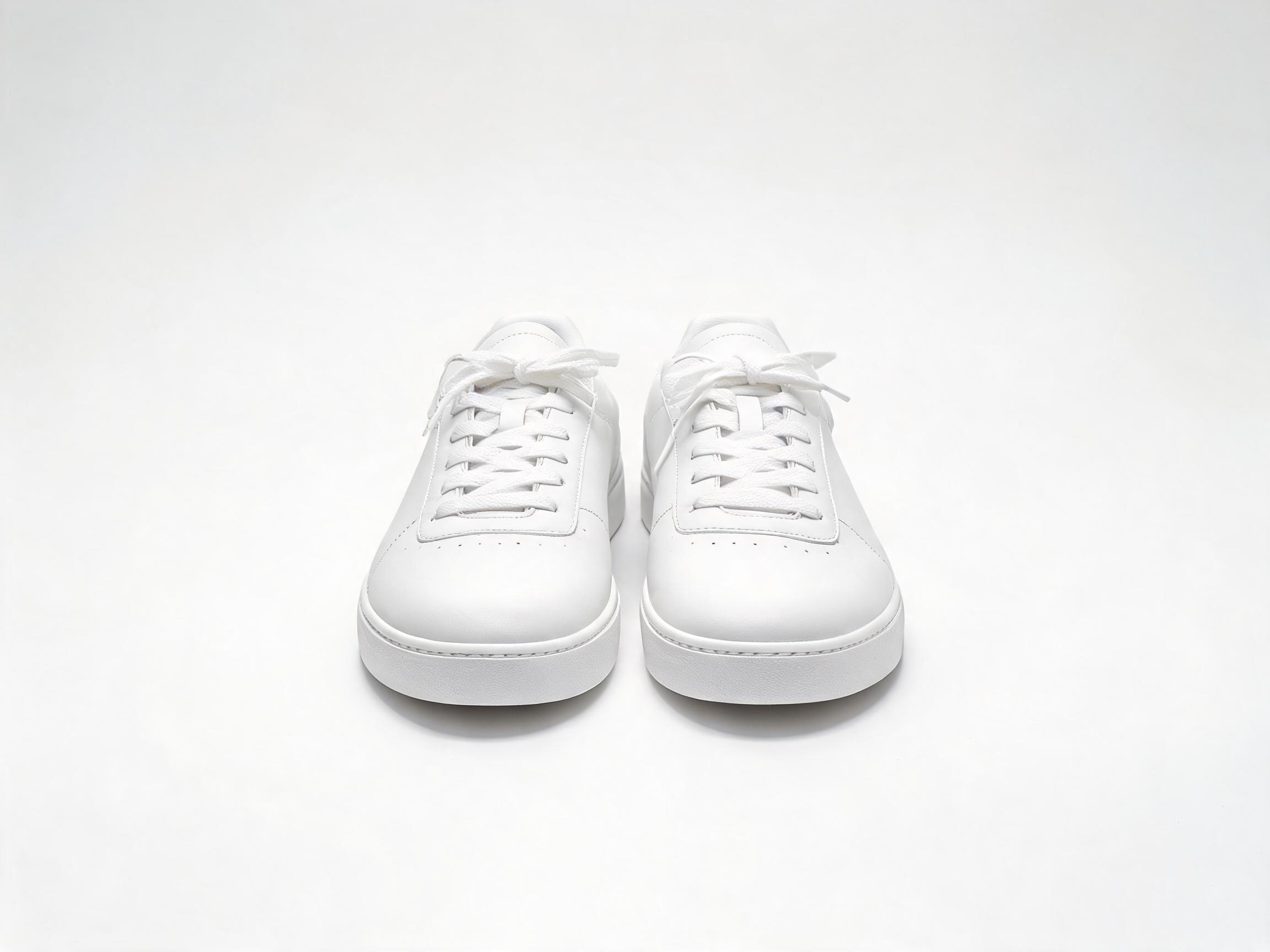
A real example of an OEM/ODM sneaker program is the White Leather Low-Top Sneakers — full-grain leather upper, breathable textile lining, cushioned removable insole, and a vulcanized-style rubber outsole, with OEM/ODM options covering leather, colorway, logo, and packaging. The same option structure applies when the upper is finished in metallic silver rather than white leather: the finish changes, the development sequence does not.
The OEM/ODM Order Process for Private Label
Once the approval sample is signed, the private-label process moves into production preparation. Four items should be locked before bulk starts.
- Logo method. Options typically include embossing, printing, woven or printed labels, and metal hardware. The method affects pattern and material selection, so it should be decided alongside the sample, not after.
- Packaging. Polybag, box, tissue, hangtag, and any inserts. If your packaging has a print spec, provide the artwork file; print matching follows the same approval logic as color.
- Size grading. Confirm the size run and the grading you expect. Size grading is a specification, not an assumption — state it in the order.
- Color and material confirmation. The approved coating specification and material list go into the production record.
Bulk production then follows the approved sample. Multi-stage inspection is used across production — typically checking materials and components at intake, work-in-progress at key assembly points, and finished pairs before packing. Inspection catches deviations; it does not replace your approval sample as the standard.
Size Grading and Pre-Production Checks
Size grading is where a style that looks right on one sample can drift across a run. Metallic finishes add a variable: coating thickness and sheen can be affected by the base pattern pieces, which change with size. A finish approved on a size 42 upper is not automatically identical on a size 36 upper.
A practical approach is to ask for the graded size run to be confirmed against the approved sample at the extremes of the run, not only in the middle. This is a pre-production check, not a bulk-stage correction. If your order spans a wide size range, raise this before production, not after.
The broader point is that the order process is a sequence of confirmations. Color is confirmed by sample, sample is confirmed by approval, approval is confirmed by production records, and production is checked against the approved standard. Skipping a confirmation does not remove the risk — it moves it to bulk.
FAQ
Can you match a metallic silver from a photo?
A photo can set a direction, but it is not a match standard because screens and cameras shift color. Send a physical reference or a color code alongside the photo, and expect a counter sample to confirm the match.
How many sample rounds should we plan for?
It depends on the reference quality and how far the first counter sample lands from your target. Budget for at least one counter sample round and one approval sample. Metallic coatings often need one adjustment to the sheen or base before approval.
Can we use our own logo and packaging?
Yes. Private-label logo and packaging are part of the OEM/ODM process. Decide the logo method and packaging spec alongside sample development, and provide artwork files for any printed packaging.
Who sets the size grading?
The buyer specifies the size run and grading expectation. The manufacturer confirms feasibility against the last and pattern. Confirm grading at the sample stage so it is fixed before bulk.
Next Step for Your Silver Trainer Program
If you have a reference, a tech pack, or just a color direction, send it with your target size run and logo/packaging requirements. The most useful first reply is a counter sample plan, not a generic quote.
Share your brief with the manufacturer to get the sample development and OEM/ODM order process started.