
A practical checklist for wholesale buyers to verify that shoes sold as genuine leather actually are, covering grain patterns, smell and feel, cut-edge inspection, material declarations, and sample testing.
Wholesale Buyer's Guide
When you source genuine leather shoes wholesale, the gap between what a supplier declares and what arrives in your warehouse is a commercial risk, not a minor quality issue. Leather is graded and finished in many ways, and some suppliers use the word "genuine" loosely. This checklist gives you concrete steps to verify material claims before you commit to a bulk order: what to look at on a sample, what to ask the supplier to put in writing, and how to interpret the answers.
Key Takeaways
- Verification starts with a physical sample and a written material declaration, not with a catalog photo.
- Grain pattern, smell, feel, and cut-edge structure each tell you something different; no single check is conclusive.
- Ask suppliers to state leather type, tannery source, and thickness in writing, and compare that against the sample.
- Sample testing you perform yourself records what you observed under your conditions; it is not a formal certification.
In This Article
Why verification matters in wholesale
In wholesale, you are buying based on a sample and a description. If the description says "genuine leather" but the delivered shoes use a corrected-grain or coated split, the difference may not be obvious from photos. It shows up later as creasing, cracking, or customer returns. Verifying material before mass production protects your margin and your reputation.
The checks below are practical steps a buyer can take. They are not laboratory tests or formal certifications. Use them to gather evidence and to frame specific questions for your supplier.
1. Inspect the grain pattern
Full-grain leather retains the original surface of the hide, so the grain pattern varies naturally across the shoe. Look for irregular pore sizes and a pattern that does not repeat identically from one panel to the next. Corrected-grain or embossed leather often shows a uniform, repeating pattern.
On a sample, compare the left and right shoe. Natural grain will show subtle differences. Also check areas that are less processed, such as under the tongue or inside the heel. If the grain looks identical everywhere, ask the supplier to clarify the leather type.
2. Check smell and feel
Genuine leather has a characteristic smell that comes from the tanning process. Synthetic or heavily coated materials often smell of chemicals or plastic. Smell is subjective and not a definitive test, but it is a useful first filter.
Feel the leather with your fingers. Full-grain leather feels supple and warms quickly to the touch. It should not feel brittle or overly slick. Press your thumb into the surface and release; natural leather shows fine, irregular creases that recover. A coated or synthetic surface may show sharper creases or none at all.
3. Examine cut edges
The cut edge of a leather panel reveals its structure. On genuine leather, you can often see a fibrous, suede-like layer beneath the surface finish. On corrected-grain or coated leather, the edge may show a distinct top layer that looks separated from the base. On synthetic materials, the edge may look uniform or show a fabric backing.
Ask the supplier to send a sample with an exposed edge, or inspect the edge of the insole or lining where it is visible. Use a magnifying glass if needed. Compare what you see with the supplier's material declaration.
4. Request material declarations
Ask the supplier to provide a written material declaration for the specific shoe model. This should state the leather type (for example, full-grain, top-grain, corrected-grain, or split), the tannery source if available, and the nominal thickness. A declaration is not a certificate, but it creates a written record you can compare against the sample.
Ask follow-up questions if the declaration is vague. For example, if it says "genuine leather" without specifying the type, request clarification. If the supplier cannot provide a declaration, treat that as a risk factor in your sourcing decision.
5. Run your own sample checks
Before placing a bulk order, request a production sample and perform your own checks. You can do a simple water drop test: place a drop of water on an untreated area of the leather. Full-grain leather may darken and absorb slowly; a coated surface may repel water. This is not a definitive test, but it can reveal a heavy coating.
You can also cut a small piece from an inconspicuous area of the sample (with the supplier's agreement) and examine the cross-section. Genuine leather shows a fibrous structure; synthetic materials may show a uniform or layered structure. Record what you observe, along with the date and sample details, for your own records.
What declared full-grain looks like: a reference product
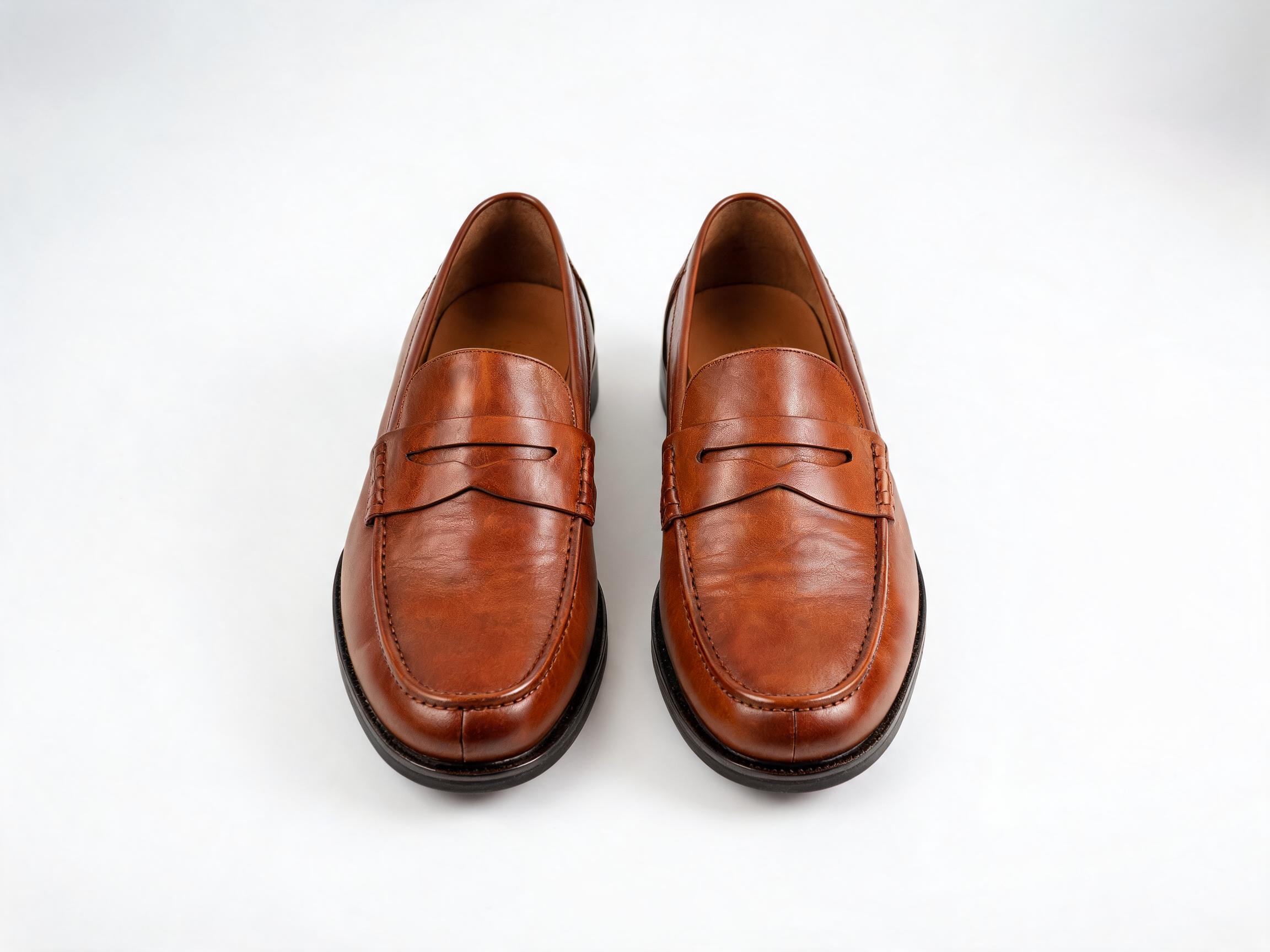
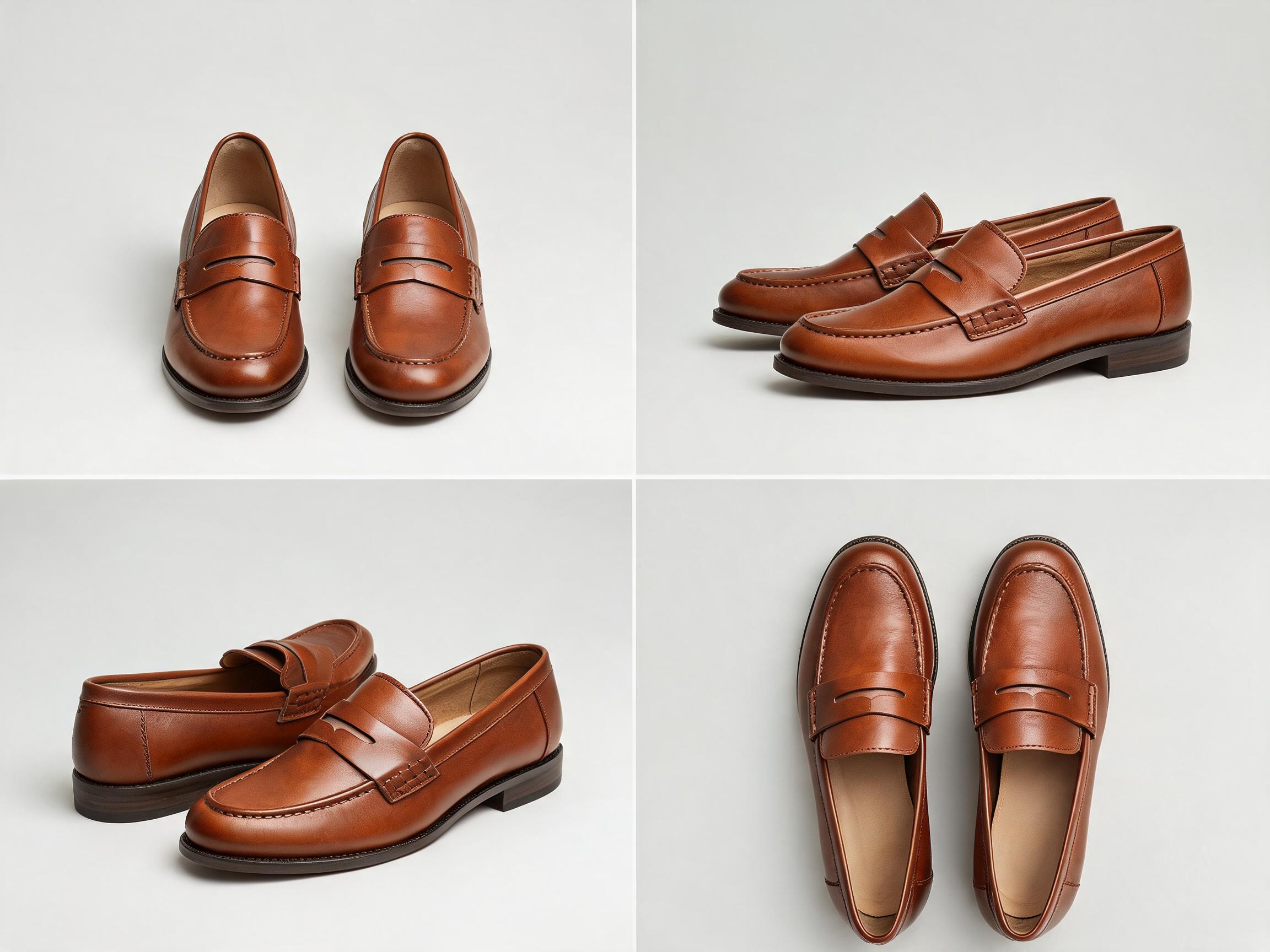
To see how these checks apply in practice, consider the Cognac Penny Loafer Shoes. The product photos show the grain, finish, and stitching of a shoe declared as full-grain leather. Use them as a visual reference when comparing samples from other suppliers. The spec sheet lists a MOQ of 100 pairs per color and a lead time of 25-35 days. Confirm current MOQ and lead time with the sales team before ordering.
Checklist summary
| Check | What to do | What it tells you |
|---|---|---|
| Grain pattern | Compare left and right shoe; look for natural variation | Uniform pattern may indicate corrected or embossed grain |
| Smell and feel | Smell the leather; press with thumb | Chemical smell or plastic feel may indicate synthetic or heavy coating |
| Cut edge | Inspect exposed edges for fibrous layer | Distinct top layer may indicate coated leather |
| Material declaration | Request written statement of leather type and thickness | Creates a record to compare against sample |
| Sample testing | Water drop test; cross-section inspection | Observed behavior under your conditions; not a certification |
No single check proves material type on its own. Use them together, keep records, and ask specific questions when something does not match. This approach gives you a defensible basis for your sourcing decision.
Ready to review a sample? Contact our sales team to request a sample of the Cognac Penny Loafer Shoes and discuss your material requirements.
Request a Sample