A technical sourcing guide for wholesale buyers comparing Chinese hiking and outdoor shoe manufacturers. Covers how to evaluate outsole grip, discuss waterproofing construction with suppliers, and structure bulk QC inspections for materials, construction and finished pairs.
Wholesale Sourcing Guide
Outsole grip, waterproofing and bulk QC are the three areas where Chinese hiking and outdoor shoe suppliers are most often compared — and where vague answers cost buyers the most. This guide explains what to evaluate, what to ask, and how to verify claims before a bulk order leaves the factory.
In this guide
Outsole grip: lug patterns, rubber compounds and slip-resistance claims
Outsole grip is the first technical conversation most buyers have with an outdoor shoes manufacturer. It is also the easiest place to receive marketing language instead of a specification. Ask for the outsole drawing or technical sheet, then work through three layers: lug geometry, rubber compound, and how slip resistance is presented.
Lug pattern geometry
Lug depth, direction, spacing and shape determine how an outsole behaves on mud, loose gravel, wet rock and hard packed trail. There is no single correct pattern — the pattern should match the terrain the shoe is designed for. Ask your supplier to explain the intended use of a proposed pattern and whether tooling already exists for it. A pattern that is already in production is usually faster and cheaper to sample than one requiring new tooling.
Rubber compound
Outsole rubber compounds balance grip, abrasion resistance and hardness. Softer compounds generally grip better on wet surfaces but wear faster; harder compounds last longer but can feel less secure on slick ground. Ask the supplier what compound family they use for a given model and whether they can show the compound specification. Do not accept "high-grip rubber" without a material reference. If the supplier cannot provide a compound data sheet, that is a sourcing risk, not necessarily a disqualification.
Slip-resistance claims
Slip resistance is often stated as a feature rather than a measured result. As a buyer, separate three things:
- What the manufacturer claims (e.g. "oil- and slip-resistant rubber outsole").
- What the compound or outsole supplier can document.
- What you can verify on samples.
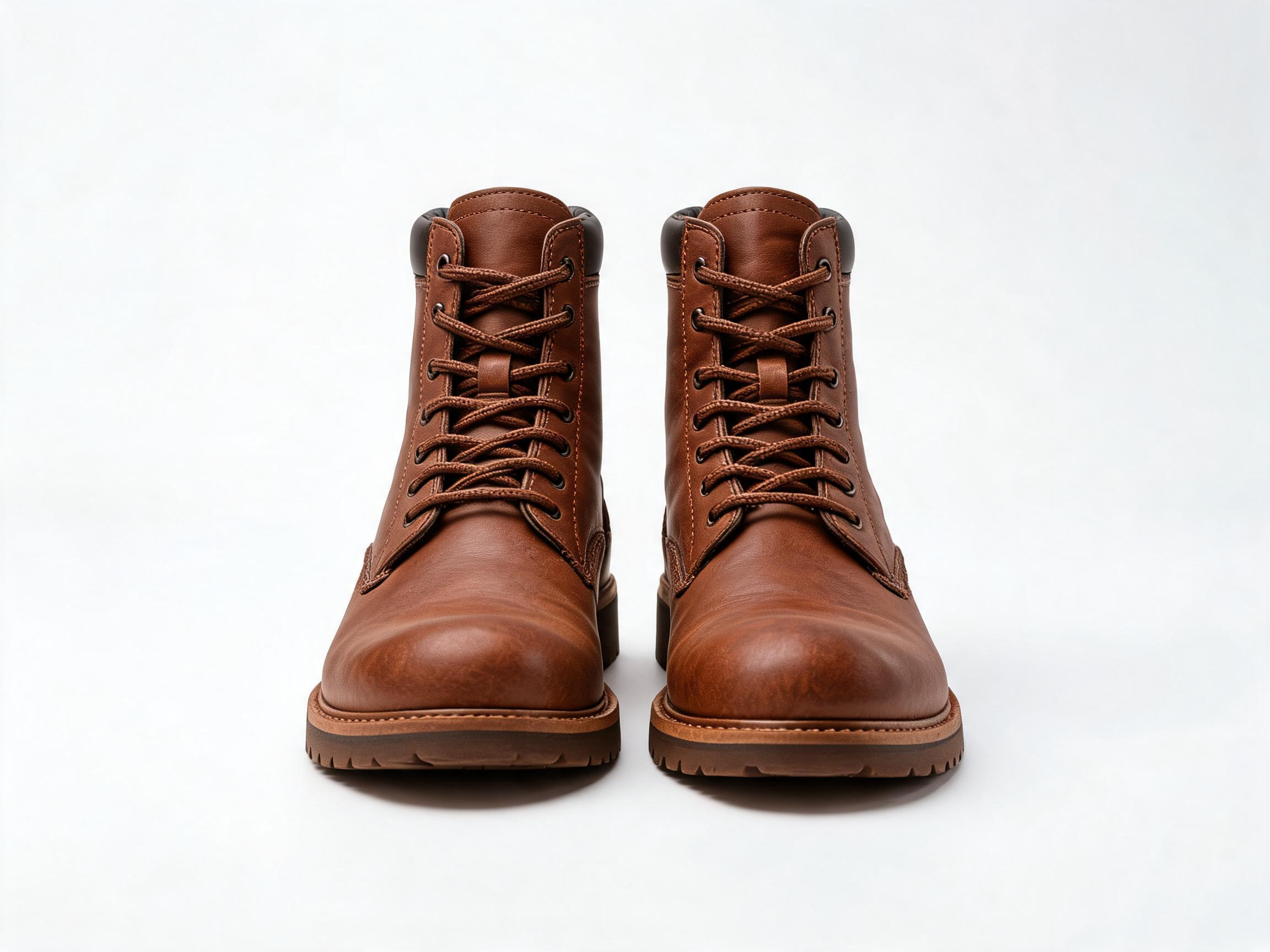
A useful reference point for durable boot-style construction is the Brown Leather Work Boots, which use an oiled full-grain leather upper, a breathable textile lining, a cushioned anti-fatigue insole and a lug rubber outsole described as oil- and slip-resistant. That product is a work boot, not a hiking shoe, but it illustrates how a supplier should be able to describe sole construction and material intent in concrete terms. For buyers sourcing hiking and outdoor shoes, the same discipline applies: ask for the outsole specification rather than relying on a generic claim.
Waterproofing options and how to verify them in sampling
"Waterproof" means different things depending on construction. Before agreeing on bulk pricing, clarify which approach the factory is proposing and what it covers.
| Approach | What it generally involves | What to discuss with the supplier |
|---|---|---|
| Waterproof membrane bootie | A membrane liner inserted as a bootie during lasting or strobel construction | Membrane source, seam sealing method, breathability trade-off, how the bootie is fixed to avoid movement |
| Water-resistant leather treatment | Oiled, waxed or treated full-grain leather upper | Treatment type, whether re-treatment is expected, colour and surface change after treatment |
| Water-repellent textile | DWR-treated mesh or synthetic upper | Durability of the treatment, effect on breathability, care instructions |
| Seam-sealed construction | Taped or sealed seams in combination with the above | Which seams are sealed, tape width and placement, how sealing is inspected |
These approaches are not mutually exclusive. Many outdoor shoes combine a treated upper with a membrane bootie and sealed seams. The buyer's job is to confirm what is actually specified for the order, not to assume that "waterproof" covers every component.
Verifying waterproofing in sampling
Sampling is where claims become testable. Useful steps include:
- Ask for a construction breakdown showing upper material, lining, membrane (if used) and seam treatment.
- Request a sample pair and inspect seam sealing visually — gaps, wrinkles and missed sections are visible before any wear.
- Discuss with the supplier what their internal water-resistance check is and whether results are recorded per sample.
- Ask how the membrane is positioned relative to the lasting margin and whether it is stitched or cemented.
If the supplier cannot describe the construction beyond "waterproof", treat that as an open question to resolve before bulk production. For buyers working with a genuine-leather footwear OEM/ODM manufacturer, leather treatment and membrane integration are standard topics at sampling stage.
Bulk QC: material checks
Bulk QC starts before assembly. Material checks catch problems that are expensive to correct later.
- Upper material: confirm grain, thickness and finish match the approved sample. Oiled leather should show consistent colour and surface.
- Lining: check that lining material matches the specification and is free from defects.
- Membrane: verify batch consistency of the membrane or waterproof component if used.
- Insole and midsole: confirm density, thickness and shaping against the approved sample.
- Outsole: check compound consistency and lug pattern against the outsole drawing.
- Hardware: examine eyelets, hooks and lacing components for plating quality and sharp edges.
A practical material inspection works from the bill of materials downwards. If a material is not listed in the BOM, it should be identified and confirmed separately, because substitutions are easier to spot when the specification is complete.
Bulk QC: construction checks
Construction checks verify that materials have been assembled as specified. For hiking and outdoor shoes, the critical areas are lasting, stitching, seam sealing and sole attachment.
- Lasting: check symmetry between left and right, toe shape and heel alignment.
- Stitching: look for skipped stitches, uneven spacing and loose thread ends.
- Seam sealing: confirm that sealing covers the intended seams and is continuous.
- Sole attachment: check for gaps between upper and sole, excess adhesive and misalignment.
- Lining and bootie: confirm the membrane or lining has not been pulled, folded or punctured during assembly.
Construction inspection is more useful when it happens at defined stages rather than only at the end of the line. A supplier with a multi-stage inspection process can usually show you where checks occur and what is recorded. Ask to see the inspection plan for your order; a clear plan is a better signal than a verbal assurance.
Bulk QC: finished-pair inspection
Finished-pair inspection is the buyer's last practical checkpoint before shipment. It should cover appearance, fit and function together.
| Check point | What to look for |
|---|---|
| Pair matching | Left and right match in size, colour and finish |
| Stitching and trim | No skipped stitches, no loose thread, clean trimming |
| Sole bond | No gaps, no excess adhesive, even sole placement |
| Lacing and hardware | All hardware present, laces correctly threaded and of specified type |
| Marking and labelling | Size, style and any required buyer marking match the order specification |
| Packaging | Polybag, box and inserts correct; no damage or moisture |
Finished-pair inspection usually works best as an AQL-based sampling plan agreed in advance. Buyers sourcing Black Leather Knee-High Boots or similar leather boot lines will recognise the same logic: the final check confirms that what was approved at sampling is what ships. For hiking and outdoor shoes, add a simple functional check on a sample of pairs — flex the sole, check the heel counter, and inspect the seam seal under light.
FAQ
What should I ask a Chinese hiking shoe manufacturer about outsole grip?
Ask for the outsole drawing, the rubber compound family, and how slip resistance is described on the specification sheet. Request a sample pair so you can assess lug pattern and compound feel against your intended terrain.
How can I verify waterproofing claims during sampling?
Ask for a construction breakdown showing the upper material, lining, membrane if used, and seam treatment. Inspect the sample for seam sealing quality and confirm what internal water-resistance check the factory performs.
What are the most important bulk QC checks for outdoor shoes?
Material checks (upper, lining, membrane, outsole, hardware), construction checks (lasting, stitching, seam sealing, sole attachment), and finished-pair inspection (matching, stitching, sole bond, labelling, packaging).
Can a work boot manufacturer produce hiking shoes?
Factories that produce genuine-leather footwear often have the lasting, stitching and sole-attachment capability relevant to outdoor shoes. Product-specific construction still needs to be evaluated against the model you intend to buy.
Next Step
If you are comparing suppliers for a hiking or outdoor shoe program, send your specification — outsole requirements, waterproofing approach and target QC plan — and request a sampling discussion. A clear specification is the fastest way to compare quoted construction and avoid surprises at bulk stage.