A practical guide for importers and brands on shortlisting a genuine leather shoes manufacturer. Learn how to translate your program brief into the right supplier questions, compare manufacturers on the same criteria, and avoid common sourcing mistakes.
Supplier Selection Guide
The decision of which leather shoes manufacturer to shortlist is often the difference between a footwear program that launches on schedule and one that stalls in sampling. For B2B buyers in Europe, North America, and the Middle East, the challenge is not finding factories that claim to make leather shoes — it is identifying a genuine leather footwear manufacturer that can execute your specific program brief with consistency.
In this guide
- Start with your program brief, not with a factory list
- Translate your brief into supplier questions
- Compare two shortlisted manufacturers on the same brief
- Verify leather footwear manufacturing capability
- Frequently asked questions
- Send your program brief to Aurevia Footwear
Start with your program brief, not with a factory list
Most sourcing advice begins with factory audits and compliance checks. Those matter, but they come later. The first step in choosing a leather shoes manufacturer for B2B programs is to write down your own requirements in enough detail that two different factories could quote against the same document. Without this, every supplier conversation stays vague and comparisons become guesswork.
A practical program brief should answer at least these five questions:
- Category mix: Are you sourcing only women's leather boots, or a mix of boots, loafers, and heels? A factory that runs a dedicated cutting-to-lasting line for leather footwear can handle mixed programs more predictably.
- Leather type: Full-grain, top-grain, or split leather? Smooth or textured finish? The answer determines which tanneries the manufacturer works with and how they inspect incoming hides.
- Size grading: European sizing, US sizing, or a regional grading chart for the Middle East? Ask how the factory adjusts lasts and patterns for your target market's fit preferences.
- Target market: Climate, seasonal calendar, and retail price point. A program for Northern European winters has different construction requirements than one for Middle Eastern spring seasons.
- Program type: OEM (your design, their production) or ODM/private label (their design team develops from your references). This changes how much of the development work the factory owns.
When your brief is concrete, you can use it as a filter. A manufacturer that only handles basic cemented construction will struggle with a program requiring Goodyear welted boots. One that sources leather locally may not meet your requirement for a specific European tannery. The brief tells you which questions to ask next.
Translate your brief into supplier questions
Once your brief is written, turn it into a short list of questions that separate a genuine leather shoes manufacturer from a trading intermediary. The goal is not to catch anyone — it is to understand how the factory would actually execute your program.
Here are the questions that matter most for a leather footwear program:
Where is the leather sourced, and how is it inspected?
Genuine leather programs depend on consistent hide quality. Ask about the manufacturer's supply channels and their inspection process for colour, texture, and durability across repeat orders. A credible answer refers to specific stages in their workflow, not a general promise of quality.
What does your sampling process look like?
For ODM and private label programs, the factory's design and pattern teams turn your sketches, references, or trend boards into production-ready samples. Ask how many rounds of sampling are typical and what inputs they need from you at each stage.
How do you handle size grading for my target market?
European and North American sizing differ from Middle Eastern grading conventions. A manufacturer that exports across these regions should be able to explain how they adapt lasts and patterns for each market. This is a practical test of their export experience.
Which construction methods are you equipped for?
Genuine leather shoes can be made with cemented, Blake, or Goodyear welted construction. Each requires different machinery and skill levels. Ask which methods the factory runs on its own production lines, and verify that their equipment matches your program's needs.
What does your inspection process cover before shipment?
Multi-stage inspection — from incoming material to finished shoes — is standard for reputable manufacturers. Ask for the specific checkpoints: material inspection, construction checks during production, and a final finished-shoe inspection before packing.
These questions work because they tie directly to your brief. A trading intermediary can answer general questions about quality, but they will struggle to explain the specifics of leather sourcing, last grading, or production-line construction methods.
Compare two shortlisted manufacturers on the same brief
After the first round of conversations, you will likely have two or three candidates. The most reliable way to compare them is to score each against the same set of criteria from your brief. The table below shows what to ask and what a credible answer looks like.
| Program brief item | Question to ask | What a credible answer looks like |
|---|---|---|
| Leather type and sourcing | Can you source full-grain leather from European tanneries, and how do you inspect incoming hides? | Names specific supply channels, describes a multi-stage inspection for colour and texture consistency, and can explain how they handle natural leather variation. |
| Category mix | Can you produce boots, loafers, and heels in one program with consistent quality? | References production lines for each category, shows samples across categories, and explains how they manage last and pattern changes between styles. |
| Size grading for target market | How do you adapt sizing for European versus Middle Eastern markets? | Describes specific grading adjustments, references past export programs to those regions, and can discuss fit preferences by market. |
| ODM / private label support | How does your design team work from our trend boards or sketches? | Explains the sampling workflow, shows examples of past private label programs, and clarifies what inputs they need from the buyer. |
| Construction method | Which construction methods do you run in-house? | Lists specific methods (e.g., cemented, Blake, Goodyear welt) and can point to the machinery and skilled workers on their production floor. |
| Inspection and quality control | What checkpoints does a bulk order pass before shipment? | Describes material inspection, in-process construction checks, and a final finished-shoe inspection. Avoids vague language about quality. |
When you compare answers side by side, patterns emerge. One factory may excel at leather sourcing but lack experience with your target market's sizing. Another may have strong ODM design capabilities but limited experience with mixed-category programs. The table helps you see these trade-offs clearly instead of relying on first impressions.
Verify leather footwear manufacturing capability
Beyond the answers, there are practical ways to verify that a manufacturer actually runs leather footwear production. These checks are especially important when you are considering a long-term private label program.
Look for a dedicated leather production line
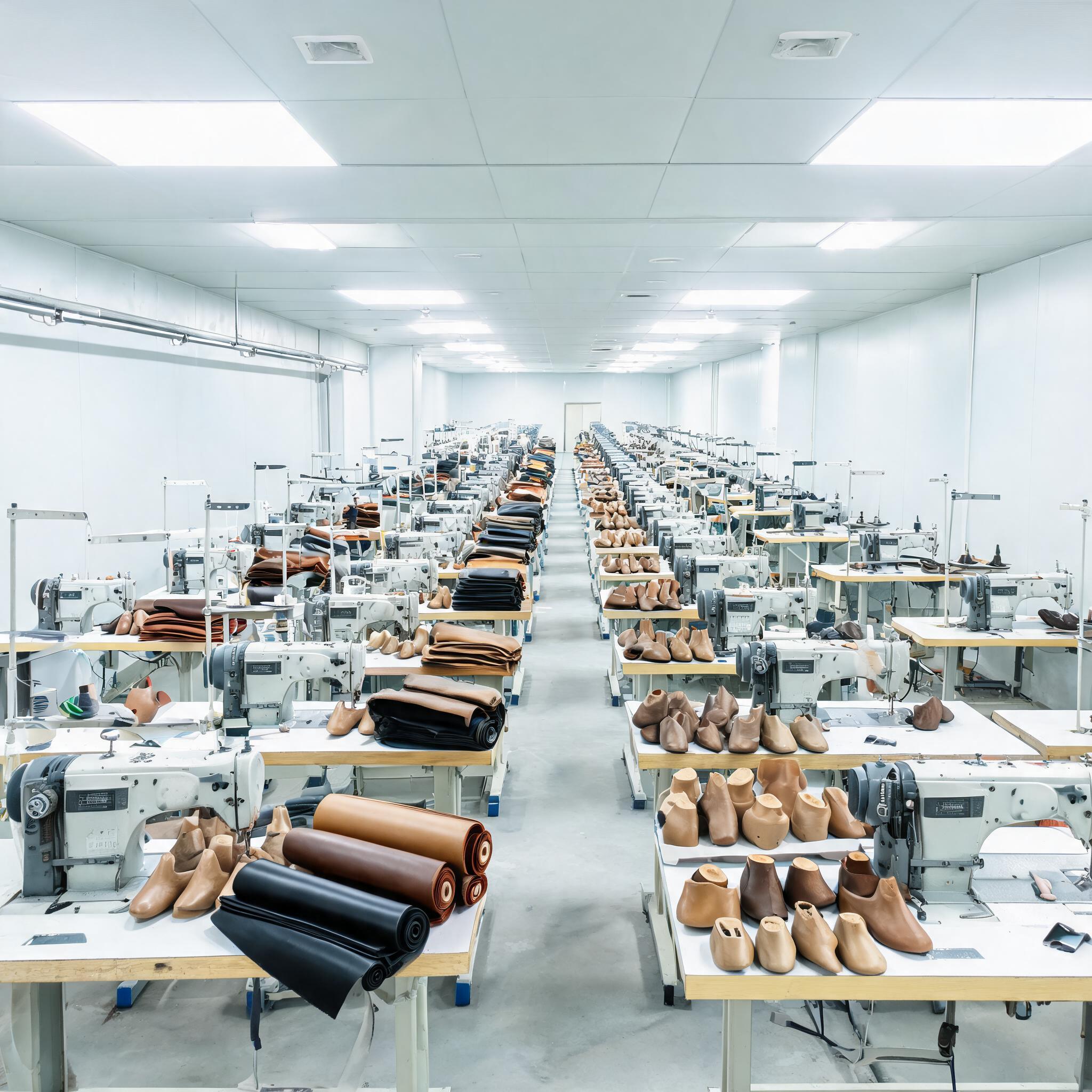
A genuine leather shoes manufacturer operates cutting, stitching, and lasting lines specifically for leather footwear. This is different from a factory that mostly handles synthetic materials and accepts leather orders occasionally. Ask about the production base and whether the leather line runs year-round.
Aurevia Footwear Co., Ltd., for example, operates its production base in Quanzhou, China, where cutting, stitching, and lasting lines are set up for leather footwear. The company was established in 2011 and has grown to a 260-person team with annual revenue of USD 12 million, focusing on high-end footwear and fashion accessories for global B2B buyers.
Review samples across your category mix
Ask for samples that match your program, not just their best-selling styles. If your program includes leather boots and loafers, request both. Examine the construction details — stitching consistency, leather quality, sole attachment, and heel finish.
For reference, consider the construction details in these examples from Aurevia's leather footwear range:
- Black Chelsea Boot Shoes — black leather upper, leather lining, rubber sole, 3 cm block heel, and elastic side panels.
- Black Leather Loafers — black leather upper, leather lining, leather sole, and a 3 cm stacked heel.
- Black Leather Knee-High Boots — black leather upper with a 6 cm block heel for a bold statement.
These examples show the level of detail you should expect when reviewing samples — not just the overall look, but the specific materials, linings, and heel constructions that affect durability and comfort.
Ask about their export markets
A manufacturer that exports regularly to Europe, North America, and the Middle East has practical experience with different regulatory requirements, sizing conventions, and buyer expectations. This experience reduces the friction of your first program. Aurevia, for instance, exports to these three regions and has built long-term cooperation with European footwear importers and retail chains on private label programs.
Frequently asked questions
What is the difference between OEM and private label in footwear?
OEM means the factory produces according to your design and specifications. Private label (also called ODM) means the factory's design team develops the product from your references, trend boards, or sketches, and you sell it under your own brand. Private label is a good fit when you want a seasonal collection without building an in-house design team.
How many samples should I expect before bulk production?
For a leather footwear program, plan for at least two rounds of samples: a development sample to confirm design and materials, and a counter sample to verify fit and construction. The exact number depends on the complexity of your designs and how quickly you can give feedback on each round.
Can a manufacturer handle a mixed program of boots, sneakers, and sandals?
Yes, but only if the factory has production lines for each category. Leather boots require different lasting and stitching processes than sandals. Ask specifically about the factory's experience with your category mix, and request samples from each category to verify consistency.
How do I verify that a supplier is a genuine leather shoes manufacturer and not a trading company?
Ask for details about their production process — leather sourcing, cutting, stitching, lasting, and inspection. A genuine manufacturer can describe these steps in specific terms and can show you their production floor. A trading intermediary typically cannot answer these questions with the same level of detail.
Send your program brief to Aurevia Footwear
Choosing the right leather shoes manufacturer for your B2B footwear program comes down to preparation. When you have a clear brief, the right questions, and a structured comparison method, the decision becomes much more objective.
Aurevia Footwear Co., Ltd. is a high-end footwear and fashion accessories manufacturer and exporter based in Quanzhou, China. The company's in-house design and pattern teams work from buyer sketches, references, or trend boards to produce ready-to-sample styles. Genuine leather and premium materials are sourced through stable supply channels, and every bulk order passes material, construction, and finished-shoe inspections before shipment.
If you are starting a leather footwear program and need a manufacturing partner, send your program brief — your category mix, leather type, target market, and program type. The team at Aurevia can review your requirements and explain how their production lines would execute your program.