
A buyer-facing selection guide for knee high boots in an autumn/winter wholesale range: shaft height and calf fit, zipper closure, heel construction, lining choice by season, size coverage, and the QC points to confirm before placing a bulk order — each decision point mapped to the specifications of our Black Leather Knee-High Boots.
Wholesale Buying Guide
Six decision points that determine whether a knee high boot line sells through or sits in stock — and the specifications to pin down with the factory before the bulk order.
Key takeaways
- Shaft height (~38 cm here) sets where the boot ends on the calf; calf circumference is the fit variable that decides size returns, and both can be adjusted on bulk orders after the confirmation sample.
- Lining is a seasonal decision: fabric for transitional weather, brushed fleece for deep winter. One upper cannot serve both without a second SKU.
- Zipper type and heel construction are the two components most likely to generate after-sales complaints; both are included in the factory's three-stage inspection.
- Size coverage of EU 35–41 / US 5–10 determines which markets a single run can serve.
- MOQ and lead time come from the sales team's written quotation, which supersedes any figure published in the product documentation — confirm both before committing a purchase order.
In this guide
1. Shaft height and calf circumference
Shaft height decides where the boot top sits on the leg; calf circumference decides whether it closes comfortably around it. These are two separate numbers, and a wholesale range needs both stated in writing before you compare suppliers.
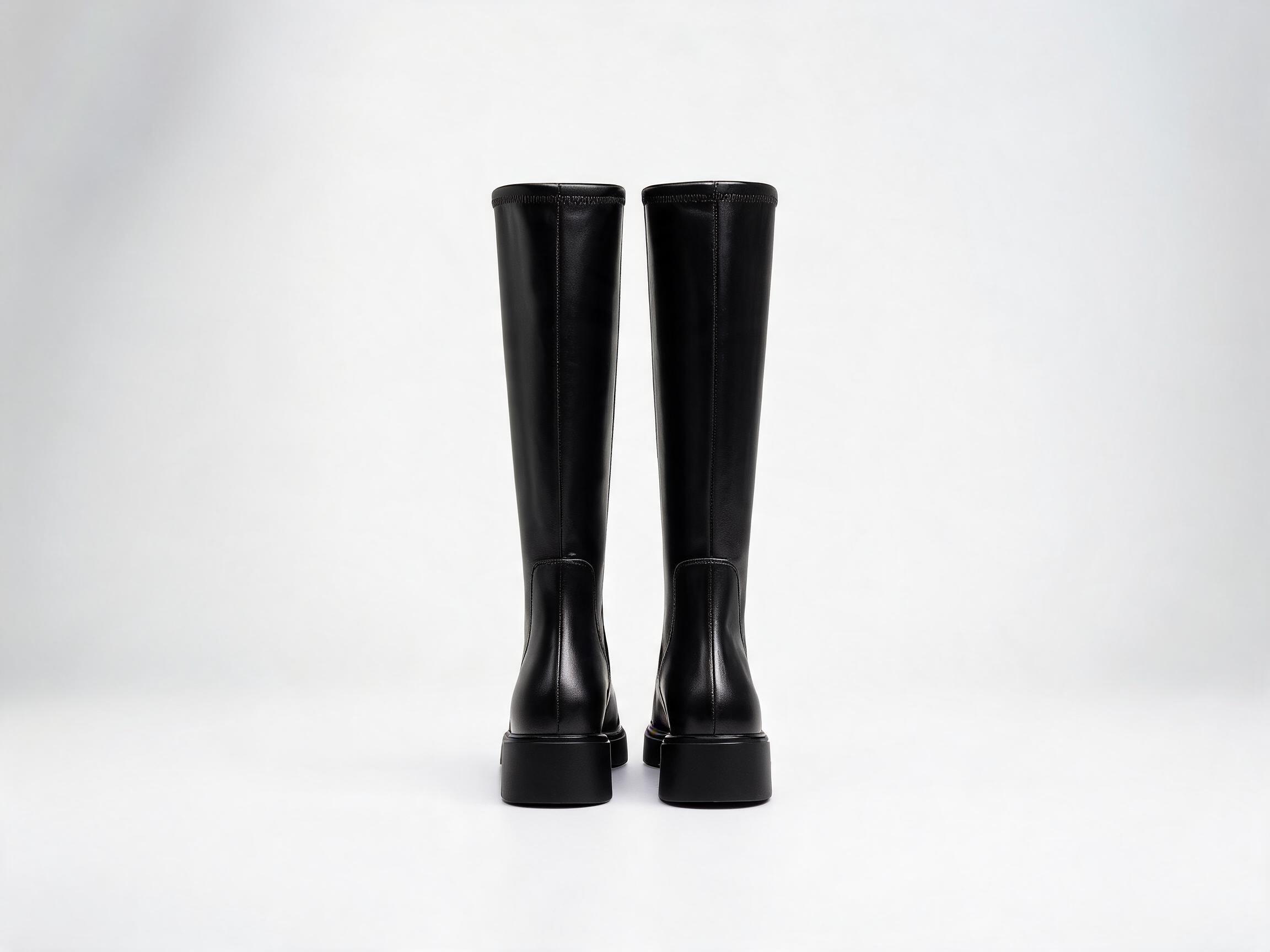
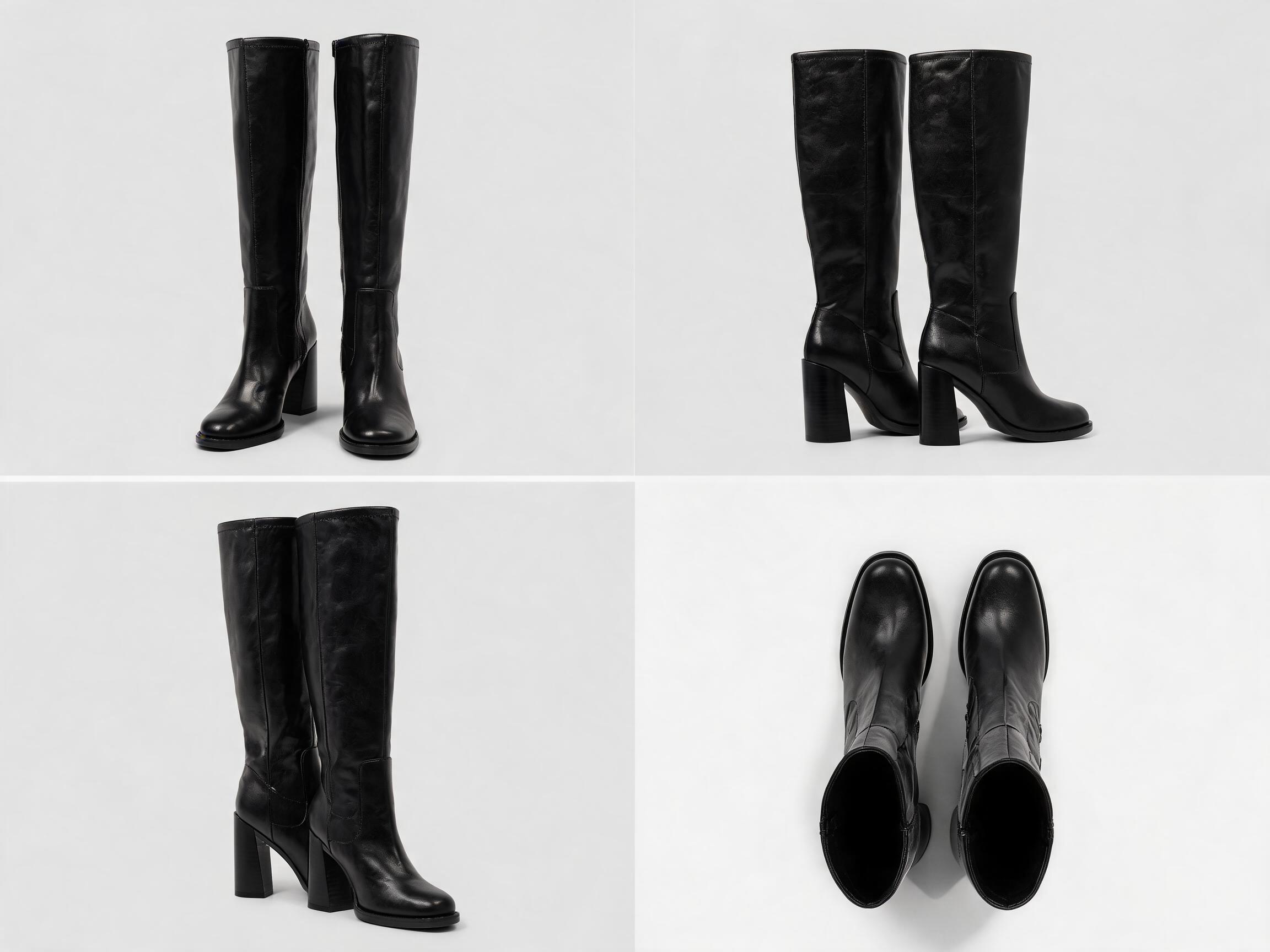
The Black Leather Knee-High Boots are specified with a shaft height of approximately 38 cm, which places the top at knee level on an average adult leg. Because leg proportions vary, 38 cm will read as true knee-high on some wearers and mid-calf on others — which is why the circumference figure matters just as much.
For bulk orders, calf circumference and shaft height can be adjusted after the confirmation sample is approved. If your market skews toward wider or narrower calves, this is the point to negotiate, not the point to discover from returns data after the season. Bring your target circumference range to the sampling stage and confirm it against the sample before production. The adjustable range, any extra sampling cost and the effect on lead time should be settled with the sales team at the sampling stage.
Two things to verify with the factory:
- Measurement method — is the 38 cm measured from the top of the sole, the heel seat, or the back of the heel? The number differs depending on where you start.
- Tolerance — what circumference range is held across a production run, and how is it checked?
Getting these on record protects you when a retail partner asks why a size 39 fits differently from the sample they approved.
2. Zipper: the full-length inner closure
A knee-high boot has to be entered through the shaft, and the closure choice determines how easy that is and how often it fails. This model uses a full-length inner zipper — one zip running from the top of the shaft down toward the heel seat on the inside of the leg.
Full-length inner zips are the practical choice for a wholesale range because they let the wearer open the whole shaft rather than squeezing the foot through a partial opening. The trade-off is that the zip is now a wear point on every pair, and a failed zip at retail is a return, not a repair conversation.
The factory's three-stage inspection includes zipper function testing. When you review samples, run the zip yourself: open and close it the full length several times, check that the pull tab sits flat and does not catch on the lining, and confirm the zip does not gap at the ankle flex point where the shaft bends.
A question worth asking at sampling: are replacement zip pulls or sliders available as spares with bulk orders? For a retail chain that handles its own aftersales, a small spare-parts allowance can be cheaper than processing a return.
3. Heel: why a low block heel suits range stock
Heel height and heel shape do different jobs. Height affects how the boot wears across a day; shape affects stability and how the boot reads on the shelf. This model uses a low block heel — a solid, wide-profile heel rather than a slim one.
For a multi-store range, the practical argument for a block heel is surface contact. A wider heel footprint distributes load more evenly than a narrow one, which matters for a boot worn on pavements, in stores, and through a commute. It is also a lower-risk shape for buyers who cannot try the boot on: block heels are more forgiving of minor fit differences than narrow heels.
For the exact heel height, the specification sheet is the working reference and the sales team's written confirmation on the current production specification is the authoritative figure. Use the confirmed figure in your retail copy, and do not print a heel height on packaging or e-commerce listings until you have that confirmation in writing.
Also confirm the heel attachment: a block heel is typically fixed to the sole unit, and the factory's inspection includes a sole adhesion test. Ask what that test covers — outsole-to-upper bonding, heel attachment, or both — so you know which failure mode it screens for.
4. Lining: fabric vs. brushed fleece
Lining is where a single style becomes two seasonal products. This boot is offered with two lining options: a fabric lining and a brushed fleece lining.
| Lining | Best suited to | What to confirm |
|---|---|---|
| Fabric | Transitional weather, autumn, mild-winter markets, and retailers who want the boot worn from early autumn into spring | Lining fiber content and whether it is specified on the label |
| Brushed fleece | Deep-winter markets and cold-climate retail; the boot reads as a winter product on shelf | Fleece weight and how far up the shaft the fleece extends |
The upper is full-grain leather in both cases; only the lining changes. That means the two versions share a last, a shaft pattern and a sole, so ordering both as a two-SKU seasonal program keeps the range visually consistent while covering more of the calendar.
One constraint to plan for: if both linings are ordered in the same colorways, confirm that the factory treats them as separate SKUs for MOQ purposes. Also confirm whether the fleece lining affects the internal fit — a brushed lining takes up volume inside the shaft, so a wearer may need the same size as the fabric version or may not, depending on how the pattern is adjusted. Ask for both lining versions in the same size at sampling and compare the internal circumference.
5. Size coverage and color options
The size range is EU 35–41, equivalent to US 5–10. For a wholesale range this determines which markets a single run can address without opening a separate size extension: it covers the core women's size band for most European and North American retail.
Sizes outside that band would be a new decision, not an automatic extension — confirm with the sales team before promising a retail partner anything above 41 or below 35.
Color is black, brown, or a custom color. For a first order, black and brown are the safe depth colors; a custom color is a range differentiator but adds a color-matching step. If you are specifying a custom color, confirm the color standard (a physical swatch or a Pantone reference) and the colorfastness testing that applies, since the factory's inspection includes colorfastness checks. Ask which test method and what acceptance level is used, and get that in writing before the bulk run.
OEM and ODM are supported, including logo and packaging. For a retail chain, this is where a private-label program starts: the boot, the zip pull, the box, and the tissue wrap can all carry your brand. Confirm the tooling or marking cost and the sample turnaround for a branded version before you build the timeline.
6. QC, packing and warranty terms
Inspection is where a wholesale buyer's risk sits. The factory runs a three-stage inspection that includes zipper function, colorfastness, and sole adhesion testing. Ask for the inspection record with the shipment, and confirm at which stage each check is performed — inline, pre-final, or both.
Packing is specified as one pair per box plus an export carton, with 12 pairs per carton. Weight is approximately 1.0 kg per pair, which is a useful figure for freight estimates; multiply by 12 for the carton weight before you request a freight quote, and add the carton's own weight as confirmed by the factory.
Warranty is 6 months, with a 48-hour response commitment. For a retail chain, clarify what the warranty covers — zipper failure, sole separation, and color issues are the three most likely claims — and what evidence the factory needs (photos, a return sample, a claim form) to process a claim. A short written claims procedure saves argument later.
Before you place the order
MOQ and lead time are quoted per order and per specification; the sales team's written quotation supersedes any figure published on the product page or in the specification sheet. Confirm both in writing before ordering, and do not build a retail launch calendar on an unconfirmed figure.
Beyond MOQ, three questions close the loop on a first range order:
- Confirmation sample first. Approve a physical sample in your chosen lining, colorway, and calf measurement before the bulk run. The adjustability of shaft height and calf circumference only has value if it is locked in at the sample stage.
- Test the zip and the fit yourself on that sample — full open and close, and a circumference check against your target range.
- Get the terms in writing — confirmed heel height, MOQ, lead time, carton weight, and warranty claims procedure.
The product page for the Black Leather Knee-High Boots lists the full specification set; use it as the starting point for the sample request, and treat any figure you intend to print on retail packaging as needing written confirmation.
FAQ
Can the calf circumference be adjusted for our market?
Yes — calf circumference and shaft height can be adjusted on bulk orders after the confirmation sample is approved. Specify your target range at the sampling stage, and settle the adjustable range, any extra cost and the effect on lead time with the sales team then, because the adjustment is tied to the sample you sign off.
Should we order both lining options in the first season?
That depends on your climate and your shelf calendar. Fabric suits transitional and mild-winter markets; brushed fleece suits deep-winter markets. The upper and sole are shared, so ordering both keeps the range visually consistent, but confirm how the factory treats them for MOQ and internal fit before committing.
What is the heel height?
The boot uses a low block heel; the confirmed figure for the current production specification comes from the sales team in writing. Avoid printing a specific number on retail packaging until you have that confirmation.
What is the MOQ and lead time?
Confirm current MOQ and lead time with the sales team before ordering — the written quotation that applies to your order supersedes the figures published in the product documentation.