
A practical framework for retail chains, buyers, and brands to assess ladies footwear suppliers before committing to samples. Learn which dimensions—last and style range, material and color management, size localization, comfort engineering, and private-label support—to verify, using our own women's line as a concrete reference.
Supplier Evaluation Guide
When you are sourcing ladies footwear for a retail chain, a concept store, or a private label, the sampling stage is where most hidden costs surface: a last that runs narrow, a color that shifts between the swatch and the bulk lot, a size run that skips your key market, or a heel that feels unstable after ten minutes of walking. None of these issues are resolved by a beautiful sales deck. They are resolved—or exposed—by how the supplier manages the dimensions that sit behind every sample.
This article outlines what to verify before you approve a sample request, using our own women's line—three published styles with defined materials, constructions, and customization options—as a concrete reference. Where a point depends on current terms, we say so; where a fact is fixed in our product data, we state it directly.
- Evaluate five dimensions before sampling: last and category coverage, material and color control, size-range localization, comfort and stability engineering, and private-label support.
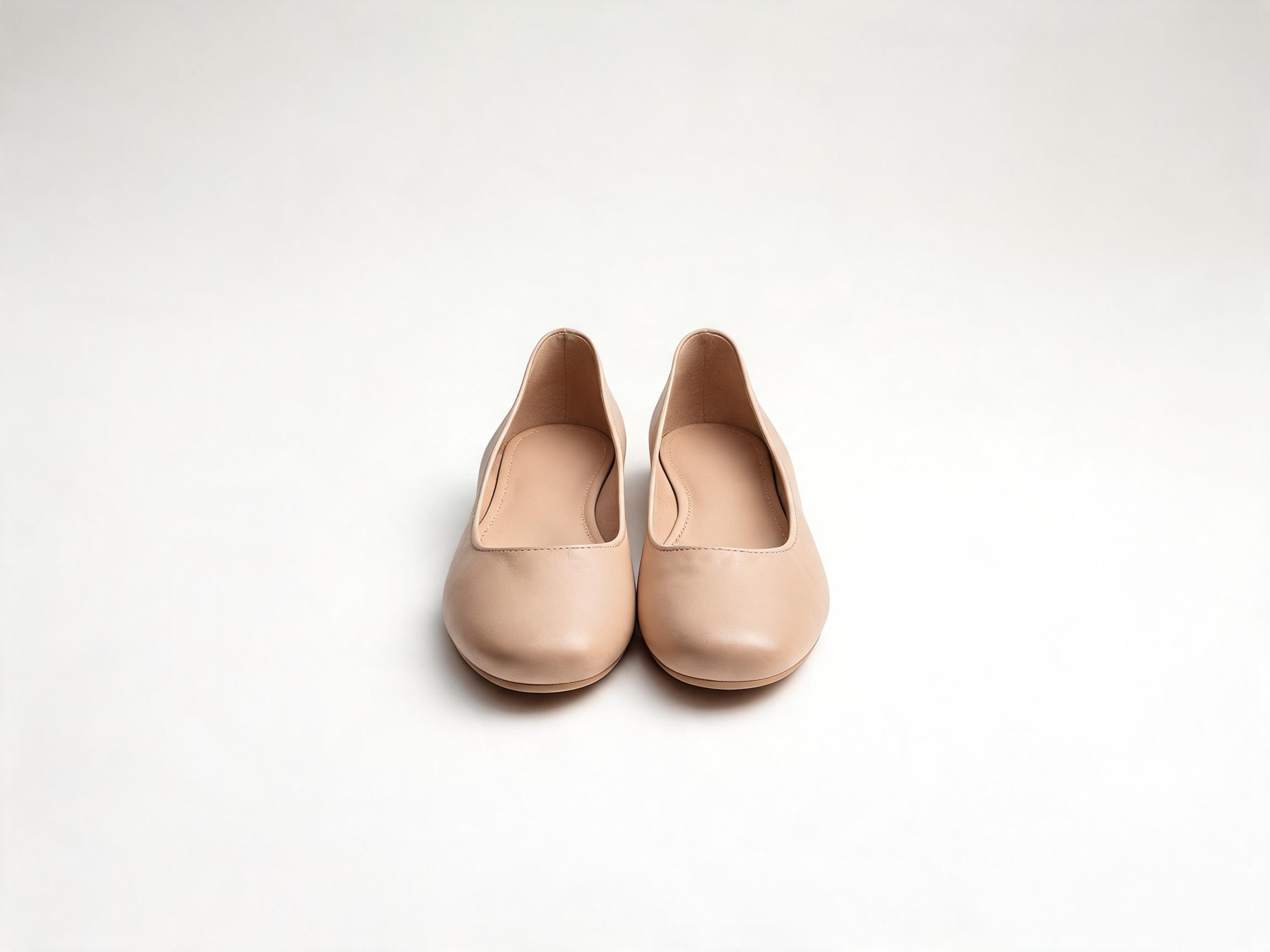
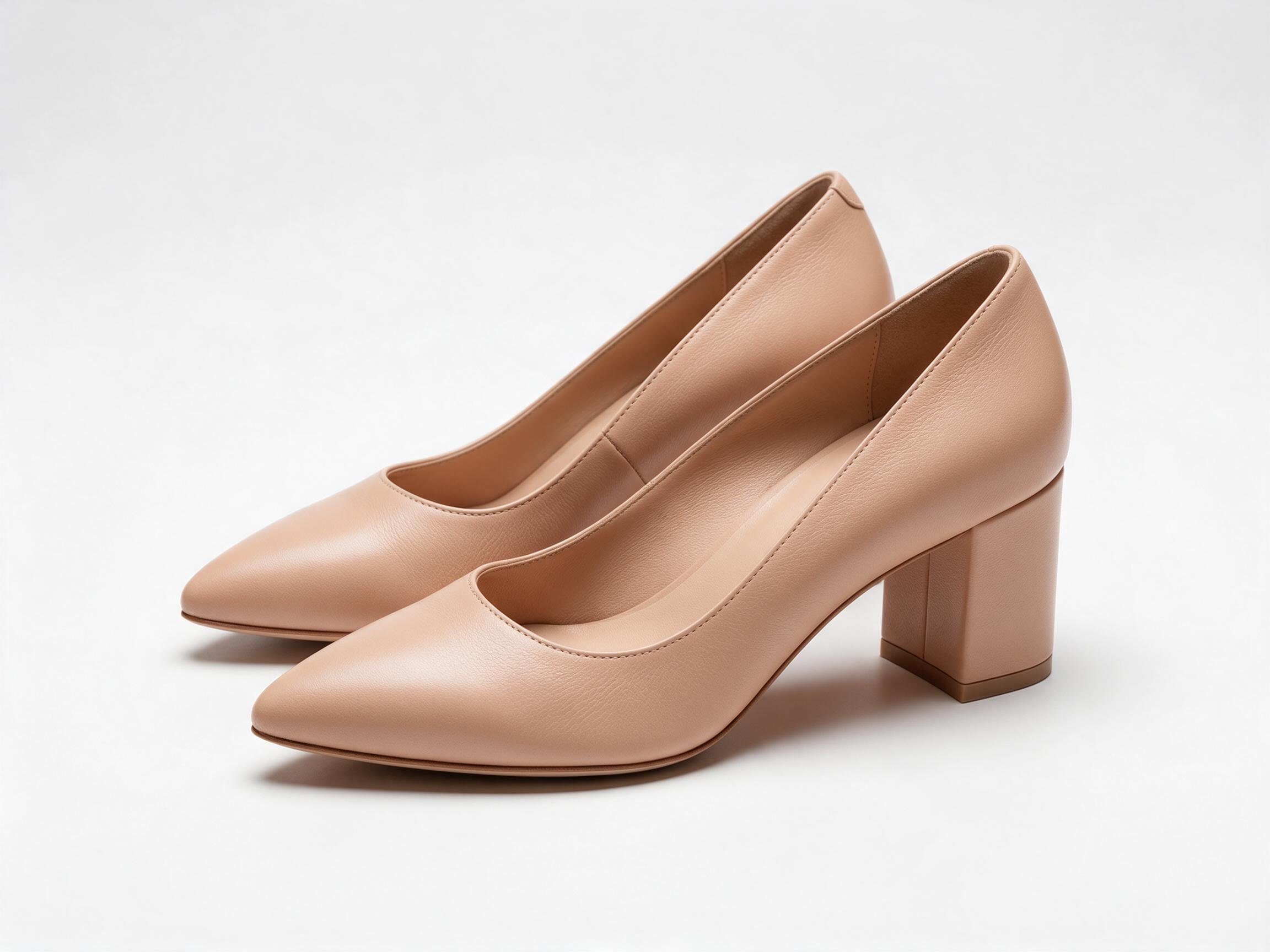
- Our women's line spans classic pumps (~7 cm heel), ballet flats with an elasticized topline, and block-heel pumps (~5 cm heel), giving you three different constructions to compare.
- Ask for the size range, material composition, and heel attachment method in writing—not after the first sample arrives.
- Confirm current MOQ, lead time, and sampling fees directly with the sales team before committing.
1. Last and Category Coverage
A supplier that offers only one last shape will fit one type of customer. Before sampling, ask how many distinct lasts are available for women's styles and what foot shapes they are designed around. A narrow pointed last suits a fashion pump; a rounder toe box suits a ballet flat that needs to accommodate a wider forefoot. If the supplier uses the same last for both, the fit compromise shows up in returns.
Our women's range gives you three constructions to test against the same last family:
- Black leather classic pumps with a pointed toe and a heel height of about 7 cm—a dress silhouette.
- Nude leather ballet flats in soft nappa leather with an elasticized topline—a low-profile, slip-on construction.
- Nude block-heel shoes in soft kid leather with a stable block heel of about 5 cm.
When you evaluate a supplier, ask for the last dimensions (ball girth, instep, toe box height) for each style you intend to sample. Compare them with your existing best-selling fit. A supplier that can supply these numbers before sampling is managing fit as a specification, not as a guess.
2. Material and Color Management
Material and color are the two areas where a sample can look perfect and the bulk order can diverge. Before sampling, ask:
- Material specification: Is the upper a soft kid suede, a polished leather, a nappa, or a kid leather? Each has different care, drape, and break-in behavior. Our pumps use soft kid suede or polished leather; the ballet flats use soft nappa leather; the block-heel style uses soft kid leather.
- Color matching method: Is color matched to a Pantone reference, and is the matching done on the actual material or on a paper swatch? Paper swatches lie on leather.
- Lot consistency: Ask how the supplier controls dye-lot variation between the sample and the bulk run. A written procedure—even a simple one—tells you more than a verbal assurance.
Our OEM/ODM service includes Pantone color matching. The practical test is to request a material swatch in your target color before the sample is made, and to confirm that the swatch is cut from the same lot family as the planned production. If the supplier cannot provide that, treat color consistency as an open risk.
3. Size-Range Localization
European, North American, and Middle Eastern markets do not share the same size curve. A supplier that samples only in EU 37 is not telling you how the style behaves at EU 34 or EU 41. Before sampling, confirm:
- The available size range for each style. Our women's styles are offered in EU 34–41 or EU 35–41 depending on the style.
- Grading rules: How much does the ball girth increase per size? A flat graded too tightly at the top of the range will pinch; a pump graded too loosely at the bottom will slip.
- Sample sizes: Ask for at least one sample at the low end and one at the high end of your target range, not just a mid-size.
If your market includes half sizes, ask whether those are available or whether you need to plan a size run that skips them. The answer affects your buy plan before you place a single order.
4. Comfort and Stability Engineering
Comfort is not a softness claim; it is a set of construction decisions. For ladies footwear, three checks matter before sampling:
- Forefoot flexibility: The sole should flex at the ball of the foot without collapsing the shank. Ask how the supplier checks forefoot flex—our three-stage inspection includes a forefoot flex check.
- Heel attachment: A heel that loosens in wear is a return. Our inspection includes a heel attachment check. Ask for the method: is the heel pinned, screwed, or bonded, and is the attachment tested on the finished pair?
- Topline and closure comfort: The ballet flat's elasticized topline is a comfort feature, but its tension must be specified. Ask how the elastic tension is controlled across sizes—too tight at EU 41 is a common failure.
For block heels, stability comes from the heel footprint and the shank. A ~5 cm block heel is inherently more stable than a ~7 cm stiletto, but stability still depends on the heel base width and how it is attached. Ask for the heel base dimensions and the attachment method in writing.
5. Private-Label and Customization Support
If you are building a brand, the supplier's private-label capability determines how much of the product you actually control. Before sampling, confirm the scope of customization in writing:
- Color: Pantone matching is offered in our OEM/ODM service.
- Heel height: Adjustment is supported—useful if you want the same upper on a different heel for a second market.
- Insole logo: Supported.
- Private-label box and hangtag: Supported.
Ask for a sample with your logo and packaging as part of the sampling round, not as a later step. That way you see the full deliverable—shoe, insole mark, box, and tag—before you approve bulk. The sampling timeline matters here: our existing samples ship in 3–5 days; customized samples take about 7–12 days. Confirm current timing with the sales team when you request your sample set.
6. Inspection and Order Terms
Before you place a bulk order, ask how the supplier inspects production and what the commercial terms are. Our process uses a three-stage inspection that includes forefoot flex and heel attachment checks. The specification sheet lists MOQ at 100 pairs per color, with a production lead time of 25–35 days after confirmation. Because terms can change, confirm current MOQ and lead time with the sales team before ordering.
| Evaluation dimension | What to verify before sampling | Reference in our women's line |
|---|---|---|
| Last and category coverage | Number of lasts, fit dimensions per style | Pumps, ballet flats, block heels on distinct constructions |
| Material and color | Material spec, Pantone matching method, lot control | Soft kid suede/polished leather, nappa, kid leather; Pantone matching in OEM/ODM |
| Size localization | Available size range, grading rules, sample sizes | EU 34–41 or 35–41 depending on style |
| Comfort and stability | Forefoot flex, heel attachment, elastic tension | Three-stage inspection with forefoot flex and heel attachment checks |
| Private label | Color, heel height, insole logo, box and hangtag | All supported per OEM/ODM scope |
| Sampling and terms | Sample lead time, MOQ, production lead time | 3–5 days existing samples; 7–12 days customized; MOQ 100 pairs per color; 25–35 days after confirmation |
Exports to Europe, North America, and the Middle East are part of our regular business. If your market has specific labeling or packaging requirements, raise them during the sampling request so they can be built into the sample.
7. A Practical Pre-Sampling Checklist
Use this checklist when you contact a supplier for the first time:
- Request the last dimensions for each style you are considering.
- Ask for a material swatch in your target Pantone color, cut from the planned production lot family.
- Confirm the size range and grading rules for each style.
- Ask for the forefoot flex and heel attachment inspection method.
- Confirm the private-label scope in writing (color, heel height, insole logo, box, hangtag).
- Ask for sample lead time and whether sampling fees apply.
- Confirm current MOQ and production lead time before you approve the sample.
If a supplier can answer these seven points clearly before sampling, you are working with a partner who treats fit, color, and construction as specifications. If they cannot, the sample may still look good—but you will be the one discovering the gaps at bulk.
Frequently Asked Questions
What size range do your ladies styles come in?
Our women's styles are offered in EU 34–41 or EU 35–41, depending on the style. Confirm the exact range for the style you are sampling.
Can you match a specific Pantone color?
Yes, Pantone color matching is part of our OEM/ODM service. Request a material swatch before the sample to confirm the match on the actual upper material.
How long does sampling take?
Existing samples ship in 3–5 days. Customized samples take about 7–12 days. Confirm current timing with the sales team when you place your sample request.
What is the MOQ and production lead time?
The specification sheet lists MOQ at 100 pairs per color, with a production lead time of 25–35 days after confirmation. Terms can change, so confirm current MOQ and lead time with the sales team before ordering.
Can you put our logo on the insole and packaging?
Yes. Insole logo, private-label box, and hangtag are supported as part of our OEM/ODM service.
Do you inspect heel attachment and forefoot flex?
Our three-stage inspection includes forefoot flex and heel attachment checks. Ask for the method so you understand how it applies to your style.