
A sourcing guide to two quality signals buyers can read before samples arrive: how the upper is cut, stitched and finished, and which sole construction the factory builds — and what each choice means for weight, flexibility and repairability.
Sourcing guide
Two things separate a leather shoes factory that can hold a program from one that only assembles pairs: what the upper looks like when you inspect it closely, and how the sole is attached. Both are visible before you commit to bulk, and both set the weight, flexibility and repairability your market will judge you on.
This guide covers upper craftsmanship details and sole construction types as evaluation criteria. Lasts, leather grades and bulk order QC procedures are a separate subject; here the focus is the workmanship you can read on the shoe itself.
- Reading the upper: perforations, stitching, hide matching, edge finishing
- Stitched-and-cemented versus cemented versus cupsole, and what each means for your market
- How to match construction to price tier and end use
- How bulk QC confirms the sample you approved
Why upper craft and sole construction reveal factory level
Most quality complaints from importers do not come from the leather itself. They come from the consistency of the work: brogue perforations that drift out of pattern across sizes, apron seams that pucker, left and right shoes that read as different shades in daylight, or sole edges that look raw because nobody burnished them. These are process problems, and process problems show up on the sample.
A factory that hand-punches, hand-stitches and hand-burnishes has made an explicit choice to keep skilled operators on dedicated dress-shoe lines rather than run every style through one generic line. You can judge that choice by examining four features of the upper and one feature of the outsole.
Reading upper craftsmanship
Hand-punched brogue perforations
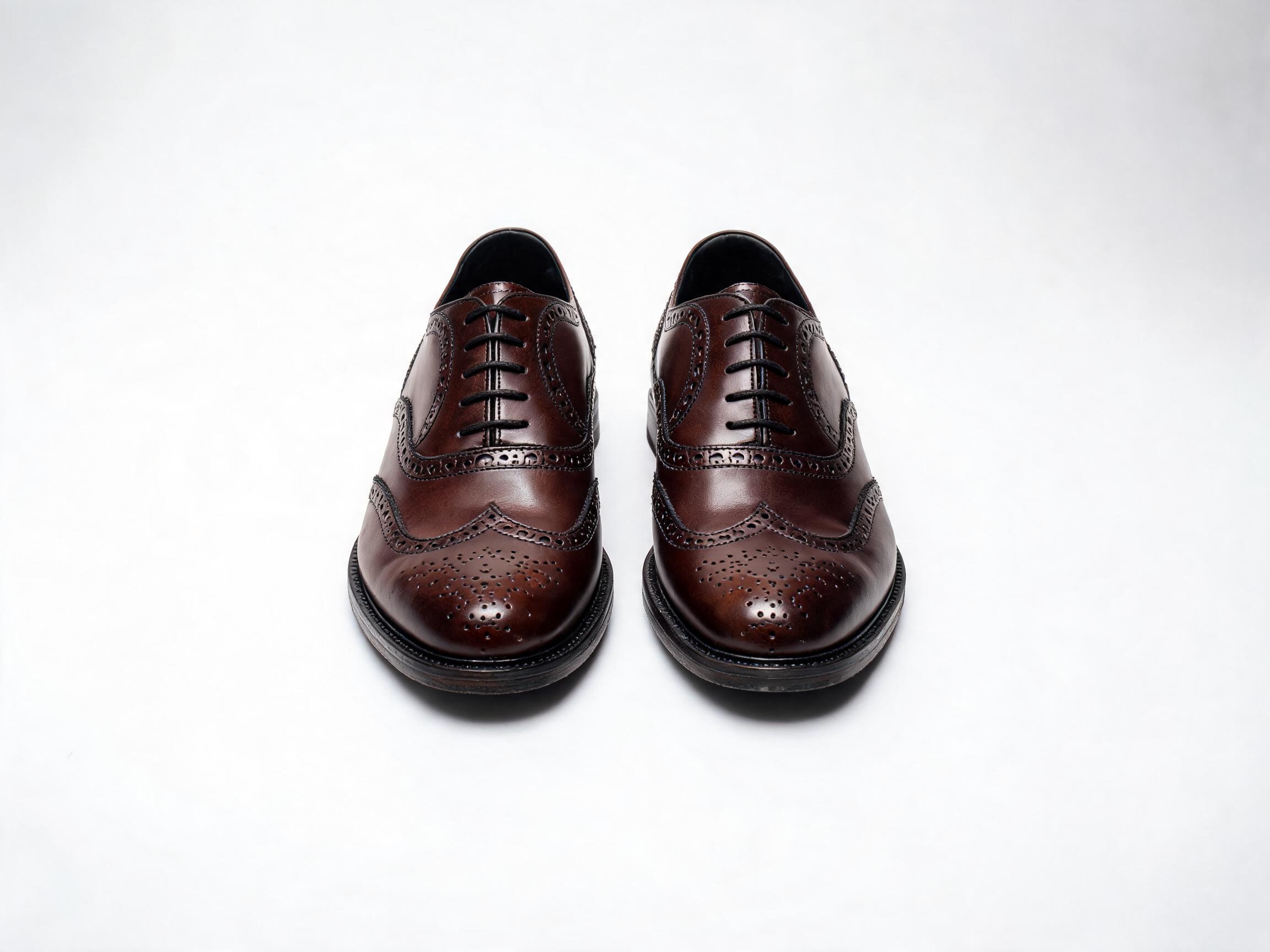
On a full brogue, the wingtip perforation pattern is the easiest place to spot machine haste. Hand-punched perforations, as on our dark brown full brogue shoes, hold an even spacing along the curve of the wingtip and across sizes, because the operator is following the pattern rather than the machine's fixed pitch. Ask to see the same pattern in two or three sizes side by side: the perforation count and spacing should stay consistent as the pattern grades up.
Hand-stitched aprons and cap-toe lines
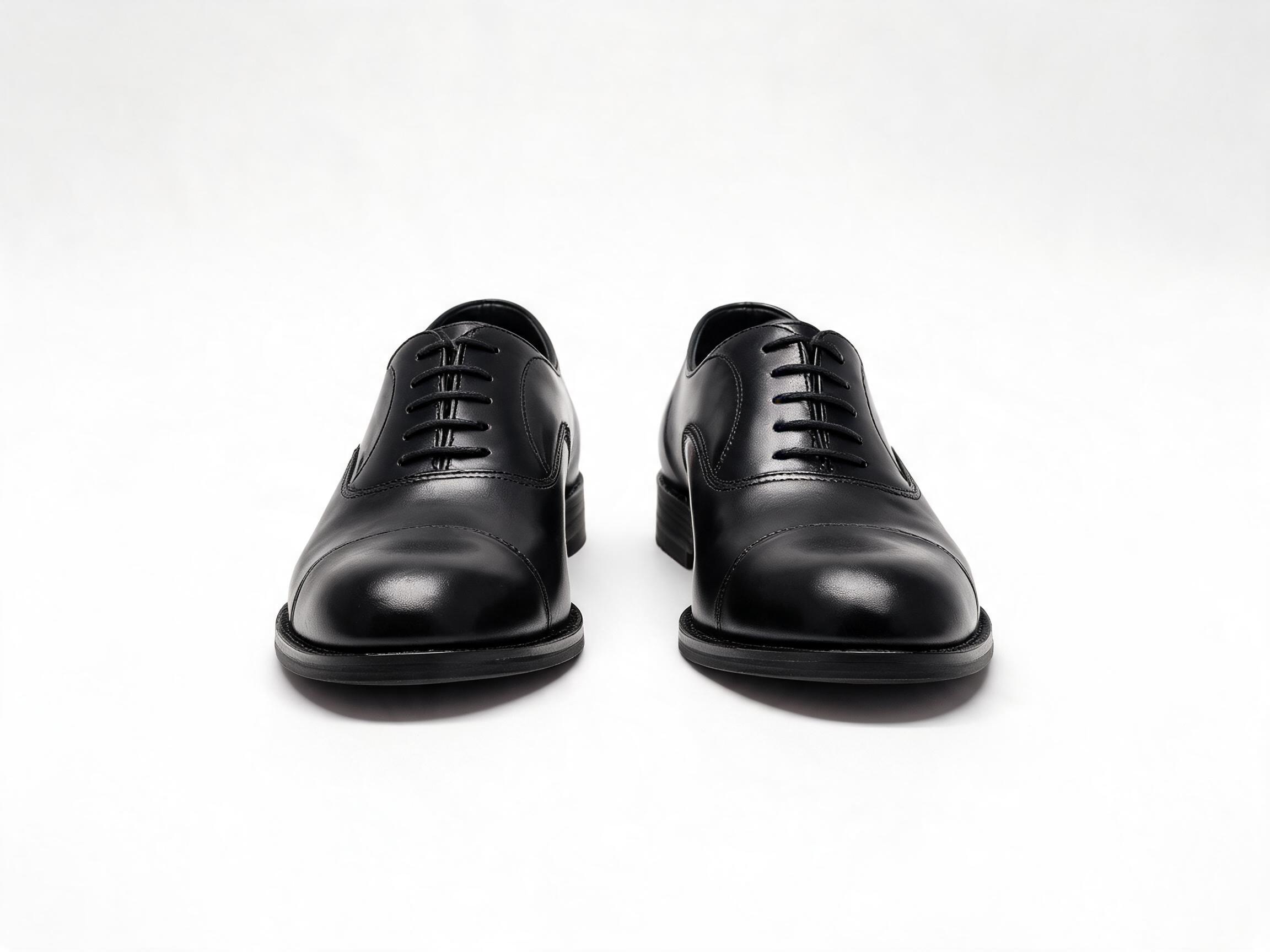
The apron seam on a penny loafer, and the strap detail that sits with it, is a visible seam on the vamp. On the cognac penny loafer in our range the apron seam and penny strap are hand-stitched; on the black cap-toe oxford the cap-toe line is stitched by hand. What you are checking is consistency: even stitch length, no wandering off the marked line, no puckering where the upper curves. Hand stitching is not automatically better than good machine stitching, but it is a reliable indicator that the line has the operator skill to handle more demanding panels.
Matched-hide cutting
Upper panels are cut from matched hides so that the left and right shoes share the same grain direction and shade. This matters most in plain, unperforated styles where there is nowhere for variation to hide. When you evaluate samples, place the pair side by side under daylight and check grain direction on the vamp panels and shade across the quarters. Ask the factory how they pair hides during cutting; the answer tells you whether matching is a controlled step or an afterthought.
Hand-burnished edges and hardware
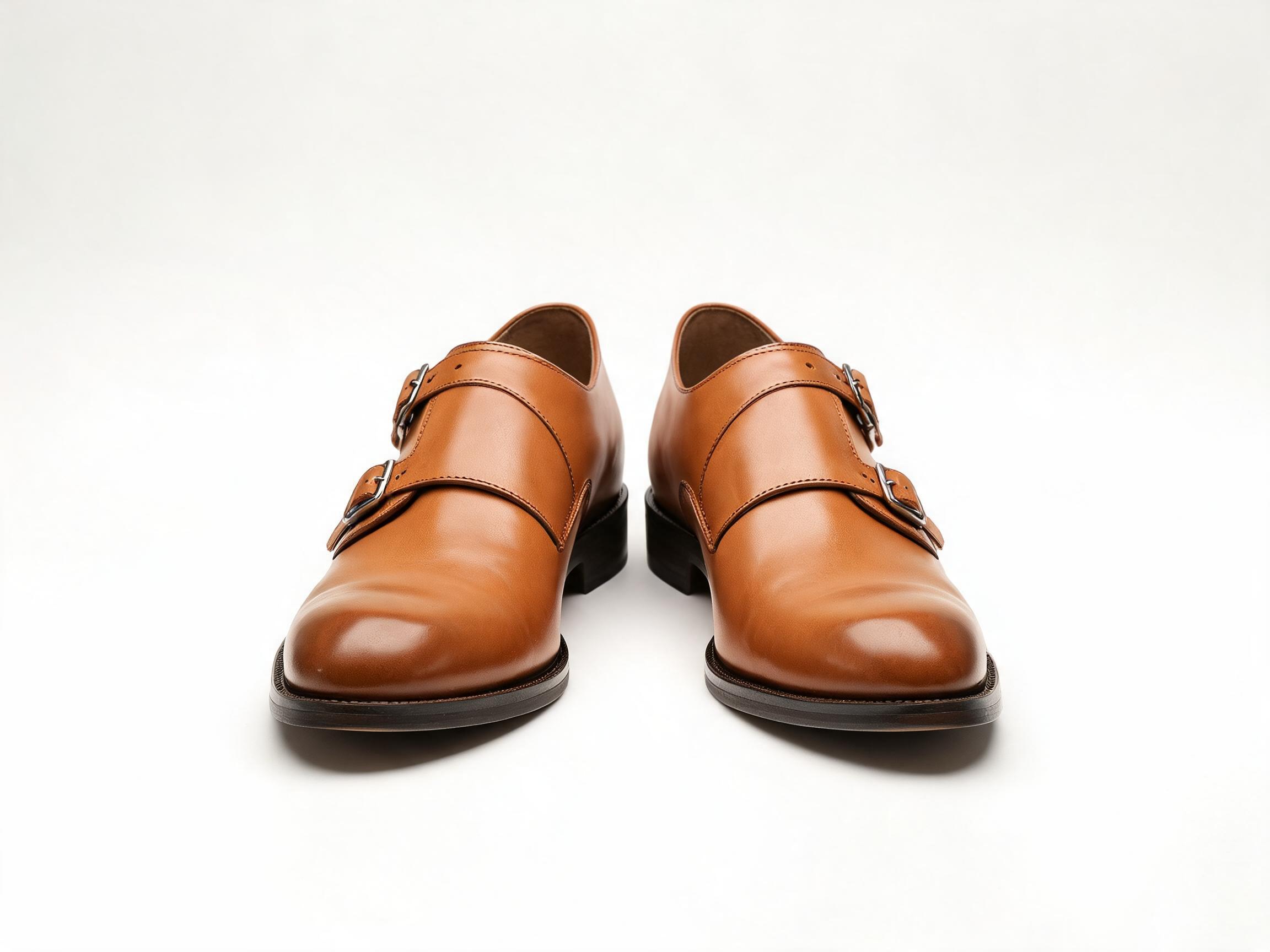
Outsole edges that are inked and burnished by hand give a finished profile that buyers notice in a display. Hardware is a separate check: on the tan double monk strap shoes, the buckle hardware is corrosion-resistance tested, which is a functional requirement in humid retail environments and for long sea transit. When you review a sample, confirm whether buckles and eyelets are tested and what the test covers.
One production detail worth asking about: lasting operators adjust tension by hand to keep the vamp smooth and wrinkle-free. Wrinkling at the vamp is one of the most common reasons a bulk shipment gets rejected, and it is a lasting skill issue rather than a material issue.
Sole construction options and what they mean
Construction affects three buyer-facing properties: weight, flexibility at the forefoot, and how easily the shoe can be repaired. Our current range uses three builds.
| Construction | Where it is used | Practical character |
|---|---|---|
| Stitched-and-cemented | Oxfords, derbies, brogues, monk straps, Chelsea boots | Durability at the sole edge; the stitched build supports a proper dress-shoe profile |
| Cemented | Light, flexible slip-ons and loafers | Lighter and more flexible out of the box; suits styles sold on comfort |
| Rubber cupsole with EVA midsole | Leather sneakers, e.g. white leather low-top sneakers | Casual weight and cushioning; this bonded build is what our sneaker line uses |
Stitched-and-cemented means the sole is both cemented and stitched at the edge. That extra stitching is what buyers look for when they want a dress shoe that can go back to a cobbler rather than be replaced. Cemented construction without stitching gives a lighter, more flexible shoe, which is the right answer for slip-ons and loafers sold on comfort, but it changes the repairability conversation you will have with your end customer. Neither is a defect; they serve different price tiers and different retail stories.
For sneakers, the rubber cupsole with EVA midsole is a different product category wearing a leather upper. Do not evaluate it against dress-shoe criteria — ask instead about bonding and outsole adhesion, which is covered in the QC section below.
Matching construction to your market and price tier
A simple decision path works for most buyers:
- Classic dress programs (oxfords, derbies, brogues, monk straps): stitched-and-cemented, with hand-finished sole edges. This is where upper craft details — perforations, cap-toe stitching, hide matching — carry the most perceived value.
- Comfort-led slip-on and loafer lines: cemented construction for lighter weight and flexibility. Keep the hand-stitched apron and strap detail if the retail price supports it; that detail is visible and sells.
- Casual and sneaker lines: rubber cupsole with EVA midsole. Judge on bonding and consistency, not on dress-shoe criteria.
Ask for the construction type by style, not by factory. A single supplier may run all three, as our dress-shoe lines and sneaker line do, and the correct question is which build each SKU uses and why.
How bulk QC confirms the sample
A good sample proves what the factory can do once. Bulk QC proves it can do it repeatedly. Our production flow runs pattern grading, leather cutting, upper stitching, toe lasting, cementing, sole stitching or pressing, cooling, de-lasting, inspection and packing. Three-stage inspection covers this:
- Incoming materials: leather thickness, color and grain are checked before cutting.
- In-line construction checks: stitching and lasting are inspected while the shoe is being built — this is where perforation pattern drift and vamp wrinkling are caught.
- Final finished-shoe inspection: symmetry, bonding strength, cleanliness and packing accuracy.
Random pairs are flex-tested at the forefoot, and color fastness and sole adhesion are checked. Inspection reports are available on request, and third-party inspection is welcome.
When you place an order, ask for the inspection criteria to reference the craft details you approved on the sample — perforation evenness, stitch consistency, shade matching, sole edge finishing. That turns a sample approval into an enforceable standard rather than a memory.
FAQ
Is hand stitching always better than machine stitching?
Not automatically. On the styles above, hand stitching is used where it holds a pattern or a curved seam more reliably. What matters for a buyer is consistency across sizes and repeat orders, which is a line-skill question rather than a hand-versus-machine question.
How can I tell stitched-and-cemented from cemented construction?
Look at the sole edge: a stitched build shows stitching around the edge. Confirm the construction type for each SKU with the factory in writing before you order, and check it again on the bulk inspection.
Why do left and right shoes sometimes look different in shade?
Usually because panels were not cut from matched hides with the same grain direction. Keep shade and grain matching on the sample approval checklist so it becomes an inspection point.
Does sole construction affect how the shoe wears over time?
It affects weight, flexibility and how the shoe can be repaired. Stitched-and-cemented builds support edge durability and repairability; cemented builds are lighter and more flexible. Choose against how your market uses the shoe, not against a general rule.
If you are evaluating a leather shoes factory for a dress, comfort or casual program, request samples across all the constructions and craft details relevant to your range, and inspect them against the checks above before you move to bulk.