Before committing to a bulk order for OEM quality shoes, buyers need a written quality standard. This article outlines a practical four-step framework: lock the specification in writing, approve the sample as the benchmark, agree inspection stages and reports, and define packing, labeling and after-sales terms. Based on Aurevia Footwear's OEM program facts, it helps importers and brand owners set clear expectations with the factory and avoid costly misunderstandings.
When you place a bulk order for OEM quality shoes, the term "OEM quality" can mean different things to different factories. Without a shared, written definition, you risk receiving goods that meet the factory's internal standard but not your market's expectations. This article explains how to define the quality standard with your OEM partner before production begins, using a practical framework that covers specification, sampling, inspection, and after-sales terms.
Key takeaways:
- "OEM quality" is not a universal grade—it must be defined in writing for each order.
- The approved sample is the physical benchmark for bulk production.
- Agree on inspection stages and the reports you will receive.
- Packing, labeling, and after-sales terms are part of the quality standard.
At Aurevia Footwear Co., Ltd., we have been producing OEM and ODM footwear from Quanzhou since 2011 for brands in Europe, North America, and the Middle East. Our 260-person team works with buyers who need clarity on what "OEM quality" means for their specific order. This article shares the framework we use to align expectations before a bulk order is confirmed.
Why "OEM Quality" Needs a Written Definition
In the footwear industry, "OEM quality" is often used loosely. It can refer to the materials used, the construction method, the finishing standard, or the consistency across pairs. For a buyer, the risk is that the factory's interpretation differs from yours. For example, a factory might consider a pair acceptable if it passes a visual inspection, while you expect a certain flexibility in the forefoot or a specific color match across left and right shoes.
The solution is to move from verbal assurances to a written quality standard that both parties sign off on. This standard becomes the reference point for sampling, production, and final inspection. It also protects you if disputes arise later.
Step 1: Lock the Specification in Writing
The first step is to document every detail that affects quality. This goes beyond a simple product description. It should include:
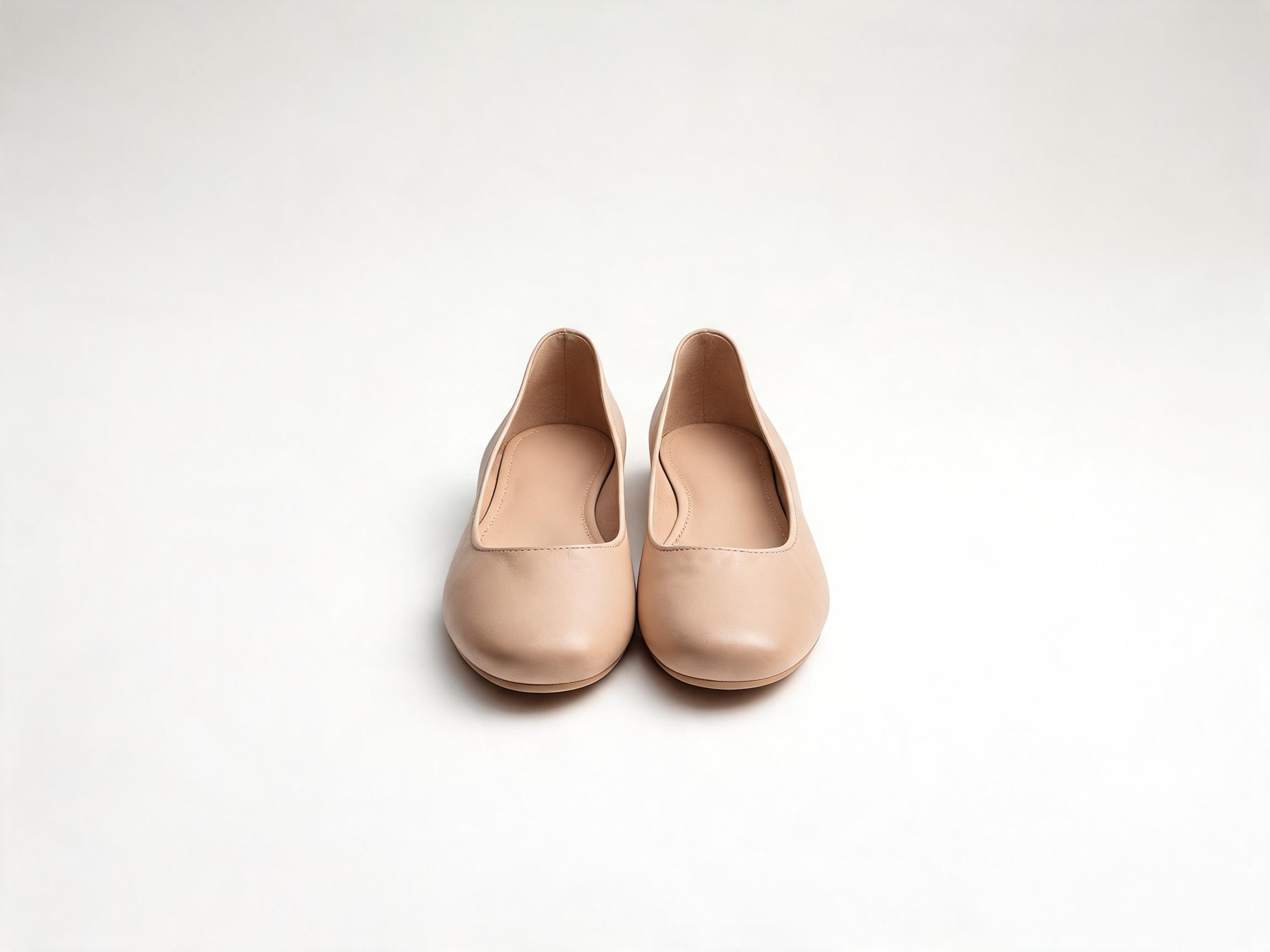
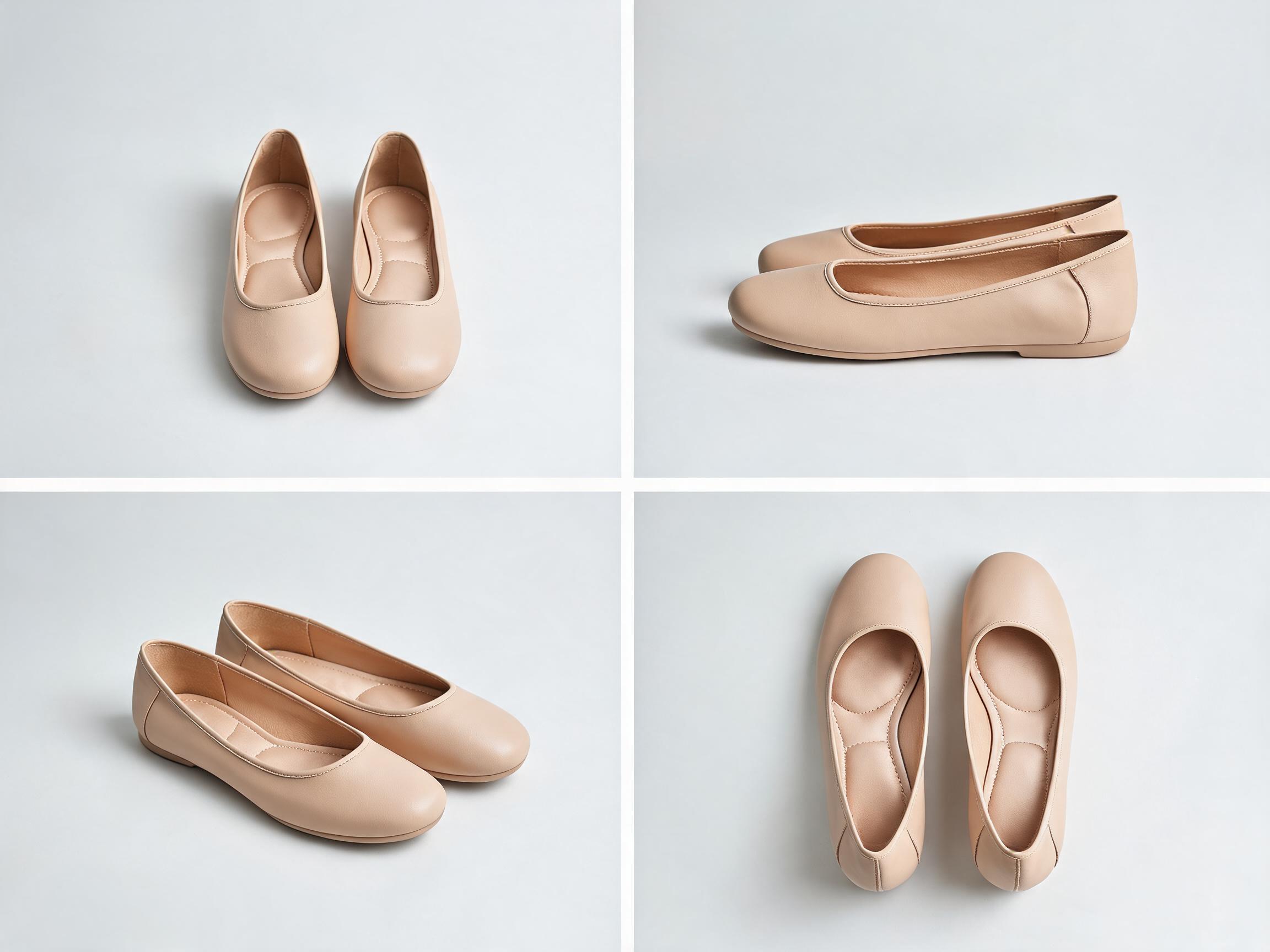
- Materials: Specify the upper material, lining, insole, outsole, and any hardware. For leather, include the type (e.g., nappa), thickness, and color reference. For example, our Nude Leather Ballet Flats use soft nappa leather with matched hides so that left and right shoes share grain direction and shade. If you require color matching, we can match to a Pantone reference.
- Size grid: Provide the full size range and any specific measurements for each size. Our ballet flats, for instance, are available in EU 35-41 / US 5-10. Confirm whether you need a standard size run or custom grading.
- Construction: Detail the construction method (e.g., cemented), stitching type and density, and any reinforcement. For the ballet flats, the construction is cemented, with an elastic binding topline and a flexible rubber outsole.
- Color options: List all colors, including custom colors. The ballet flats come in nude, black, white, and custom colors.
- Components: Specify the insole (e.g., cushioned), outsole hardness and thickness, and any logos or labels.
Put all of this into a written specification sheet, often called a tech pack or spec sheet. Review it with the factory and confirm that they can meet every point. If something is unclear, ask for clarification before proceeding. The goal is to eliminate assumptions.
Step 2: Make the Approved Sample the Benchmark
Once the specification is agreed, the next step is to produce a sample that represents the quality standard. This sample, once approved by you, becomes the benchmark for bulk production. The factory should keep a signed, approved sample on file, and you should keep an identical one.
At Aurevia, we provide existing samples within 3-5 days. For customized samples, we need about 7-12 days after all details are confirmed. During sampling, pay attention to:
- Material hand-feel and appearance: Check that the leather or fabric matches the agreed specification. For leather, verify grain direction and shade consistency between left and right.
- Construction details: Inspect stitching, bonding, and component placement. Ensure the elastic binding, for example, is applied correctly.
- Fit and comfort: Try the sample or have it tested for fit. Confirm the insole cushioning and outsole flexibility.
- Color accuracy: Compare against your color reference under proper lighting.
If the sample needs adjustments, request revisions until it meets your expectations. Only approve the sample when you are confident it reflects the quality you want in bulk. Remember that the approved sample is the reference for any inspection or dispute resolution.
Step 3: Agree Inspection Stages and What Reports You Receive
Quality is built during production, not just at the end. Agree with the factory on the inspection stages and the reports you will receive. A typical three-stage inspection process includes:
- Incoming material checks: Verify that raw materials match the specification. For leather, check for defects, color, and thickness.
- In-line construction checks: Monitor stitching and lasting to catch issues early. This is where problems like uneven stitching or poor bonding can be corrected.
- Final finished-shoe inspection: Inspect finished shoes for symmetry, bonding strength, cleanliness, and packing accuracy.
In addition to visual checks, our program includes random pairs flex-tested at the forefoot, color fastness checks, and sole adhesion checks. These tests help identify potential durability issues. We share inspection reports with buyers on request, and we welcome third-party inspection.
When discussing acceptance thresholds, describe them as "agreed in advance with the factory in writing." For example, you might agree on an acceptable number of minor defects per carton, but avoid specifying AQL levels unless you have a verified basis. The key is to have a documented agreement that both parties understand.
Step 4: Agree Packing, Labeling, and After-Sales Terms
Quality also includes how the product is packed and what happens if something goes wrong. Specify:
- Packing method: Individual box or polybag, inner box configuration, and export carton strength. Our ballet flats are packed in individual boxes and then in export cartons.
- Labeling: Artwork, placement, and language requirements. Confirm whether you need your logo on the shoe, insole, box, or carton.
- Documentation: What documents will accompany the shipment (e.g., packing list, commercial invoice).
- After-sales terms: Clarify the warranty period and how claims are handled. At Aurevia, we offer a 6-month quality warranty covering manufacturing defects, with a response within 48 hours.
Also, confirm the MOQ and lead time. For the Nude Leather Ballet Flats, the MOQ is 100 pairs per color, and lead time is 25-35 days after order confirmation. These figures are from the spec sheet; always confirm current MOQ and lead time with our sales team before ordering, as they may vary by material or customization.
What a Defined Standard Changes for Your Bulk Order
When you have a written quality standard, sampling process, inspection plan, and after-sales agreement in place, several things improve:
- Clear expectations: Both you and the factory know exactly what is required, reducing the risk of disputes.
- Consistency: The approved sample and specification guide production, so each pair meets the same standard.
- Faster issue resolution: If a problem arises, you can refer to the agreed terms and inspection reports.
- Better planning: Knowing the inspection stages and lead times helps you manage your inventory and launch schedules.
This approach also makes it easier to scale: once the standard is set, you can repeat orders with confidence, knowing that the factory has a documented reference.
Next Step: Start with a Conversation
Defining OEM quality shoes is a collaborative process. If you are planning a bulk order, the first step is to discuss your quality requirements with a factory that understands your market. At Aurevia Footwear, we work with buyers to turn expectations into written specifications and approved samples. Whether you are developing a new style like our White Satin Wedding Heels or reordering an existing one, we can help you set a clear standard.
Contact our sales team to request a sample, discuss your specification, or learn more about our OEM/ODM services. We will guide you through each step, from spec sheet to bulk delivery.