
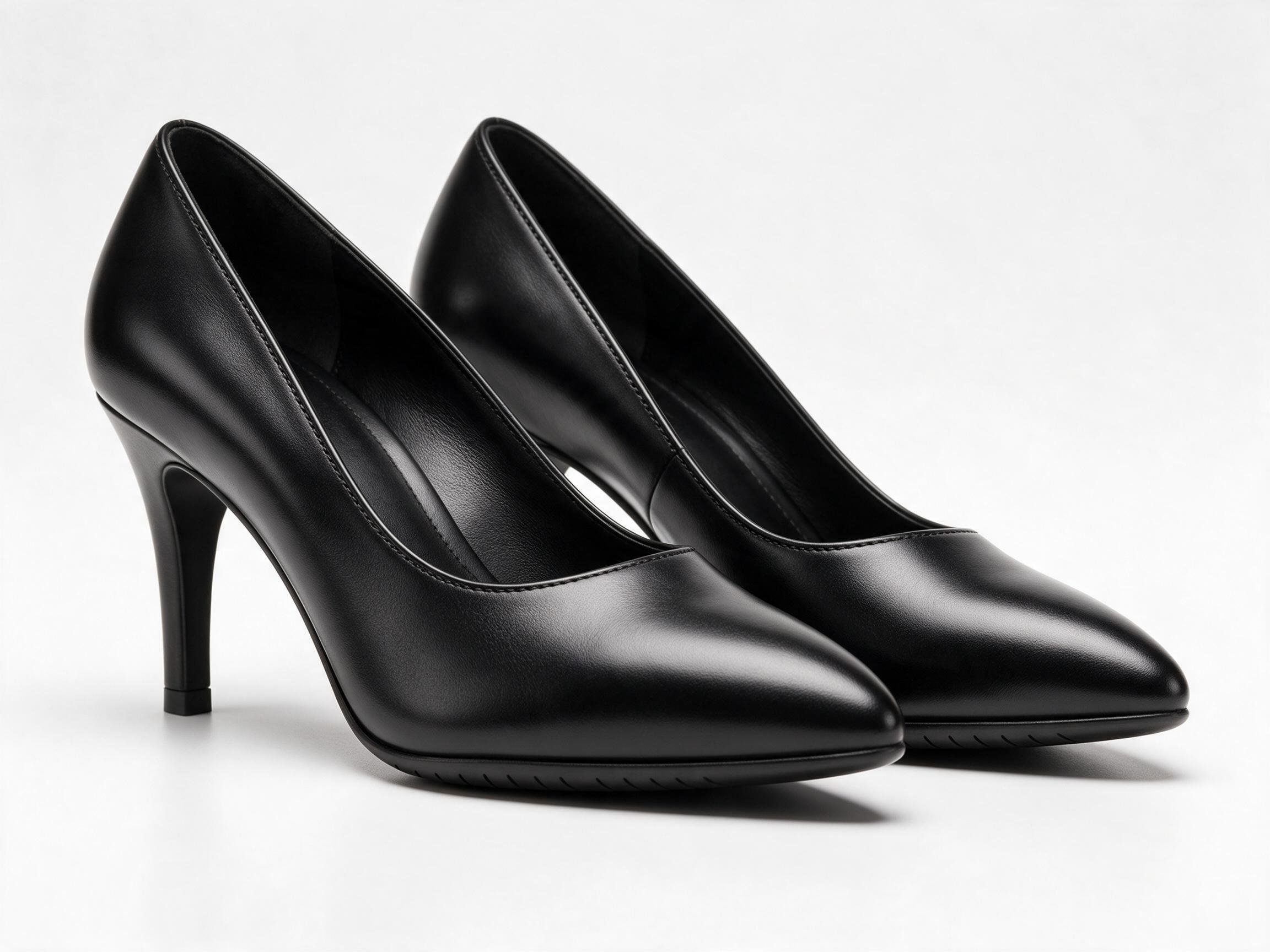
This guide explains how wholesale buyers can plan a pumps assortment around toe shape, heel height, lining, outsole, size range and sample-fit approval. Using the Black Leather Classic Pumps as a concrete example, it shows the trade-offs behind each choice and how to specify requirements to a supplier before committing to bulk orders.
Pumps Shoes Wholesale: Matching Toe Shapes and Heels to Your Assortment
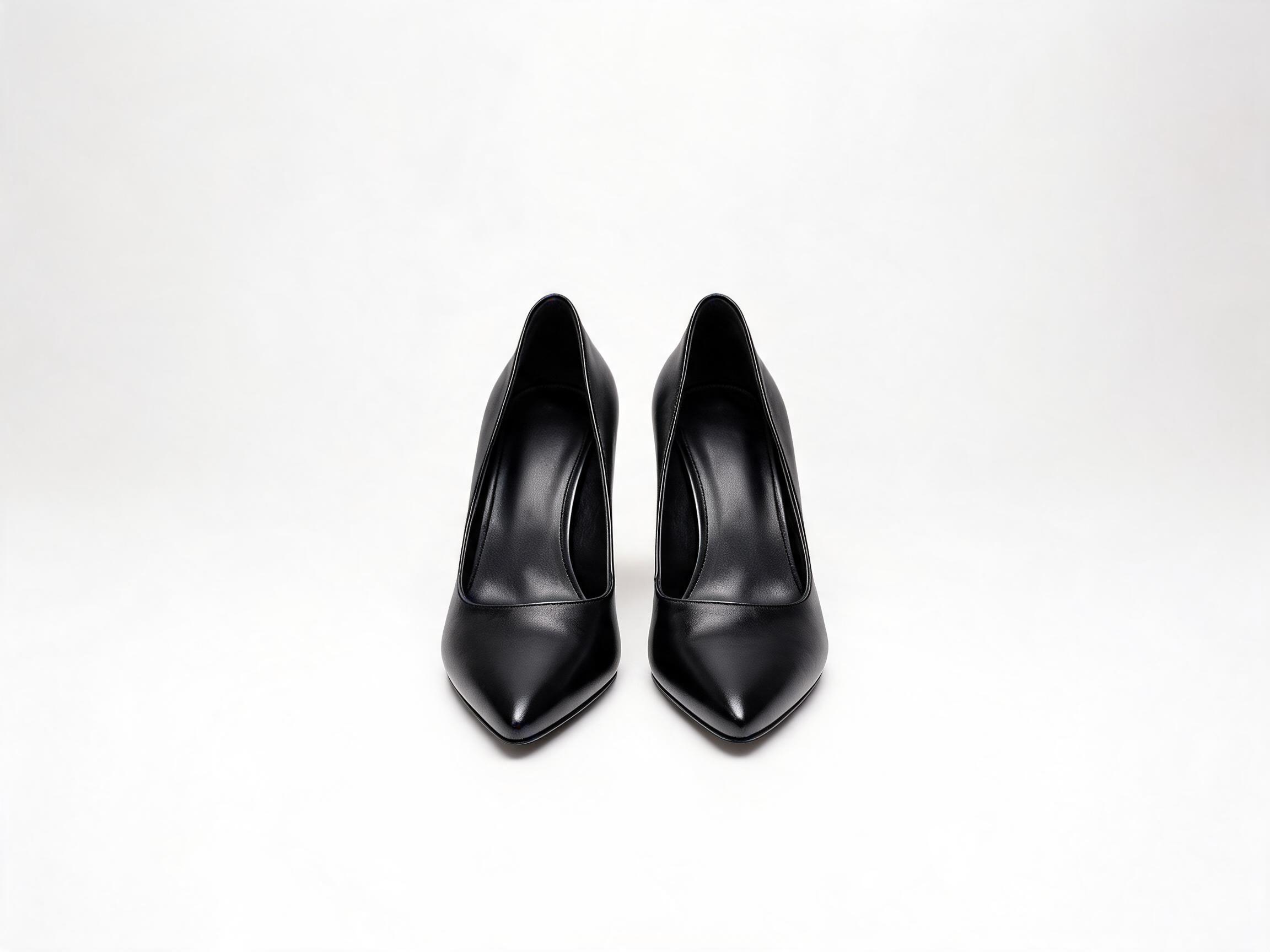
Buying pumps at wholesale means choosing a set of shapes and heel heights that will sell across your customer base, not picking one pair you like. Toe shape changes the visual profile and fit at the front of the foot; heel height changes stance, comfort and use occasion; lining and outsole affect how the shoe feels and wears; size range decides who you can serve. This guide walks through each decision as an assortment trade-off and shows where a specific supplier requirement, like the Black Leather Classic Pumps, can anchor the plan.
Key takeaways
- Toe shape and heel height are assortment levers: each serves a different customer need, so plan them together rather than as separate style lists.
- Lining and outsole are not cosmetic. They change comfort and grip, and should be written into the sample brief.
- Size range planning should follow the markets you sell into; a narrow range limits reach, a wide range raises stock risk.
- Approve fit on samples before bulk. Sample lead time is short enough to make this practical: 3–5 days for stock samples, 7–12 days for customized samples.
- Why toe shape and heel height belong in one plan
- Toe shape trade-offs
- Heel height planning
- Lining and outsole choices
- Size-range planning
- Sample-fit approval
- Supplier and order questions
Why toe shape and heel height belong in one plan
A pumps assortment is usually built around a small number of silhouettes, each with its own toe and heel. If you plan toes first and heels later, you can end up with several styles that compete for the same customer and leave a gap for another. Planning them together forces a simple question: which combinations give your buyers a reason to pick one pair over another?
The Black Leather Classic Pumps illustrate a single, defined point in that matrix: a pointed toe with a heel of approximately 7 cm, an upper available in soft suede or patent leather finish, a rubber anti-slip outsole, and sizes EU 34–41. That is one reference configuration, not a complete range. Your job as a buyer is to decide how many such reference points you need around it.
Toe shape trade-offs
Toe shape is the most visible part of a pump and the part most likely to affect fit at the front of the foot. The common options in wholesale pumps are pointed, almond/round, square and open or peep toe. Each has a different role in an assortment.
- Pointed toe: a sharper, more formal profile. Because the toe box narrows, fit at the front of the foot matters more, and customers who prefer room at the toes may size up or avoid the style. The Black Leather Classic Pumps use this shape.
- Almond or round toe: a softer profile with more room across the toes. Often easier to fit across a broad customer base, but visually less sharp for formal occasions.
- Square toe: a distinct fashion profile. It reads as a deliberate style choice and can differentiate a range, but it is less of a safe staple.
- Peep or open toe: a seasonal or occasion option; adds variety but narrows the wear occasions.
For assortment planning, the trade-off is profile versus fit tolerance. A pointed toe gives a cleaner formal look but asks more of your size advice and sample approval. A rounder toe is more forgiving but may not carry the same formal positioning. Neither is universally better; the choice depends on the customer segment you serve.
Heel height planning
Heel height is usually discussed in generic terms, but for pumps the useful question is what each height does for the wearer and which occasions it covers. A range that only offers one height limits the customers you can serve.
| Heel approach | Typical role in a pumps assortment | Planning consideration |
|---|---|---|
| Lower block or kitten heel | Everyday and workplace wear | Broader comfort appeal; confirm heel construction and height with the supplier. |
| Mid heel, around 7 cm (as in the Black Leather Classic Pumps) | Smart-casual to formal; a core height for many ranges | Balances a formal profile with a stance many wearers can manage; confirm the actual measured height on your sample. |
| Higher stiletto | Occasion and evening wear | Narrower use case; fit and stability need closer sample checks. |
The Black Leather Classic Pumps sit at approximately 7 cm, which makes them a mid-heel reference. If your range needs a lower everyday heel and a higher occasion heel, treat the 7 cm pair as the core and plan the others as separate styles. Do not assume one heel height can cover all occasions; it cannot, and pretending otherwise leaves gaps in the range.
Lining and outsole choices
Lining and outsole are the parts buyers often leave to the supplier, but they affect comfort and grip, and they belong in the sample brief.
Lining: the material against the foot affects how the shoe feels and how it wears over time. Common linings include leather and synthetic textiles. Leather linings are generally associated with breathability, while synthetic linings can offer different cost and care profiles. The published specifications for the Black Leather Classic Pumps do not specify a lining, so if lining matters to your customers, state the requirement in the sample request and confirm it with the supplier before bulk.
Outsole: the Black Leather Classic Pumps use a rubber anti-slip outsole. For wholesale pumps, the outsole is where grip and durability are addressed. A rubber outsole is a practical choice for varied indoor and outdoor surfaces. Ask for the outsole specification and any grip claims in writing, and check the sample on the surfaces your customers use.
The upper finish is a separate choice: the Black Leather Classic Pumps are available in soft suede or patent leather finish. Suede reads softer and more matte; patent gives a glossier, more formal look. Offering both finishes from one silhouette lets you cover two customer preferences without adding a new last.
Size-range planning
Size range is an assortment decision with direct stock consequences. The Black Leather Classic Pumps run EU 34–41. Whether that range suits your market depends on the size distribution of your customers.
- A range that is too narrow leaves customers unable to buy and can push them to a competitor.
- A range that is too wide for your market creates slow-moving stock at the extremes.
- The practical approach is to start with the core sizes your customers actually buy, and add the edges only where demand supports it.
If your market needs sizes outside EU 34–41 for a given style, raise it as a requirement for the supplier to confirm. Do not assume a range can be extended; ask.
Sample-fit approval
Fit is where toe and heel decisions meet reality. A pointed toe at 7 cm will fit differently from a round toe at the same height, and different customers will notice different issues. Approving fit on samples before bulk is the most reliable way to catch problems early.
Sample timing supports this: sample shoes are typically ready in 3–5 days, and customized samples in 7–12 days. That gives you time to wear-test, check toe room and heel stability, and confirm the lining and outsole against your requirement before committing to a bulk order.
A practical sample-fit check for pumps:
- Try the shoe on feet that represent your customer base, not just one fit model.
- Check toe room at the widest part of the foot, especially on pointed toes.
- Check heel grip: the heel should hold without slipping when walking.
- Walk on the surfaces your customers use most, and note any grip or comfort issues.
- Record fit notes by size so your buying team and the supplier work from the same assessment.
Supplier and order questions
Once the assortment plan is set, confirm the commercial terms before ordering. As an example of what a supplier can provide, the Black Leather Classic Pumps spec sheet lists a minimum order quantity of 100 pairs per color and a lead time of 25–35 days. Confirm current MOQ and lead time with the sales team before ordering.
Beyond MOQ and lead time, ask the supplier about quality control and after-sales terms so there are no surprises. For reference, the company behind this product was founded in 2011 in Quanzhou, China, has a 260-person team, and exports to Europe, North America and the Middle East. It offers OEM/ODM, uses a three-stage QC process, provides a 6-month warranty, and responds to after-sales enquiries within 48 hours. These are the terms to verify against your own order.
If the plan includes the Black Leather Classic Pumps as the core mid-heel style, review the full product information at Black Leather Classic Pumps and send your fit, lining and size-range questions with the sample request.