
A block heel is a wide, roughly squared heel base that spreads the wearer's weight over a larger footprint than a stiletto. For wholesale buyers and private-label brands, this guide defines the construction, explains which product lines suit it, and lists the specifications and order terms to confirm before adding block heels to a range.
A block heel is a shoe heel with a wide, roughly squared base that spreads the wearer's weight over a larger footprint than a stiletto. That width is the defining feature: it changes how the shoe balances underfoot and, for buyers, how the product is specified, tested and positioned in a range. This guide defines the block heel, places it within the broader heel family, and then translates the definition into the decisions a merchandiser or private-label buyer makes when adding block heels to a wholesale order.
Key takeaways
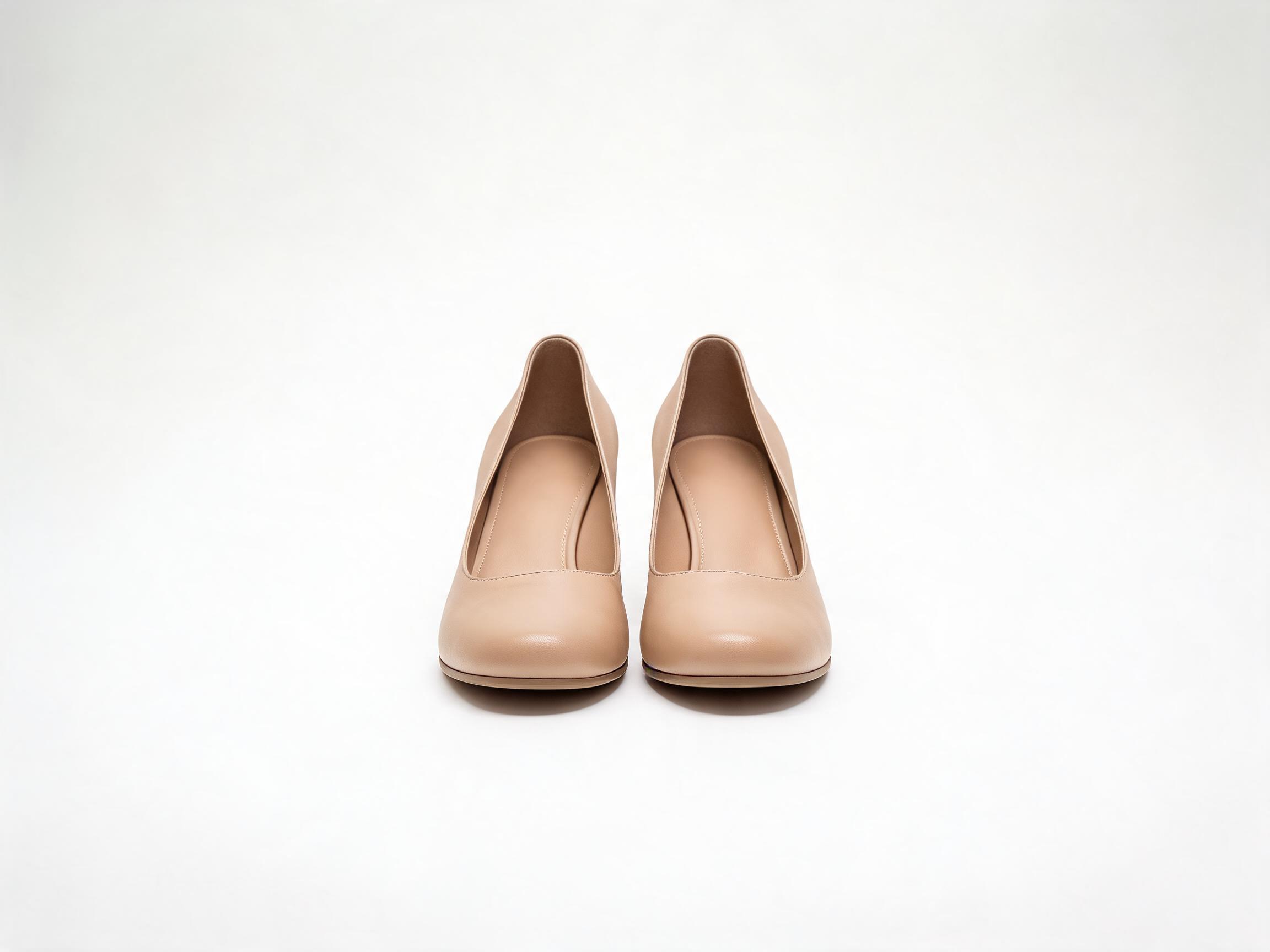
- A block heel is a wide, squared heel base; a stiletto is a slim one.
- Block heels suit office, travel and everyday wear because the wider base spreads weight over a larger area than a slim heel.
- Specify heel height, upper material, size range, colour options and construction on the spec table.
- For the Nude Block-Heel Shoes referenced here, MOQ is 100 pairs per colour and lead time is 25–35 days after order confirmation; confirm current terms with the sales team before ordering.
- Order terms to print include MOQ, lead time, size range, colour options, sampling timeline and warranty.
What are block heels?
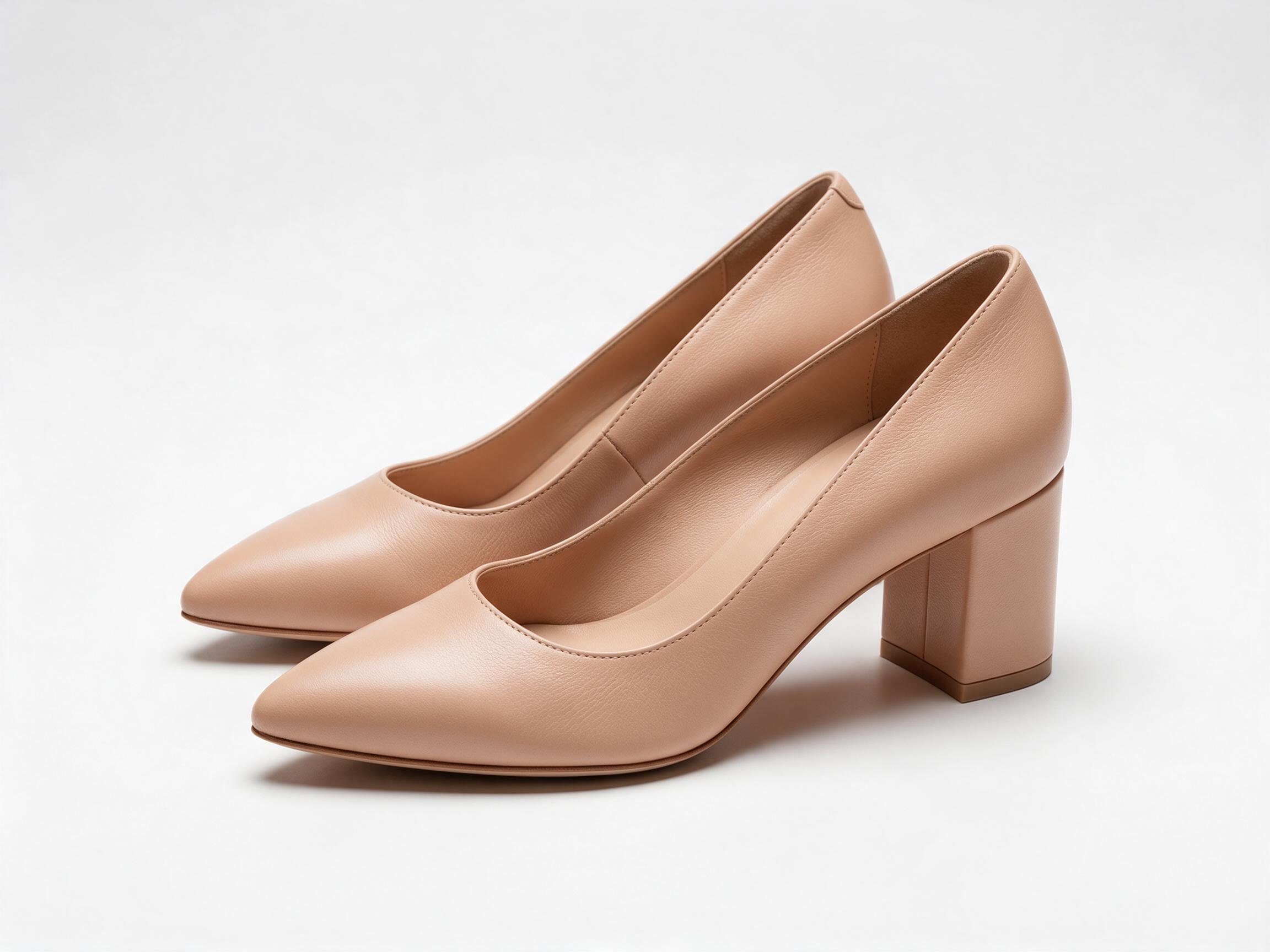
In trade usage, a block heel is a heel whose base is wide and roughly squared rather than narrow and tapered. The shape is the point: a wider base spreads the wearer's weight over a larger area than a slim stiletto heel does. The same factory's stiletto program, for contrast, uses a slim 10 cm stiletto heel with a reinforced core, while the block-heel program referenced here uses a stable 5 cm block heel with a reinforced core.
This is also the answer to the related phrasing what are block heels called: in English-language catalogues and buyer conversations, the style is referred to as a block heel, and the term describes the heel construction rather than a single silhouette. A block heel can appear on a pump, a sandal or a boot; what stays constant is the wide, squared base. For a buyer, that means the heel type is one specification line among several, not the product name on its own.
The style family a block heel sits in
Block heels belong to the broader family of heeled footwear, alongside stilettos, wedges and other heel constructions. The distinction that matters for range planning is the relationship between heel base and heel height. A slim heel concentrates load under a small point; a block heel spreads it. The product referenced here is a nude block-heel shoe built on a soft nude kid leather upper with even grain, a soft leather lining, and a padded footbed with arch-support contour. Its rounded pointed toe and rubber outsole with discreet tread complete the package, and the cemented construction is listed on the spec table.
Because the heel base is wide and squared, block heels are commonly specified for lines where stability underfoot is part of the wearer's expectation: office, travel and everyday wear. That is the positioning the product page uses, and it follows from the heel geometry rather than from a marketing claim. A buyer comparing a block heel with a stiletto in the same range is effectively comparing two different load-spreading profiles at two different heel heights — 5 cm here versus 10 cm on the stiletto program.
Which lines block heels suit
The block heel's wider footprint makes it a practical choice for ranges where the wearer is on her feet through a working day or moving through transit. Three line types follow directly from that:
- Office and workwear. A 5 cm block heel gives a defined heel without the narrow base of a stiletto, which suits a closed pump or a low-cut shoe intended for desk-to-meeting wear.
- Travel and everyday. The same stability profile applies when the shoe is packed and worn across a trip. A padded footbed with arch-support contour supports the everyday-wear positioning, and the rubber outsole with discreet tread is the listed outsole spec.
- Private-label core ranges. Because the heel construction is straightforward to specify, block heels work well as a repeatable base style that a brand colours and packs under its own label. The product page lists OEM/ODM support including logo and packaging.
What block heels do not automatically suit is a range built around a slim, high-lift silhouette. That is a different heel type with a different load profile, and the stiletto program referenced here — a slim 10 cm stiletto heel with reinforced core — is the appropriate comparison point when a buyer needs both silhouettes in one collection.
Spec points to write down
The definition translates into a short list of specifications that belong on the spec table before a sample is requested. For the Nude Block-Heel Shoes, the listed values are:
| Spec point | Listed value |
|---|---|
| Upper | Soft kid leather, even grain |
| Lining | Soft leather |
| Footbed | Padded with arch-support contour |
| Heel | Approx. 5 cm block heel with reinforced core |
| Toe shape | Rounded pointed |
| Outsole | Rubber with discreet tread |
| Construction | Cemented |
| Size range | EU 34–41 / US 4–10 |
| Colour options | Nude, black, taupe, custom colours |
| MOQ | 100 pairs per colour |
| Lead time | 25–35 days after order confirmation |
| OEM/ODM | Supported, including logo and packaging |
| Packaging | Individual box plus export carton |
| Inspection | Three-stage inspection with forefoot flex testing and heel attachment checks |
| Samples | Existing 3–5 days; customized 7–12 days |
| Warranty | 6-month quality warranty |
When you write your own spec table, keep these as separate lines rather than collapsing them into a single description. Heel height and heel type belong together — “approx. 5 cm block heel” — because the 5 cm figure only means what it means in combination with a wide, squared base. Upper material and lining are separate purchase decisions from heel construction. And the inspection protocol is a term worth carrying into the purchase order: the listed three-stage inspection includes forefoot flex testing and heel attachment checks, which is the kind of clause that gives a buyer something to verify at goods-in.
Order terms to print on the spec table
Commercial terms should sit on the same table as the product specs, so that the buyer, the factory and the QC team are working from one document. For this block-heel program, the terms to print are:
- MOQ: 100 pairs per colour.
- Lead time: 25–35 days after order confirmation.
- Sampling: existing samples 3–5 days; customized samples 7–12 days.
- OEM/ODM: supported, including logo and packaging.
- Packaging: individual box plus export carton.
- Warranty: 6-month quality warranty.
Buyers should confirm the exact upper leather, current MOQ and lead time with the sales team before ordering, because these are quoted terms and can change with colour, customisation and order volume. The manufacturer behind this program is Aurevia Footwear Co., Ltd., established in 2011 in Quanzhou, China.
Common buyer questions
Is a block heel the same as a chunky heel?
The common trade definition is the same shape — a wide, squared base. There is no single industry-wide cutoff between the two terms, so the important thing is to specify the actual heel height and base dimensions in your tech pack rather than relying on the label alone.
Can a block heel be produced in a custom colour?
The product page lists nude, black and taupe as standard colour options, with custom colours available. Custom colour is an OEM/ODM item, so it should be quoted together with your logo and packaging requirements.
What heel height should a buyer specify for an everyday range?
The reference product uses an approx. 5 cm block heel. That figure comes from this program's spec table; if your range calls for a different height, state it as a separate requirement in the tech pack and treat it as a development item rather than an assumption about the base style.
Used as a definition, a block heel is simply a wide, squared heel base. Used as a buying decision, it is a heel type plus a height plus a set of spec and order terms — and the range only comes together when all three are written down before the first sample is approved. To move from definition to order, start with the Nude Block-Heel Shoes product page and put your size-mix, colour and order-term questions to the sales team in one message.