
A purchasing guide for importers and private-label buyers on building a closed-toe women's dress shoe range around three heel heights: how a 7 cm pointed pump, an 8.5 cm ankle-strap heel, and a flat lace-up Oxford divide shelf space between office and occasion, which construction details drive comfort, and which parameters to lock at the sample stage before bulk.
Wholesale buying guide
Shoes are the heaviest decision in a formal range. An importer or private-label buyer planning a closed-toe women's dress shoe line for European, North American, or Middle Eastern accounts has to answer one question before anything else: which heel heights go into the range, and which shelf does each one occupy?
A range that mixes a 7 cm pointed pump, an 8.5 cm ankle-strap heel, and a flat lace-up Oxford is not a random assortment. Each height maps to a distinct buying decision and a distinct shelf. Get the split right and the line covers office and occasion without duplicating itself. Get it wrong and you carry stock that competes with itself in the same aisle.
- How the three heel heights divide office and occasion shelf space.
- Which construction details to check when balancing comfort against formality.
- The parameters to lock at sample confirmation before bulk production.
- What to inspect batch by batch, and where failures usually appear.
How Each Heel Height Earns Its Shelf
Start from the shelf, not the last. A closed-toe formal line usually has two positions to fill: the office shelf, where the shoe has to survive a working day, and the occasion shelf, where the silhouette carries the look. Heel height is the clearest signal of which position a style serves.
The 7 cm pointed pump: the office-to-evening bridge
A 7 cm heel with a pointed toe reads as formal without becoming occasion-only. It sits directly in front of the buyer who needs one pair that works with a suit and a dinner dress. That dual use is why it anchors a range rather than filling a single slot.
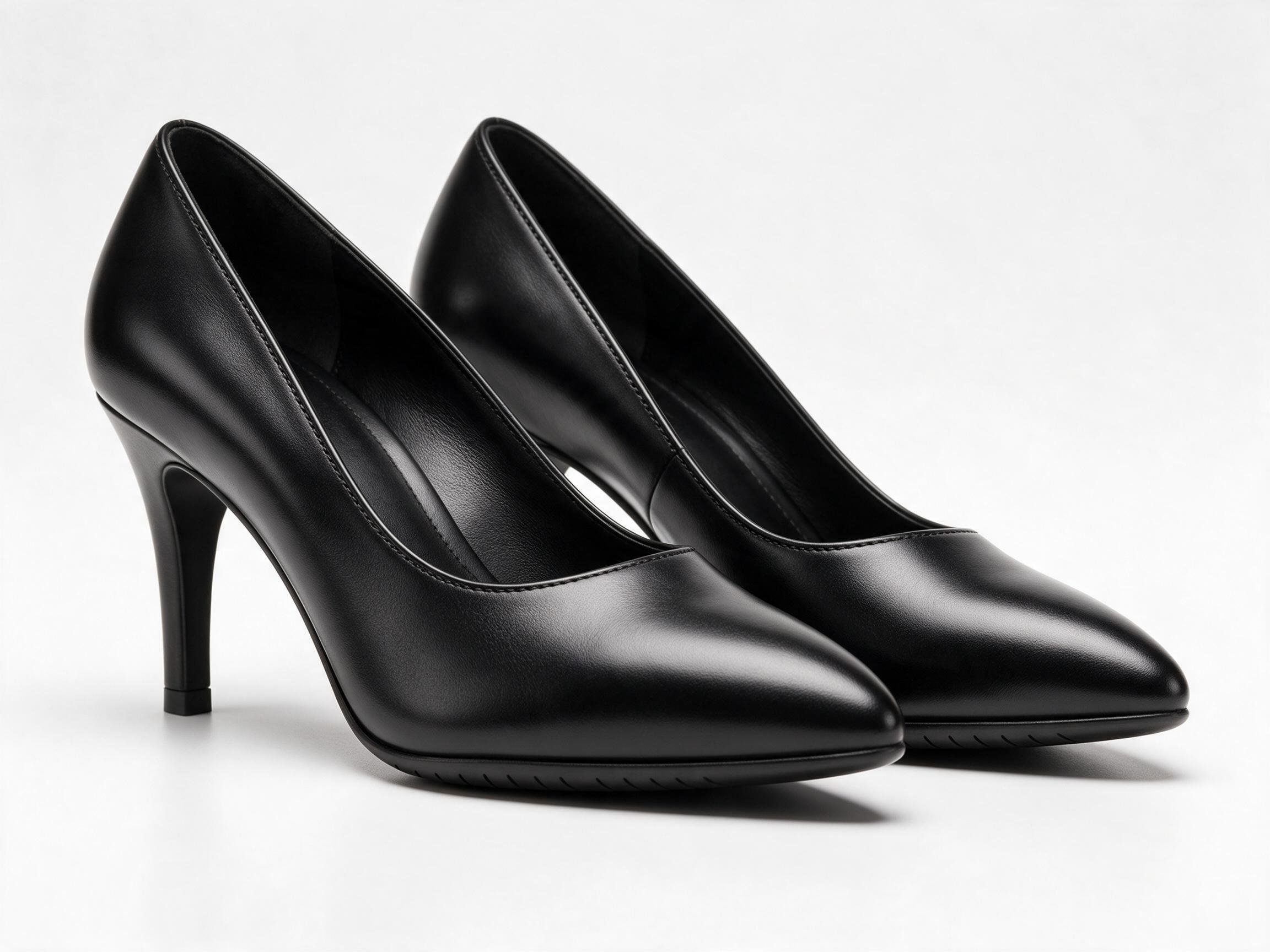
Construction is where this style earns repeat orders. The Black Leather Classic Pumps illustrate the pattern: black calf leather upper, leather lining, a padded insole with arch support, a slim 7 cm heel with a reinforced heel core, a pointed toe, and a slip-resistant rubber outsole on cemented construction. The upper panels are cut from matched leather so left and right shoes carry consistent grain and color. The outsole edge is hand-inked, and the heel is stability-tested.
For the buyer, the padded insole with arch support is the detail that decides whether this style can be sold as office wear. The reinforced heel core is what separates a pump that holds its shape from one that arrives wobbly at the heel seat.
The 8.5 cm ankle-strap heel: the occasion shelf
The 8.5 cm height is where the range tips fully into occasion. The extra height lengthens the silhouette, and an ankle strap adds security that a slip-on pump does not offer at that pitch. This style brings a customer into the range who is shopping for an event, not a workday.
It should be merchandised as its own position. If it sits next to the 7 cm pump without a clear visual distinction, the two compete. The strap and the higher pitch are the difference; plan the shelf so the customer reads one as everyday and the other as event.
The flat lace-up Oxford: the office base
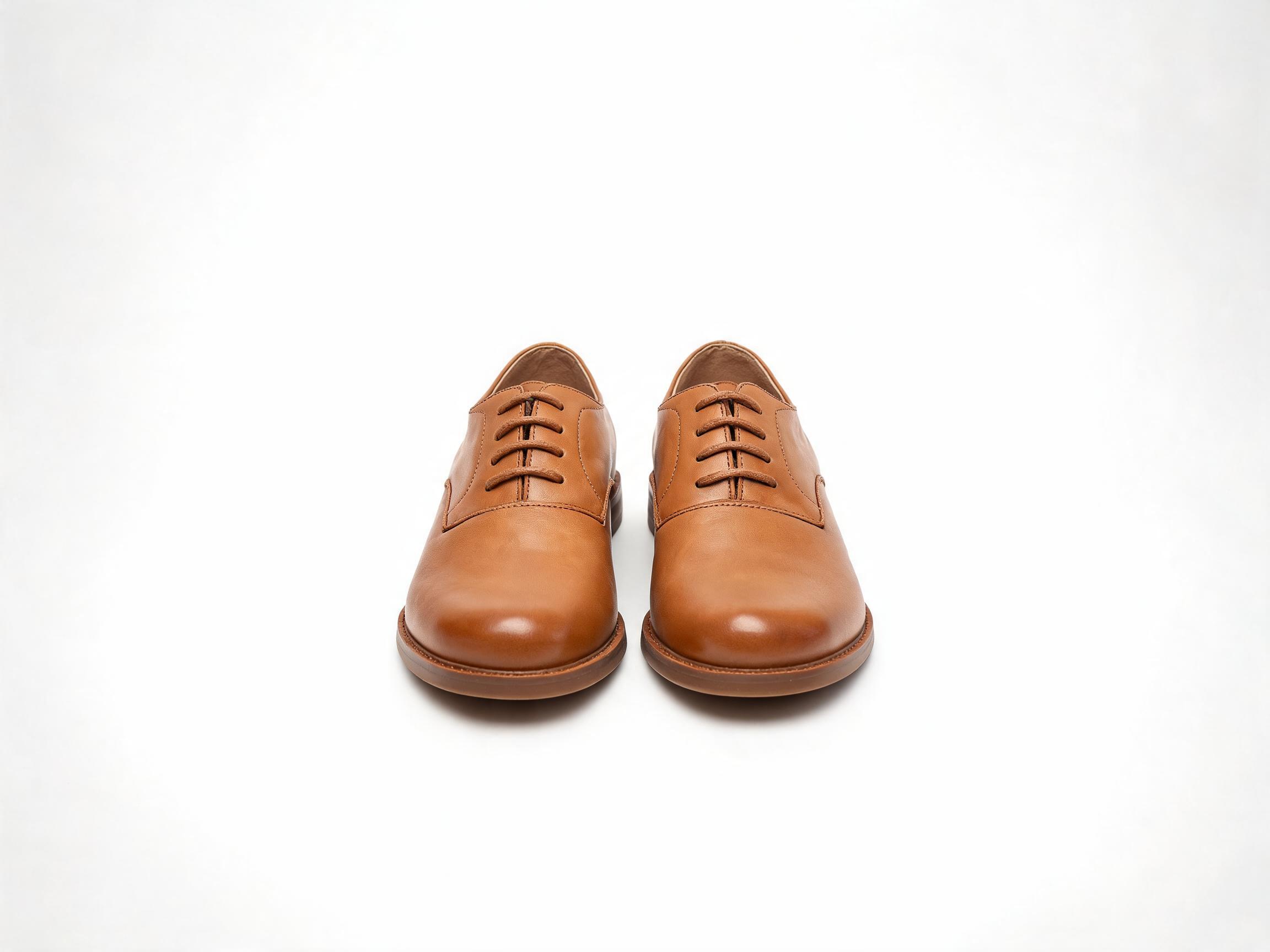
A flat Oxford is the quiet volume seller of a formal range. It carries the office account that wants a closed toe, a secure lacing system, and a low, level stance across a long day. The Tan Leather Oxford Shoes are a women's tan leather lace-up with structured lacing and a padded insole. Tan is a merchandising choice as much as a style one; it opens a color story that black pumps cannot.
The flat does not compete with the pumps. It captures the buyer who rejects height outright, and it anchors the lower shelf where customers browse for practical formal footwear.
Loafer as a business-casual bridge
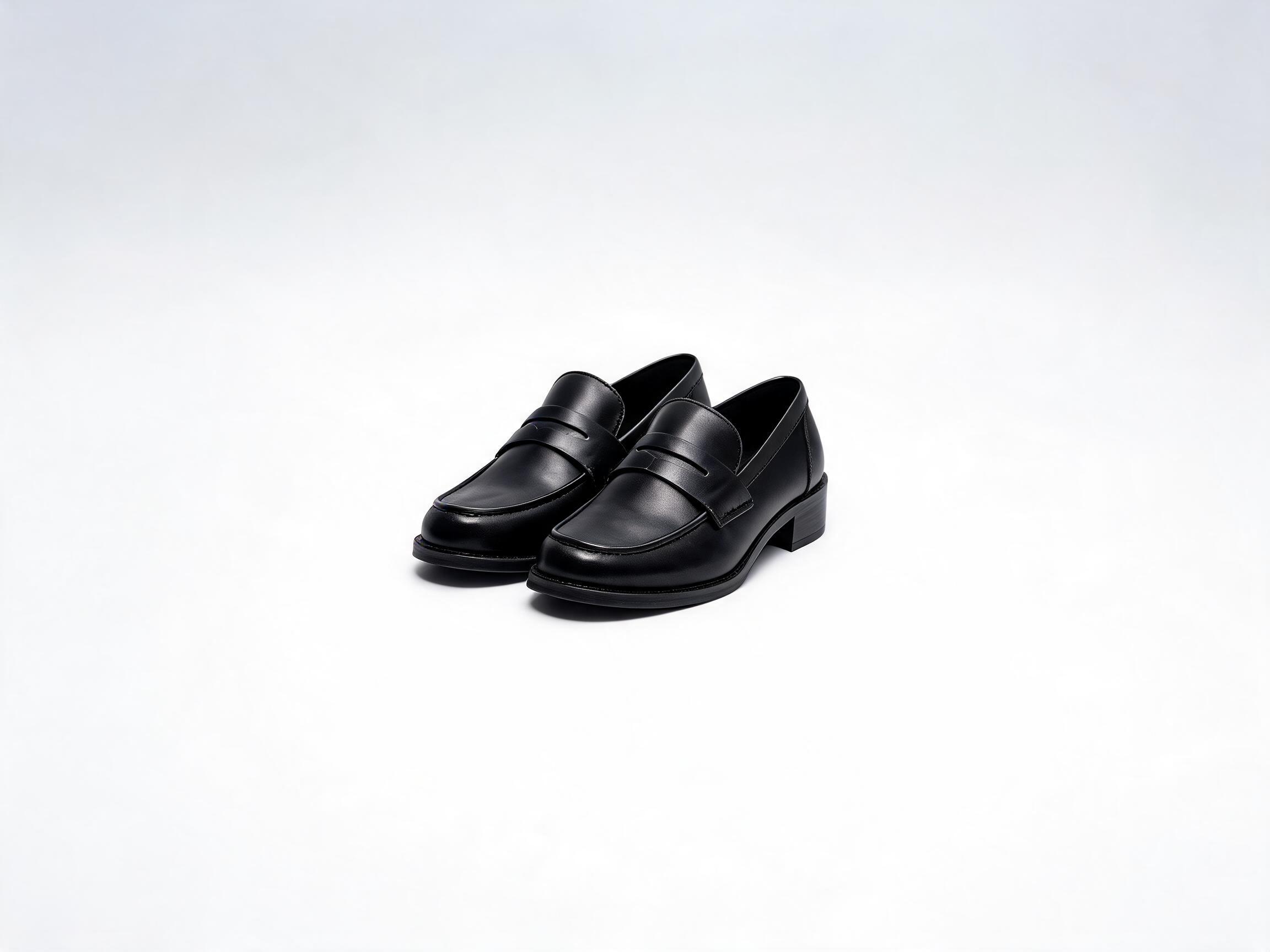
Some ranges also carry a low block-heel loafer to cover business-casual dressing. The Women's Black Leather Loafers are a women's black leather loafer with a block heel and padded insole, positioned for the office line. Where a range needs a business-casual bridge between flat and pump, this style fills it. It is not a substitute for the Oxford; it serves a different dress code.
Construction Choices Behind Comfort and Formality
Heel height gets a style onto the right shelf. Construction decides whether the buyer reorders it. For closed-toe women's dress shoes, a handful of internal details carry most of the perceived quality.
Upper leather
Panel matching matters more than most buyers expect. When the left and right upper are cut from paired leather, the grain and shade line up across the pair. That consistency is visible on the shelf and reduces the risk of a customer rejecting one shoe of a pair. Leather thickness, color, and grain are checked on incoming material before cutting, which is the earliest point to catch a mismatched lot.
Lining and insole
A leather lining and a padded insole with arch support change how a pump feels at the 7 cm height. For a wholesale line sold into accounts with long wear expectations, the insole is not a hidden detail; it is a selling point the buyer can cite. The same padded insole logic applies across the Oxford and the loafer, which keeps a range consistent in comfort vocabulary.
Heel core and bottom construction
A reinforced heel core is critical on the slim 7 cm pump, where a soft or poorly anchored heel shows up as instability. Heel stability is tested, not assumed. The outsole is rubber for slip resistance, and the bonded construction is cemented. The hand-inked outsole edge is a finishing detail that reads as premium in a formal range and costs little to specify.
The making sequence
Understanding the production order helps the buyer ask the right questions at the sample stage. The sequence runs: pattern grading, leather cutting, upper stitching, lasting of the forepart, heel attachment, bonding, sole pressing, cooling, last removal, inspection, and packing. Lasting is done by hand to control tension, which is why upper lines stay clean. The factory runs a dedicated women's high-heel line, so the pump and strap heel are not squeezed through a general-purpose line.
What to Lock at Sample Confirmation
The sample stage is where the buyer has the most leverage and the least cost exposure. Four parameters should be settled before a style moves to bulk.
- Heel height. Confirm the actual height on the sample, not the spec sheet. The difference between 7 cm and 8.5 cm changes the shelf position, so this is a merchandising decision as much as a technical one.
- Toe shape. The pointed toe on the pump and the rounder toe on the Oxford serve different dress codes. Confirm the toe on a worn sample, because a pointed toe that looks right on the last can pinch when lasted.
- Width and half sizes. Half sizes and width options can be arranged after the sample is confirmed. Decide early whether the target market needs them, because they affect the pattern set.
- Color. Black and tan carry different shelf stories. Confirm color against the actual leather lot, since grain and shade vary between lots and panel matching depends on it.
Ask for the sample in the exact color and heel height you intend to buy. A sample made in a standard color tells you little about how the production lot will read.
Batch Inspection: Where Ranges Lose Money
The sample passed. The question becomes whether the bulk order repeats it. A practical inspection routine for a closed-toe formal range covers three stages.
- Incoming material. Leather thickness, color, and grain are checked before cutting. This is where a mismatched lot is caught.
- In-line checks. Stitching and lasting are inspected during assembly, while corrections are still possible.
- Finished goods. Symmetry, bonding strength, cleanliness, and packing accuracy are checked on the finished pair.
On top of that, each batch is sampled for forepart flexing, color fastness, and heel attachment. These are the three failure points that matter most in a formal range: a sole that cracks at the flex point, a color that bleeds or fades, and a heel that loosens. Inspection reports are available on request, and third-party inspection is welcome.
The most common losses in this category come from inconsistency between pairs rather than from a single defective shoe. Panel matching and color consistency across a lot deserve as much attention as the individual shoe.
Range Comparison at a Glance
| Style | Heel height | Shelf position | What to confirm first |
|---|---|---|---|
| Pointed pump | 7 cm slim heel | Office-to-evening bridge | Toe shape on worn sample; insole arch support; heel core |
| Ankle-strap heel | 8.5 cm | Occasion shelf | Strap fit and security; pitch comfort |
| Lace-up Oxford | Flat | Office base | Lacing structure; color story; width options |
| Block-heel loafer (optional) | Low block | Business-casual bridge | Heel proportions; office color palette |
Read the table as a shelf plan. If two rows land on the same shelf in your market, one of them is probably redundant. The pump and the Oxford can coexist because they serve different dress codes; the pump and the ankle-strap heel can coexist only if the customer can tell them apart at a glance.
Frequently Asked Questions
Can one range cover office and occasion without too many SKUs?
Yes, if the shelf positions are visually distinct. A 7 cm pointed pump, an 8.5 cm ankle-strap heel, and a flat Oxford give three clear positions with minimal overlap. Add colors only where the market supports a separate story.
Should half sizes and width options be decided at the sample stage?
Decide at the sample stage whether the target market needs them, because they affect the pattern set. Half sizes and widths can be arranged after the sample is confirmed, but the decision should come before bulk planning.
What is the single most important sample check for a pump?
Wear the sample and check the heel seat and the arch support. A 7 cm pump can look correct on a shelf and still feel unstable if the heel core is not properly reinforced. Ask how heel stability is tested.
How should a buyer compare color consistency between lots?
Ask for panel-matched pairs and check color under the lighting used on the shelf. Incoming material checks cover leather color and grain, but the buyer should confirm the production lot against the approved sample color.
Planning a formal range for next season? Aurevia Footwear Co., Ltd. manufactures and exports leather footwear and fashion accessories for B2B buyers in Europe, North America, and the Middle East, offering OEM/ODM and private-label programs with a dedicated women's high-heel line.
To discuss a range, send your target shelf positions, heel heights, toe shapes, colors, and whether half sizes or widths are needed. Sample and inspection details can be arranged around your program.