
A buyer guide to building a wholesale shoe range from factory-direct supply, paired with a concrete audit checklist covering capacity signals, dedicated production lines, three-stage QC, and private-label capability.
Factory-direct wholesale changes two things at once: the styles you can hold as a repeatable range, and the questions you can ask the factory that makes them. This guide covers both, using a leather footwear factory in Quanzhou as the working example.
How to choose styles that survive as a wholesale program rather than a one-season buy, and how to audit the factory itself: capacity signals, dedicated lines, three-stage QC, inspection access, and private-label capability.
What factory-direct wholesale actually buys you
Buying factory-direct is not mainly about a lower unit figure. It changes what you can specify. A manufacturer that runs its own design and pattern teams can adjust a last, a sole, a leather finish or a size grading to your market instead of selling you a catalogue item as-is. Aurevia Footwear Co., Ltd., established in 2011, is a B2B manufacturer and exporter with a 260-person team based in Quanzhou, China, working in OEM/ODM and private label for buyers in Europe, North America and the Middle East.
That matters for a wholesale range because the factory controls the two things that decide whether a program holds together: repeatability of a core style, and the ability to extend that core into adjacent categories without your buyers seeing a quality break between them.
Selecting styles that work as a wholesale range
A wholesale range needs a small number of styles that can be reordered, plus enough category width that your accounts order more than one line. Choose the core first, then the edges.
Start with repeat core styles
Repeat styles are the ones engineered for stable volume production. They are the styles a factory can keep running without redrafting patterns or re-sourcing components between orders. In leather footwear, that usually means clean, season-neutral designs where the upper construction and sole unit are settled.
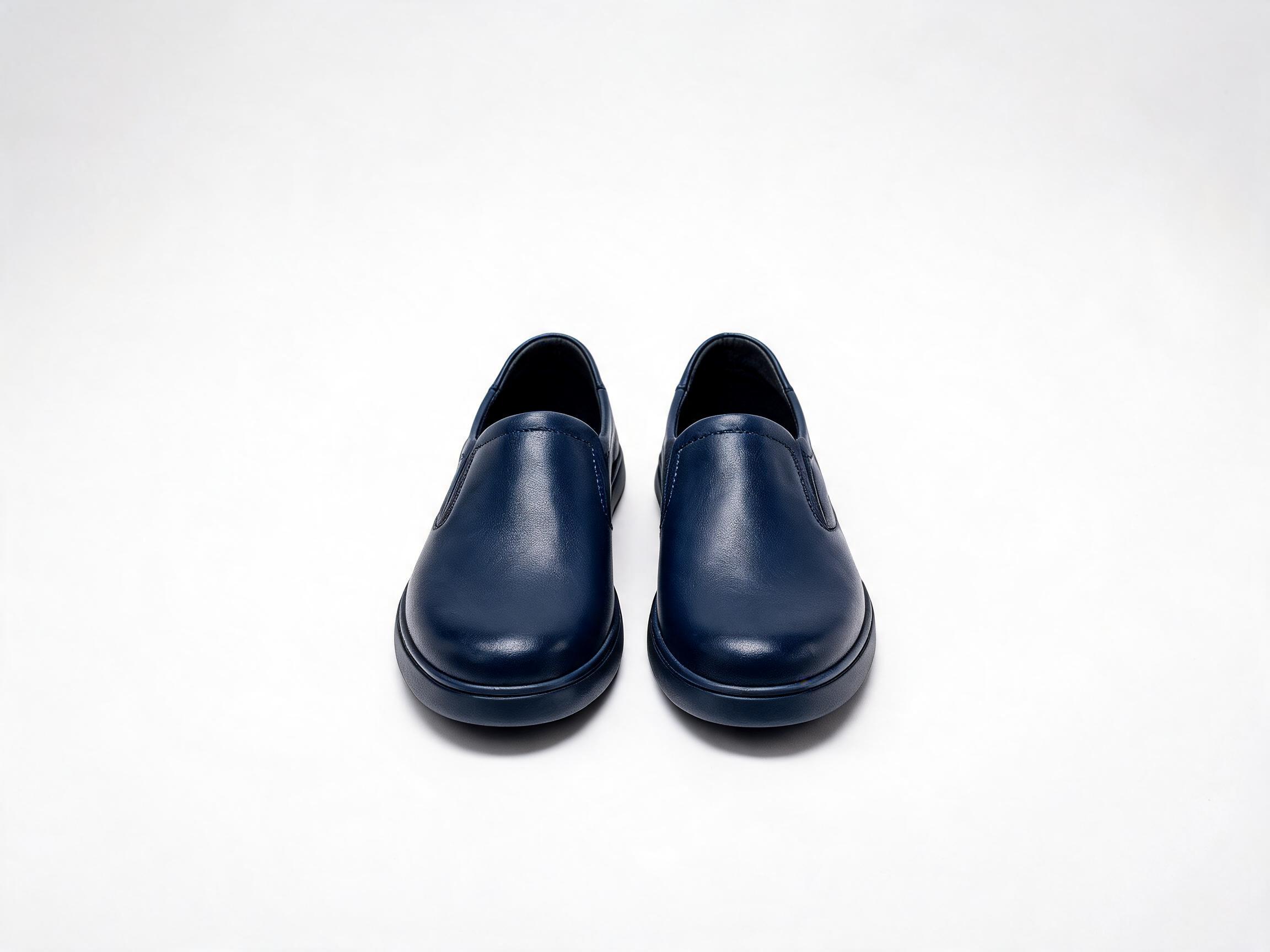
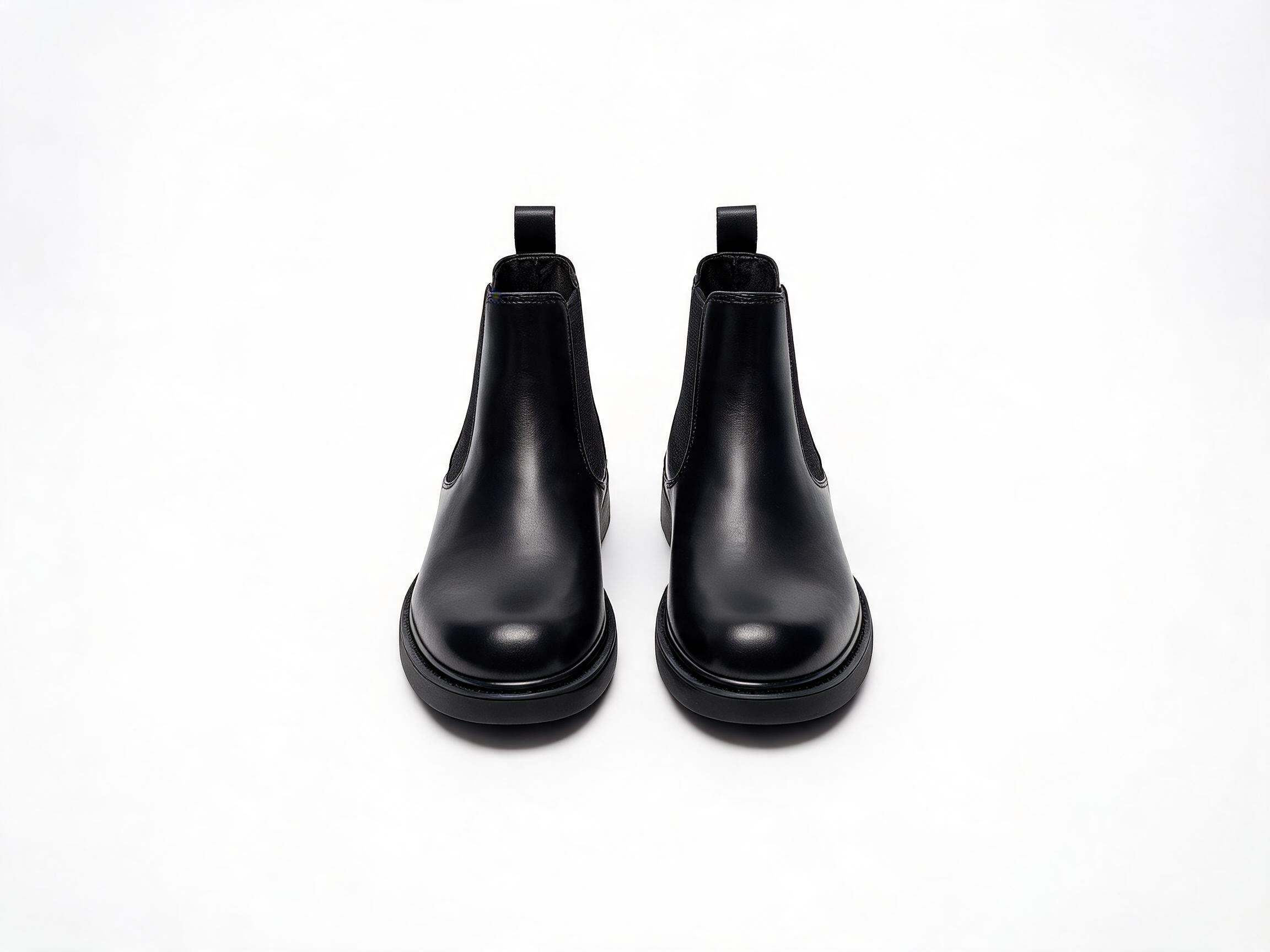
Two examples from the current range show the pattern. The navy leather slip-on shoes use polished full-grain leather with an apron toe and cemented construction, which makes them a business-casual core style rather than a fashion item. The black Chelsea boot shoes use full-grain leather with elastic side panels and stitched-and-cemented construction, positioned as an autumn/winter core. One carries the front half of the year, the other the back half.
Build category width from dress to boots to sneakers
Category width is what lets a wholesale account buy a full program from one supplier instead of splitting purchase orders across three factories. It also means your sizing, packaging and labelling standards stay consistent across the range.
The published range covers:
- Men's dress shoes: oxfords, derbies, brogues, monk straps and loafers.
- Boots: Chelsea boots, ankle boots, knee-high boots and work boots.
- Casual and athletic: sneakers and slip-ons.
- Women's lines: pumps, heels, flats, loafers, mules, oxfords and sandals.
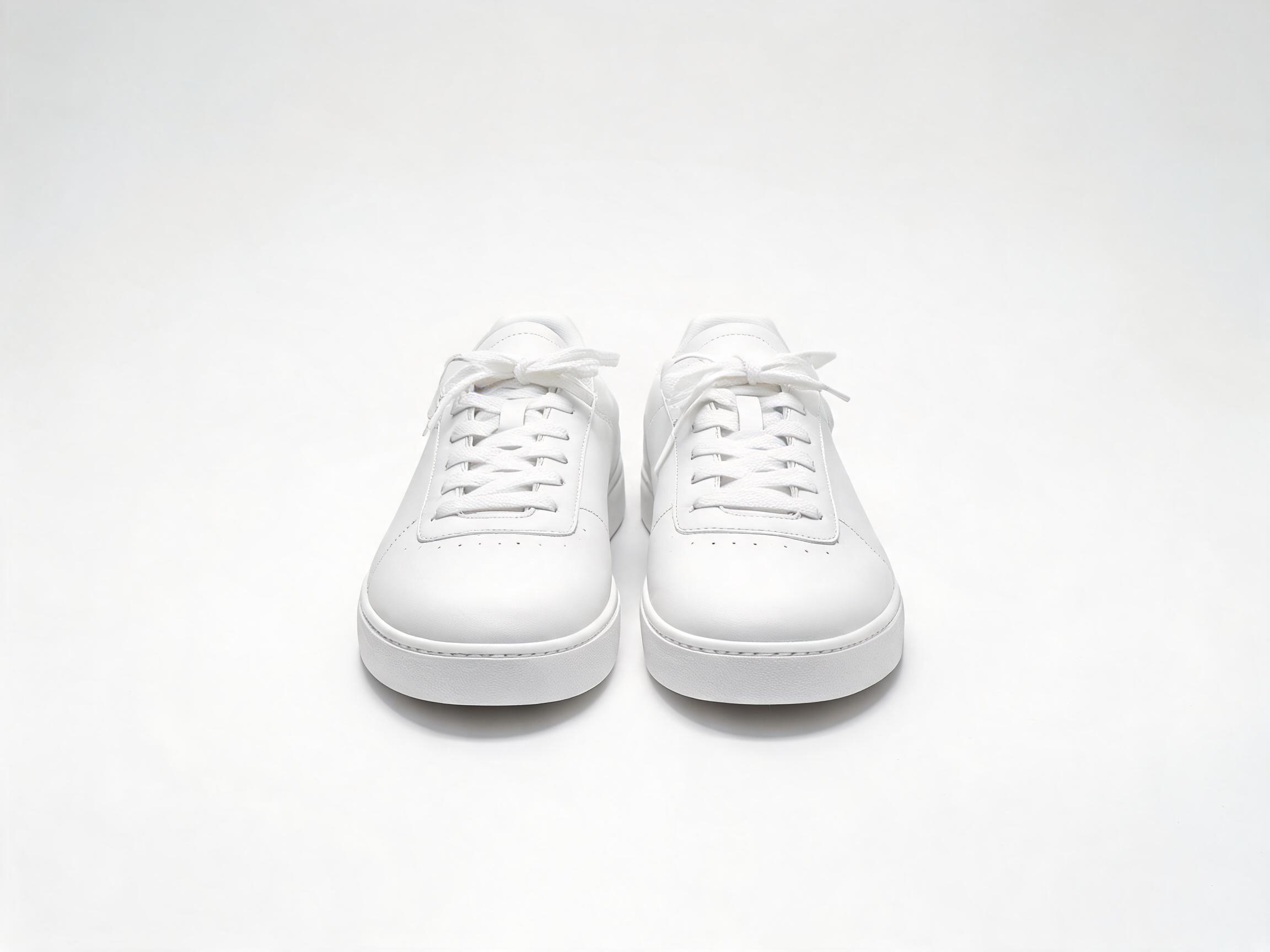
A practical way to use this is to treat dress shoes and boots as your volume anchors and sneakers or slip-ons as the entry price point that brings smaller accounts in. The white leather low-top sneakers with a minimal upper and rubber cupsole are built as a private-label-ready style, which suits buyers who want their own mark on the fastest-moving part of the range.
Plan seasonality across the range, not per style
Seasonality should be a property of the range, not a surprise. If your dress shoes and boots both peak in the same month, your factory schedule and your warehouse both suffer. Alternating the half-year anchors, or sizing the order book so the boot line carries the winter and the dress line carries spring, spreads production load and reduces the chance of a late shipment on your best-selling style.
Auditing the factory behind the range
Range selection tells you what you want. The audit tells you whether the factory can deliver it repeatedly. Four areas carry most of the signal.
Capacity signals
Ask for the number of people in production and the split between sample, production and QC functions. A 260-person team is large enough to support dedicated departments, and the way a factory describes that split tells you whether samples and bulk orders compete for the same hands. Confirm which categories the team actually runs in-house, since a factory that lists boots but outsources boot lasting is a different supplier than one that does not.
Dedicated production lines
This is the single most useful audit question for a repeat-style program. Dedicated lines — men's dress-shoe lines, boot lines and sneaker lines kept separate — are what keep schedules stable in peak season, because on a shared line a boot order can displace a dress-shoe order when both are due at once. Ask the factory to show you which line each of your core styles runs on and whether that line is shared with other buyers' programs; what matters is confirming the split on your own order, not assuming it.
Three-stage QC
A verifiable QC process is structured, not just claimed. Aurevia runs three-stage inspection:
- Incoming material checks on leather thickness, color and grain before cutting.
- In-line construction checks during stitching and lasting.
- Final finished-shoe inspection covering symmetry, bonding strength, cleanliness and packing accuracy.
On top of that, random pairs are flex-tested at the forefoot, with color fastness and sole adhesion checks. Inspection reports are available on request, and third-party inspection is welcome. In an audit, ask what happens when the in-line check fails: whether the affected batch is pulled and re-inspected, and who signs off on release.
Inspection access
A factory that welcomes third-party inspection is telling you something about its confidence in its own process. Confirm before placing an order who pays for third-party inspection, when access is granted, and whether you can see the in-line stage as well as the final one. If a factory limits access to the final stage only, price that limitation into your risk.
Checking private-label capability
Private label is where range selection and factory capability meet. A supplier that only prints a logo on an existing catalogue shoe gives you a private label in name. The audit should establish how far the customization actually reaches.
| Customization area | What to verify in the audit |
|---|---|
| Logo placement | Whether the factory supports marking on the insole, box and hangtag, and how the mark is applied. |
| Packaging | Whether retail packaging is built to your spec or sourced from a fixed menu. |
| Size grading | Whether the grading can be adjusted for your market's size curve. |
| Color matching | Whether leather colors can be matched to Pantone references. |
| Full seasonal collections | Whether design and pattern teams can build a coordinated season rather than single styles. |
A factory with in-house design and pattern teams can generally move further into these areas than a trading operation can, because the changes happen on the pattern table rather than being requested from a third party. Ask for the customization scope in writing before sampling, so the sample you approve matches what will be produced.
From sample to bulk: what to expect
Sampling is the point where the range stops being a spreadsheet. Custom samples are typically ready in about 7-12 days after details are confirmed. Existing samples ship within 3-5 days, which is useful when you need to show a buyer a style before committing to development.
Use the sample stage to lock the specification, not just to approve the look. Confirm the leather, the construction, the size grading, the logo placement and the packaging on the approved sample, then reference that sample in the bulk order. The three-stage QC process is what links the approved sample to the production run, so make sure the sample becomes the standard the in-line checks are measured against.
FAQ
How many styles should a first wholesale range include?
Enough to cover two seasons and a couple of adjacent categories, without so many that you cannot reorder any of them. A common structure is a small set of repeat core styles across dress shoes and boots, plus a sneaker or slip-on entry point.
What is the most important question in a factory audit?
Which production line each of your core styles runs on, and whether that line is dedicated. It tells you the most about how your schedule will hold in peak season.
Can logo, packaging, size grading and color be customized together?
Aurevia supports logo marking on insole, box and hangtag, custom packaging, size grading and leather color matching to Pantone references, alongside full seasonal collections. Confirm the scope in writing before sampling.
Can we use a third-party inspection company?
Yes. Third-party inspection is welcome, and inspection reports are available on request.
How long does a custom sample take?
Custom samples are typically ready in about 7-12 days after details are confirmed. Existing samples ship within 3-5 days.
A factory-direct wholesale program works when the range and the factory are chosen together: repeat core styles produced on production lines you have confirmed, category width that keeps accounts ordering in one place, and a QC process you have actually seen. If you are building a leather footwear range, start with the styles you intend to reorder, then audit against them.