
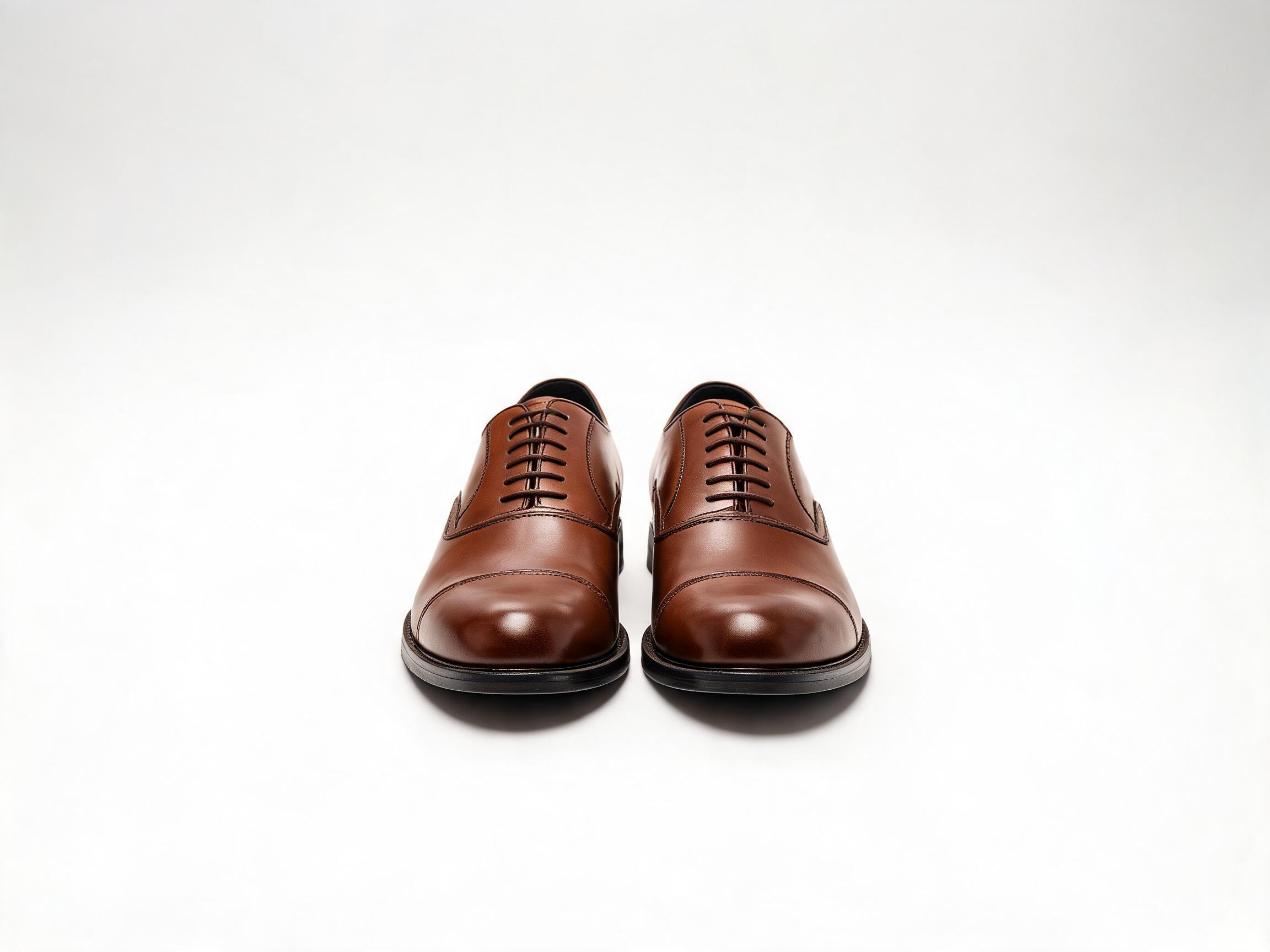
A procurement planning guide for B2B buyers building women's formal and office shoe programs. Covers heel type selection from flat oxfords to mid-heel pumps, last shape matching, seasonal restock cadence, and worked examples from our published styles, with a focus on order structure and supplier communication.
Key Takeaways for Buyers
- Build your heel range from flat to mid-heel, not from a single silhouette; the mix should match your channel's formality split.
- Last shape decides fit consistency across sizes. Ask for the last name or number and a size-set fit report before scaling a program.
- Restock timing follows retail calendars, not container schedules. Place production orders against your sell-through forecast, not your warehouse empty date.
- Confirm current MOQ and lead time with the sales team before ordering; published ranges are planning guides, not quotations.
If you are building a women's formal and office shoe program for wholesale, the first question is not which style looks best on a shelf. It is which combination of heel types, last shapes, and restock cycles you can buy, carry, and repeat without breaking size availability or margin. This article uses our published styles as worked examples to show how a lady dress shoes wholesale program can be structured for procurement planning, rather than styled for a retail lookbook.
What This Article Covers
Heel Architecture: Flats, Low Heels, and Mid-Heels
Dress shoe programs for women usually spread across three heel categories: flat, low heel (under 30 mm), and mid-heel (30–60 mm). Each category serves a different buyer need and carries its own procurement implications. If you are sourcing lady dress shoes wholesale for office and formal wear, the mix you choose should match your channel's formality split rather than a single aesthetic preference.
Flat styles, such as oxfords and loafers, are the easiest to forecast in size runs because they have no heel height variance between sizes. That consistency is also what makes them a reliable anchor in office programs, where sizing is the main fit variable. Low heels are a natural bridge between comfort and formality, and often become the volume driver in uniform or daily-office programs. Mid-heel pumps carry the highest formality and the highest size-curve risk; a 60 mm pump in size 35 and size 41 is effectively a different shoe in terms of fit and material behavior.
For a wholesale program, how you split the range across these three categories is a planning decision, not an industry standard. Many office-led programs weight flats and low heels most heavily because of their fit consistency, while a department-store formal department may lean toward mid-heels. The important part is to set the ratio before sampling, based on your own channel data, not after receiving the first order.
Last Shapes and Fit Consistency
A last is the shaped form around which the shoe is built. Two shoes with the same heel height and upper design can fit completely differently if they are built on different lasts. For wholesale buyers, the last is the most important specification you can lock down, because it determines whether a size 37 in one colorway will fit the same as a size 37 in another.
When you request samples, ask for the last name or number for each style, and request a size-set fit report if available. A fit report should show the inside length, width at the ball, and heel width for at least three sizes (for example, 36, 38, and 40). This lets you compare across styles without relying on visual assessment.
For women's formal and office shoes, two last families cover most needs: a round-toe last with a slightly wider toe box for flats and low-heel oxfords, and a tapered or almond last for mid-heel pumps. If you are sourcing a women's tan leather oxford, the last shape is typically round or slightly squared, with closed lacing. That last is not interchangeable with the tapered last used for a pump, even if both are produced in the same EU 35–41 range. Treat each last as a separate program component, and do not assume that a successful fit in one last will transfer to another.
Our women's tan oxford is built on a round-toe last with a cushioned insole, and is available in EU 35–41. For buyers who need a contrasting men's style in the same program, our men's brown derby uses open lacing and is sized EU 39–45 with a stitched-and-cemented build. The two are different last families and should be planned as separate size curves, even if they share a color direction.
Seasonal Restock Cadence
Restock timing for dress shoes is driven by two calendars that rarely align: the retail selling calendar and the production calendar. A common mistake is to order based on when your warehouse is empty, which usually means you are already late for the selling season. Instead, plan production orders against your sell-through forecast and your supplier's actual production window.
For most wholesale programs, two main production windows per year are practical: one for the spring/summer formal season and one for the autumn/winter office season. If your market has a strong graduation or wedding season, add a third smaller window for mid-heel pumps and formal flats. The exact timing depends on your supplier's capacity and shipping route, so confirm current MOQ and lead time with the sales team before ordering.
| Planning Window | Typical Styles | Procurement Action |
|---|---|---|
| Spring/Summer (Feb–Apr production) | Flats, low-heel oxfords, light-color pumps | Confirm last and color approvals by Jan; place production order against spring forecast |
| Autumn/Winter (Jul–Sep production) | Mid-heel pumps, dark oxfords, closed-toe flats | Lock Pantone matches and packaging by Jun; schedule production before peak capacity |
| Event-driven (Oct–Nov production) | Formal pumps, seasonal colors | Small repeat order for graduation/wedding season; confirm whether MOQ allows partial size runs |
Restock cadence also affects your size-curve planning. If you carry a broad size range (EU 35–41 for women), a mid-season restock on a single style often requires a minimum production quantity per color. Before you commit to a restock, confirm the minimum per color and whether the supplier can produce a split size run. This is especially important for mid-heel pumps, where the size curve is wider and the cost of leftover sizes is higher.
Worked Examples from Published Styles
Two published styles show how heel type and last shape translate into a procurement plan.
Example 1: Women's Tan Leather Oxford (Flat, Closed Lacing)
This oxford is a flat style with closed lacing, a cushioned insole, and EU 35–41 sizing. In a wholesale program, it works as the anchor flat for office and daily-formal buyers. Because it has no heel height, the size curve is more forgiving and the restock risk is lower. It is also a candidate for OEM/ODM programs: the tannery color can be matched to a Pantone reference, and private-label packaging can be specified. If you are building a women's dress shoes supplier relationship, this style is a practical first order because it tests your supplier's last consistency and color matching without the complexity of a heel.
Example 2: Men's Brown Derby (Open Lacing, Stitched-and-Cemented)
While this is a men's style, it is useful as a comparison point for buyers who run both men's and women's formal programs. The derby uses open lacing, EU 39–45 sizing, and a stitched-and-cemented build. The construction method is different from a women's oxford, and the size range does not overlap with the women's EU 35–41 range. If you are planning a paired men's/women's formal offering, order the two as separate programs and confirm the last and construction for each. Do not assume that a women's oxford last can be scaled up for men's sizing, or that the same MOQ applies to both.
For buyers sourcing wholesale office shoes, the practical takeaway is to treat each last and heel category as its own planning unit. A program with three heel types and two lasts is effectively six product lines, even if they share a color palette and a packaging design.
Frequently Asked Questions
How many heel types should a first wholesale order include?
For a first order, two heel types (one flat and one low heel) are usually enough to test fit and sell-through without overcommitting to a wide range. Add mid-heel pumps in the second or third order once you have fit feedback and a clearer size curve. The right number depends on your channel and your warehouse capacity, so confirm current MOQ and lead time with the sales team before ordering.
Can I mix sizes and colors within one production order?
This depends on the style and the supplier's current production setup. Some styles allow split size runs; others require a minimum per color. Before you plan a mixed order, confirm the minimum per color and whether the supplier can produce a split size run for the specific style you are ordering.
What should I ask for when comparing lasts from different suppliers?
Ask for the last name or number, a size-set fit report, and the inside length and width at the ball for at least three sizes. If a supplier cannot provide a fit report, request physical samples in two sizes and measure them yourself. Visual comparison of product photos is not a reliable substitute for measured fit data.
How does OEM/ODM affect restock timing?
OEM/ODM programs typically add steps for color matching and packaging approval before production. If you are specifying Pantone color matching or private-label packaging, build those approval steps into your timeline before the production window opens. Confirm the approval lead time with the sales team as part of your order planning.
Planning a women's dress shoe program and need current MOQ, lead time, or last details for a specific style? Our sales team can confirm the specifications and production schedule for your order.
Request program details