
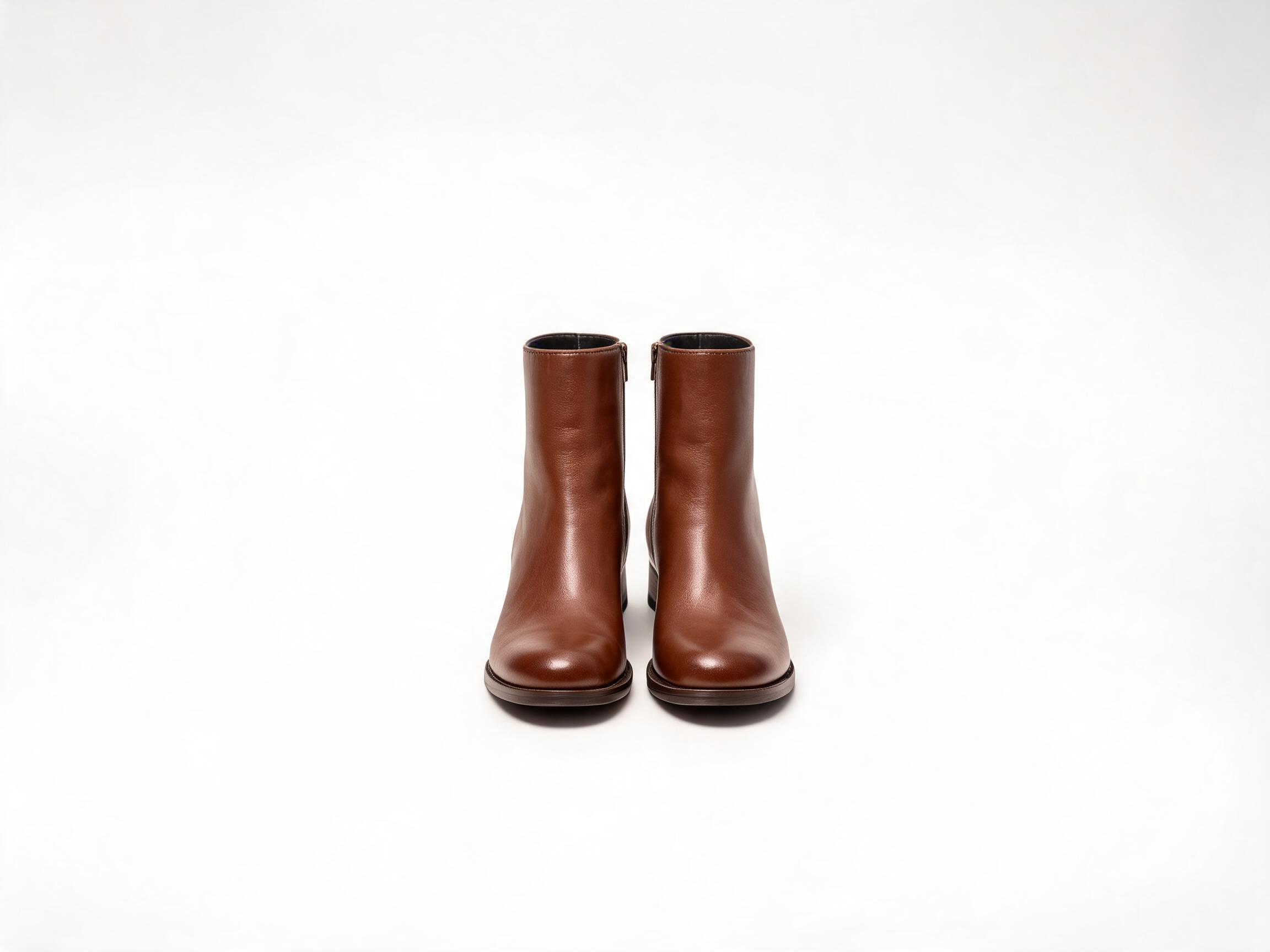
A size-run assortment across ankle and knee-high boots gives womens boots wholesale buyers a coherent series instead of isolated SKUs. This guide covers height and heel gradation, color allocation, size curve weights, sample coordination for two styles from one factory, and series-level replenishment, with product facts to confirm before ordering.
B2B Buyers' Guide
Womens Boots Wholesale: Planning a Size-Run Assortment Across Styles
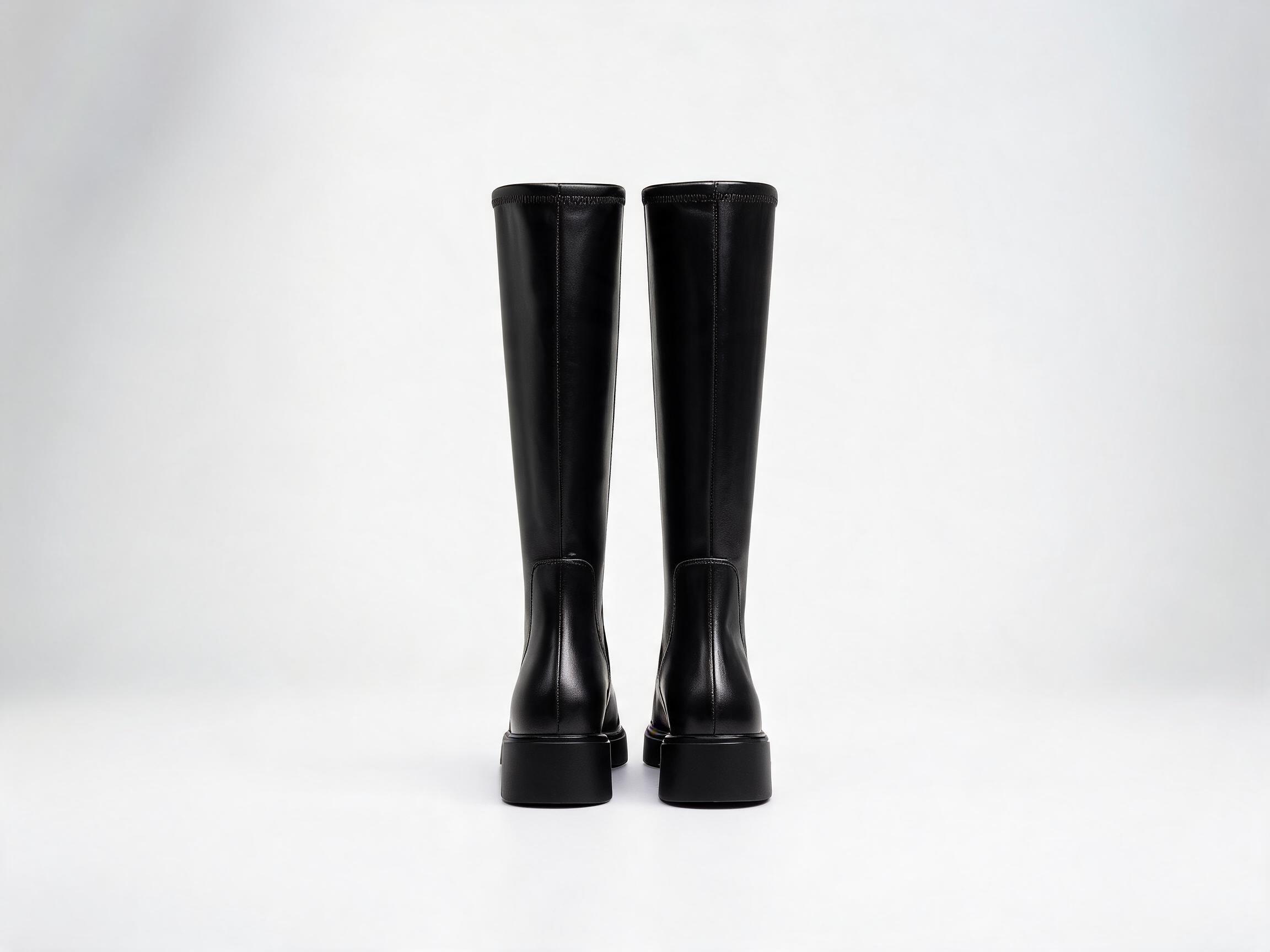
A size-run assortment treats womens boots wholesale as a series question, not a single-SKU one. A buyer who orders one ankle style and one knee-high style from the same factory is not buying two products; they are buying a height gradient, a heel-story, a color plan and a size curve that have to hold together across both styles. This guide covers how ankle boots and knee-high boots can form one coherent range, how to coordinate confirmation samples for two styles out of one factory, and how to replenish by series instead of by style.
Key takeaways
- A cross-style size run is built on three axes: shaft-height gradient, heel-height consistency, and a shared color story.
- Two styles from one factory can share a confirmation-sample round if you define which elements must match and which may differ.
- Size-run weighting should be tied to the series curve, not to each style in isolation.
- Confirm current MOQ and lead time with the sales team before ordering; the figures here come from the product-page specifications.
Height and heel gradation across two styles
Shaft height and heel height are the two dimensions that let two boots read as one family. In the current range, the Black Leather Knee-High Boots list a shaft height of about 38cm and a 6cm block heel; the Brown Leather Ankle Boots also list a 6cm block heel, with a warm lining. Those two specification points already do useful work for a wholesale womens boots series: the heel platform is consistent, so the ankle and knee-high styles sit at the same height under the foot, and the shaft heights separate cleanly into a short and a tall option without either looking like an outlier.
That leaves a decision the specifications cannot make for you: whether the gradient between the two shaft heights is wide enough for your market's styling, and whether the shared 6cm heel is the right anchor. If your range needs a lower heel on the shorter boot and a block heel on the taller one, that is a change you would specify to the factory rather than a fact you can assume from these two listings. What the listings do give you is a defensible default: one heel height, two shaft heights, two materials. That is the simplest gradient a series can hold, and it is easier to replenish than a range where every style has its own heel.
When you write the brief, separate the fixed elements from the variable ones. Fixed: heel family (block), nominal heel height (6cm), one or more shared leathers. Variable: shaft height, lining, and whether the shorter style carries the warm lining. That separation matters later, because it tells the factory which parts of the two styles are meant to be coordinated and which are deliberately different.
Color allocation across the series
The two listed styles are Black Leather (knee-high) and Brown Leather (ankle, warm-lined). As a starting series, that is a black-and-brown split across a short and a tall boot. A common next step in womens boots wholesale planning is to decide whether color should be split by shaft height or offered across both. Splitting by height keeps the series visually simple and keeps each color's MOQ concentrated in one style. Offering both colors in both styles broadens the range but splits each color's volume across two SKUs, which matters at the 100-pairs-per-color minimum described below.
A practical allocation plan identifies, for each color, which styles it appears in and what the resulting pair count is. If black runs only on the knee-high and brown only on the ankle, each color has one SKU and one MOQ line. If you want black on both, that is a second color line on the ankle style, with its own MOQ commitment. Decide this at the brief stage, because color count drives both the MOQ schedule and the confirmation-sample set.
| Series element | Knee-high style | Ankle style | Planning implication |
|---|---|---|---|
| Shaft height | ~38cm | Not listed (confirm target with the factory) | Two-step gradient; the ankle shaft height needs to be specified if you want a target |
| Heel | 6cm block | 6cm block | Shared heel family anchors the series |
| Upper material | Black leather | Brown leather | Color split by height as the base case |
| Lining | Not listed | Warm lining | Climate positioning differs by style; state it in the brief |
| MOQ | 100 pairs/color | 100 pairs/color | Color count multiplies MOQ lines |
| Lead time | 30–40 days | 30–40 days | Two styles from one factory can be scheduled together or sequentially |
Size-segment weighting in a two-style run
A size run is not the same as an even size spread. For a series, the useful question is where the volume sits across the curve, and whether that weighting is the same for both styles. Shorter ankle boots and taller knee-high boots can sell into different size profiles depending on the market, but both are typically bought on a curve with the middle sizes carrying the most pairs and the extremes carrying the least. The weighting you choose should be written down as a single series curve, then applied to each style with an explicit note of any deviation.
A workable method is to define the curve in percentages, not pairs, and then convert to pairs per style based on the MOQ. If each color line has a 100-pair minimum, the curve tells you how those 100 pairs split across the size range. The same percentage curve can be applied to the ankle and the knee-high, or you can decide the ankle gets a slightly flatter curve and the knee-high a more center-weighted one. Either way, the decision belongs at the series level so the two styles do not end up with curves that fight each other in replenishment.
As an illustrative planning template only — not a listed specification — a centre-weighted five-band curve such as 10%, 20%, 40%, 20%, 10% is a common starting sketch for a 100-pair colour line: about 10, 20, 40, 20 and 10 pairs per band. Treat those shares as a placeholder to be replaced by your market's actual size data, and confirm per-size availability and any per-size minimums with the factory before the order is frozen.
Two practical points to settle with the factory. First, whether the size range is the same for both styles; a knee-high and an ankle boot may not share an identical run. Second, how the size curve is expressed in the order—by pairs per size, or by a stated ratio. Getting this in writing at the sample stage avoids a situation where the ankle arrives on one curve and the knee-high on another.
Confirmation samples for two styles from one factory
When both styles come from the same factory, the confirmation-sample round can be combined, but only if you define what "confirmed" means for each style and what must match across them. A useful split is: confirm the shared elements once, confirm the style-specific elements per style. The shared elements—heel family and nominal heel height—can be checked across both samples in one review. The style-specific elements—shaft height, lining, upper color—need their own sign-off per style.
For the knee-high, the shaft height of about 38cm is the number to check against the sample, since shaft height is the element most likely to drift in sampling. For the ankle, the warm lining is the element to inspect directly, because a lining change is easy to miss on a photo and hard to reverse at bulk. Ask for both samples in the same round and review them side by side, so the heel height and finish read consistently across the pair.
One more coordination point: if the two styles will be produced on the same 30–40 day cycle, the sample approval dates should be aligned. If the knee-high sample is approved later, the two styles can slip out of sequence and the series ships in two drops instead of one. Agree the sample calendar with the factory at the same time as the order calendar.
Replenishing by series, not by style
Series-level replenishment changes what you reorder. Instead of tracking the ankle and the knee-high as separate SKUs with separate reorder points, you track the series curve and reorder against the styles that have fallen below their share of that curve. In practice, that means a replenishment order can contain both styles, weighted to the sizes that have sold through, rather than a full reorder of whichever style ran out first.
This is where the shared MOQ and shared lead time help. Both listed styles carry a 100-pairs-per-color minimum and a 30–40 day lead time. A series reorder that combines the two styles against one schedule is easier to plan than two independent reorders, and it keeps the color story intact—if black is only on the knee-high, a black replenishment is a knee-high replenishment, and there is no ambiguity about which SKU to bring back. If you have added black to the ankle as well, the replenishment brief needs to say so explicitly, because the two black lines are separate MOQ commitments.
The practical rule: define the series first, then define the reorder unit as the series, not the style. Review sell-through against the series curve, and let the curve tell you which style and which sizes to bring back.
Product facts to confirm before ordering
The specifications below come from the product pages and are the only figures this guide relies on. Confirm current MOQ and lead time with the sales team before ordering, since these terms should be checked against the current production schedule rather than assumed from a listing.
- Black Leather Knee-High Boots: MOQ 100 pairs per color, lead time 30–40 days, 6cm block heel, shaft height about 38cm. See product-black-leather-knee-high-boots.
- Brown Leather Ankle Boots: MOQ 100 pairs per color, lead time 30–40 days, 6cm block heel, warm lining. See product-brown-leather-ankle-boots.
Two elements in the series plan are not fixed by these listings: the ankle boot's shaft height, and whether the knee-high carries a lining. If either matters to your range, specify it in the brief and confirm it on the confirmation sample. Those are the points where a two-style series either holds together or quietly becomes two unrelated boots.
To move from plan to order, review the two product pages linked above and confirm current MOQ, lead time, size runs and sample arrangements with the sales team.
Planning a womens boots wholesale series starts with the gradient between styles, then the color split, then the size curve. Get those three agreed before the sample round, and the replenishment plan follows from the same document.