
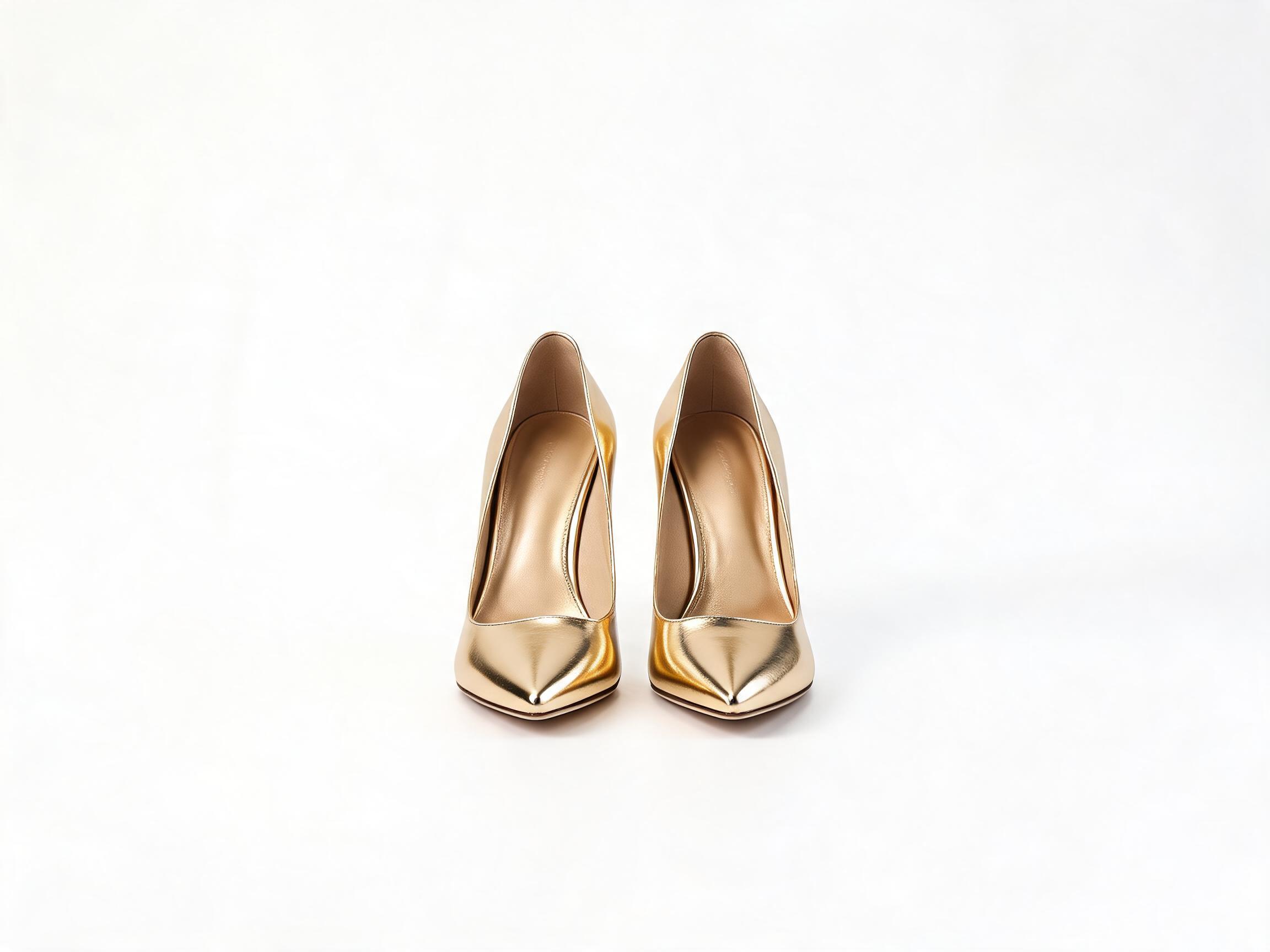
Metallic footwear is one of the fastest ways to make a trainer programme look premium, but it is also one of the least forgiving categories to source at scale. The finish is a surface effect, not a base material quality, so any weakness in the supplier's process control becomes visible on the shelf rather than hidden in a warehouse. Buyers searching for China silver trainers customized for B2B orders usually discover the same problem: two pairs from the same shipment can photograph identically and look different under retail lighting. This guide explains what to specify in a brief, how to compare materials, and how to structure MOQ so a metallic trainer line stays commercially viable.
Why Metallic-Finish Trainers Need a Different Sourcing Brief
Metallic footwear is one of the fastest ways to make a trainer programme look premium, but it is also one of the least forgiving categories to source at scale. The finish is a surface effect, not a base material quality, so any weakness in the supplier's process control becomes visible on the shelf rather than hidden in a warehouse. Buyers searching for China silver trainers customized for B2B orders usually discover the same problem: two pairs from the same shipment can photograph identically and look different under retail lighting. This guide explains what to specify in a brief, how to compare materials, and how to structure MOQ so a metallic trainer line stays commercially viable.
Colour Consistency: What Actually Has to Match
Colour consistency in metallic finishes is not a single property. It has at least four measurable dimensions, and a supplier who only talks about a colour code is not giving you enough control.
- Batch-to-batch hue: the difference between the first production run and a reorder placed months later.
- Panel-to-panel match: the metallic film, foil, or coated synthetic on different panels of the same shoe.
- Light-angle shift: metallic surfaces change appearance as the viewing angle changes. Two swatches can match face-on and diverge at 45 degrees.
- Gloss level: a metallic finish with a higher sheen looks lighter than the same pigment at a lower sheen.
For a silver metallic finish, the biggest practical risk is not "wrong silver" but "silver that shifts brown or blue under warm store light." Ask for master swatches approved under both daylight and warm indoor lighting, and treat them as the production reference. Where a supplier can provide a spectrophotometer reading or a controlled visual assessment against your approved swatch, that is a stronger verification step than a photo.
Verification steps before you commit
- Request physical swatches, not digital renders, and view them under at least two lighting temperatures.
- Ask for the approved swatch to be sealed and retained by both parties.
- On the first bulk run, pull pairs from the start, middle, and end of production and compare them side by side, not from separate photos.
- For reorders, confirm the supplier still holds the original material lot or an approved replacement before you accept a ship date.
Materials: How the Metallic Effect Is Made
The metallic look comes from a small number of material routes, and each carries a different cost, durability, and consistency profile. Understanding these options helps you compare quotations that look identical on paper.
| Material route | Typical behaviour | Consistency risk | Best suited to |
|---|---|---|---|
| Metallic-coated synthetic (PU/PVC) | Uniform surface, moderate flex life | Low to moderate if lot-controlled | Volume trainer programmes, fashion drops |
| Metallic foil laminate on textile | Strong shine, can crease at flex points | Higher at high-flex zones | Statement panels, low-flex areas |
| Metallic yarn in knit or woven upper | Subtle sheen, breathes well | Can vary with yarn lot | Lightweight, sport-influenced trainers |
| Metallic print or coating on finished upper | Flexible design placement | Higher, depends on coating adhesion | Small detail panels, heel counters |
For most B2B trainer lines, a coated synthetic remains the most predictable route for large panels, with foil or yarn used where the design needs a specific texture. The trade-off is that foil and yarn give more visual depth but are harder to keep consistent across a long run.
The other half of the materials question is what sits underneath. A metallic surface on a cheap backing will crease, crack, or delaminate at the flex point of the toe box and the collar. Ask how the upper is backed, how the coating or laminate is bonded, and what flex testing the supplier performs. A simple flex test repeated a few thousand times at the forefoot is a reasonable proxy for how the finish behaves in wear.
MOQ: How to Set It Without Locking Up Capital
MOQ in metallic trainers is driven less by the shoe and more by the material and the colour. A factory has to commit to a minimum quantity of a specific coated synthetic or foil lot, and that minimum often sets the floor for your order.
Practical ways to manage it:
- Align MOQ to a single colour and a single upper material. Mixing silver with a second metallic shade in the same order usually increases the material commitment, not just the shoe quantity.
- Start with one colourway and one outsole. Design variants can be added later as separate runs once the first colour is proven.
- Ask whether the supplier stocks the metallic material or buys to order. Stocked material lowers MOQ but may limit your colour choices.
- Accept a size curve that suits the factory. An unrealistic size breakdown can push the MOQ higher because the factory cannot use leftover material efficiently.
For a first order, the goal is not the lowest possible unit price; it is a controlled run that proves colour consistency and construction before you scale. A slightly higher per-pair cost on a smaller, well-specified first batch is usually cheaper than a large run that fails a colour review.
Choosing a Supplier for Custom Metallic-Finish Trainers
When comparing China silver trainers customized for B2B programmes, look beyond the catalogue. The capabilities that matter are sample discipline, material control, and communication.
Useful comparison criteria:
- Sampling accuracy: does the sample match the approved material and finish, or is it a best-effort mock-up?
- Material sourcing transparency: can the supplier name the material type and explain the backing and bonding?
- Colour process: is there a documented approval step before bulk production?
- Flex and adhesion testing: what does the supplier do, and can you see the method?
- Change control: how are material substitutions communicated and approved?
- Lead time realism: metallic materials can have longer lead times than standard synthetics; check this early.
- Sampling cost and turnaround: a supplier that charges fairly for samples but delivers on time is usually a better long-term partner than one that rushes free samples.
Red flags include vague answers about the metallic layer, unwillingness to retain a sealed swatch, and a quotation that does not separate material from labour. If the price is unexplained, the colour control is probably unexplained too.
What to put in the specification sheet
A clear spec sheet reduces disputes later. Include: approved colour swatch reference, finish type (coated, foil, yarn, print), gloss target, backing material, flex-test expectation, panel-by-panel material allocation, size curve, packaging, labelling, and the acceptance criteria for colour. This is the document both sides measure against when the goods arrive.
Risks and Limitations to Plan For
Metallic finishes are not the right choice for every trainer programme. They show scuffs more readily than matte finishes, they can be harder to clean, and they may not suit products where the buyer expects a low-maintenance finish. High-flex areas are the most likely failure point, so designs that keep large metallic panels away from the toe box tend to age better.
There is also a cost ceiling. Metallic materials and the extra process control they require cost more than standard synthetics, and that premium is difficult to remove without changing the visual effect. Buyers should decide early whether the metallic look is a core design element or a seasonal accent, because that decision shapes the right MOQ and material route.
Next Steps for Your Sourcing Project
Start by writing a one-page brief: target colour, finish type, expected order size, size curve, and the colour acceptance criteria you will use. Send it to two or three suppliers and compare their answers to the same questions, not their catalogues. Ask for sealed swatches and a flex-test explanation before you approve a sample. Once you have a supplier who can hold colour across a run and explain their material route, scale the order in stages rather than in one commitment. If you are ready to compare options for China silver trainers customized for your B2B programme, request a swatch set and a sample quote so you can judge the finish under your own lighting before you place a bulk order.