A private-label guide to custom silver trainers: silver colour matching methods, staged sample development, OEM vs ODM order paths, and how to control sample-to-bulk colour drift.
Why Silver Is the Hardest Finish to Buy Blind
Silver looks simple in a photo and complicated on a production line. A metallic trainer can read as bright chrome, soft pearl, brushed steel or cool matte depending on the substrate, the coating method and the light it sits under. For private label buyers, the real work is not choosing "silver" — it is locking one specific silver, proving it on a wearable sample, and then getting the same result across bulk. This guide walks through how a custom silver trainers factory handles colour matching, sample development and the OEM/ODM order path, and where buyers usually lose time.
Silver Colour Matching: One Word, Dozens of Outcomes
Silver on footwear is rarely a single pigment. It is usually one of four build-ups:
- Metallic PU or metallic TPU film laminated or heat-pressed onto the upper. Consistent, but limited in stretch and harder to wrap around tight toe curves.
- Foiled or hot-stamped panels, which give the sharpest mirror effect and the worst abrasion resistance on high-contact zones.
- Spray or transfer coatings over a base material, which offer the most shade flexibility but can flex-crack at the forefoot crease.
- Pearlescent or mica-filled compounds, which give a soft, non-mirror silver that photographs flatter but wears longer.
Because these methods reflect light differently, a Pantone metallic chip is a starting point, not an answer. A workable brief specifies the substrate per panel, the target appearance, the lighting the buyer will judge it under, and the panels where mirror finish matters most. Ask for a physical standard — a swatch, a lab dip or a strike-off — not a screen colour. Keep the approved standard on file; it becomes the reference when bulk is compared later.
Two practical tests belong in the approval step. First, view the swatch under neutral daylight and under typical retail lighting; metallic surfaces shift noticeably between the two. Second, flex the coated sample repeatedly at the toe crease and check whether the finish whitens or cracks. Buyers who skip the flex check often approve a beautiful sample and reject a bulk run.
Sample Development: From Tech Pack to Approved Pair
Sampling usually runs in stages, and each stage answers a different question.
- Specification intake. Tech pack or reference shoe, target size run, upper and lining materials, outsole, hardware, branding placement, packing format.
- Last and pattern confirmation. If you are adapting an existing last, this is quick. New lasts and new outsole moulds add cost and lead time and must be quoted separately.
- First sample round. Focused on construction and fit — not on final surface finish. Judge length, width, arch and heel hold here, because changing fit later invalidates any colour approval.
- Colour and material round. Panels cut in the proposed silver build-ups, compared against the retained standard, adjusted and re-submitted.
- Sales or confirmation sample. The pair you photograph, show to distributors and use as the contractual reference. Approved and signed before bulk.
Expect several rounds if the silver is applied by coating or foiling. A custom silver trainers factory that pushes you toward a single approval round for a metallic finish is usually optimising its own schedule, not your risk.
OEM vs ODM: Choosing the Right Order Path
ODM means the factory's existing last, outsole tooling and construction are adapted with your colourway, branding and packaging. It is faster, cheaper and sensible for a first private label range or for testing a silver colourway in a market. Your design freedom sits mainly in materials, colour and trims.
OEM means the shoe is built to your drawings and specifications, potentially with new tooling. It gives you a genuinely differentiated silhouette and better long-term brand control, but adds development cost, higher minimum order quantities and a longer timeline.
A hybrid path is common: an ODM base for the first season while an OEM last is developed for the next. Ask directly which lasts and moulds already exist, whether they are exclusive to another buyer, and who owns new tooling after the order ends.
The Order Process, Step by Step
- Inquiry and quotation. Share quantities per colourway, size breakdown, target market and packing requirements. Vague briefs produce vague quotes.
- Sampling agreement. Confirm sample fees, whether they are credited against bulk, revision rounds included, and shipping terms.
- Approval and deposit. Bulk normally starts after written approval of the confirmed sample and receipt of the agreed deposit.
- Material preparation. Silver films, coatings and foils may have longer lead times than standard materials. Confirm availability before fixing a delivery date.
- Production and in-line checks. Ask how colour is monitored during the run and how panels from different production batches are matched.
- Final inspection and shipping. Agree the inspection method, who attends, and what happens if a batch falls outside the approved standard.
Where Buyers Usually Get Caught
Sample-to-bulk colour drift is the most frequent complaint with metallic finishes. Reduce it by holding a signed physical standard, requesting batch swatches before cutting, and accepting a defined tolerance in writing rather than an absolute match.
Minimum order quantities that multiply. MOQ is often quoted per style, but colour and size breakdowns can each carry their own minimum. A 600-pair order split across two silvers and six sizes may not be viable. Clarify before you commit.
Tooling cost amortisation. New lasts and moulds are a fixed cost. Confirm whether they are charged once, amortised into unit price, or recoverable if you move production.
Seasonal timing. Metallic finishes frequently sit in spring and holiday ranges, so factory calendars tighten. Build buffer into your launch plan rather than assuming a fixed production window.
Compliance expectations by market. Labelling, material restrictions and testing requirements differ by destination. Where testing is required, arrange it with a qualified third-party laboratory and confirm the exact standard with your importer — do not rely on a general assurance.
What to Prepare Before Contacting a Factory
Bring a reference shoe or clear images, a tech pack if you have one, quantities per colour and size, your target retail price band, packing format, and the market you are selling into. State which silver effect you want and which panels carry it. That single paragraph saves weeks.
What This Looks Like in an Active Trainer Program
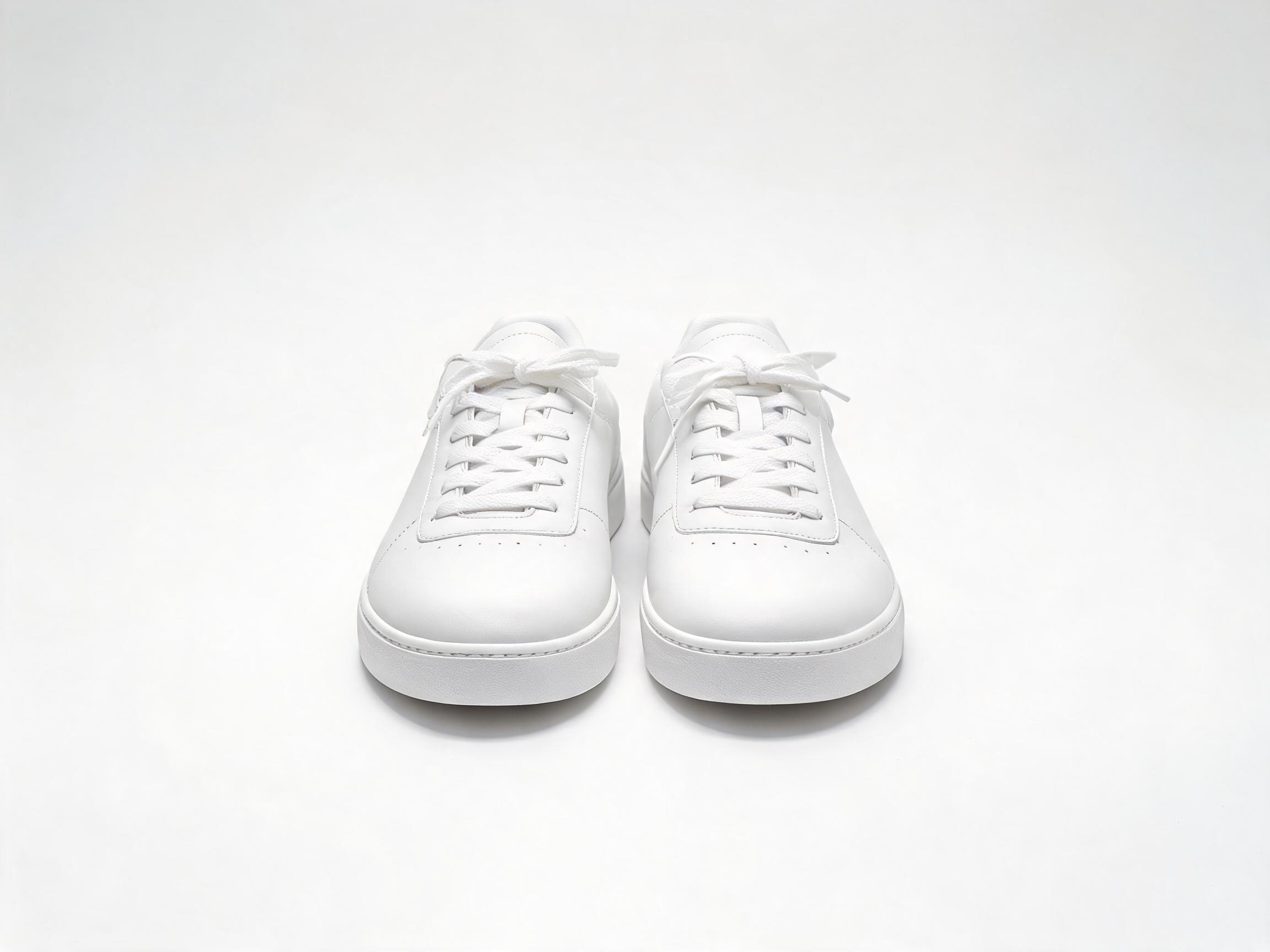
Aurevia Footwear Co., Ltd. runs low-top and high-top leather trainer lines from its Quanzhou base, supported by an in-house design team. The men's low-top sneaker program is built on a full-grain leather upper, rubber cupsole, cushioned removable insole and lace-up closure in EU sizes 39–45, with colour options including white, black and custom colours. Under OEM/ODM service, the same program supports Pantone-referenced colour matching, sole colour changes, insole branding, metal or fabric trims, and private-label boxes and hangtags; customised samples are typically ready in 7–12 days after details are confirmed, and every bulk order passes three-stage inspection with third-party inspection welcome.
Browse the low-top sneaker program to see how a private-label-ready trainer line presents its specification, then hold every candidate factory to the colour-standard questions above.
Next Step
If you are planning a silver range, send your reference, quantities and target timing and ask three questions: which silver build-ups the factory can produce, how it holds a colour standard between sample and bulk, and what tooling and MOQ apply to your design. Clear answers to those three tell you more than any catalogue.
Request a Sample Plan
Share your reference shoe or images, quantities per colour and size, target market and packing format — our team will confirm the sampling steps and customization options that apply to your program.
Start the conversation