
A wedge sandal fails in the market for one of three reasons: the wedge cracks at the flex point, the heel breast separates from the midsole, or the footbed rolls under the arch after a few weeks of wear. All three are construction problems, not design problems. Before you brief a Chinese factory on aesthetics, decide how load travels from the ball of the foot through the wedge to the ground.
Start With the Load Path, Not the Look
A wedge sandal fails in the market for one of three reasons: the wedge cracks at the flex point, the heel breast separates from the midsole, or the footbed rolls under the arch after a few weeks of wear. All three are construction problems, not design problems. Before you brief a Chinese factory on aesthetics, decide how load travels from the ball of the foot through the wedge to the ground. Buyers who lead with the load path get usable samples faster than buyers who lead with mood boards.
This guide covers how to structure a custom wedge sandals manufacturing program so the construction holds up across a full size run and a full season.
Choose the Wedge Type Before the Factory
Most wedge sandals fall into four build families, and each one has a different manufacturing risk profile.
- Single-density PU or EVA wedge. Lightest, cheapest tooling, best for volume fashion programs. Risk: compression set over time, especially in warm climates.
- Two-density wedge with a firmer base. The top layer stays soft for comfort, the bottom layer carries structure. Adds a bonding step and a second mold.
- Wrapped wedge with a board or TPU shank. The wrap hides the core, so the internal shank does the real work. Risk: wrap adhesion at the heel curve.
- Stacked or layered wedge. Leather, cork, or wood layers bonded and sanded. Highest perceived value, highest labor cost, most sensitive to humidity in the factory.
For a first program, a two-density PU wedge with an internal shank gives the best balance of stability, cost, and repeatability. Stacked constructions are worth it only when the retail price supports the extra labor and the buyer can tolerate longer lead times.
Specify the Internal Shank and Heel Height Together
Heel height and shank stiffness are one decision, not two. A 45 mm wedge with no shank will feel unstable regardless of how good the footbed is. A 90 mm wedge with an over-stiff steel shank will feel rigid and can crack the wedge at the flex line.
Practical ranges to discuss with the factory:
- Up to 40 mm: a fiberboard or TPU shank is usually sufficient.
- 40–70 mm: a steel or composite shank bonded into the midsole, with the flex point set behind the metatarsal heads.
- Above 70 mm: a full-length shank plus a reinforced heel breast, and a pitch that keeps the ankle closer to neutral.
Ask the factory to show you the shank position on a cut sample, not a drawing. A cut sample is the fastest way to confirm the shank actually sits where the drawing claims.
Lock Down the Footbed and Bonding Process
Wedge sandals live or die at the bond lines. There are three critical interfaces: footbed to midsole, midsole to outsole, and wrap or upper to wedge edge.
Questions that separate capable factories from assemblers:
- What surface preparation is used before bonding — buffing, priming, flame treatment, or none?
- What adhesive system, and what open time and press time are specified?
- Is bonding done in a temperature- and humidity-controlled room?
- How is the bond tested — peel test, flex test, or only visual inspection?
A factory that answers these with process numbers rather than adjectives is a factory that has solved this problem before. If the answer is "we use strong glue," treat that as a gap you will pay for later in returns.
Build the Size Run and Lasts Around the Wedge
A wedge mold is expensive, so buyers often try to stretch one wedge across too many sizes. That is where fit complaints start. The wedge should scale with the last, and the arch position must move with the size, not stay fixed.
Confirm with the factory:
- How many wedge molds are needed for your size range (commonly two to three molds split across the run).
- Whether the arch support position is graded or fixed.
- Whether the strap lengths and buckle positions are graded per size or averaged.
Averaging straps is the single most common cause of a wedge sandal that fits at the sample stage and generates complaints at the extremes of the run.
Materials: Where Cost and Durability Trade Off
For custom wedge sandals manufacturing, material choice drives both the price and the failure mode.
- PU footbed: comfortable, molds well, can yellow. Specify UV stabilizers if the sandal will sit in sunlight.
- EVA: light and cheap, compresses faster. Fine for promotional or short-season programs.
- Cork: excellent moisture management and perceived quality, but brittle if not blended with a binder.
- Leather or microfiber wrap: affects perceived value more than structural performance, but adhesion quality matters.
- Rubber outsole: best grip and abrasion resistance; heavier and more expensive than TPR.
Ask for material data sheets for the foam and the outsole compound. Density, hardness (Shore A or Asker C), and compression set numbers are the three figures that predict how the wedge will feel after a month.
Sampling and Verification Steps That Actually Catch Problems
A single confirmed sample proves almost nothing. Build a verification sequence:
- Construction sample. Cut it open. Verify shank position, bond lines, and layer thickness against spec.
- Flex and fatigue test. Flex the wedge at the ball line repeatedly and inspect for cracking or bond separation.
- Wear trial. Put samples on real feet for at least two weeks of daily wear, in the climate where they will be sold.
- Size run confirmation. Check the smallest and largest sizes, not the middle.
- Pre-production sample. Approve this against the golden sample before bulk starts.
Document each step with photos and measurements. When a dispute arises later, the golden sample and the cut sample are your only reliable reference.
Commercial Terms That Protect the Construction
Specify in the purchase order, not just in email: wedge type, shank material and position, footbed density, outsole compound, adhesive system, and the approved golden sample reference. Add a clause that any change to the wedge mold or material requires re-approval.
Also agree on tolerances. Wedge height, footbed thickness, and strap length all need acceptable ranges. Without written tolerances, a shipment that is technically "as ordered" can still be unsellable.
Where Chinese Factories Fit Best
Chinese wedge sandal factories are strongest in molded PU and EVA programs, wrapped wedges, and high-volume seasonal runs with tight color and material coordination. They are less suited to small-batch stacked leather or cork constructions where hand labor dominates, unless you find a specialist workshop. Match the factory's existing tooling and process strengths to your construction rather than asking them to learn a new build on your order.
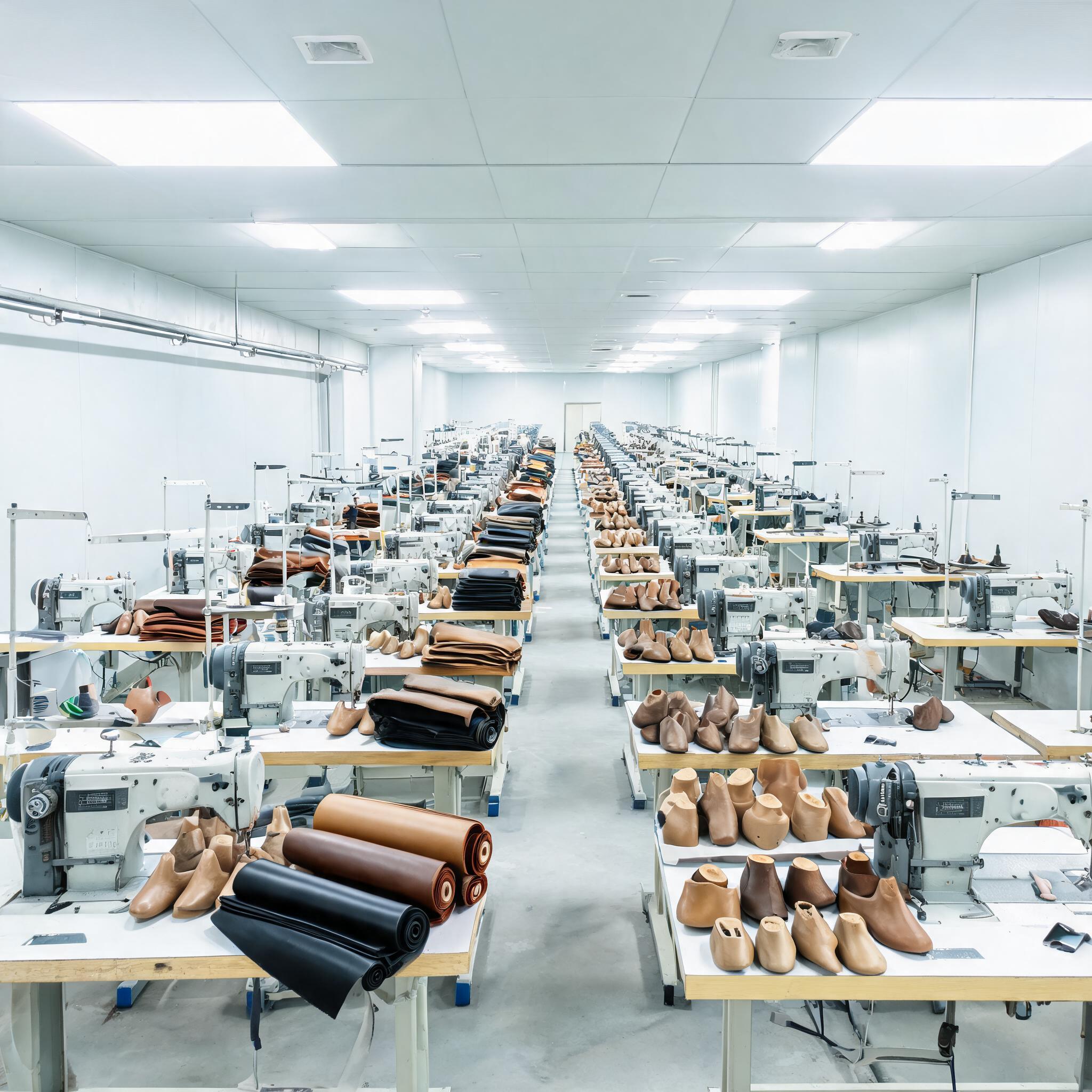
At Aurevia Footwear, our Quanzhou production base runs organized cutting, stitching and lasting lines for leather footwear, and our in-house design and pattern teams turn buyer sketches or references into production-ready samples with full private label support. Every bulk order passes material, construction and finished-shoe inspections before shipment.
Next Steps
If you are planning a wedge program, start by defining the load path, heel height, and wedge family, then request a cut sample and a process sheet from two or three candidate factories before you discuss price. Send us your target heel height, size range, and expected volume, and we will outline a construction spec and sampling plan for your custom wedge sandals manufacturing project.