DM-style sandals fail at bulk, not at sampling. This guide covers sole structure options, leather craftsmanship decisions, bulk-consistency checkpoints and the MOQ terms to compare before ordering.
Why DM-Style Sandals Need a Different OEM Brief
DM-style sandals are not a generic slide. The recognisable silhouette — a chunky sole unit, a visible stitched welt, a smooth or lightly grained leather upper and a contrasting welt thread — depends on three things that must be locked before tooling starts: sole construction, leather selection, and the factory's ability to repeat both across a few hundred pairs or a twenty-thousand-pair order. Buyers who treat a DM sandals OEM project as a simple "send a photo, get a quote" exercise usually find the gap at pre-shipment inspection, not at sampling.
This article covers what to specify, how to compare suppliers, and where bulk runs typically drift.
Sole Structure: Lock the Specification Before Tooling
The sole is the single most expensive tooling decision in a DM-style sandal project. Two constructions dominate the category:
- Cemented sole: a moulded midsole bonded to a rubber or TPR outsole, then welt-stitched for appearance. Lower mould cost and faster sampling, but bonding quality is a common field complaint in hot, humid climates — a real consideration for Middle East and Gulf retail programs.
- Direct injection / direct-attach: upper and sole unit bonded chemically in one mould cycle. Stronger bond and fewer delamination claims, but each size typically needs its own mould, so the per-size commitment is higher.
Whatever you choose, specify it in the tech pack rather than in conversation. At minimum, agree in writing: midsole thickness, midsole and outsole hardness, welt stitch density, welt thread material and thickness, flex-test expectations, and how slip resistance will be evidenced for your retail channel. Ask the factory for the mould ownership terms — whether the mould stays with the factory, whether it is transferable, and what replacement costs if it wears out mid-programme.
Leather Craftsmanship: Grain, Lining and Stitching Decisions
DM-style uppers read as "quality leather" from two metres away. Up close, buyers and consumers judge grain consistency, edge finishing and lining. Three choices drive most of the unit-cost difference between quotations:
1. Upper material. Full-grain or top-grain leather gives the tight, slightly waxy surface the style is known for. Corrected-grain or split leather with a heavy finish is cheaper and more uniform, but creases differently and shows scuffs sooner. Ask for the tannery name and the thickness tolerance, and how hide-to-hide variation will be controlled.
2. Lining. Unlined straps are cheaper but feel unfinished at the edges. A proper leather lining improves comfort and sweat management, and it is one of the first places cheap construction shows after a few weeks of wear.
3. Edge finishing and stitching. Burnished, painted or folded edges each carry a different labour cost. Stitch length, thread colour and whether the welt stitching is a genuine structural stitch or a decorative one should be confirmed on the golden sample. A structural welt stitch adds cost but survives resoling; decorative stitching does not.
Hardware matters too. Antique brass, nickel-free plating or matte black buckles should be specified by finish code, because plating batches vary between suppliers even when the colour name is identical.
Bulk Consistency: Where Most DM Sandal Projects Fail
Sampling proves a factory can make the sandal. Bulk production proves it can make thousands of identical ones. The failure points are predictable:
- Leather lot variation. Hide-to-hide colour and grain differences are normal. Without a colour tolerance and a sealed standard, panels from different lots can appear in the same carton.
- Sole mould wear. Moulds lose sharpness over their shot life. Edges round off and the welt line softens. Ask at what shot count the factory retools or replaces moulds.
- Size grading drift. Lasts are duplicated, and duplicates are rarely identical. Request measured sole length and width for first, middle and last sizes from the actual production run, not the sample room.
- Thread and hardware batches. A different thread dye lot can shift the welt colour by two or three shades.
- Yellowing. White and off-white midsoles can yellow under UV. Ask what anti-yellowing measures apply and how finished stock is stored.
A workable QC plan defines major and minor defect classifications, agreed inspection levels, and defined measurement points: sole length and width, heel height, welt stitch density, colour under standard lighting, leather thickness, and bonding strength on a cut sample. Agree all of this inside the purchase order, not after the first inspection dispute.
Sample-to-Mass-Production Verification Checklist
Use this sequence to de-risk an order before committing volume:
- Tech pack review. Send drawings, measurements and reference photos; ask the factory to return a written spec sheet with their proposed materials and tolerances.
- Two pre-production samples from the same material lot. Not one sample plus a variant. Both should be built to the production last.
- Golden sample sign-off. Seal one pair, signed and dated by both parties, and store it at the factory. It is the only reliable reference during disputes.
- Pilot run. Inspect a first production batch before the full run is released.
- In-line QC photos. Ask for images at fixed intervals — start, middle and end of the run — showing leather lots, welt stitching and sole bonding.
- Third-party inspection. Pre-shipment inspection by an independent agency is inexpensive relative to a rejected container.
- Container loading check. Photograph cartons, count and packing list before the doors close.
MOQ, Lead Time and Cost Drivers
Ask every supplier for the same three numbers before comparing prices: MOQ per colour per size run, sampling lead time from confirmed artwork and materials, and bulk lead time from sample approval — plus the tooling time if a new sole mould or last is required. The main cost levers, in order of typical impact, are: upper leather grade, sole construction method, lining, hardware finish, and packaging. Colour complexity is underestimated: four colourways on a small order means small-lot cutting for each, which raises the per-pair cost.
Risks to Negotiate Upfront
- Tooling ownership. Clarify who owns custom moulds and lasts and whether they transfer.
- Colour liability. Agree who pays for rejected lots that fall outside the agreed tolerance.
- Late-season delivery. Add a delivery window with a defined remedy rather than a single date — critical for summer sandals, where the selling window is short.
- Spare parts. Order a small percentage of extra hardware and thread in the same dye lot for after-sales repairs.
- Packaging spec. Shoebox, tissue, hangtag and carton marks should be approved before production, not after.
How Aurevia Produces Leather Sandals
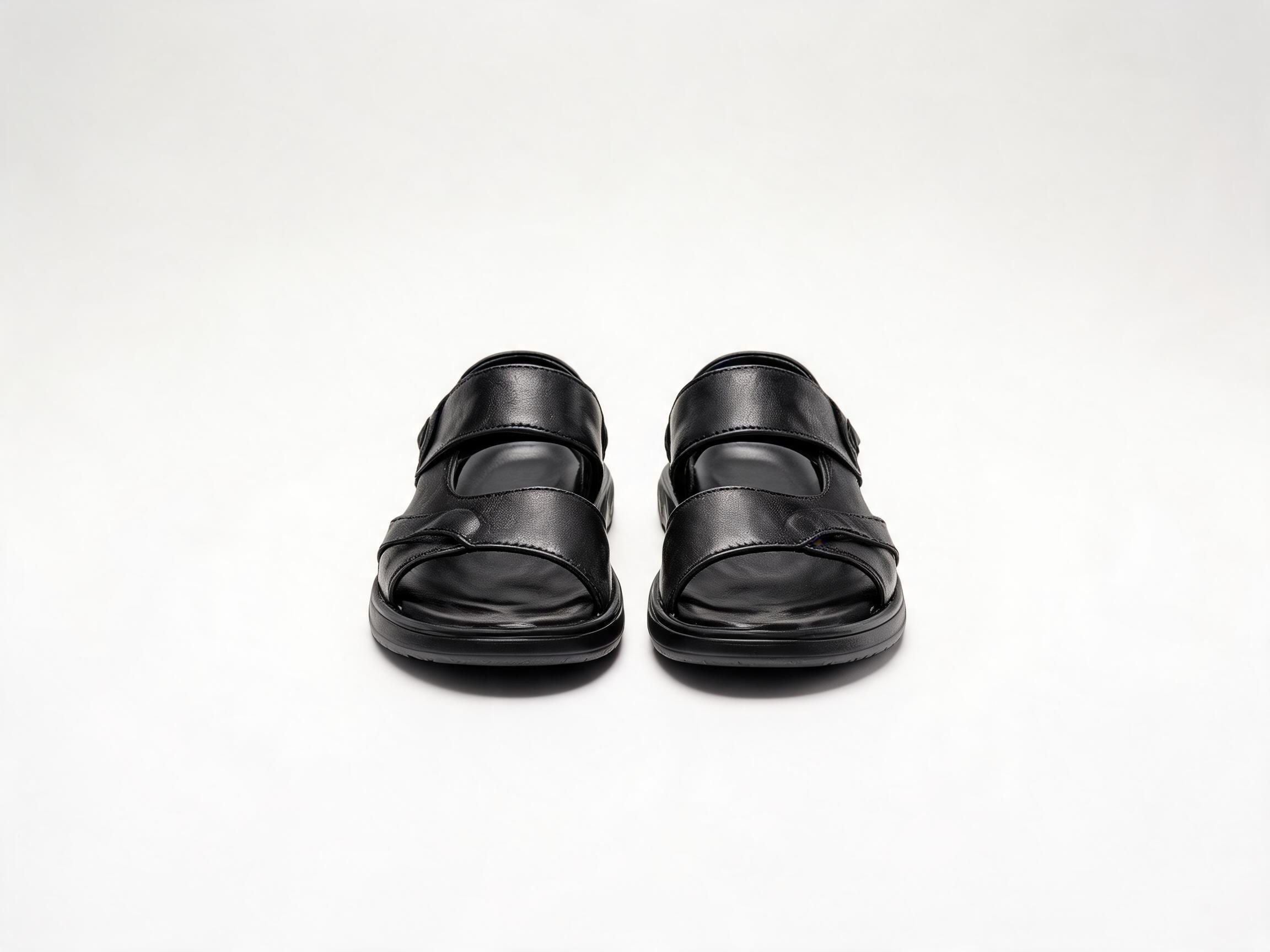
Aurevia Footwear Co., Ltd. produces genuine-leather footwear and fashion accessories under OEM/ODM and private-label programs for buyers in Europe, North America and the Middle East. The current sandal range includes black leather casual sandals for men with adjustable straps and a cushioned footbed, built on the same last-development and bulk-QC discipline described above. For a DM-style silhouette, the program starts with a written sole specification and a golden sample, then locks colour standards and inspection levels before bulk cutting.
Next Step
If you are sourcing DM-style sandals, send your tech pack, target retail price and required delivery window. Ask for two pre-production samples from the same leather lot, a written sole specification and a pilot-run QC report. That single request filters out most suppliers who cannot hold bulk consistency — and it is the fastest way to compare quotations on like-for-like terms. Contact the team to request a spec sheet, sampling timeline and current MOQ grid.