A wholesale buying guide for hiking and outdoor shoes from China: how to judge outsole grip and lug design, compare waterproofing options realistically, and run bulk QC that catches failures before shipment.
What Buyers Actually Compare in China Hill Shoes Wholesale
When business buyers search for hiking and outdoor shoes from China, the conversation usually starts with price. It should start with three failure points: outsole grip, waterproofing integrity, and bulk consistency. A shoe that grips well in a warehouse test can still slip on wet granite; a waterproof bootie that passes a static water test can leak after repeated flexing; and a bulk order can pass sample approval yet arrive with mismatched outsoles or weak adhesive. This guide explains the criteria buyers use to compare China hill shoes wholesale programs, the limitations behind each specification, and the verification steps that expose problems before shipment.
Outsole Grip: Compound, Lug Depth and Terrain Match
Outsole grip is not one property. It depends on rubber compound, hardness, lug geometry, and the surface. Ask for the compound family and the Shore A hardness. Softer compounds typically grip better on wet rock but wear faster on abrasive trails. Harder carbon rubber lasts longer but can feel slippery on smooth, wet surfaces. Neither is universally better; the correct choice depends on the target user and terrain.
Comparison criteria:
- Lug depth: 3–4 mm for mixed trails and town use; 4–6 mm for mud and loose dirt; deeper lugs can feel unstable on rock.
- Lug pattern: wide, spaced lugs clear mud; dense, shallow lugs increase surface contact on rock.
- Compound hardness: measure with a durometer on the finished outsole, not the raw sheet.
- Wet traction: test on wet ceramic tile, polished granite, and painted metal, not only dry concrete.
- Abrasion: check density and rebound; a very soft sticky rubber may lose lug height faster on gravel.
Limitations: no outsole excels on every surface. A sticky compound that performs on wet rock will wear faster on gravel. A long-wearing compound will feel less secure on wet roots and rocks. Buyers should define the primary use case before comparing quotes. If the supplier cannot explain the trade-off, treat the offer as incomplete.
Verification steps: request sample pairs in the final compound, test them on the surfaces your customers actually use, and ask for batch-level outsole hardness records. If the supplier offers a lab test, ask what standard and method were used; a result without a method is not useful. Do not accept a general "slip-resistant" claim as proof. For China hill shoes wholesale programs, this is the first place to separate a real technical partner from a trading desk.
Waterproofing Options: Membranes, Seams and Realistic Limits
Waterproofing falls into three broad levels: water-repellent upper, water-resistant construction, and waterproof/breathable membrane with sealed seams. Each has a different cost, weight, and failure mode.
Options and criteria:
- DWR-treated upper: light rain and splashes only; performance fades with abrasion and dirt; re-treatment is needed.
- Waterproof bootie or membrane: a separate layer inside the shoe; hydrostatic head and breathability ratings (for example, 10k/10k) can be compared, but the rating is only one data point.
- Seam-sealed construction: taped or glued seams prevent wicking; tape adhesion and placement are common failure points.
- Full-grain leather with treatment: durable and water-resistant; heavier and slower to dry.
Limitations: waterproof and breathable are a trade-off. A fully waterproof boot is usually warmer and less breathable than a mesh trail shoe. Membranes can fail at flex points, at the toe cap, or where the bootie is stitched. DWR finishes wear off, so a shoe that sheds water when new may wet out after weeks of use. No supplier should promise permanent waterproofing. In a China hill shoes wholesale program, waterproofing is where specification discipline matters most.
Verification steps: conduct a water immersion test with the shoe flexed, not just static — agree the immersion duration and flex frequency with the factory before inspection so results are comparable. Check seam tape coverage and adhesion. Ask for membrane batch traceability if available. For bulk orders, test a sample from the production run, not only the golden sample. If the supplier cannot explain the membrane type or seam process, treat that as a quality risk.
Bulk QC That Catches Failures Before Shipment
Bulk QC for China hill shoes wholesale should be built around the failure modes that cost the most: outsole delamination, waterproofing leaks, size mismatch, and colour variation. A practical inspection plan includes:
- Pre-production sample approval: sign off a golden sample with the exact compound, membrane, and construction.
- In-line checks: outsole bonding, seam sealing, and lasting tension.
- Final random inspection: use an AQL sampling plan agreed in the purchase order. Check outsole bond strength with a defined pry-test method written into the inspection brief, not only visual inspection.
- Waterproofing batch test: sample from each production batch, flex and immerse under the agreed conditions.
- Size and fit: measure last dimensions, not only the printed size.
- Colour and material consistency: compare against the approved swatch under daylight.
- Packaging and labelling: confirm carton marks, barcodes, and any market-specific requirements before production, not after.
Risks: a factory may use a different rubber compound when the approved one is out of stock; a membrane may be substituted; adhesive may be applied too thin. These are not always visible in a final inspection. That is why the golden sample, batch traceability, and in-line checks matter more than a single final inspection.
Third-party inspection can add an independent check, but it is only useful if the inspection brief lists the exact tests and acceptance criteria. A generic "quality inspection" report may not test outsole grip or waterproofing at all.
How to Brief a Supplier and Read Quotes
A useful inquiry helps the supplier quote accurately. Include:
- Target terrain and season.
- Outsole compound preference and lug depth range.
- Waterproofing level: water-repellent, water-resistant, or waterproof membrane.
- Sizes and size grading.
- Estimated quantity, target port, and expected delivery window.
- Any market compliance requirements you already know.
When you compare quotes, remember that MOQ and lead time move with real variables: membrane and specialty compound availability, whether existing tooling can be reused, the number of colours and sizes in the size run, and seasonal factory capacity. Ask each supplier which of these apply to your brief, then compare the answers side by side instead of accepting a single headline number. Treat MOQ, lead time and payment terms as confirmed only when the supplier's commercial team puts them in writing; a figure that appears only in marketing copy is not a commitment.
Red Flags and Limitations to Accept
- Absolute grip or waterproof guarantees without a method or test condition.
- A single sample that differs from the bulk specification.
- No traceability for rubber compound or membrane batch.
- Prices that ignore the cost of a real membrane or sealed seams.
- Reluctance to name the outsole hardness or lug depth.
- No written answer on MOQ, lead time, or payment terms from the commercial team.
Every design has a limitation: lighter shoes trade away durability, breathable shoes trade away waterproofing, stickier outsoles wear faster. Buyers who accept these trade-offs deliberately can compare quotes on total value rather than headline price.
How a Leather Boot Program Answers the Same Questions
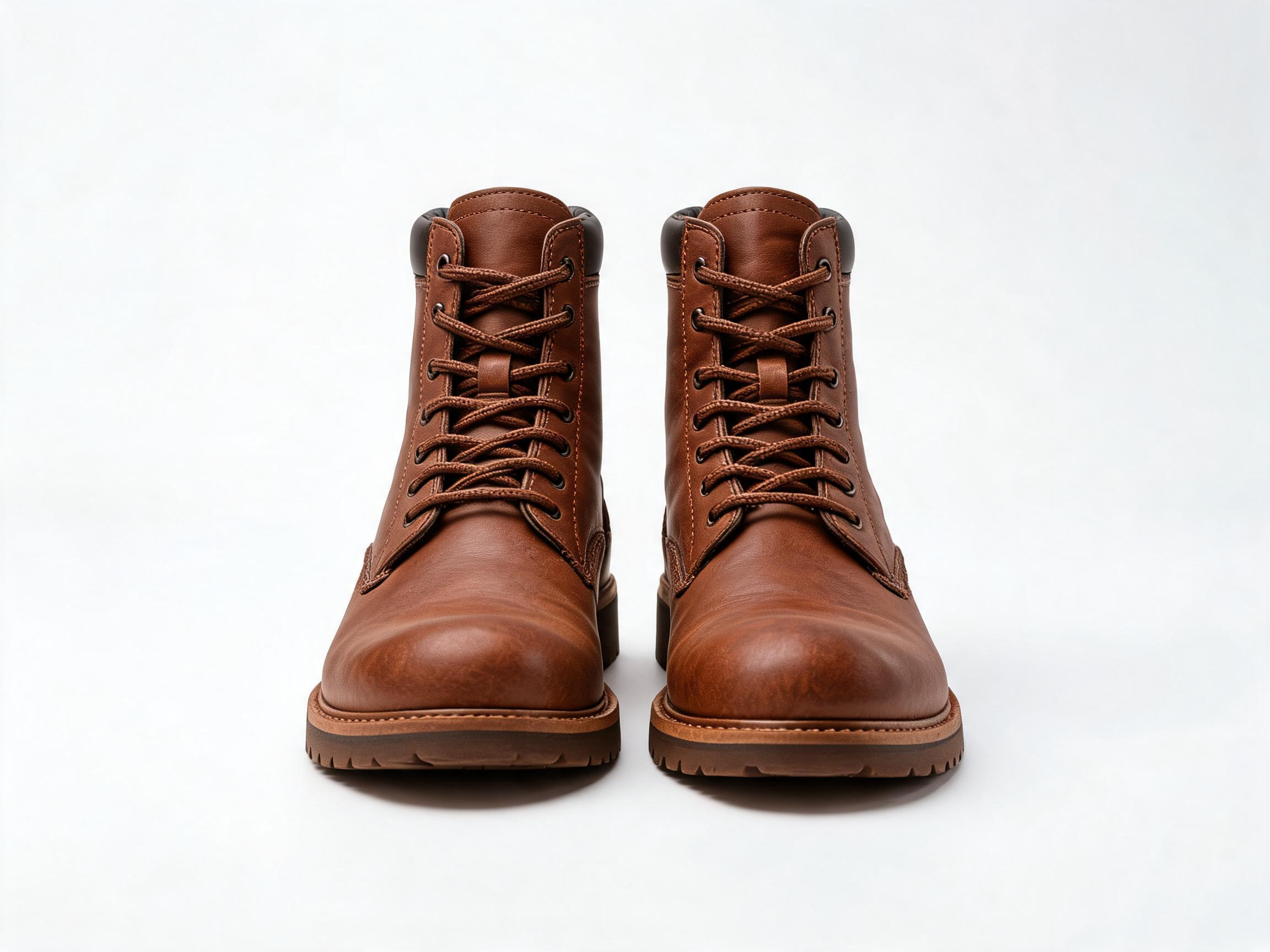
Many of these verification steps can be rehearsed against a published boot specification before you commit to a technical outdoor range. The men's work boot line from Aurevia Footwear Co., Ltd. — a Quanzhou-based manufacturer and exporter established in 2011 — is published on the site with an oiled full-grain leather upper, a lug rubber outsole described as oil- and slip-resistant, breathable textile lining, a cushioned anti-fatigue insole, speed-hook lacing and reinforced toe-cap stitching. Its published quality standard covers three-stage inspection — incoming material, in-line construction and finished-shoe checks including forefoot flex testing and sole adhesion — with batch-level sampling, third-party inspection welcome and reports shared on request; customised samples are stated at 7–12 days after details are confirmed. Treat these as the supplier's own published figures and verify each one inside your own sampling and inspection rounds.
See the work boot specification, or compare it with the knee-high leather boot line, and use that level of detail as your benchmark when you question any outdoor supplier about grip, construction and batch QC.
Next Steps: Sample, Test, Then Scale
Start with a paid sample that matches the production specification. Test outsole grip on the surfaces your customers use, flex and immerse the waterproofing under the agreed conditions, and measure the last and sizing. Approve a golden sample and define the inspection plan before placing a bulk order. If the supplier cannot support that process, the risk sits with you.
Request Samples and a QC Plan
Share your target terrain, waterproofing level, size run, quantity range and destination market — our team will confirm the sampling and inspection details that apply to your program.
Start the conversation