
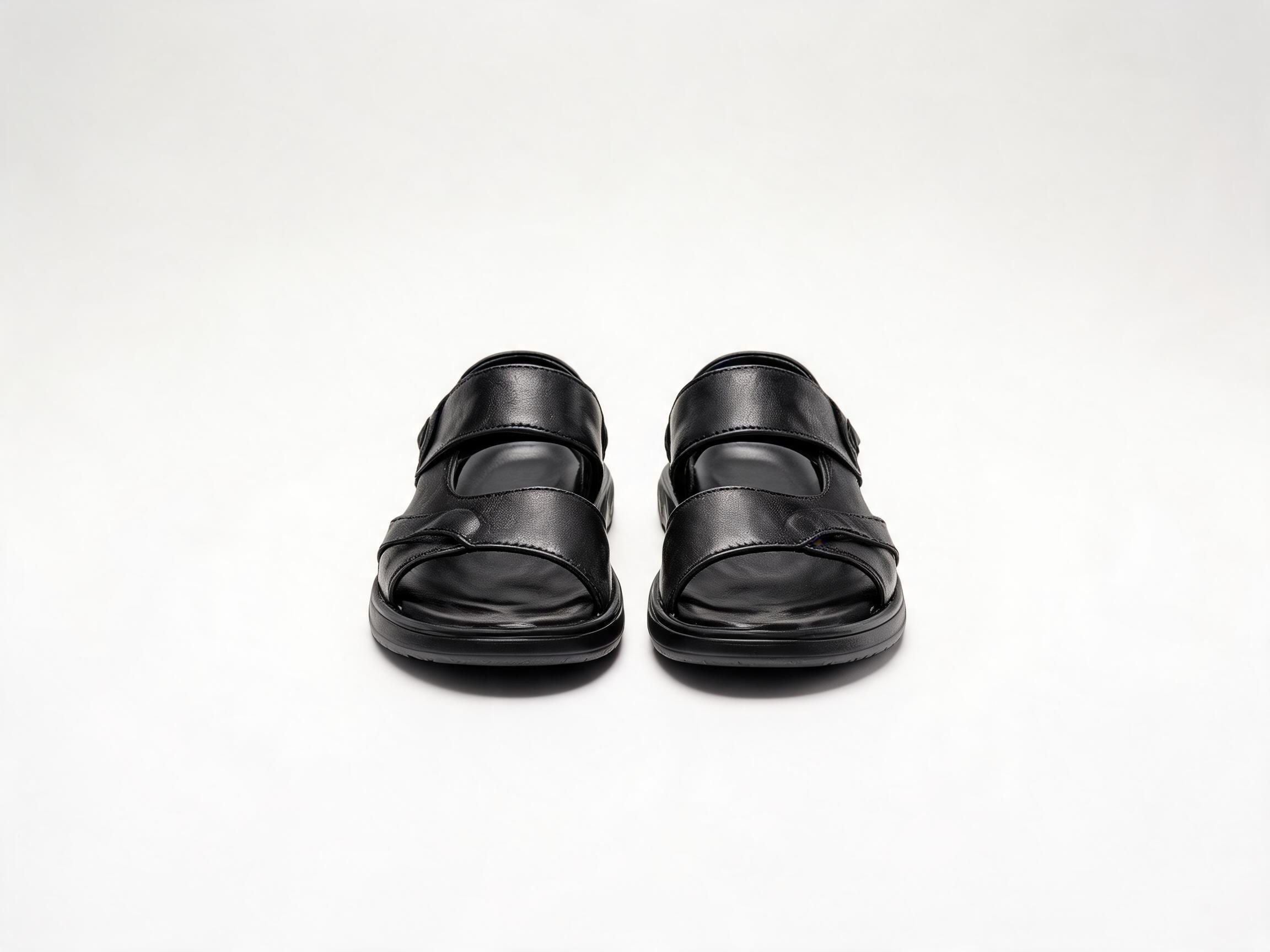
A structured evaluation guide for EU/US buyers assessing a China vegan sandals factory: material alternatives, sampling rounds, REACH/CPSIA compliance, and the supplier checks that protect a vegan claim in bulk production.
What Makes a Vegan Sandals Factory Different From a Standard Supplier
Vegan footwear is defined by what is absent, not by what is visible. A sandal can look completely animal-free on the shelf and still fail a buyer's claim if the adhesive is casein-based, the footbed supplier switched to a leather-lined version, or the finishing wax contains beeswax. That is why evaluating a China vegan sandals factory is less about the product catalogue and more about three capabilities: controlled material sourcing, disciplined sampling, and documentation that survives an audit.
Sandals help here. A typical pair has fewer components than a sneaker — upper, lining, footbed, outsole, adhesive, trims and hardware — so the bill of materials is short enough to trace line by line. Use that advantage. If a factory cannot map those components back to a named material source, it cannot protect your vegan claim at volume.
Material Alternatives: What to Specify and What to Watch
Most vegan sandals are built from a predictable material set. The evaluation question is not which materials exist, but whether the factory can hold a specification without substitutions.
- Uppers: PU-coated microfibre, recycled PET woven or non-woven fabric, cotton canvas, jute, hemp, lyocell.
- Linings: breathable microfibre, unbleached cotton, bamboo-derived viscose.
- Footbeds: cork, natural or synthetic latex, PU foam, sugarcane-based EVA, moulded EVA.
- Outsoles: natural rubber, synthetic rubber, recycled rubber blends, TR, PU, EVA.
- Adhesives: water-based PU or neoprene systems are common vegan choices; casein and gelatin-based adhesives exist in the industry and must be explicitly excluded in writing.
- Finishes and dyes: synthetic waxes and polishes, and dyes that do not rely on animal-derived processing aids.
Three risks recur. First, recycled-content claims: recycled PET and recycled rubber need traceable documentation through the supply chain, and a supplier statement alone is thin. Second, water-repellent finishes: PFAS chemistry is under increasing restriction in the EU, so ask what chemistry is used, not just whether the sandal is waterproof. Third, natural rubber: it is a regulated commodity under the EU's deforestation rules, so if your outsole uses it, expect to need origin and geolocation information.
Practical questions to put in writing: Which mill or compounder supplies each component? Can you provide material declarations or safety data sheets? What is your documented procedure if a specified material is out of stock?
Sampling: Where Vegan Sandals Projects Are Won or Lost
Sampling is the cheapest place to find a problem and the most common place buyers skip steps. A structured sample programme for sandals usually runs through several rounds: proto sample, sales sample, size set, and pre-production sample.
To make those rounds meaningful, the tech pack should be complete before the first sample: last dimensions, size grading, construction method (cement lasted, vulcanised, stitch-down), material specs with weight and thickness, colour references such as Pantone or approved lab dips, and trim details.
Evaluate each round against the same criteria:
- Dimensional accuracy against the approved last and size chart.
- Adhesive bond strength and flexing performance at the sole and strap joints.
- Colour consistency under a standardised light source, not office lighting.
- Footbed compression and recovery after a wear test of at least two to four weeks.
- Colour transfer to socks or skin, and hardware corrosion after humidity exposure.
Watch for a specific red flag: samples made with better materials than the factory intends to use in bulk. Ask for the sample's material list to match the production bill of materials, and keep a signed approval sample on file.
Outsole tooling deserves its own conversation. Ask how many sizes share a mould, what the tooling cost is, how long it takes, whether the cost is amortised into unit price, and who owns the mould. Ownership should be in writing.
Compliance: What EU and US Buyers Actually Need to Document
Compliance is where a China vegan sandals factory is either helpful or evasive. Requirements differ by market.
European Union
REACH is the baseline: restricted substances under Annex XVII, including azo dyes, PAHs, phthalates and nickel release from metal hardware, plus SVHC screening. Consumer footwear also carries material labelling obligations under EU footwear labelling rules. Packaging and packaging waste requirements affect how the goods arrive, and green claims are increasingly scrutinised, so vague environmental wording carries risk.
United States
If the sandal is sized for children, CPSIA requirements apply, covering lead content, phthalates and tracking labels. California Proposition 65 may require warnings for listed chemicals. Environmental claims such as "recycled" or "biodegradable" fall under FTC guidance and need substantiation.
Vegan claims themselves
There is no universal legal standard for calling a product vegan. Voluntary certification schemes exist, and they generally require supply-chain declarations covering adhesives, dyes and finishes — not just the upper material. Ask whether the factory holds such certification for the specific production line, and treat an unverified verbal assurance as a starting point rather than proof.
Testing
Third-party laboratories can test for restricted substances, but scope matters. A report is only useful if it covers the exact material, colour and component you are buying, is dated, and is issued in the name of the party that can rely on it. Request test scope, not just a certificate number.
Verifying the Factory Behind the Quote
Once materials and compliance look workable, verify the supplier itself.
- Confirm the business licence and whether the entity is a manufacturer or a trading company.
- Ask which processes are in-house: cutting, stitching, lasting, sole attachment, packaging.
- Request disclosure of any subcontracted operations.
- Ask for social compliance audit documentation and confirm which legal entity it covers.
- Confirm the QC structure: inline and end-line inspection, sampling plan such as AQL based on ISO 2859-1, and whether third-party inspections are permitted.
- Ask how defects are handled — rework, replacement, or credit — and how that is recorded.
Commercial Terms That Reveal How a Factory Works
MOQ per style and per colour, sample fees and whether they are credited against bulk orders, tooling ownership, production lead time by quantity band, price validity period, packaging cost, and payment terms. A factory that answers these precisely is usually a factory that plans production precisely.
A Practical Evaluation Scorecard
Score each candidate on material traceability, sampling discipline, test documentation, audit trail, QC structure and commercial clarity, using a simple 1–5 scale with written anchors so different reviewers score the same way:
- Score 5: written material declarations naming the mill or compounder for every component, a documented substitution procedure, and dated, component-specific test reports supplied before you ask twice.
- Scores 3–4: partial documentation — some components traceable, verbal assurances for the rest, reports available on request but without confirmed scope.
- Scores 1–2: marketing-level answers only — no named sources, no written declarations, reports promised but never specified.
Weight traceability and documentation highest, and stop the evaluation of any candidate scoring 1–2 on either, regardless of price, because those are the items that cannot be fixed after the purchase order is placed.
How an Established Leather Sandal Program Applies the Same Discipline
The framework above is not reserved for vegan programmes. Aurevia Footwear Co., Ltd. — a footwear manufacturer and exporter established in 2011 in Quanzhou, China — runs its genuine leather sandal lines under the same disciplines this guide asks you to verify: matched hides cut so left and right straps share grain direction and shade, buckle hardware checked for corrosion resistance, Pantone-referenced colour matching, three-stage inspection from incoming material to finished shoe, and third-party inspection welcome with reports shared on request. Its sampling workflow is documented as well: existing styles ship as samples within 3–5 days, and customised samples — including strap, colour and branding changes under OEM/ODM service — are typically ready in 7–12 days after details are confirmed.
The men's adjustable-strap casual sandal line, produced in EU sizes 39–45 with custom colour options, is a working example of this specification discipline. It is a leather line, not a vegan one — we link it as a benchmark for documentation depth, not as a product reference for your vegan claim. View the leather sandal program and use its documentation standard when you audit vegan candidates.
Next Step
Shortlist two or three suppliers, send the same complete tech pack to each, and compare their sample lead time, clarifying questions and documentation quality side by side. The factory that asks the sharpest questions about your materials is usually the one that will protect your vegan claim in mass production.
Request a Sampling Quotation
Tell us your target market, required sizes and quantities, preferred materials, and packaging and delivery terms — our team will confirm the details that apply to your programme. If your programme is vegan, say so in the first line so material declarations are prepared accordingly.
Start the conversation