A practical vetting guide for European and North American buyers sourcing vegan sandals from China: materials, sample-to-bulk consistency, MOQ and a hands-on QC checklist.
Buying vegan sandals from China looks simple on a product page: synthetic upper, a sole, a price. The hard part is confirming that what arrives in your warehouse matches what you ordered. European and North American buyers who import animal-free footwear face three recurring risks: a "vegan" upper that is actually split leather with a coating, inconsistent material quality between the sample and the bulk run, and suppliers who cannot document what is inside the shoe. This guide walks through how to vet a vegan sandal wholesaler before you commit to a purchase order.
Start with the material, not the price
"Vegan" only means no animal-derived material. It says nothing about quality. The main upper options you will be quoted are PU (polyurethane) leather, microfiber leather, PVC, and textiles such as canvas or jute. Each behaves differently:
- PU leather is the most common vegan upper. Ask which base fabric and coating thickness the factory uses; a thin coating cracks at flex points within one season.
- Microfiber is closer to genuine leather in hand feel and abrasion resistance, and costs more. If a quote is far below the market range for microfiber, verify what you are actually getting.
- Canvas and natural fibers work well for espadrille-style and casual sandals. Check the fabric weight (GSM) and whether the jute or canvas is specified per order, not just "as sample".
- PVC is cheap and stiff, and many European markets are moving away from it for environmental reasons. Confirm whether it appears anywhere in the shoe, including the lining.
Ask the supplier to state, in writing, the material composition of the upper, lining, insole and outsole. A wholesaler who answers precisely is easier to work with than one who sends a photo.
Confirm the sample-to-bulk consistency
The single most common failure in vegan footwear is not the design; it is that the bulk production material differs from the approved sample. Before confirming an order:
- Ask whether the sample is made from the same material lot that will be used for bulk.
- Request a pre-production sample after the bulk material is sourced, not before.
- Define the acceptable range for color, texture and coating thickness, and reference it in the purchase order.
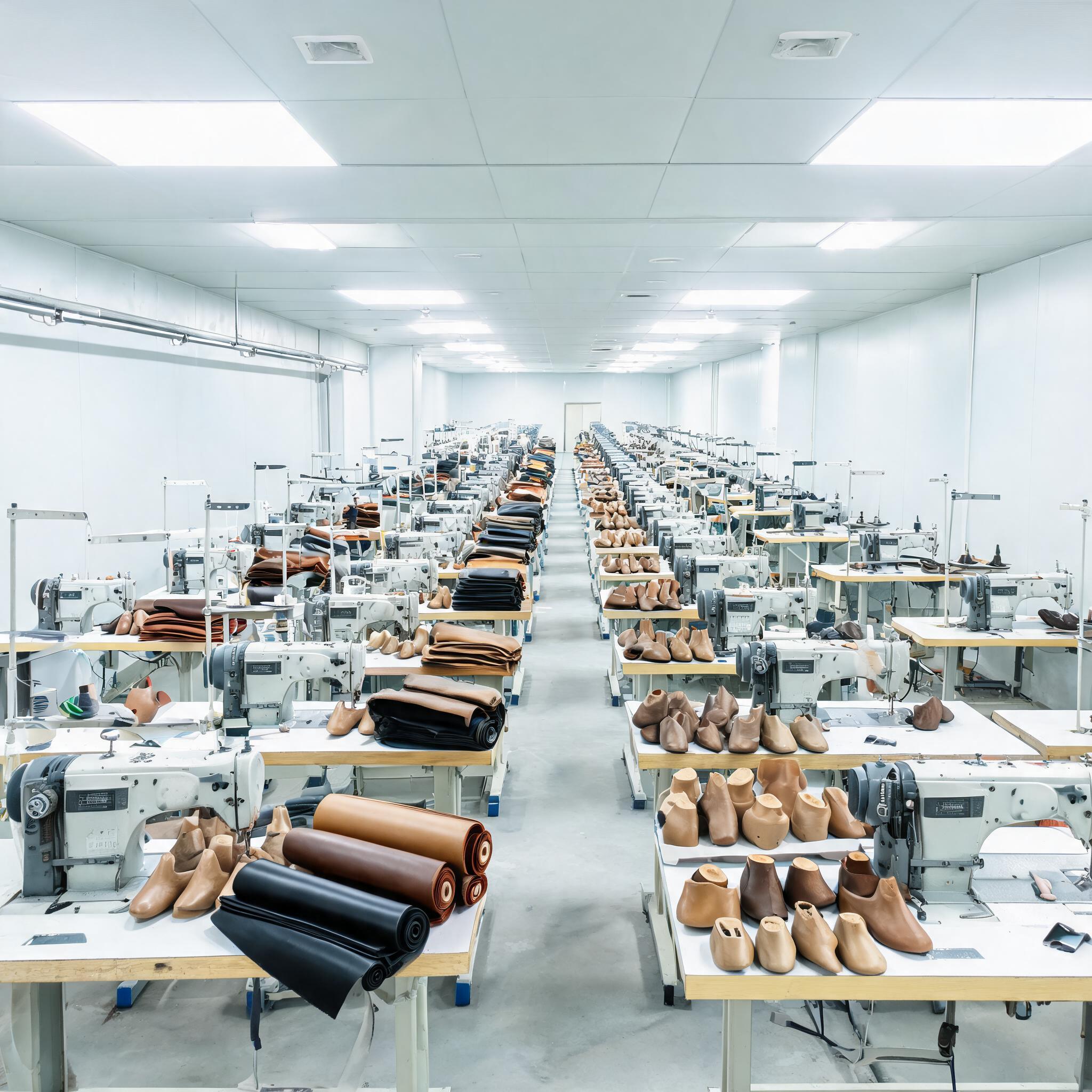
A factory with stable supply channels and multi-stage inspection — checking materials at incoming, mid-production and final stages — can hold consistency across repeat orders. This is the question to ask directly: "What do you inspect, and when?" A useful answer names the stages and the checkpoints, not just "we have QC".
MOQ and trial orders
For a first order, a low MOQ is more valuable than the lowest unit price. It lets you test sell-through before committing to a full container. Many sandal suppliers will support seasonal trial orders with a limited color range; ask what the realistic minimum is per style and per color, and what the price difference is versus a bulk run. Be suspicious of a supplier who promises a very low MOQ at bulk pricing — that usually means something else in the specification will be reduced.
A practical QC checklist for vegan sandals
- Material verification: confirm the upper, lining and insole contain no leather, and record the agreed composition in the PO.
- Flex test: bend the forefoot repeatedly; check for coating cracks at the flex line.
- Bonding: pull the sole away from the upper by hand; the adhesive line should not separate.
- Strap and buckle strength: pull adjustable straps and check stitching density at load points.
- Footbed: press the insole; a cushioned footbed should recover, not stay compressed.
- Odor: strong chemical odor often signals low-grade solvent-based materials.
- Packaging: confirm carton markings, size run and pairs per carton before shipment.
Documents to request
You do not need a laboratory certificate for every order, but you do need written material declarations. Ask for a composition sheet per material, and keep it on file with each season's approved sample. If you sell into markets with specific labeling requirements for footwear materials, give the supplier the exact wording you need on labels and confirm it can be produced — do not assume.
How a manufacturing partner fits into this
Aurevia Footwear Co., Ltd. is a footwear manufacturer and exporter based in Quanzhou, China, established in 2011, working mainly with genuine leather for OEM and ODM programs. That leather background is an advantage when vetting vegan suppliers: the same pattern-making, lasting and inspection disciplines apply. For buyers adding animal-free styles to a leather program, Aurevia works with canvas and natural fiber constructions such as its jute-sole espadrille line, and applies the same multi-stage material and finished-shoe inspection to synthetic uppers. If your program mixes leather and vegan styles, keeping both with one factory simplifies sampling, size grading and repeat-order consistency.
Before you place the order
Summarize the deal in one page: material composition per component, sample references, MOQ per style and color, inspection stages, packaging and labeling requirements. Send it to the supplier and ask them to confirm each line. Suppliers who confirm line by line are the ones who deliver line by line.
Ready to discuss a sandal program? Send your target styles, size run and estimated annual volume, and ask for a sampling plan and quotation based on your specification.