When buyers evaluate an OEM/ODM partner for leather accessories, the first question is rarely about price. It is about whether the factory can translate a design sketch into a consistent, export-ready product line. Aurevia Footwear Co., Ltd. has built its reputation on exactly this: high-end footwear and fashion accessories manufactured with genuine leather craftsmanship, supplied to global B2B buyers under OEM/ODM and private label programs.
Why Leather Accessories Belong in a Footwear Program
Many retail buyers who source shoes from Aurevia Footwear Co., Ltd. also consolidate their leather accessories orders with the same supplier. The logic is practical: matching leathers, consistent color standards and one quality-control process reduce the coordination cost of running shoes and bags as separate programs. A cognac leather mule collection, for example, pairs naturally with a matching bag range in the same tone family, and Aurevia can align dye lots across both categories during development.
This consolidation matters most for private label buyers. When one factory controls both footwear and leather accessories, branding elements such as metal logos, lining prints and dust bags stay consistent across the whole collection. Aurevia's OEM/ODM team manages these details from the first sample onward, so the final shipment reads as one brand rather than two unrelated product lines.
What Genuine Leather Craftsmanship Means in Production
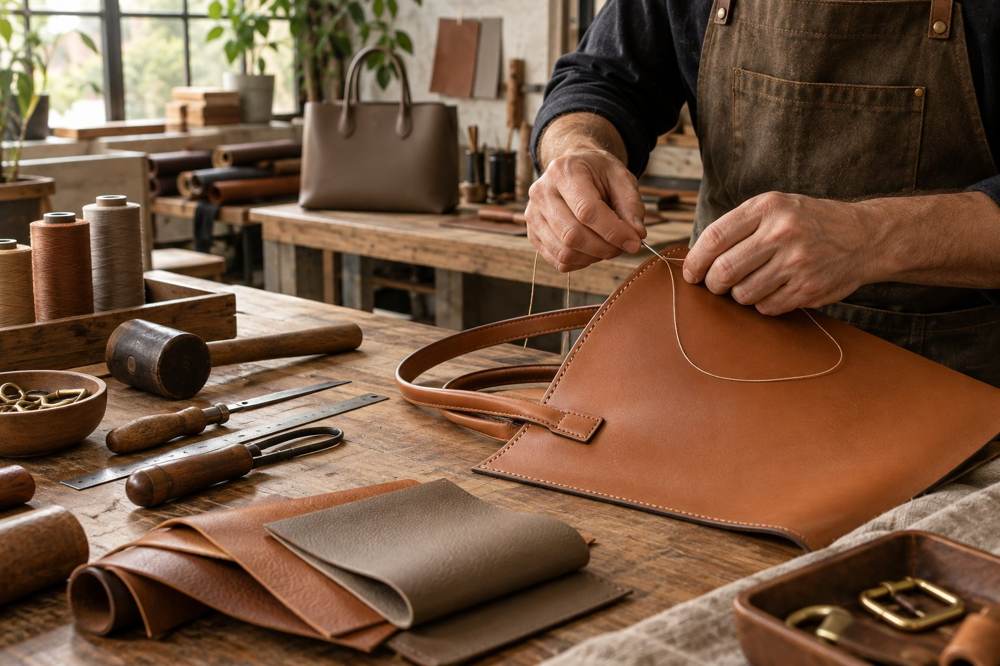
In Aurevia's workshops, genuine leather craftsmanship is a production discipline, not a marketing phrase. It covers full-grain and top-grain leather selection, edge painting in multiple coats, reinforced stitching at stress points, and hardware that is tested for pull strength before bulk assembly. Each of these steps is documented in the company's inline inspection records, which buyers may review during audits or third-party inspections.
The same discipline extends to the small leather accessories that complete a collection: card holders, key cases, belts and small pouches. Because these items use offcuts and matched hides from the main production, the material for the accessories is already approved during the shoe program's color sign-off, so buyers skip a separate leather approval round and avoid a second dye-lot matching cycle. The saving is in development time — one approval round instead of two — and its practical value increases as the accessories range grows alongside the shoe program.
From Design Brief to Bulk: How the OEM/ODM Process Runs
A typical Aurevia ODM project for leather accessories starts with a design brief: target market, price band, material preferences and reference styles. The development team returns material proposals and a costed specification, followed by a first sample. Buyers who already have complete tech packs can enter the OEM track, where Aurevia manufactures strictly to the supplied drawings and material list.
Sample-to-bulk consistency is the checkpoint that decides most B2B relationships. Aurevia seals a golden sample before bulk production, and the bulk goods are compared against it at cutting, stitching and packing stages. Buyers can see this process applied on the company's published product pages, such as the Cognac Leather Mule Shoes and the Black Leather Loafers, which document the materials and construction standards used across the range.
Choosing the Right Product Mix for Your Market
B2B buyers usually open an Aurevia program with one hero category and expand from there. Men's lines often start with classic silhouettes like the Navy Leather Slip-On Shoes or the Black Chelsea Boot Shoes, then add matching belts and card holders. Women's programs frequently begin with the Tan Suede Slip-On Flats and grow into handbags and small leather goods in coordinated tones.
This staged approach keeps the first order focused and the cash flow manageable, while the leather accessories range grows on top of a proven shoe program. Aurevia's merchandising team helps buyers plan this sequence, recommending which styles share lasts, leathers and hardware so that later additions inherit the approved materials instead of restarting development.
Quality Control Buyers Can Verify
Aurevia Footwear Co., Ltd. applies a three-stage inspection flow to both footwear and leather accessories: incoming material checks, inline production inspection, and final random inspection before packing. The specific AQL level, sampling plan and defect classification for each order are agreed in the quotation and contract — for reference, export programs for fashion goods are commonly set at AQL 2.5 for major defects and 4.0 for minor defects. Buyers may also appoint their own QC company or request Aurevia's internal reports with shipment samples.
For leather accessories specifically, the checks focus on color fastness of the lining, stitch density per inch, edge-paint adhesion and hardware plating. As industry reference values, small leather goods are commonly produced at 7–9 stitches per inch, with lining color fastness tested to grade 3–4 or above; the exact standards for each Aurevia order are written into the quotation. These are the failure points that generate retail returns, and Aurevia addresses them at the production stage rather than after shipment.
Order Quantities, Lead Times and Development Costs
Minimum order quantities, sample lead times and bulk production lead times for leather accessories vary by style, material and order volume. As typical reference ranges for export programs of this kind, small leather goods usually start around 300–500 pieces per style and color, footwear styles commonly open near 100–200 pairs per style, first samples take 7–14 days, and bulk production runs 30–45 days after sample approval.
These figures are industry-typical reference points rather than fixed commitments. When buyers send their target styles, estimated quantities and branding requirements, the OEM/ODM team replies within 1–2 working days with the applicable MOQ, a sample schedule and a bulk lead time for that specific program. Sample and development charges, including whether they are credited against the bulk order, are confirmed in the same quotation so buyers can budget the full development cost before committing.
Leather Accessories Program: Frequently Asked Questions
What are typical MOQ ranges for private label orders? For small leather accessories such as card holders, belts and pouches, export programs of this type typically open around 300–500 pieces per style per color; footwear styles commonly start near 100–200 pairs. Aurevia confirms the exact MOQ for each style in the quotation, based on material and construction.
How long do sampling and bulk production take? Typical lead times for leather accessories run 7–14 days for a first sample and 30–45 days for bulk production after sample approval. The actual schedule for each Aurevia program depends on style complexity and material availability, and is fixed in the sample schedule issued with the quotation.
Can sample charges be credited against the bulk order? Sample and development charges are stated in the same quotation as the bulk price. Whether the sample fee is credited against the first bulk order is confirmed at quotation stage, so buyers know the full development cost before committing.
Can we appoint third-party inspection? Yes — buyers may appoint their own QC company or request Aurevia's internal inspection reports together with shipment samples, checked against the AQL level written into the order contract.
Start Your Leather Accessories Program with Aurevia
If you are planning a private label collection that combines footwear with leather accessories, Aurevia Footwear Co., Ltd. can quote both categories from a single development brief. Browse the company's published ranges, from the White Leather Low-Top Sneakers to the Black Leather Knee-High Boots, then send your target styles, estimated quantities per style, target price band, branding requirements (logo placement, packaging, labels) and your launch timeline. The OEM/ODM team will respond within 1–2 working days with material options, the applicable MOQ, a sample schedule and a costed specification for your review.