"Wide" is a position inside a fitting system, not an absolute dimension. This guide explains last development inputs, girth grading approaches, fit trials and bulk QC checkpoints for wide fit trainers OEM programs aimed at B2B buyers.
Wide Fit Is a Fitting System, Not a Single Measurement
"Wide" in footwear is a position inside a fitting system, not an absolute dimension. A US 4E, a UK G and a factory's own wide last are not interchangeable, and two pairs carrying the same width label can feel completely different on the foot. Before any quote is useful, agree which system the program follows — or accept the factory's system with its girth dimensions written in millimetres.
Four dimensions drive most fit complaints in trainers: ball girth, instep girth, toe box height and heel width. Two lasts with identical ball girth still behave differently if the instep is higher or the toe box is shallower. That is why the practical starting point for a wide fit trainers OEM program is a measurement table, not a size label.
Last Development: Inputs, Tooling and Approval Points
A factory needs specific inputs before it can shape anything useful:
- A reference pair in the target size that fits your buyers, or measured foot data collected the same way across the sample group.
- The insole and sock thickness buyers will actually use, since both sit inside the internal volume.
- Intended use — running, walking, gym, workwear or orthopaedic accommodation — because it changes how much room the toe box needs.
- The target size range, including whether half sizes are required.
- Upper construction, since a stitched upper and a bonded upper behave differently over the same last.
Development usually runs: last blank shaped, sample pair in the base size, fit review, revision, confirmation pair, then pattern grading. Tooling for a new last is normally a one-off cost, and revisions after the fit pair is signed off can mean a new last rather than a tweak.
When reviewing the fit pair, request the last drawing with its dimension table — ball girth, waist girth, instep girth, heel width and toe box height in millimetres — and measure your reference pair with the same method. Comparing a drawing against a shoe by eye does not work. The common mistake at this stage is signing off on one mid-range sample; wide-fit problems tend to appear at the ends of the range, so ask for the confirmation pair in the smallest and largest sizes of the planned run before tooling is locked.
How Size Grading Turns One Last Into a Full Run
Grading is the rule set that expands the approved base last across the size range. Length increases are fairly consistent across factories. Girth is where programs diverge, and it is the part buyers rarely see in a quotation.
| Grading approach | How it works | Where it goes wrong |
|---|---|---|
| Uniform girth increment | Every size grows by the same girth amount | Larger sizes often feel tighter than the base size for the same foot |
| Progressive girth increment | The girth step increases in larger sizes | More pattern work; small sizes must still be checked |
| Split grading | Length and width graded on separate rules, sometimes with a width jump at a set size | Needs clear documentation, otherwise reorders drift |
Which approach fits depends on where your buyers cluster. If most volume sits in the larger sizes, uniform girth grading is usually the wrong choice — but ask for the graded measurements rather than the description, because the same label can hide different arithmetic.
Request a size-grading chart in millimetres covering the whole range: internal length, ball girth, instep girth and heel width per size. Then ask for sample shoes at the base size, one size down and the largest size, all measured with one method. A grading chart that only exists as a pattern file is difficult to verify later, especially if the factory changes pattern staff.
Decide here whether wide fit trainers OEM output uses one last for every upper pattern or a separate last per style. One last gives more consistent fit across the range; separate lasts add tooling and another approval cycle per model.
Fit Trials: Who Wears What, and What Gets Recorded
A wear trial is not market research. Keep it short, structured and written down. A workable structure is two or three wearers per size band covering the smallest, base and largest sizes, wearing the sample for a defined period under the intended use condition, with a comparison shoe they already own.
Record pressure points and their location, heel slip, toe contact, whether the wearer's usual size was correct, and any change after the insole settled. Feedback without a comparison shoe drifts, and "feels fine" is not a finding you can grade against later.
A wear trial confirms the last behaves as specified across the range. It does not prove fit for every foot shape, and it is not a substitute for the dimensional checks described below.
Bulk Production Quality Control for Wide Fit Runs
Lasts wear. Across a long production cycle, dimensions shift gradually, so ask how last condition is monitored — a last gauge, periodic measurement of a sample pair, or a replacement interval. Any of these can work; an unmonitored last cannot.
The checkpoints that matter most for wide fit:
- Incoming lasts and components — verified against the approved last dimensions before cutting starts.
- Cutting and stitching — pattern pieces taken from the graded set, with width-critical panels checked.
- Lasting tension — over-lasting pulls the upper tighter and reduces internal volume. This is where a comfortable fit pair becomes a tight bulk shoe.
- Bottoming — insole, midsole and outsole bonding. Volume lost here usually shows at the instep.
- Finished-shoe measurement — internal length, ball girth and heel width against the approved sample, with a tolerance agreed in writing in advance.
- Packing and size labelling — mixed cartons and mislabelled sizes generate returns that get reported as fit problems.
Agree the sampling plan and defect classification before the purchase order, and reference the inspection level in the PO rather than assuming the factory default. During production, in-line photos at lasting and at final assembly plus the final inspection report with measurements give you a process record. Photos alone verify that steps were followed; they do not verify fit. Colour and material consistency is a separate control — uppers cut from different lots can drift in appearance even when fit stays stable.
Where Wide Fit OEM Programs Usually Lose Money
- Approving the last from a single mid-range sample.
- Grading girth uniformly while selling mainly large sizes.
- Changing the insole or sock spec after fit approval without re-checking internal volume.
- Leaving finished-shoe tolerances undefined, so every shipment is argued case by case.
- Never settling who owns the last.
Documentation, Ownership and Commercial Terms
Before ordering, collect the last drawing and dimension table, the graded pattern list, the size-grading chart in millimetres, the construction spec with upper material and insole, the QC plan with checkpoints and inspection level, and a sample inspection report template. These documents are what make a reorder repeatable.
Commercially, wide fit trainers OEM quotations should separate MOQ per size per colour, tooling cost for a new last, sample lead time, bulk lead time and last ownership. Tooling is a one-off; size-break MOQ affects every reorder, so it deserves the harder negotiation. If the last stays factory-owned and you later change supplier, you may need to develop it again.
How Aurevia Runs OEM Sneaker Programs
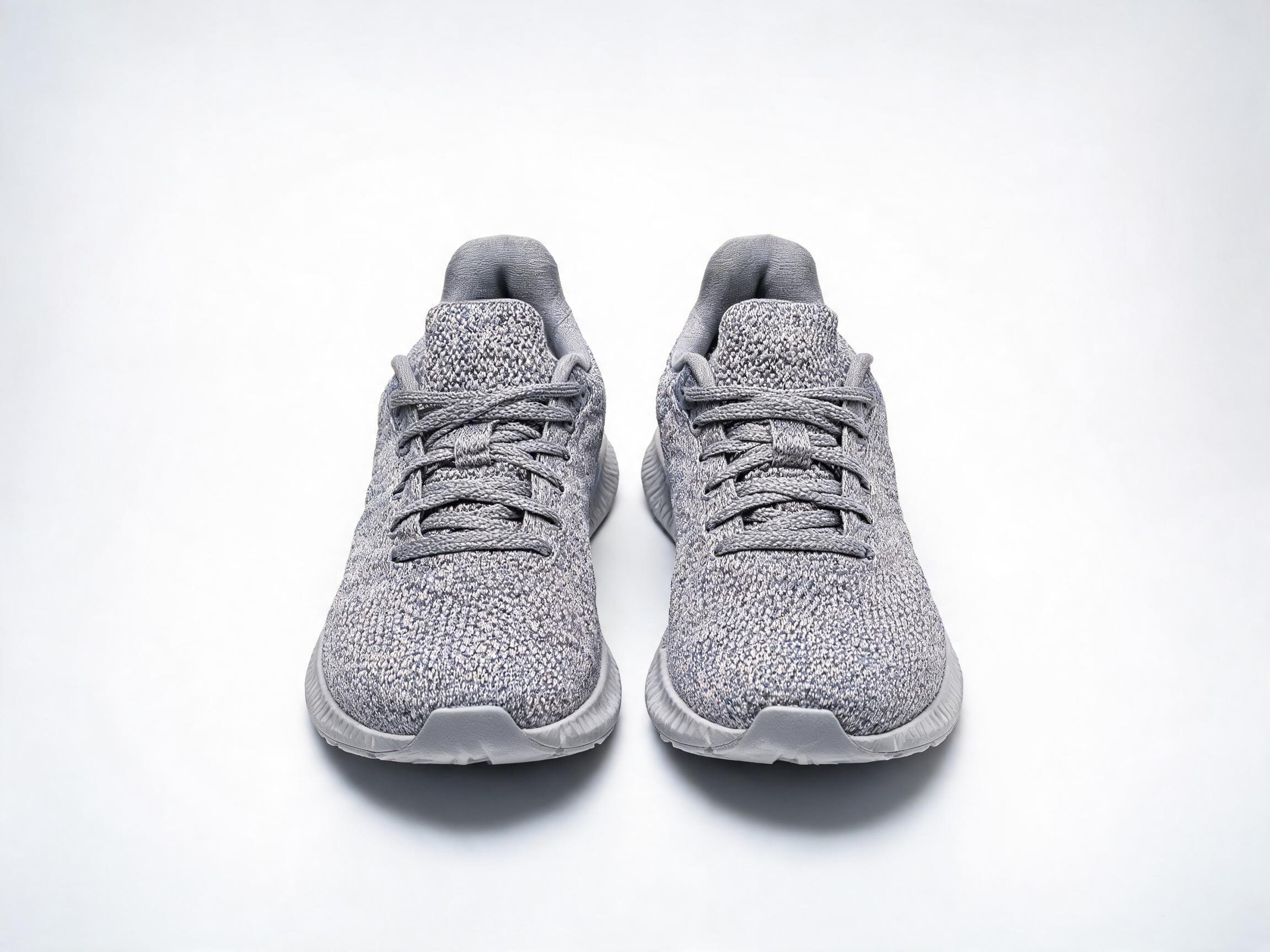
Aurevia Footwear Co., Ltd. is a high-end footwear manufacturer focused on genuine leather craftsmanship, with OEM/ODM and private-label programs for global B2B buyers in Europe, North America and the Middle East. The current sneaker range includes white leather low-top sneakers, black leather high-top sneakers and grey knit running sneakers with EVA midsole. Wide-fit requests follow the same last-and-grading logic described above: agree the measurement system first, approve the fit pair at both ends of the size range, and lock the QC checkpoints before bulk.
Next Step
Send a reference pair, the target size range and your intended insole and sock spec. The OEM/ODM team will review the last dimensions, propose a grading approach, and quote tooling, samples and bulk with the size break stated clearly. A reply with the dimension table and grading chart in hand is usually more useful than a catalogue.