
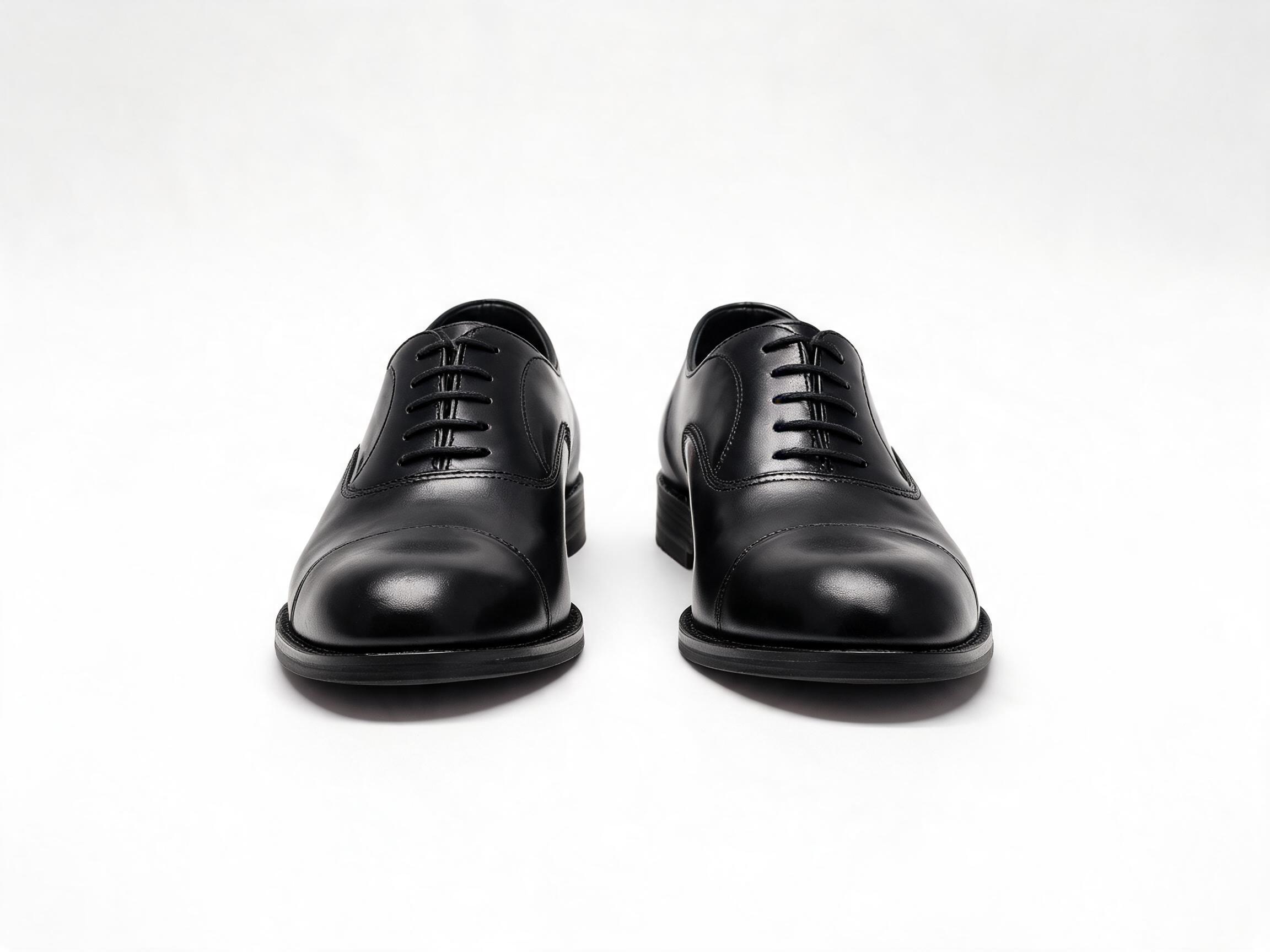
A welted Oxford changes weight, flex, resoling, edge finishing and inspection points — and it makes two quotations incomparable unless the construction method is stated. This explainer frames the decision for B2B buyers and private-label brands sourcing men's leather dress shoes and boots from China for Europe, North America and the Middle East, with a decision table and tech-pack wording. Note: Aurevia's men's dress Oxford is a stitched and cemented build; welted construction must be confirmed before sampling.
A buyer sends a brief: men's cap-toe Oxford, Goodyear welted, leather sole, black calf. Three factories quote. One quote comes back noticeably lower, one in the middle, one higher. The line items look similar — upper, lining, sole, lasting, finishing — so the buyer assumes the difference is margin. It usually is not. The lower quote may be a stitched and cemented build with the word "welt" in the description, or a welted upper on a non-welted sole attachment, or a welted construction quoted without the sole-replacement allowance the buyer assumes is included.
This article is for buyers and private-label brand owners specifying Goodyear welted oxfords or welted dress shoes wholesale from a China manufacturer and selling into Europe, North America and the Middle East. It explains what a welt actually changes in the product and the program, why two quotations that use different sole-attachment methods are not comparable line by line, which inspection points belong to the sole attachment rather than the upper, and how to write the requirement into a tech pack so a sample can be judged against it.
Aurevia Footwear Co., Ltd. produces a men's dress Oxford described in its own product record as a stitched and cemented build with a stitched leather/rubber sole. This article does not state or imply that Aurevia produces Goodyear welted footwear. If a welted construction is a hard requirement in your program, it has to be confirmed with the factory before sampling, and the factory's actual construction method should be compared against your requirement rather than assumed to be interchangeable with the term in your brief.
What a welt changes in the product
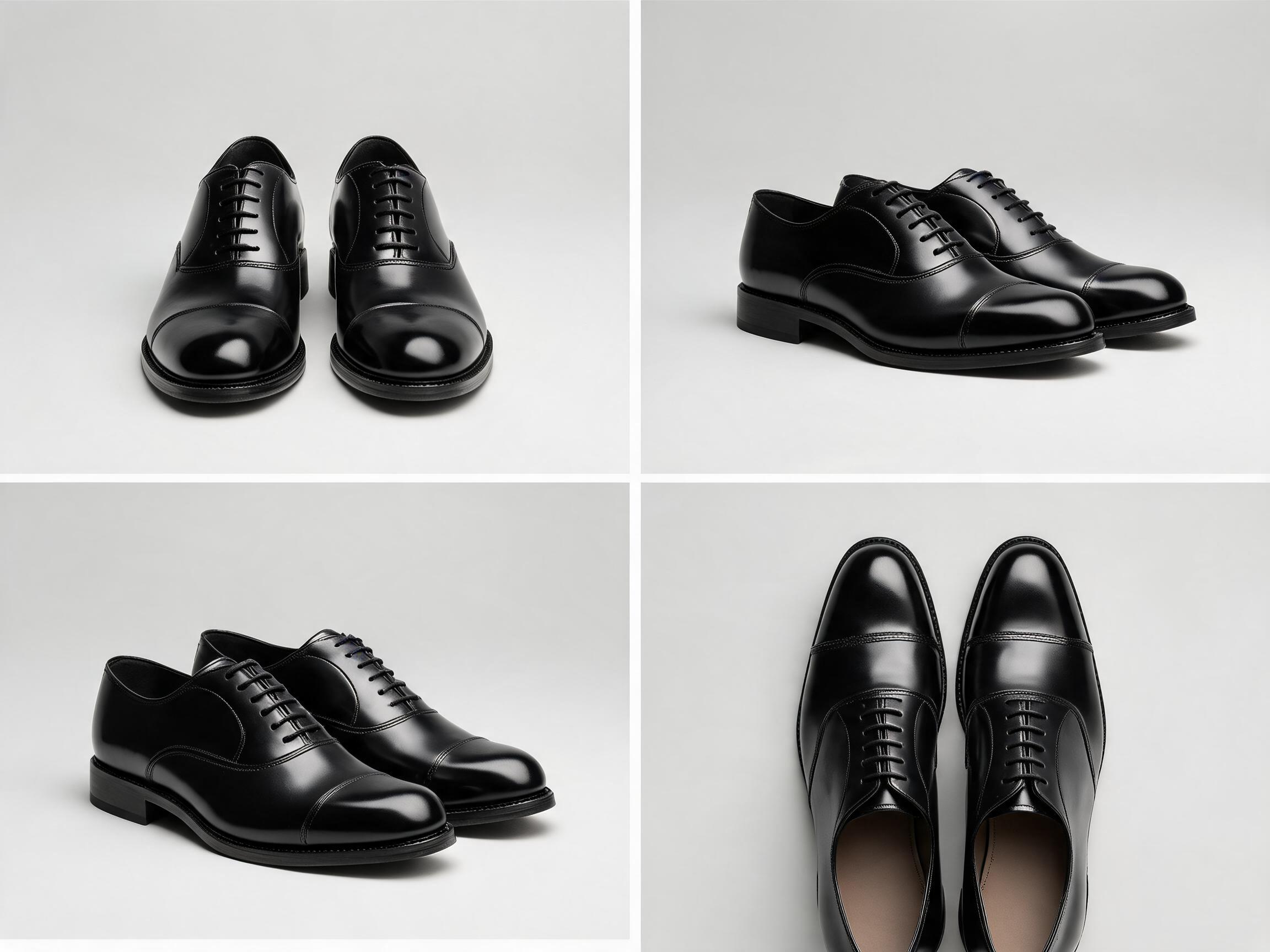
Goodyear welting is a sole-attachment method in which the upper is lasted over a ribbed insole and a strip of leather (the welt) is stitched through the upper, insole rib and welt; the outsole is then stitched to the welt. The method is not a single feature but a set of consequences that a buyer should be able to name before comparing quotes.
- Weight and balance. A welted shoe carries an insole with a raised rib, a welt strip, a filling layer and a stitched outsole. The finished pair is heavier and the weight sits differently under the arch than a cemented build, where the sole is bonded directly to the lasted upper with adhesive. For a dress Oxford sold in Europe or North America, the difference is felt in hand and in wear; it is a product-positioning question, not a defect.
- Flex. A welted sole is stitched, not glued, across the forepart. The break-in period is longer and the flex point is governed by the insole rib and welt line. A stitched and cemented shoe flexes more readily out of the box. Neither is better in the abstract; the brief should say which behaviour the range is being sold on.
- Sole replacement. A welted outsole can be cut away and replaced by a cobbler without rebuilding the upper, because the welt and insole rib remain. A cemented sole can be replaced, but the operation depends on the adhesive bond and the upper condition, and many repairers will not guarantee the result. If the brand sells on resoling, the construction requirement belongs in the spec, not in the marketing copy.
- Edge finishing. A welted edge shows the welt stitch line and a trimmed, inked or burnished edge over the welt. A cemented edge is trimmed flush to the upper and finished directly. The visual difference is visible at the waist and forepart, and it is one of the first things a sample reviewer should be shown against the brief.
- Inspection points. The welt adds stitch-density consistency, welt-joint placement, insole rib integrity and filling evenness to the inspection plan. These sit on the sole attachment, not the upper, and they need their own checkpoints (see below).
Why two quotes are not comparable line by line
When one factory quotes a welted build and another quotes a stitched and cemented build, the two bills of materials diverge at the lasting station and never reconverge. The upper, lining and insole may be quoted under the same labels; the sole attachment, filling, welt, edge treatment, finishing time and inspection time are different operations with different labour content. A line-by-line comparison of "upper, sole, assembly" hides this, because the assembly line item means different things.
The practical rule: require every quotation to state the sole-attachment method in writing, name the outsole material and construction, and break out the sole-attachment operation as its own line. Until both quotes do that, the buyer is comparing a welted program against a cemented program and calling the difference a price gap.
Decision table: welted versus stitched and cemented
| Decision | Welted build | Stitched and cemented build | What to confirm |
|---|---|---|---|
| Weight and hand-feel | Heavier pair; insole rib and welt add mass under the arch | Lighter pair; sole bonded to lasted upper | Target weight band per size, stated in the tech pack; confirm the factory can measure and report it per order |
| Flex and break-in | Longer break-in; flex governed by welt and insole rib | Faster flex out of the box | Which behaviour the range is sold on; confirm with a wear trial on the sample, not a verbal assurance |
| Sole replacement | Outsole can be replaced without rebuilding the upper | Replacement depends on adhesive bond and upper condition | Whether resoling is a brand promise; if yes, it belongs in the spec, not the copy |
| Edge finishing | Welt stitch line visible; edge trimmed and finished over the welt | Edge trimmed flush to upper and finished directly | Reference photo of the edge in the tech pack; sample judged against it |
| Inspection focus | Welt stitch consistency, welt joint, insole rib, filling evenness, outsole stitch | Adhesive bond line, sole alignment, edge trim, outsole stitch | Separate inspection checklist for sole attachment versus upper |
| Quotation structure | Sole attachment costed as its own operation | Sole attachment costed as its own operation | Method stated in writing on every quote; construction line broken out |
Inspection: what belongs to the sole attachment
Most factory inspection plans are written around the upper: leather grain, cap-toe seam, lining, lacing, colour match. When the brief specifies a welted construction, the upper checklist does not test the thing the buyer is paying for. The sole attachment needs its own checkpoints, and they should be written into the inspection plan before the first bulk run.
- Welt stitch consistency. Stitch length and tension along the welt, checked against the approved sample, not against a general standard. The value is set per order with the factory.
- Welt joint placement. Where the welt strip begins and ends, and whether the joint sits where the brief requires.
- Insole rib integrity. The rib the welt is stitched to must be continuous and undamaged; a broken rib defeats the resoling argument.
- Filling evenness. The layer between insole and outsole should not create lumps under the forepart.
- Outsole stitch and edge. Outsole stitching through the welt, and the edge trim and finish against the reference photo.
For a stitched and cemented build, the equivalent checkpoints are the adhesive bond line, sole alignment to the upper, edge trim and outsole stitch. The point is the same: name the sole-attachment checkpoints separately, and judge the sample against them.
Writing the requirement into a tech pack
A tech pack that says "Goodyear welted" in a single line gives the factory nothing to be judged against, and gives the buyer nothing to inspect. The requirement should be written so that a sample can pass or fail it.
- Name the method in full. Write "Goodyear welted sole attachment" and, separately, the outsole material and edge treatment. Do not rely on the shorthand.
- State what resoling means for the range. If the brand intends to sell on resoling, say so; if not, say that too, so the factory does not cost an allowance the buyer will not use.
- Give a reference image of the edge. The welt stitch line and edge finish are visual; a reference photo is the most direct way to make the requirement testable.
- Break out the sole attachment in the quotation request. Ask every factory to quote the sole attachment as its own line and to state the method in writing. Where a figure such as stitch length or weight band would normally appear, give the decision rule and say the value must be confirmed per order.
- Define the sample verdict. State which checkpoints the sample will be judged on — method, edge, welt stitch, rib integrity, weight band — so the sample review is a comparison against the pack, not a general impression.
For buyers whose program does not require a welted construction, the same discipline applies in reverse: specify the stitched and cemented build explicitly, name the outsole material and edge finish, and require the factory to state the method on the quote. Aurevia's Black Cap-Toe Oxford Shoes are described in their product record as a stitched and cemented build with a stitched leather/rubber outsole, leather lining, cushioned leather footbed and closed lacing, in EU 39–45 with US 6.5–12 conversion listed. The Black Chelsea Boot Shoes are the boot line in the same men's leather dress range.
FAQ
Does a Goodyear welted oxford cost more than a stitched and cemented one?
The two builds have different labour content and different bills of materials, so the quotations are not directly comparable. The useful step is to require each factory to state the sole-attachment method in writing and cost it as its own line, then compare like with like. Price figures are not quoted here because they vary by specification and order.
Can a factory that makes cemented shoes also make welted ones?
That depends on the factory's equipment and experience with the welted operation. The buyer should not assume the term is interchangeable. Confirm the factory's actual construction method before sampling, and judge the sample against the tech pack rather than against the word on the quote.
What inspection points change with a welted construction?
The upper checkpoints stay the same; the sole attachment gains its own checkpoints: welt stitch consistency, welt joint placement, insole rib integrity, filling evenness, and outsole stitch and edge finish. These should be written into the inspection plan separately from the upper.
How do I write the requirement so a sample can be judged?
Name the method in full, state the resoling intent, give a reference image of the edge, break out the sole attachment in the quotation request, and list the checkpoints the sample will be judged on. Where a value such as stitch length or weight band would normally be given, state the decision rule and confirm the value per order.
Does Aurevia produce Goodyear welted oxfords?
Aurevia's men's dress Oxford is described in its own product record as a stitched and cemented build with a stitched leather/rubber sole. If welted construction is a hard requirement, it has to be confirmed with the factory before sampling; the factory's actual method should be compared against the requirement rather than assumed.
About Aurevia's leather dress-shoe OEM/ODM capability
Aurevia Footwear Co., Ltd. is a B2B manufacturer and exporter of high-end footwear based in Quanzhou, China, established in 2011, with a 260-person team, in-house design and pattern teams, and exports to Europe, North America and the Middle East. The company supports OEM/ODM and private-label work across men's leather dress and boot lines, including the Black Cap-Toe Oxford Shoes and Black Chelsea Boot Shoes described above. For programs where the construction method is a fixed requirement, the workable next step is to state the method and the sole-attachment expectations in the brief, request a quotation that names the construction in writing, and confirm the factory's actual method against the requirement before sampling.