A step-by-step walkthrough of the private-label heels production path — from brief and tech pack to sample rounds, Pantone color matching, bulk release, and final inspection. Based on a factory with in-house design and pattern teams.
How a heels wholesale order moves from an idea and a tech pack to a saleable bulk run — sample rounds, color matching, bulk release and the final QC gate, explained for brand buyers placing a first private-label order.
- Which inputs you need to prepare before a sample can be made
- How in-house pattern teams convert a sketch or reference into a wear-testable sample
- Where color matching, heel height changes and branding enter the process
- What a bulk release and a three-stage inspection actually check
On this page
Step 1 — The brief and tech pack
The sample-to-bulk path starts long before a factory cuts leather. A private-label heels program needs one of three inputs to move forward: a full technical drawing, a physical reference shoe, or a trend board with clear construction intent. The more specific the input, the fewer correction rounds later.
A usable tech pack for heels should cover:
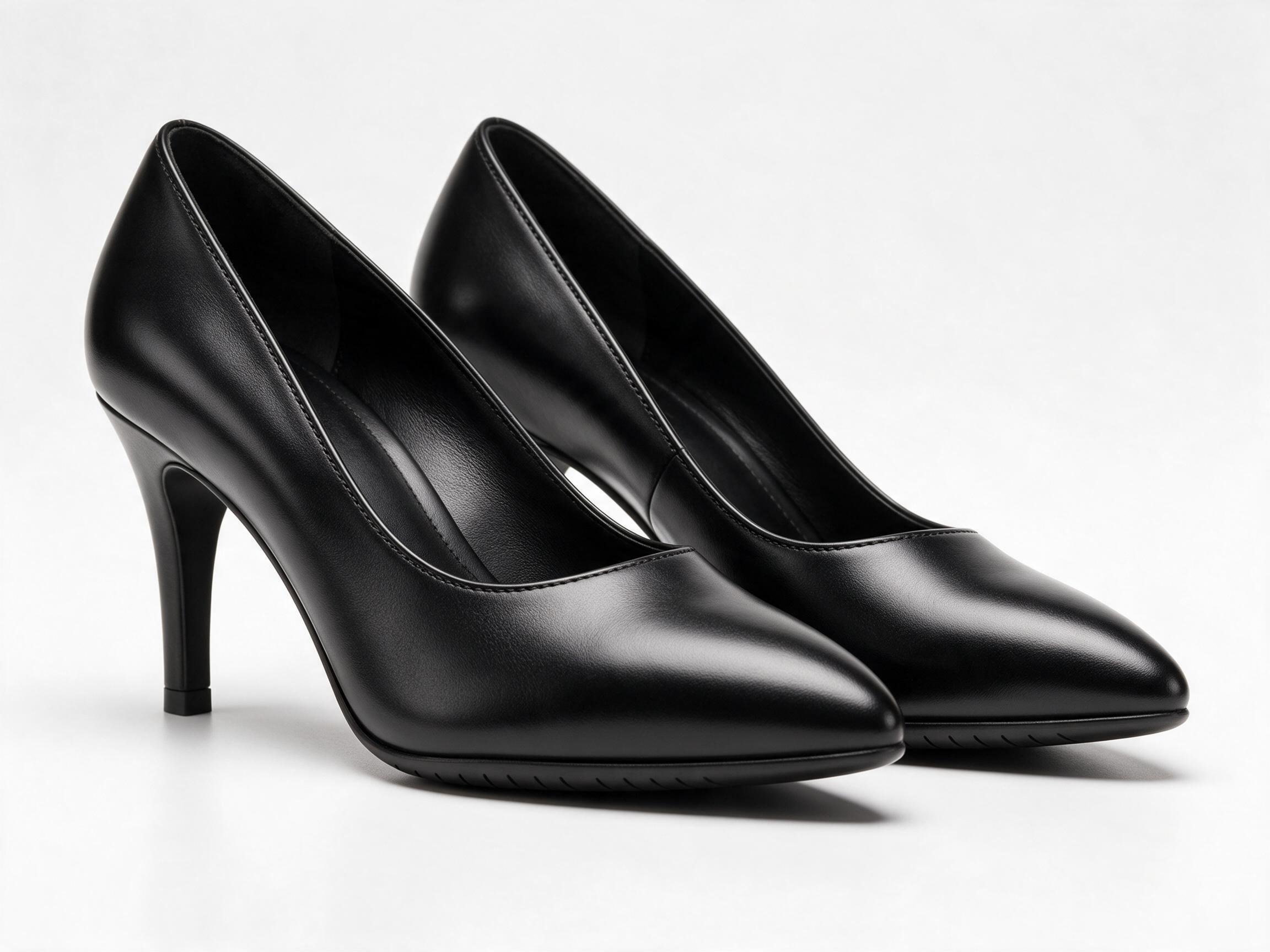
- Last shape and toe shape — for example, a pointed toe profile like the Black Leather Classic Pumps, which is built on a smooth black calf leather upper
- Heel height and heel type — the Black Leather Classic Pumps sit at approximately 7 cm with a reinforced core
- Size range — EU 34–41 / US 4–10 on that style, to be confirmed per last
- Upper material, lining and insole treatment — the Black Leather Classic Pumps use a padded insole, relevant to how the sample feels on the foot
- Outsole spec — the same style uses a rubber anti-slip outsole
- Branding placement: insole logo, box and hangtag
If you work only from a trend board, expect a short alignment call: the design team will propose a construction set and confirm heel height, toe spring and sole unit before pattern making begins. Reference shoes are useful because the last and heel pitch can be measured directly, which reduces guesswork in the first sample.
Step 2 — Pattern making and last selection
Pattern making is where an in-house design and pattern team adds the most value to a heels wholesale order. Instead of forcing your design onto a generic last, the pattern is developed around a specific last, and the upper pieces are drafted to that geometry.
What happens at this stage:
- Last selection or adaptation. The last determines toe shape, instep height and heel pitch. Heel height changes are a standard OEM request, and the last has to be matched to that height so the arch angle stays comfortable.
- Upper pattern drafting. Panels are laid out to keep grain direction consistent across the vamp and quarter. On a smooth calf style, this matters for both look and how the leather stretches over the toe.
- Heel core and sole matching. The heel core is reinforced so the heel keeps its shape under load; the sole unit is matched to the heel base so the finished balance is correct.
- Component sourcing. Lining, insole board, padding and outsole are selected to match the brief rather than defaulting to a house spec.
Once pattern and components are aligned, the sample room builds the first prototype. Customized samples typically take 7–12 days from confirmed brief — a realistic window when the pattern is cut in-house rather than outsourced.
Step 3 — Sample rounds and fit review
Most private-label heels programs run more than one sample round. The point of round one is not just visual approval — it is to catch fit issues while the pattern can still be adjusted cheaply.
Review the first sample on three levels:
| Review level | What to check | Typical follow-up |
|---|---|---|
| Fit | Toe room, instep pressure, heel grip, arch contact | Pattern adjustment, padding change, last tweak |
| Construction | Stitch alignment, panel symmetry, heel attachment, sole bond | Stitch guide correction, reinforcement re-check |
| Finish | Leather color evenness, edge paint, insole cleanliness | Finish spec update before color matching |
Wear-test the sample on real feet in your target size range, ideally at both ends — for example a US 5 and a US 9.5 if your range is US 4–10. Fit problems that look minor on a size 7 sample can behave differently at the extremes, and correcting them before bulk is far less costly than after.
Round two is usually a confirmation sample: same last, corrected pattern, finish as close to production as possible. This is the sample you keep as the approved reference.
Step 4 — Leather color matching
Color matching is the step most likely to cause a bulk surprise if it is handled loosely. For private-label heels, the practical approach is to match leather to a Pantone reference and approve a physical swatch — not to approve a color from a screen or a photo.
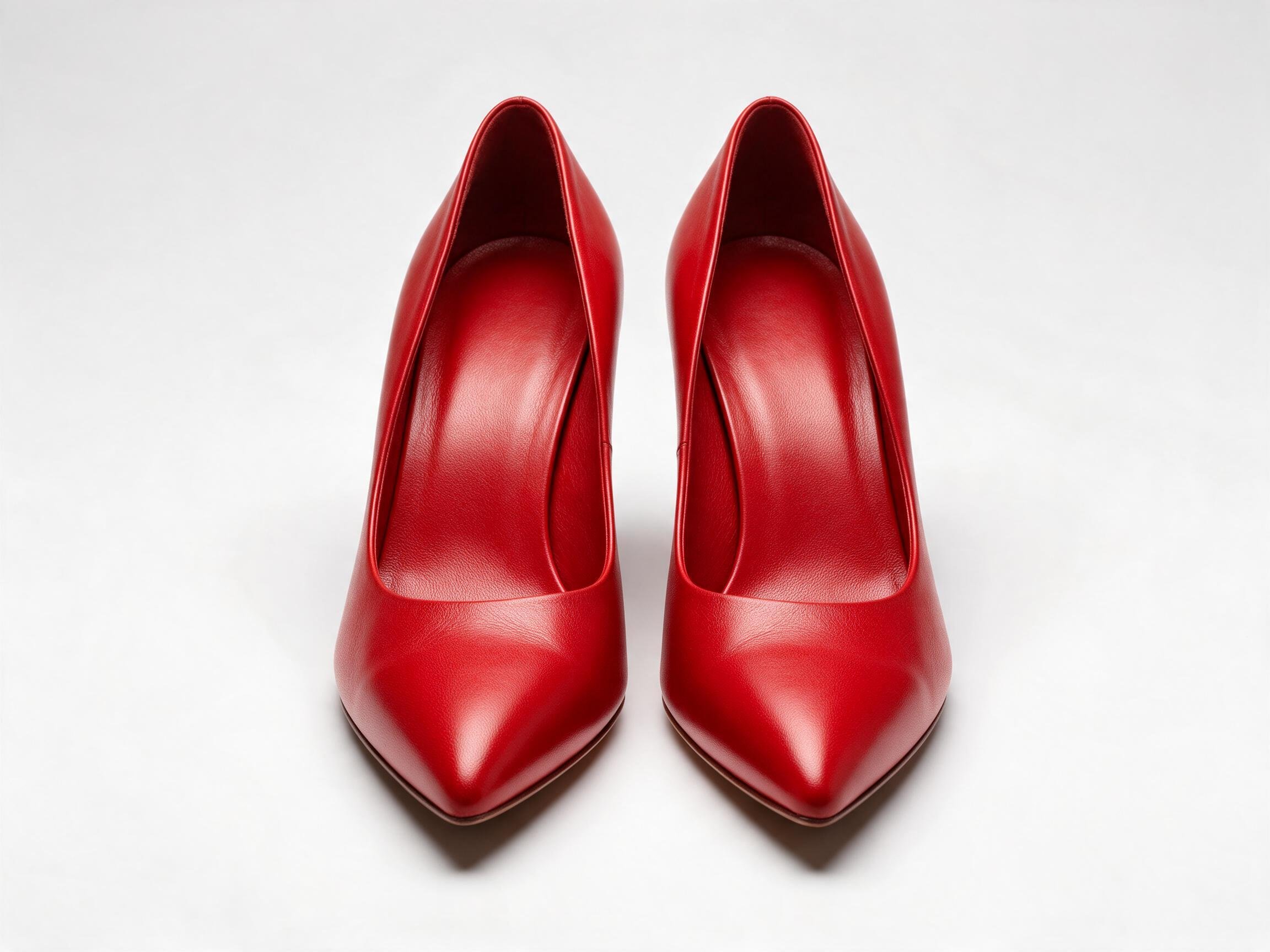
A red upper is a good example of why. The Red Leather Classic Pumps show how a saturated leather color reads on a pointed-toe silhouette — under factory light, under daylight, and in photography. Red is also one of the colors where tannery batches can drift, so the approved swatch becomes the reference for the bulk run.
Standard color directions across heel ranges include black, nude and red, with custom matching available on request. When matching:
- Approve a physical leather swatch under daylight, not just a digital reference.
- Confirm which panels are cut from the same dye lot, especially on multi-panel uppers.
- Decide finishing — matte, polished or slightly glazed — at the same time as color, because finish changes how a color reads.
Step 5 — Customizations before bulk
Customizations are easiest to lock in after the construction sample is approved and before bulk release. Changing them mid-production is what causes delays and mismatched components.
OEM/ODM options that can be confirmed at this stage:
- Leather color matching to a Pantone reference, with an approved swatch on file
- Heel height changes — the pattern and last are matched to the new height
- Insole branding — logo applied to the insole
- Box and hangtag branding — private-label boxes and hangtags carrying your logo
- Size range confirmation — final EU / US size set based on the approved last
Treat this as a freeze point. Once color, heel height and branding are signed off on the confirmation sample, the same specification should flow into the bulk order unchanged. If something has to move after this point, flag it before the cutting order is placed rather than after.
Step 6 — Bulk release and QC gate
Bulk release turns the approved sample into a production order. The sample itself becomes the manufacturing reference: pattern, last, materials, color swatch and branding all trace back to it.
Three-stage inspection runs before shipment, structured as:
| Stage | Focus | Why it matters for heels |
|---|---|---|
| Incoming / in-process | Leather shade against the approved swatch, panel cutting, stitching | Catches color drift and panel mismatch before assembly |
| Assembly / finished goods | Heel attachment, sole bond, insole branding, size marking | Confirms structural consistency across the run |
| Pre-shipment | Pair matching, box and hangtag, carton count | Prevents mismatched pairs and packing errors reaching your warehouse |
Because the approved sample defines the standard, the inspection gate is a comparison against your own sign-off — not against a general house spec. That is the main reason to keep the confirmation sample, its color swatch and any measurement notes together as one reference file.
Auravia was founded in 2011 in Quanzhou and runs in-house design and pattern teams with a team of 260 staff, exporting to Europe, North America and the Middle East. That in-house structure is what allows the brief-to-sample loop to stay inside one operation.
Buyer FAQ
Can you work from a sketch or a trend board instead of a full tech pack?
Yes. The in-house design and pattern teams turn sketches, references or trend boards into production-ready samples. Where the brief is incomplete, the team proposes a construction set and confirms heel height, toe shape and sole unit before pattern making.
How long does a customized sample take?
Customized samples typically take 7–12 days once the brief is confirmed. The number and timing of follow-up rounds depends on how much fit or finish adjustment is needed.
Can we change heel height from a stock style?
Heel height changes are part of the OEM/ODM options, and the pattern and last are matched to the new height. If you are starting from a style such as the Black Leather Classic Pumps at approximately 7 cm, tell the team your target height so the last can be selected accordingly.
How is color matched to our brand reference?
Leather color can be matched to a Pantone reference, then approved as a physical swatch. Black, nude and red are the standard directions, with custom matching available on request.
Where can our logo be placed?
Logo application is available on the insole, the box and the hangtag as part of private-label packaging.
What size range can the sample cover?
The Black Leather Classic Pumps are offered in EU 34–41 / US 4–10. Confirm your target range in the brief so the last and pattern are matched to the sizes you plan to sell.
Start a private-label heels sample
Send your sketch, reference shoe or trend board with your target heel height, size range and branding placement. The team will confirm the construction set and move into sample development.
Request a sample brief