
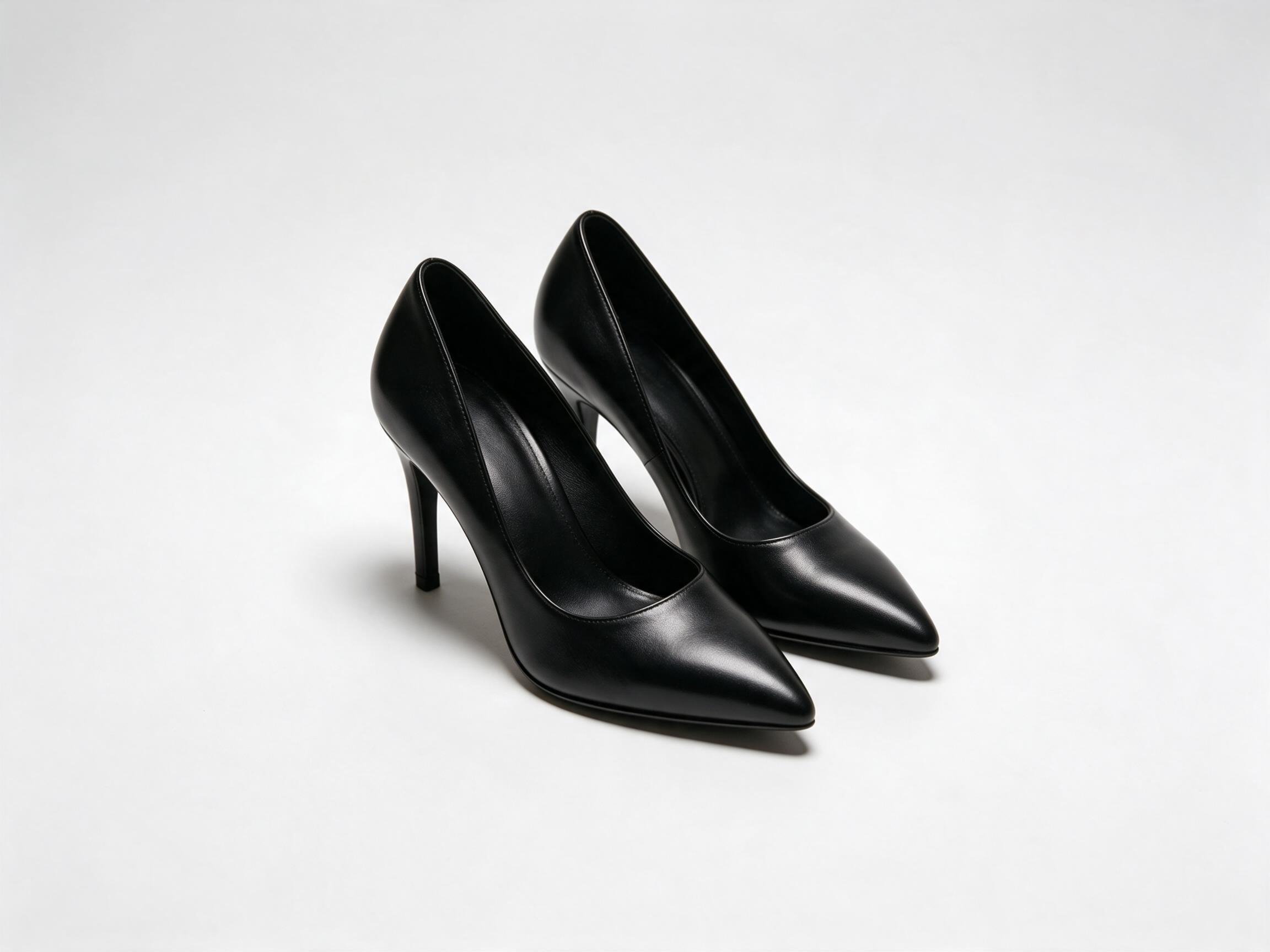
A wholesale buying guide for women's high heels: plan a heel-height ladder, evaluate comfort structure (reinforced heel core, padded insoles, slip-resistant outsoles), and run practical pre-shipment acceptance checks, with reference to two published styles from Auravia (black leather stiletto, nude block heel).
Wholesale Buying Guide
High heels shoes wholesale is not a single product decision. A buyer assembling a season's line is really choosing a set of heel heights, a comfort story that survives customer wear, and an acceptance standard that can be applied before cartons leave the factory. This guide works through those three decisions using two published styles as reference points: a Black Leather Stiletto Heels with an approx. 10 cm stiletto heel, and a Nude Block-Heel Shoes with an approx. 5 cm block heel. Both are listed under the women's high heels category.
Key takeaways
- Plan heels as a ladder of heel heights (e.g., approx. 5 cm block through approx. 10 cm stiletto) so the range covers different wearing occasions and customer comfort thresholds, not as one hero SKU.
- Comfort comes from structure you can specify: reinforced heel core, cushioned or padded insole, soft leather lining, and a slip-resistant rubber outsole.
- Write acceptance checks around what you can observe and test before shipment — heel attachment, flex, color fastness, insole padding, outsole grip — and confirm current MOQ and lead time with the sales team before ordering.
- Why heel height is an assortment decision, not a spec sheet line
- Building a heel-height ladder
- Comfort design: what to specify and why it matters
- Acceptance checks before shipment
- Working with a heel manufacturer: what to confirm
- FAQ
Why heel height is an assortment decision
Heel height changes who the shoe is for and when it gets worn. A buyer who orders only one height tends to end up with either a range that scares off comfort-first customers or one that feels flat next to competitors' displays. The practical fix is to treat heel height as a ladder: each rung covers a wearing occasion, and together they let a retail buyer merchandise a full wall without doubling the number of suppliers.
Two published styles illustrate the ends of a simple ladder. The Black Leather Stiletto Heels use a stiletto heel of approximately 10 cm with a reinforced core, a pointed toe, polished kid leather upper, soft leather lining and a cushioned insole. The Nude Block-Heel Shoes use a block heel of approximately 5 cm, a soft kid leather upper, leather lining, padded insole and rubber outsole. Both are listed in EU 34–41. The height difference is not cosmetic: it is a difference in silhouette, balance point and the comfort argument you can make to the end customer.
Building a heel-height ladder
A workable ladder usually has three rungs. The exact heights depend on your market and price architecture, but the logic is the same: give each rung a clear job, then let color and upper material do the merchandising work within it.
| Rung | Reference height | Typical role in assortment | Published example |
|---|---|---|---|
| Low / block | Approx. 5 cm | Everyday wear, comfort-led customers, office and commuting | Nude Block-Heel Shoes (block heel approx. 5 cm) |
| Mid | Between the two published heights | Transitional styling; bridges comfort and dress | Not published in the two reference styles — specify with supplier |
| High / stiletto | Approx. 10 cm | Occasion, evening, fashion-forward displays | Black Leather Stiletto Heels (stiletto approx. 10 cm with reinforced core) |
Color planning runs across the ladder. The stiletto style is published in black, nude and red plus custom colors; the block-heel style in nude, black and taupe plus custom colors. A buyer can therefore build a core palette in each height and add custom colors where a private-label program needs them. Minimum order quantity for the stiletto style is listed at 100 pairs per color; confirm current MOQ and lead time with the sales team before ordering, because these figures can change by color and season.
Two practical notes on the ladder. First, don't assume a mid-height is automatically the best seller; stock the published heights first and let sell-through data guide the middle rung. Second, keep sizing consistent across rungs — both reference styles are listed in EU 34–41, which simplifies size-curve planning across the range.
Comfort design: what to specify and why it matters
Comfort in heels is mostly a structural question, and structure can be written into a purchase order. The useful specification points are the ones the factory can confirm and the buyer can inspect.
Reinforced heel core
The heel core is the internal element that carries load from the foot down through the heel. In a stiletto of approximately 10 cm, a reinforced core is a named feature on the published Black Leather Stiletto Heels. For buyers, the point is to ask how the core is constructed and how heel attachment is checked before shipment — not to assume that a reinforced core alone guarantees a particular service life. Treat it as one comfort and durability input among several.
Padded insole and soft lining
Both reference styles list a cushioned or padded insole. In a high-heel program, the insole is where comfort perception is most directly felt, so it is worth specifying: thickness, material, and whether the padding extends to the forefoot. The Black Leather Stiletto Heels also list a soft leather lining; the block-heel style lists a leather lining. Linings affect how the shoe feels against the foot and how it wears over time, so confirm lining material per style rather than assuming it is uniform across a range.
Slip-resistant rubber outsole
The Black Leather Stiletto Heels list a slip-resistant rubber outsole; the Nude Block-Heel Shoes list a rubber outsole. Outsole compound and tread pattern are reasonable specification points for markets where floor surfaces vary. Ask for the outsole specification per style and confirm whether slip resistance is a claimed property or a design intention — the published pages describe the outsole as slip-resistant, and that is the scope to hold the supplier to.
Construction
The Black Leather Stiletto Heels are listed with cemented construction. Construction method affects flexibility, repairability and the feel of the sole edge, and it should be confirmed per style if consistency across a range matters to your customers.
Acceptance checks before shipment
Acceptance checks should be written against what can be seen, felt and tested at the factory before cartons are closed. The checks below are practical, but the pass/fail thresholds are yours to set with the supplier — do not assume a universal standard.
| Check | What to look at | Why it matters |
|---|---|---|
| Heel attachment | Heel-to-sole joint, side play, visible gaps or excess adhesive | A loose heel is the most visible failure mode in a heels program |
| Flex | Forefoot flex and overall sole stiffness against the intended wear position | Relates to walking comfort and to whether the construction matches the sample |
| Color fastness | Rubbing and, where relevant, light handling of upper and lining | Color transfer is a common customer complaint, especially in dark and red uppers |
| Insole padding | Coverage, thickness and consistency across the size run | Comfort claims should be backed by a consistent insole, not a sample-only feature |
| Outsole grip | Tread pattern and compound consistency; slip-resistance claim per style | Matches the published outsole description and customer floor conditions |
| Sizing and fit | Last consistency across EU 34–41 | Size-curve accuracy affects returns and reorders |
How the checks are organized matters as much as the list. Auravia, the manufacturer behind the reference styles, describes a three-stage inspection process and lists flex, color fastness and heel-attachment testing among its checks, along with a 6-month warranty. Those are the manufacturer's stated practices; the buyer's acceptance criteria should still be confirmed in writing for the specific order, including sampling method, AQL level and who signs off. For custom colors and private-label programs, color approval against a physical standard is the natural companion to the color-fastness check.
Working with a heel manufacturer: what to confirm
Auravia was founded in 2011 in Quanzhou and operates as an OEM/ODM and private-label manufacturer with approximately 260 staff. The company lists EXW, FOB and CIF terms and exports to Europe, North America and the Middle East. Those facts tell you the commercial format is familiar to export buyers; they do not by themselves tell you whether a given heel style will meet your market's requirements, which is why the specification and acceptance work above still matters.
Before placing a bulk order, confirm with the sales team:
- Current MOQ and lead time per style and color. The published stiletto figures are 100 pairs per color and 25–35 days, but these should be reconfirmed for your order.
- Sample timing: standard samples are listed at 3–5 days and custom samples at 7–12 days.
- Custom color development — the reference styles list black, nude and red (stiletto) and nude, black and taupe (block heel), plus custom colors.
- Acceptance criteria, inspection stages and warranty terms in writing.
- Response time expectations — the company lists a 48-hour response.
None of these confirmations substitutes for seeing and testing the product. They simply make sure the commercial and quality expectations are aligned before production begins. A realistic plan is to approve samples against the heel-height ladder, lock the acceptance checks, then place bulk orders per rung and color.
FAQ
What heel heights should a first wholesale order cover?
The two published reference styles cover approximately 5 cm (block) and approximately 10 cm (stiletto). A first order can use those two rungs to test comfort-led and fashion-led demand before adding a mid-height. Confirm current MOQ and lead time with the sales team before ordering, since per-color minimums affect how many rungs you can open at once.
How do I check comfort in heels before shipment?
Focus on the structural features you can specify and inspect: reinforced heel core (stiletto), cushioned or padded insole, soft leather lining and a rubber outsole. Then check insole padding consistency and heel attachment on the production lot, not only on the sample.
Are the published slip-resistant and warranty claims enough for my market?
They are the manufacturer's published descriptions and should be treated as such. If your market requires specific test evidence or labeling, ask the supplier for the applicable documentation and confirm it covers the exact style and color you are ordering.
Can I order custom colors and private label?
The reference styles list custom colors, and Auravia offers OEM/ODM and private-label work. Custom samples are listed at 7–12 days. Color approval against a physical standard should be part of your acceptance process.