
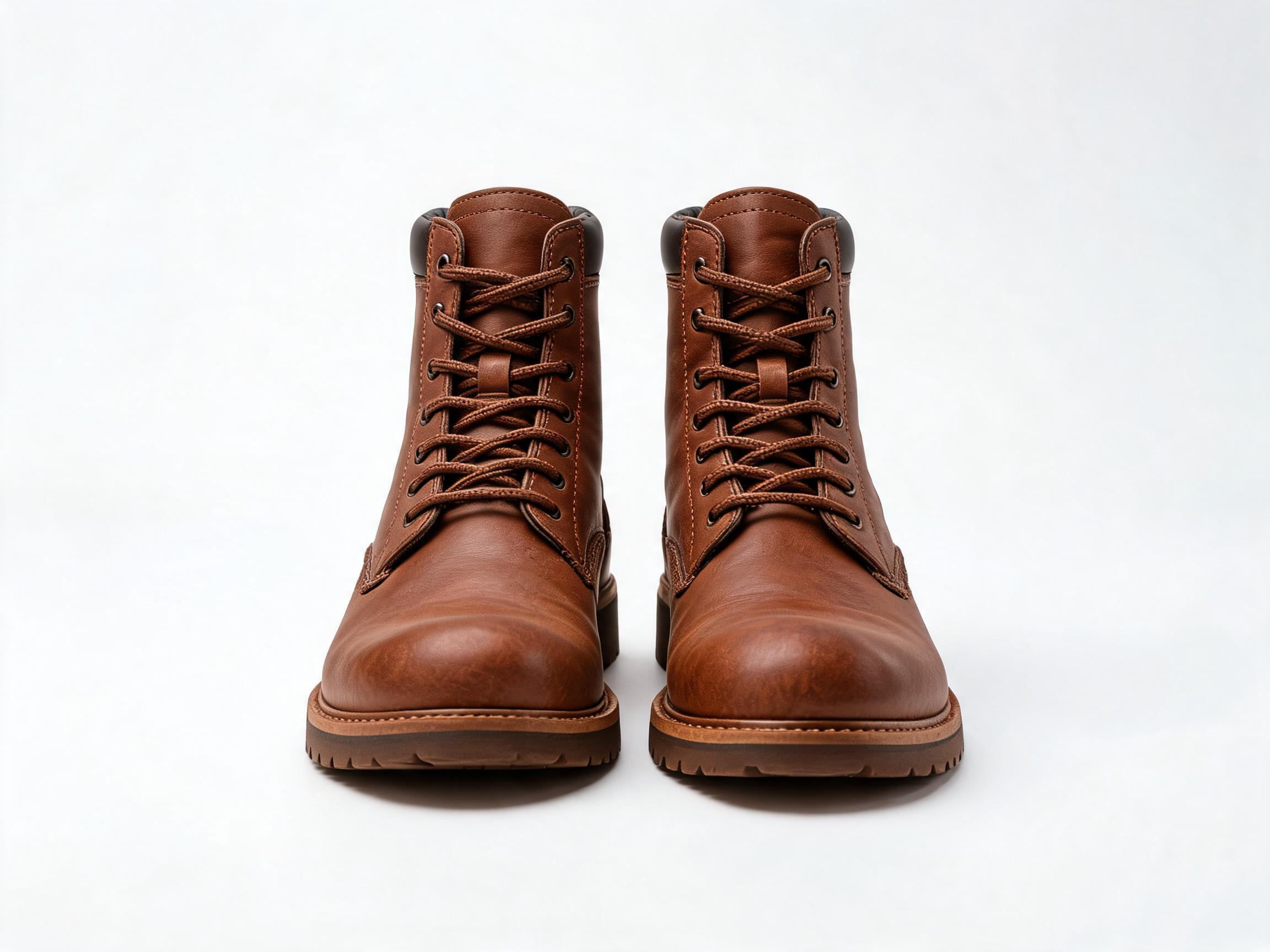
A buyer's checklist for work boots: how steel and composite toe options differ as purchasing questions, how to judge leather grade using oiled full-grain as the reference, and which supplier details to verify before you place a bulk order.
Buyer Checklist
Work boots fail procurement for reasons that rarely show up in a photograph: the toe protection type was never specified, the leather grade was left to interpretation, or the supplier could not hold the agreed specification across repeated orders. This checklist walks through the three decisions that most often go wrong when sourcing genuine-leather work boots, and shows how to put each one in writing before you request a quotation.
- Toe protection: steel and composite toe as purchasing options to confirm with the supplier, not a self-declared safety claim.
- Leather grade: how to read oiled full-grain as a benchmark, and what questions separate it from corrected-grain and coated materials.
- Supplier checks: the company, specification and commercial details to verify before committing to a bulk order.
1. Start with the toe protection type, not the boot

The toe cap is the first item to decide because it drives the material, weight and construction of the whole boot. Buyers generally choose between two options: steel toe and composite toe. Both are offered as options by work-boot manufacturers, but you must confirm the exact construction with the supplier rather than assume it from a catalog photo.
Steel toe versus composite toe: what to ask
The right choice depends on your product position and the destination market. Steel and composite caps differ in material and weight characteristics, and they may suit different end-user preferences. Since this article does not assign safety ratings or standard numbers, treat the two as options to confirm.
- Ask which option the supplier can produce for your target model, and whether both are available on the same last and upper.
- Ask what documentation the supplier can provide for the toe-cap construction. Do not accept a standard number that appears only in a chat message; request it in the formal quotation or specification sheet.
- Ask about the internal fit: a toe cap changes the room above the toes, so confirm which size range the capped version covers.
Toe protection is a specification item, not a marketing word
When you write the purchase order, avoid terms like "safety toe" or "reinforced toe" on their own. State the material option you selected (steel toe or composite toe), the model it applies to, and the size range in which it must be available. This turns a vague request into something a factory can quote and a third party can check on arrival.
2. Judge the leather grade by what it is and what it needs
"Genuine leather" is a category, not a grade. Under that heading you will find full-grain, corrected-grain and coated or split leathers, and the gaps between them matter for how a boot looks after months of use. A useful way to calibrate your judgment is to look at a real oiled full-grain example.
The oiled full-grain benchmark
Oiled full-grain leather is the top surface of the hide, treated with oil rather than sanded flat. Its grain stays visible. The brown leather work boots from Aurevia are a concrete reference point: oiled full-grain leather upper, oil- and slip-resistant lug rubber outsole, speed-hook lacing, shaft approximately 15 cm, sizes EU 39–46 / US 6.5–12.5. When you compare quotations, use that description as a template and ask each supplier to state which part matches.
A simple comparison frame
| Leather description | What you should see in the sample | Question to put to the supplier |
|---|---|---|
| Oiled full-grain | Visible natural grain, oiled surface, slight color variation across panels | Is the oil treatment applied to the grain side? Which hides are used? |
| Corrected-grain | Sanded and uniform surface, often embossed with a pattern | Has the grain been sanded back? Is a coating applied? |
| Coated / split leather | Uniform color and a film-like surface | What is the base material under the coating? |
The table compares descriptions; always confirm the actual material on the approved sample, not on the product photo.
Three checks on the sample
- Ask for two panels from the same production run. Color variation that looks natural in a sample photo should look consistent across both.
- Bend the quarter and check whether the surface creases as hide does or separates as a coating would.
- Record the approved sample and retain it as the reference for the bulk order. Written grade descriptions drift; a physical sample does not.
3. Verify the outsole and lacing as part of the same order
Toe and leather get most of the attention, but the outsole and lacing system are where a work boot becomes usable on site. On the reference style above, the lug rubber outsole is described as oil- and slip-resistant, and the lacing uses speed hooks. Neither detail should be assumed from a spec sheet alone. When you request a quotation, ask which outsole compound and tread pattern the model uses, and whether the speed-hook hardware is available on all sizes in your range.
If the destination market places requirements on slip resistance or oil resistance, state the requirement explicitly and ask what evidence the supplier can provide for the specific model. Do not translate a general description in a catalog into a compliance statement.
4. Run supplier checks before you commit
A good sample does not answer the questions that determine whether a supplier can repeat it. The checks below are the ones most worth doing early, before an order is placed.
Company and capability checks
- Legal identity: confirm the registered company name, address and export experience match the entity you are contracting with. Aurevia Footwear Co., Ltd. is a genuine-leather footwear OEM/ODM exporter founded in 2011, with about 260 staff, serving markets in Europe, North America and the Middle East.
- Model range: ask which related styles the supplier already produces; the broader men's shoes range gives you a view of the factory's actual output beyond one reference model.
- OEM/ODM terms: clarify what the supplier can change (leather, outsole, lacing, branding) and what stays fixed. Ask for the limits in writing.
Commercial terms to confirm
| Item | Reference detail | Action |
|---|---|---|
| Size range | EU 39–46 / US 6.5–12.5 | Confirm the range available for your chosen toe option |
| Shaft height | Approximately 15 cm | Confirm on the approved sample |
| MOQ | 200 pairs per color (as listed) | Confirm current MOQ with the sales team before ordering |
| Lead time | 35–45 days (as listed) | Confirm current lead time with the sales team before ordering |
Listed figures describe the reference model. MOQ and lead time change with season, material and specification, so always confirm current values with the sales team before ordering.
Specification and sample checks
- Request a written specification sheet that names the leather grade, toe-cap option, outsole and lacing hardware for the exact model you are buying.
- Approve a pre-production sample and keep it signed and dated.
- Agree an inspection point before shipment, and state what will be checked against the sample.
- Ask which documentation the supplier can provide for toe-cap construction and outsole properties, and record the answer in the order file.
Putting the checklist into a first enquiry
A short, specific enquiry gets a more useful reply than a general price request. State the model or reference style, select steel toe or composite toe as your required option, describe the leather grade you expect, give your size split, and ask for the listed MOQ and lead time to be confirmed for the current period. If you have a target market with specific requirements, name them and ask what evidence the supplier can supply for that model.
The boot you should buy is the one whose toe option, leather grade and commercial terms are all written down and verified. Everything else can be adjusted later; those three are the expensive things to discover after the container arrives.