A practical vetting framework for European and North American buyers sourcing non-animal sandals from China. Covers the material questions to ask (PU, microfiber, textile), how to talk about MOQ without losing leverage, and a stage-by-stage QC checklist from material inspection to final packing. Includes a supplier comparison table, common red flags, and an FAQ.
Sourcing non-animal sandals from China looks simple on paper: find a wholesaler, request a quote, place an order. The buyers who get into trouble are the ones who skip the vetting. They accept a “vegan” label without asking what the material actually is, agree to an MOQ that locks up cash for months, and find quality problems only after the container arrives. This guide sets out a vetting process you can run before you wire a deposit: material questions that produce specific answers, how to talk about MOQ, and QC checkpoints at each production stage.
Key takeaways
- “Vegan” describes what a sandal does not contain, not what it is made of. Ask for the component-by-component material breakdown.
- MOQ usually reflects production setup cost, not a fixed rule. Trial quantities, color splits and stock availability are the three levers to discuss.
- Define QC checkpoints at material, component, finished-shoe and packing stages — not just final inspection.
- Vague answers about material suppliers or QC steps are a stronger warning sign than a high price.
On this page
Material verification: the questions that produce real answers
When a Chinese wholesaler says their sandals are vegan, they usually mean the upper, lining and sometimes the adhesive are free from animal-derived components. That claim tells you nothing about durability, breathability or batch consistency. To judge any of those, you need to know what the material actually is.
Ask for a breakdown by component. A sandal has several parts, and each can use a different non-animal material:
- Upper: PU (polyurethane) coated fabric, microfiber synthetic leather, woven textile or mesh.
- Lining: often PU or polyester fabric, sometimes a breathable mesh.
- Insole: EVA or PU foam; ask whether it is removable.
- Outsole: rubber, TPR (thermoplastic rubber) or EVA. Rubber generally gives better slip resistance than EVA, but confirm the grade with the supplier rather than assuming.
- Adhesives and finishes: some glues contain animal by-products. Ask for a written statement that the adhesive used on your order is synthetic.
Request material samples before any bulk commitment. A photo will not tell you how the material flexes, how the surface feels, or how it creases. Ask for the exact composition, the thickness in millimetres and the backing fabric. If the supplier cannot supply those details, they are probably reselling from a trading company that does not control production — which makes it far harder to hold anyone to a specification later.
Construction quality is a separate question from material identity, and it is worth studying how a well-specified sandal is built so you know what to ask for. For reference, Aurevia Footwear’s Black Leather Casual Sandals use leather laces and adjustable buckle straps, a soft footbed and a lightweight anti-slip rubber outsole, built on in-house cutting, stitching and upper production lines. That example is leather, not a non-animal material, so do not treat it as a vegan product. Use it as a benchmark for the construction features you should expect your PU or microfiber supplier to deliver — strap adjustability, footbed comfort and outsole grip — and ask them to explain how their material achieves the same functions over the expected wear life.
Reject vague phrases such as “high-quality vegan leather.” They are a placeholder, not a specification.
MOQ: what drives it and how to negotiate
MOQ is the point where most first-time buyers lose leverage, usually because they ask “what is your MOQ?” and accept the first number. A better approach is to understand what sets it. For sandals, MOQ is normally driven by three things: the cutting and stitching setup for a given pattern, the minimum run the material supplier will sell, and whether the factory already holds moulds or stock for that style.
That means MOQ is negotiable along specific lines:
- Ask for a trial-order MOQ. Many suppliers will quote a lower first-order quantity in exchange for a higher unit price or a longer production slot. A trial order is how you verify quality before committing to volume.
- Ask whether MOQ applies per colour or per style. A three-colour order can mean three separate minimums. Get this in writing before you finalise the design.
- Ask how the material affects the minimum. A standard PU upper may carry a lower minimum than a custom-printed microfiber, because the material mill imposes its own minimum.
- Ask about stock styles. If the wholesaler holds inventory in a popular style, they may be able to ship a smaller quantity without running production at all.
Do not push for an implausibly low MOQ on a complex design. A supplier who agrees instantly is either short of orders or planning to substitute material. A minimum that genuinely covers their setup cost is more likely to produce a sandal that matches your sample.
QC checkpoints from material to final packing
For sandals, defects usually start with the material and compound during assembly, so a single final inspection catches problems too late. Agree on checkpoints at each stage and ask for photos or reports at each one. The framework below is a starting point — adjust it to your order size and risk tolerance.
Material inspection
- Check the material against the approved sample: colour, texture, thickness, backing.
- Flex and crease a swatch. Poor PU can crack after repeated flexing.
- Check for odour. A strong chemical smell suggests low-grade adhesive or insufficient curing.
- Confirm the non-animal declaration, including the adhesive.
Component and structure inspection
- Straps and buckles: securely attached and operating smoothly.
- Stitching: no skipped stitches, loose threads or uneven seams.
- Footbed: softness and thickness match the approved sample.
- Outsole bonding: no gaps or excess glue at the join.
Finished sandal inspection
- Measure against the spec sheet: length, width, strap length.
- Check left/right symmetry in shape and size.
- Operate every buckle and adjustable strap.
- Flex the sandal where the foot flexes; the material should not crack or delaminate.
- Check cleanliness: no glue marks, stains or scratches.
Packing and labelling inspection
- Carton markings, shipping marks and barcode labels match the order.
- Polybag and inner packing protect the sandals from rubbing; pairs are correctly matched.
- Carton count and weight are confirmed.
- The packing list matches what is actually in the cartons.
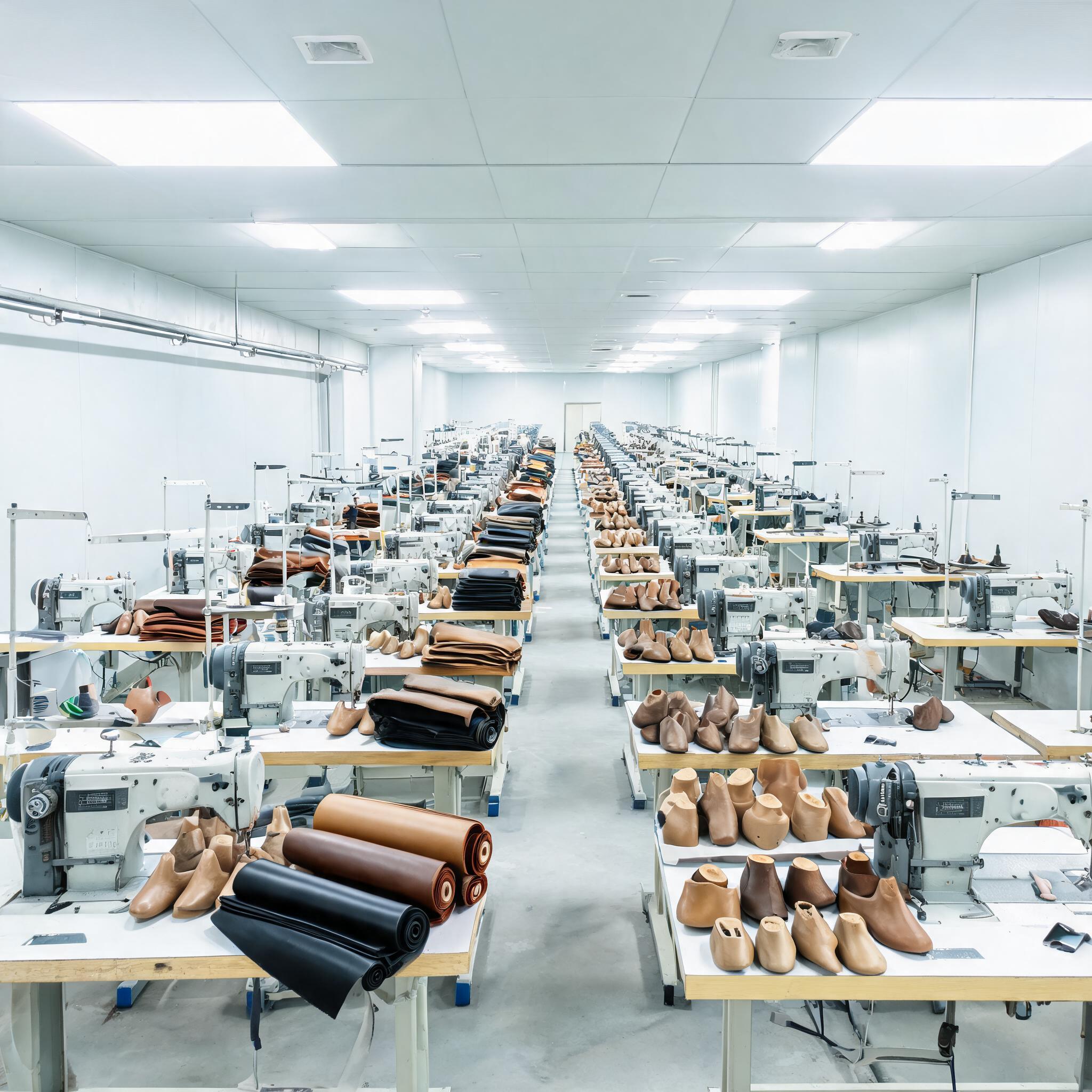
Ask your supplier to describe their QC process in this kind of detail. Aurevia Footwear, for one, runs multi-stage QC covering material verification, structural checks and finished-shoe inspection across its leather sandal production. If a wholesaler only mentions “final inspection,” ask what happens before that stage — and treat a non-answer as a signal.
Supplier vetting checklist
Use this table when evaluating a new wholesaler. The right-hand column describes the kind of answer you are looking for, not a guarantee that any given supplier will give it.
| Area | What to ask | What a useful answer looks like |
|---|---|---|
| Company background | Year established, team size, main export markets. | Specific answers that match their business licence. |
| Production capability | Do they own cutting, stitching and upper production lines? | In-house capability, supported by factory photos or a video walkthrough. |
| Material sourcing | Who supplies the PU or microfiber, and can they provide a material declaration? | A clear sourcing process and a written composition breakdown. |
| MOQ policy | Is there a trial-order minimum? Does it vary by colour or size? | A consistent answer and willingness to discuss trial quantities. |
| QC process | Which checkpoints exist, and can you receive reports or photos at each? | Multi-stage QC with documentation at defined stages. |
| Sampling | Sample lead time? Is the sample fee credited against the bulk order? | A stated timeline and clear sample-fee terms. |
| Communication | Who is your day-to-day contact, and do they understand production? | A named contact who can answer technical questions directly. |
Red flags
- They cannot name their material supplier. This usually means they are a trading company with no control over quality.
- They deflect QC questions. “We have QC” without specifics tells you nothing about what is actually checked.
- Prices far below the market. Extremely low quotes are usually funded by substituted materials or compressed labour.
- They push for a deposit before any sample. A legitimate supplier will send samples, typically for a fee.
- They cannot explain the difference between PU and microfiber. A supplier who does not know their own materials cannot keep them consistent across batches.
FAQ
Can I get a vegan sandal sample before placing a bulk order?
Most suppliers provide samples, usually for a fee that is sometimes credited against the bulk order. Ask about the cost, the timeline, and the credit terms before you pay. Aurevia Footwear supports low-MOQ trial orders on its leather sandals, and the same trial-order logic applies to non-animal projects — but confirm the specific material and terms with whichever supplier you choose.
How do I verify that a material is genuinely non-animal?
Request a written declaration from the material supplier, and a separate statement that the adhesive is synthetic. Ask for specific composition details — for example, “polyester microfiber with PU coating” — rather than accepting a general vegan claim.
What is a typical MOQ for vegan sandals from China?
It varies widely by design, material and colour count, so treat any single figure with suspicion. Ask for the MOQ per style and per colour, and ask separately whether a trial-order quantity is possible for a first order.
Should I use a third-party inspection company?
For larger orders, a third-party inspection can be worth the cost. For trial orders, ask the supplier for photos or video at each QC checkpoint. If you cannot visit the factory yourself, a local agent can carry out an on-site check.
Where does Aurevia Footwear fit into this?
Aurevia is a leather footwear manufacturer, not a vegan supplier, so it is not a candidate for non-animal orders. Its Black Leather Casual Sandals are useful as a construction reference: adjustable buckle straps, a soft footbed and a lightweight anti-slip rubber outsole. For vegan projects, apply the same questions in this guide to a supplier that works with PU, microfiber or textile.
Next step: take the checklist in this article, send it to two or three potential wholesalers, and compare how specifically each one answers. The supplier who gives documented, material-level answers is the one worth a sample order.