A buying guide for importers and private-label retailers building a women's flat shoe line: how toe shape, opening type, sole construction, and upper material interact, why four similar-looking styles can cannibalize each other, and how to keep one size grading across a mixed range.
Range Planning for Importers
Flat shoes look like the easiest category in a women's footwear program. There is no heel height to fail, no stiletto to snap, no platform tooling to fund. That is exactly why flat ranges fill up with duplicates. A buyer approves a round-toe ballet, then a slip-on in the same round last, then a Mary Jane that reads as the ballet with a strap added. On the shelf, the three styles compete for the same customer, the same size run, and the same open-to-buy budget. The range looks broad in the catalog and sells like one shoe.
This article is about the composition question: for ladies flat shoes wholesale programs, which constructions belong in one range, and how do they share a size ladder without fighting each other? Four decision points drive the answer for most European, North American and Middle Eastern ranges: toe shape, opening type, sole construction, and upper material. Each one changes fit tolerance, shelf role, and what can go wrong in bulk.
What this article answers
- How round-toe and pointed-toe shapes change internal volume and size sensitivity.
- Why elasticized openings, instep straps and plain slip-ons fail in different ways at retail.
- Where flexible thin soles, jute espadrille soles and rubber bottoms differ on durability and cost of error.
- Why suede and smooth leather demand different color and batch controls.
- How to keep one grading standard when four constructions share a size range.
First decide the structural map, not the SKU count
A flat line usually needs three or four structures, not six. The test is whether a shopper can describe the difference between two styles in one sentence. "This one has a strap, that one doesn't" is a variant. "This one is round and soft for casual wear; that one is pointed for the office" is a structure with a job.
Four constructions cover most wholesale flat ranges well: ballet, plain slip-on, Mary Jane, and espadrille. A pointed-toe flat can run as a fifth item or as the office variant inside the ballet family, depending on how much space the buyer wants between casual and formal. What matters is that each one occupies a distinct wearing occasion and a distinct fit behavior — because the fit behavior is what determines whether the range holds together at the size level.
Toe shape: round versus pointed, and what it does to internal volume
Toe shape is a last decision, and last decisions are fit decisions. A rounded toe leaves more room laterally and vertically in the forefoot. A pointed toe narrows the front of the shoe and pushes the longest toe forward. Two shoes built on the same nominal size but different toe shapes will not feel the same to the same wearer, and they will not generate the same returns profile.
For a wholesale range, the practical consequence is this: the pointed style needs more careful size advice than the round style. If a customer normally takes one size in a soft round-toe ballet, the same size in a pointed flat may feel tight at the toe box. That is not a defect; it is geometry. Buyers who plan a pointed-toe office flat should expect to communicate it as a slightly closer fit and should not treat a size exchange rate on that style as evidence that the round styles are wrong.
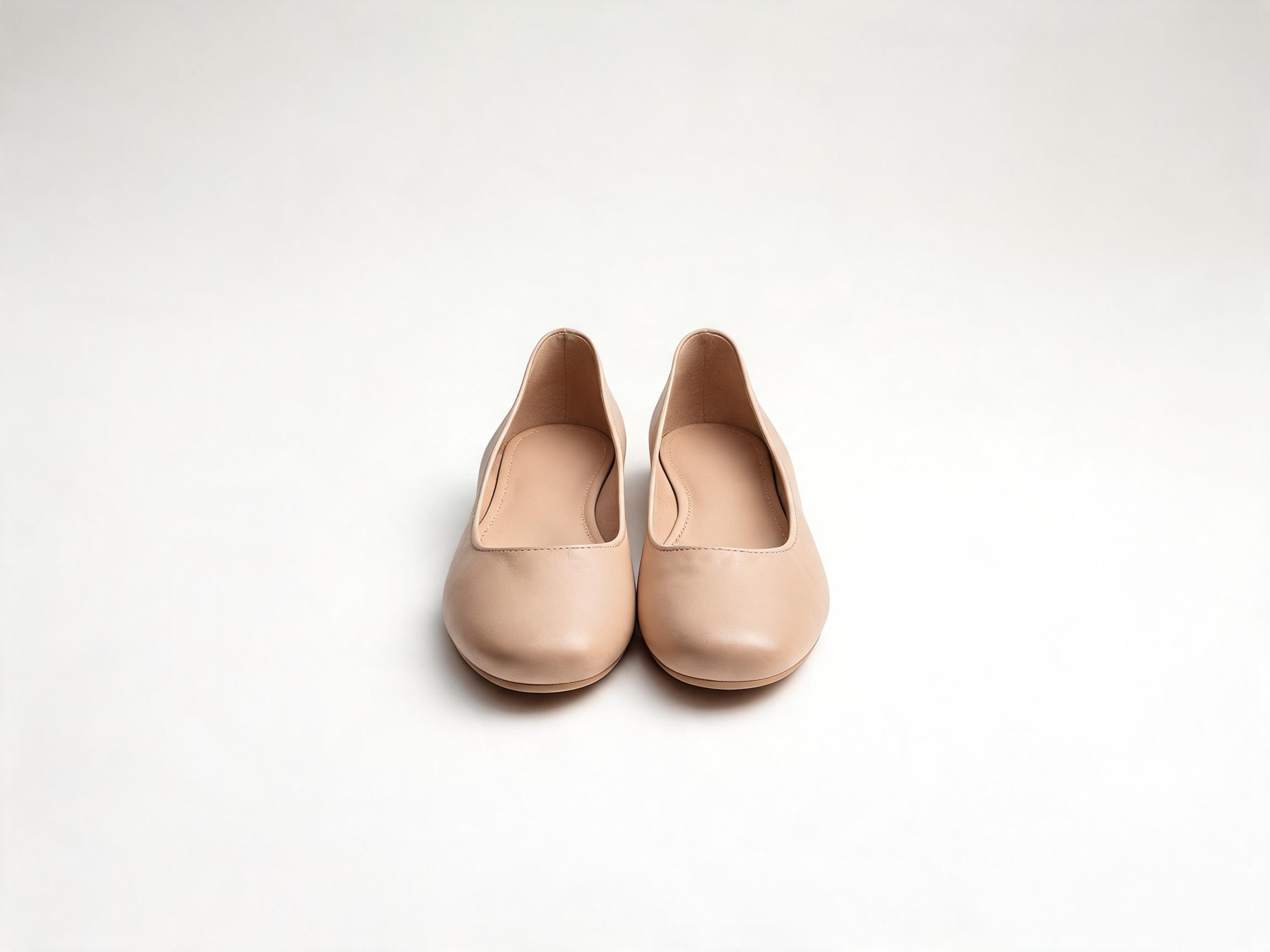
The round-toe ballet remains the anchor of most ranges because it is the most forgiving shape to fit across a broad customer base. The Nude Leather Ballet Flats show the conventional approach: soft leather upper, elasticized topline, padded insole. The nude color matters commercially — it works as a near-neutral across skin tones and sits comfortably in both bridal-adjacent and everyday assortments.
Pointed shapes earn their place when the range needs an office or dress segment. A white pointed-toe leather flat is positioned for office wear: soft leather, pointed toe, padded insole. Keep the pointed item clearly labeled by occasion in your own product data. If it is merchandised next to the ballet with no explanation, shoppers read it as the same shoe in a different toe and buy whichever is cheaper.
Opening type: elasticized, strapped, or plain slip-on
The opening is where fit tolerance lives. Three common approaches behave differently when a customer's foot is between sizes or slightly wide.
Elasticized topline
An elasticated edge grips the foot and holds the shoe on without a fastener. It absorbs small variations in instep height and heel width, which is why it appears so often on ballet flats. The trade-off is that the elastic does the retaining work, so the pattern and the elastic tension need to be consistent across the production run. If tension varies between pairs, the same size will feel different on the shelf. Ask how the topline elastic is controlled batch to batch, not just whether it exists.
Instep strap
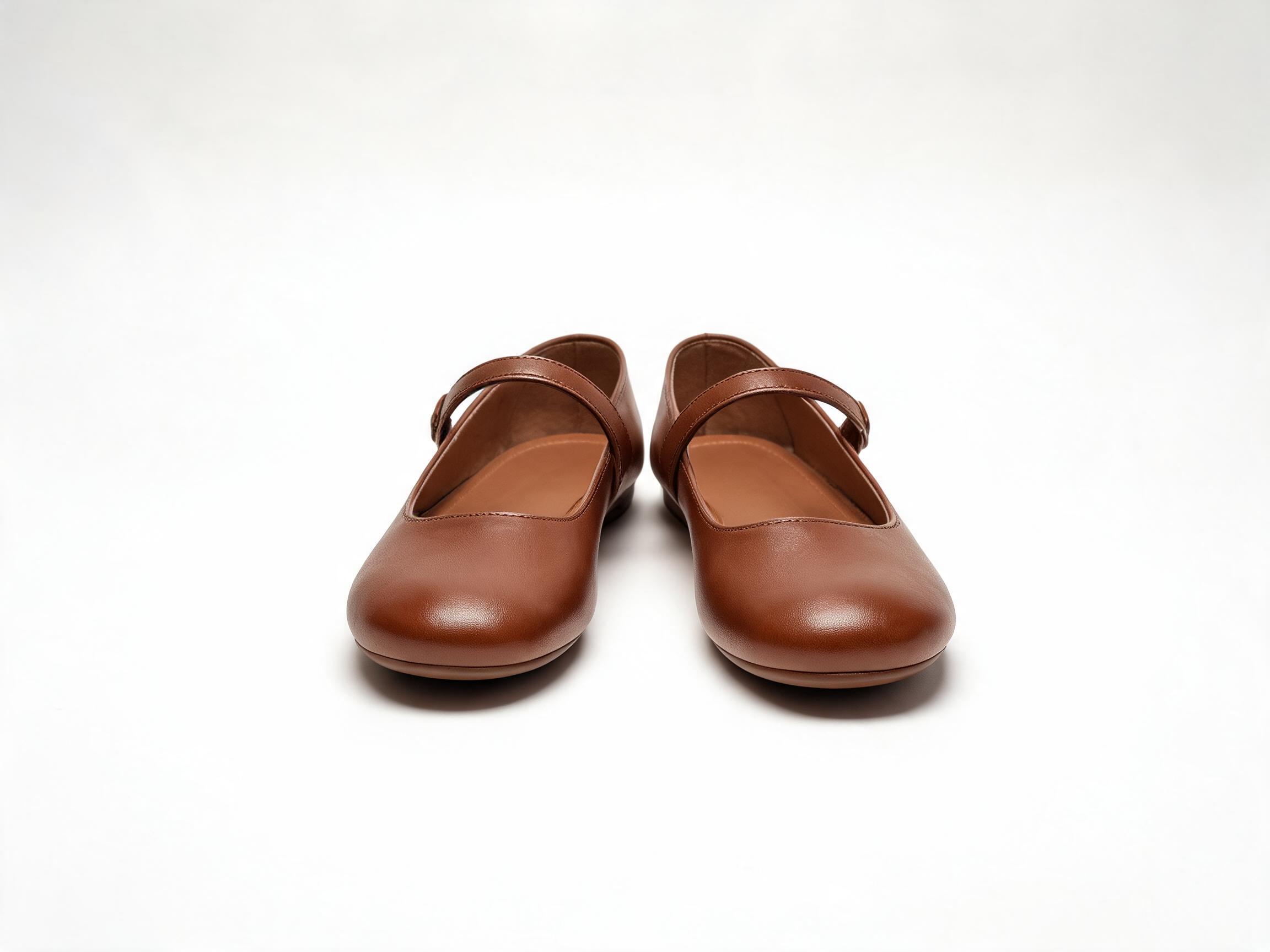
A Mary Jane strap gives the wearer an adjustment the elastic cannot offer. That adjustability is the reason to include a Mary Jane in the range: it serves customers who find slip-on flats insecure, and it gives the range a second fit story. The Brown Mary Jane Flats use an adjustable instep strap over a leather upper with a padded insole. The bulk risk is mechanical rather than visual: strap length, strap position and buckle or closure attachment all need to be verified on the approved sample and then checked in production. A strap that sits a few millimeters off changes where the shoe grips the foot.
Plain slip-on
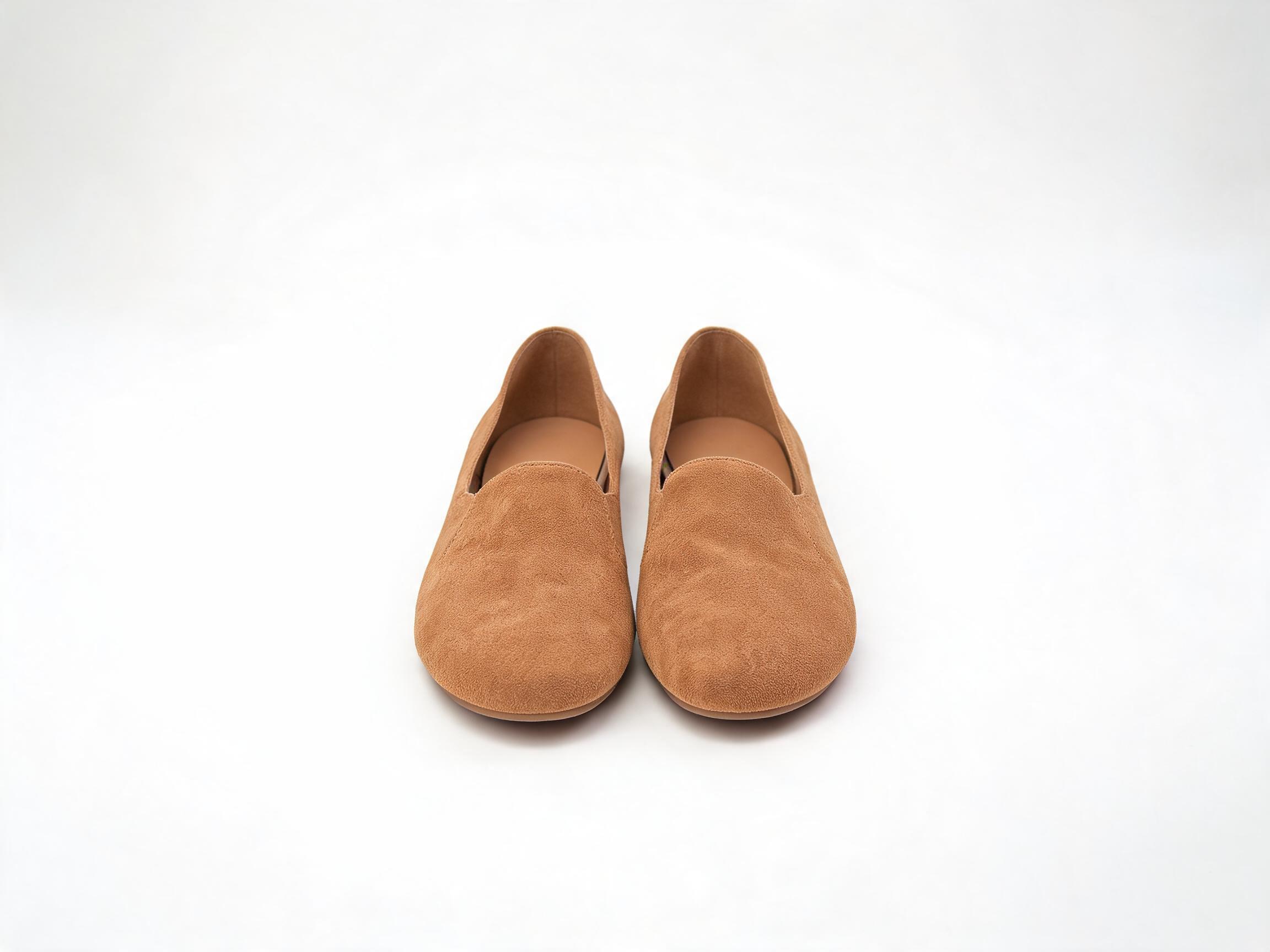
A plain slip-on with no elastic and no strap relies entirely on pattern and upper softness to stay on. Suede helps here because it has more surface grip against the foot than a polished leather. The Tan Suede Slip-On Flats pair a soft suede upper and padded insole with a flexible outsole. The construction is simple, which makes it a strong volume item — but it is also the style most likely to be returned by customers who need retention. Do not position a plain slip-on as the "safe" choice for every foot; position it as the easy, soft, packable one.
Sole construction: flexible thin, jute, and rubber
Buyers often treat the outsole as a cost line. It is also a durability and positioning line. Three options cover most flat programs.
Flexible thin soles follow the foot and suit soft, casual constructions. They are the natural partner for a suede slip-on or a soft ballet. The buyer question is not whether they flex — it is what happens at the toe and at the seam between upper and sole after repeated wear. Ask for the bonding and attachment method and how it is inspected, because a thin sole is only as good as the join above it.
Jute espadrille soles bring a seasonal, warm-weather identity that leather flats cannot match. A beige espadrille flat built on a canvas upper over a jute sole with a padded insole is the standard expression of this construction. Jute is a visible material, so it carries its own quality expectations: the rope should read evenly around the edge, and the join between upper and sole needs consistent stitching or attachment. Espadrilles are also the style most exposed to the season. They earn a place in spring and summer assortments and are a poor use of budget in a winter-heavy buy.
Rubber bottoms answer the durability question most directly. They suit markets and customers who need grip and abrasion resistance more than a soft, glove-like feel. If your range is weighted toward wet climates or mixed indoor-outdoor wear, a rubber-soled flat is a legitimate structural choice, not a downgrade. The trade-off is weight and flexibility; decide which matters more for the customer you are selling to.
Suede versus smooth leather: color, batch control, and what bulk exposes
Two flats in the same color family can behave very differently in production depending on the upper material. This is one of the most under-planned parts of a flat range.
Smooth and polished leather shows surface variation clearly. Color differences between panels, or between the left and right shoe of a pair, are visible under store lighting. Consistent dyeing and cutting from paired material matter more than usual. In our production, upper panels are cut from paired leather to control left-right and within-batch color variation — a control that becomes essential when a range includes nude and light neutrals, where any shift is obvious.
Suede is more forgiving on small tonal variation but less forgiving on handling. Nap direction changes how the surface reads, so panels cut in different directions can look like different shades even from the same dye lot. Suede also shows marks and handling during packing and transit more readily. A tan suede slip-on can look consistent in a sample photo and reveal panel-to-panel differences on the shelf if nap direction is not controlled in cutting.
For buyers, the practical rule is: set the color reference by material, not by a single lab dip for the whole range. If you are developing a nude leather ballet and a tan suede slip-on, treat them as two color programs. Pantone matching can be arranged, but the same Pantone number will not read identically on smooth leather and on suede. Approve each material on its own reference, and ask to see the material pair — left and right, cut and assembled — before signing off.
One range, one grading: keeping sizes consistent across structures
This is where mixed-construction ranges most often break. Each style is developed separately, each sample is approved separately, and the size ladder drifts. A customer who wears one size in the ballet orders the same size in the Mary Jane and finds it tight. Multiply that across four styles and a size run, and the exchange cost lands on the retailer.
The fix is procedural. Establish the grading standard for the range before the individual styles are approved, then hold every construction to it. Toe shape and opening type can change the fit feel, but they should not change the underlying size designation for the same nominal size. If a pointed toe genuinely requires a different fit approach, that has to be a documented decision, not an accident of sampling.
Half sizes and width options are a further decision. They can be arranged after the sample shoe is confirmed, which lets a buyer test the core size run first and then extend into half sizes or widths where the market needs them. That sequencing keeps the initial commitment focused and gives you room to adjust once you see the real size distribution.
During production, a three-stage inspection routine — incoming materials, in-line, and finished goods — supports that consistency. The finished-goods check includes adhesion and cleanliness, plus sampling of size and packing accuracy. Inspection reports can be provided, and third-party inspection is welcome. For a multi-structure range, size and packing accuracy checks are not administrative; they are the last line of defense against mixed-size cartons reaching the retailer.
Comparison: how the four structures differ for a wholesale range
| Structure | Opening type | Typical shelf position | Where bulk most often goes wrong |
|---|---|---|---|
| Round-toe ballet | Elasticized topline | Core everyday; near-neutral color anchor | Elastic tension consistency; left-right leather color matching on light neutrals |
| Plain slip-on | No elastic, no strap | Casual, soft, packable volume item | Retention complaints from customers needing grip; suede nap direction and handling marks |
| Mary Jane | Adjustable instep strap | Second fit story; customers who want security | Strap length, position and attachment; closure durability |
| Espadrille | Slip-on over jute sole | Spring and summer seasonal statement | Jute edge evenness; upper-to-sole join consistency |
| Pointed-toe flat | Slip-on or elasticized | Office and dress segment | Fit communication: tighter toe box than round shapes; size advice must be explicit |
Building the range: a practical sequence
Start with the customer, not the catalog. If your market is mostly casual and warm-weather, a suede slip-on and an espadrille may carry the range, with a ballet as the neutral anchor. If your market includes office and occasion wear, the pointed-toe flat and the Mary Jane earn their space. A range that tries to serve every occasion usually ends up with four styles that all look like the ballet.
Then lock the fit plan. Decide the grading standard, decide whether half sizes and widths are in scope for the first buy, and confirm that every structure is built to the same size ladder. Confirm the round and pointed shoes are clearly differentiated in your product copy, because the fit difference is real and the customer needs to know it before ordering.
Finally, control the materials. Approve color on each material separately, ask to see paired panels, and confirm the outsole choice against the customer's climate and wear pattern. For custom work, we can produce to technical packs, drawings or reference images, match Pantone colors, add brand marking on the insole, adjust outsole material, and supply private-label packaging. OEM and ODM programs are available for buyers who want to develop a range rather than select from stock.
FAQ
- Can one flat range include both round and pointed toes?
- Yes, and many do. The pointed style should be positioned as a separate occasion item, and its tighter toe box should be communicated clearly. Build both on the same size grading so a customer who knows her size in the ballet can order the pointed style with confidence.
- Which construction is the safest first item for a new flat program?
- A round-toe ballet with an elasticized topline is the most forgiving starting point because it fits a broad range of feet and suits near-neutral colors. It also gives you a fit baseline against which the other constructions can be compared.
- Can suede and smooth leather be matched to the same color reference?
- They can be developed to the same Pantone target, but the materials will not read identically. Approve each material on its own reference and review a paired left-right sample before bulk. Cutting from paired leather helps control visible variation.
- Are half sizes and widths available?
- Half sizes and widths can be arranged after the sample shoe is confirmed. That lets you test the core size run first and extend once the market's size distribution is clear.
If you are planning a ladies flat shoe range for the coming season, send the construction mix you are considering and the market you sell into. We can review fit, grading and material implications against the styles we produce, and recommend where the range may be duplicating itself.