When a buyer places men's dress shoes, women's leather casuals and boots with one leather factory, only part of that range shares tooling. This decision guide maps what is shared and what is dedicated across leather sourcing, lining, lasts, sole attachment and QC, and gives you a table to carry into the factory meeting.
A range that looks unified in the line sheet is rarely one production flow. When you place men's dress shoes, women's leather casuals and boots with a single leather factory, some elements genuinely share tooling and components; others force dedicated lasts, patterns and inspection routines. The split is predictable if you map it before sampling rather than after.
- Men's dress, women's casual and boot styles typically share leather sourcing channels, lining and footbed material families, and some finishing stations — but almost never share lasts, size grading or final QC standards.
- Two styles that look close can run on different lines because of last shape, heel construction and sole attachment method, not because the factory is disorganised.
- The share/dedicate map below is the document to bring to a factory meeting; write its conclusions into the tech pack before sampling starts.
Why one range becomes three production flows
A leather shoe factory organises production around tooling and construction, not around a buyer's seasonal collection. Three styles in one range can share a leather supplier, a stitching floor and a packing line, yet diverge completely at the last, the pattern, the sole attachment and the final inspection bench. That divergence is normal. The problem is discovering it after sampling, when the buyer's "one factory" plan collides with three separate flows and three sets of sample comments.
The map below separates what is usually shared across a range from what is almost always dedicated to a style or family. Treat it as a working template: confirm each line with the factory, because construction choices differ by order.
The share/dedicate map
Leather sourcing and shade matching
Leather sourcing channels and multi-stage inspection are the most shareable part of a range. A factory buying smooth black leather for dress shoes, a Chelsea boot and a loafer can consolidate at the hide or lot level, which helps colour consistency across a black capsule. Warm brown leather for women's ankle boots and durable brown leather for men's work boots still come through the same channels but are different materials with different shade tolerances and different finishing requirements.
Shade matching is shared only where the same material family is used. Black upper leather across a men's cap-toe Oxford and a women's black leather loafer can be compared against a single shade card. A brown women's ankle boot with side zipper and a men's work boot with reinforced toe and lug outsole sit on different material specs, so their shade approval is a separate task. Plan for one or two shade approvals per material family, not one per range.
Lining and footbed specs
Lining and footbed material families are commonly shared, but the specification is not. A leather lining and cushioned leather footbed can be standardised across men's dress and women's casual styles, which simplifies purchasing and reduces the number of components to inspect. Boots may use the same family of lining but with different panel shapes and thicknesses tied to the shaft and ankle construction.
What is dedicated here is the pattern of every lining and footbed panel. The material may be shared; the cut pieces are not. If you write a single lining spec for the whole range, expect the factory to ask which panel shapes apply to which style — and expect sampling to stall if that answer is missing.
Lasts and size grading
This is where most "one factory" plans break. Lasts are dedicated by default. A men's dress last, a women's casual last and a boot last are separate tools with separate size curves. Even within one gender, a dress shoe last and a boot last differ in toe shape, instep and heel seat.
Size grading follows the last. The men's Oxford, for example, is listed as EU 39–45 with a US 6.5–12 conversion; the women's loafer and women's ankle boot grade on their own women's scale. A men's work boot grades separately again. Do not assume a single measurement chart covers the range. The honest position for a buyer is to treat lasts and grading as dedicated line items and to ask the factory, at the quotation stage, how many last sets the range will require. Any figure for last development or grading time must be confirmed per order, not assumed.
Sole attachment and inspection points
Sole attachment is a construction question, and it is the second most common reason two similar-looking styles run on different lines. A men's dress shoe with closed lacing and a stitched leather/rubber sole sits on a dress bottoming flow. A men's black Chelsea boot with elastic side panels is an ankle boot with its own bottoming and shaft handling. A women's loafer with a low block heel and a women's ankle boot with a 6 cm block heel involve heel attachment steps that a flat dress shoe does not.
Inspection points multiply with construction. Stitched sole edges, heel attachment, elastic panel insertion and side zipper setting are separate checkpoints. Share the inspection standard across the range if you like — but dedicate the checkpoint list per construction. A boot with a lug outsole and reinforced toe needs inspection steps that a dress Oxford does not, and squeezing both into one QC sheet hides the difference.
Style-to-line assignment table
The table below is the one to carry into the factory meeting. It assigns typical line logic to the styles in a mixed range; confirm the actual assignment with the factory, since construction and tooling decisions are made per order.
| Style | Typical line | Shared elements | Dedicated elements |
|---|---|---|---|
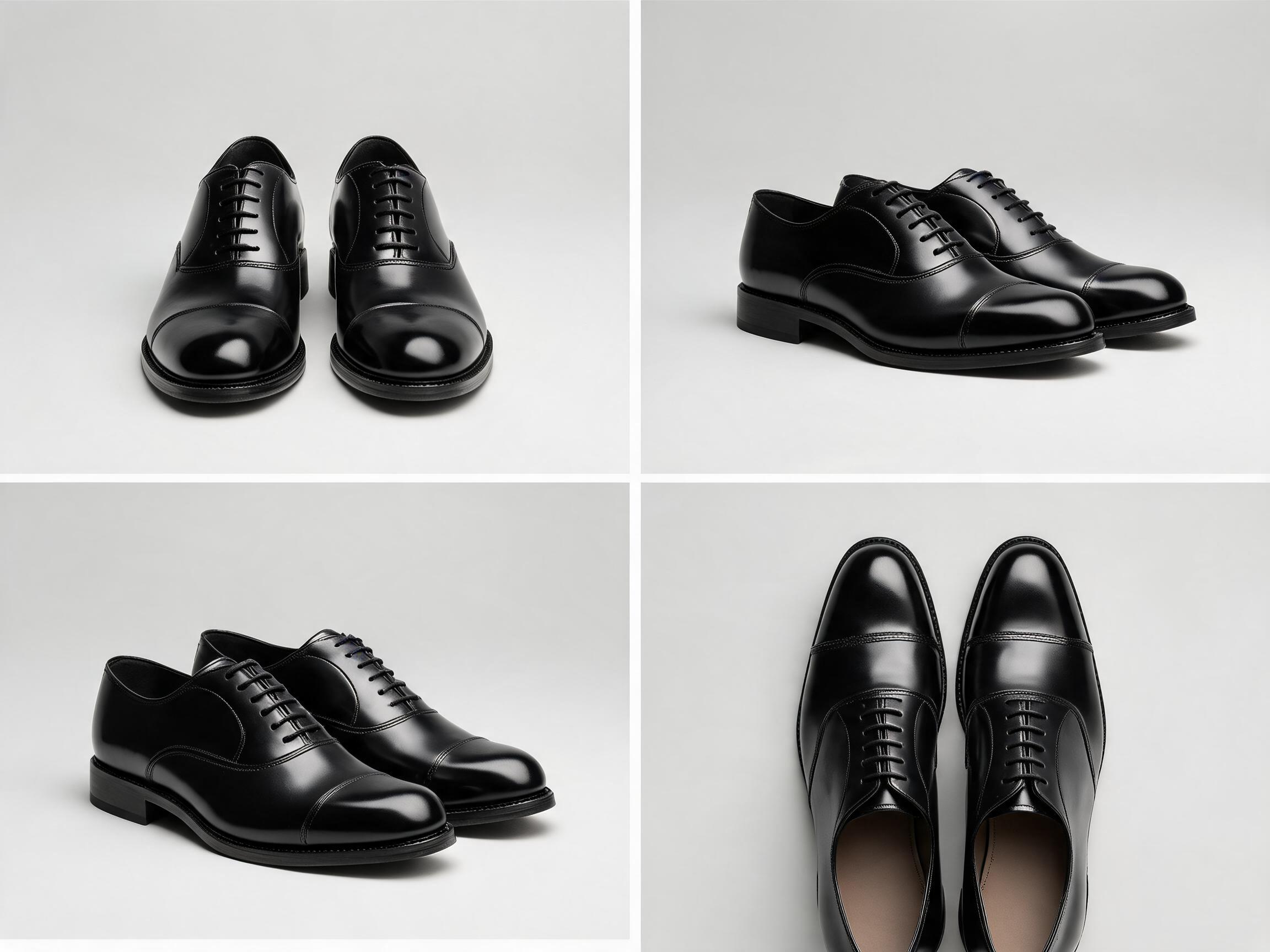
| Black cap-toe Oxford (men's dress) | Men's dress line | Black upper leather sourcing; leather lining and cushioned footbed family; finishing | Dress last and men's size grading; cap-toe pattern; closed lacing; stitched sole attachment and edge inspection |
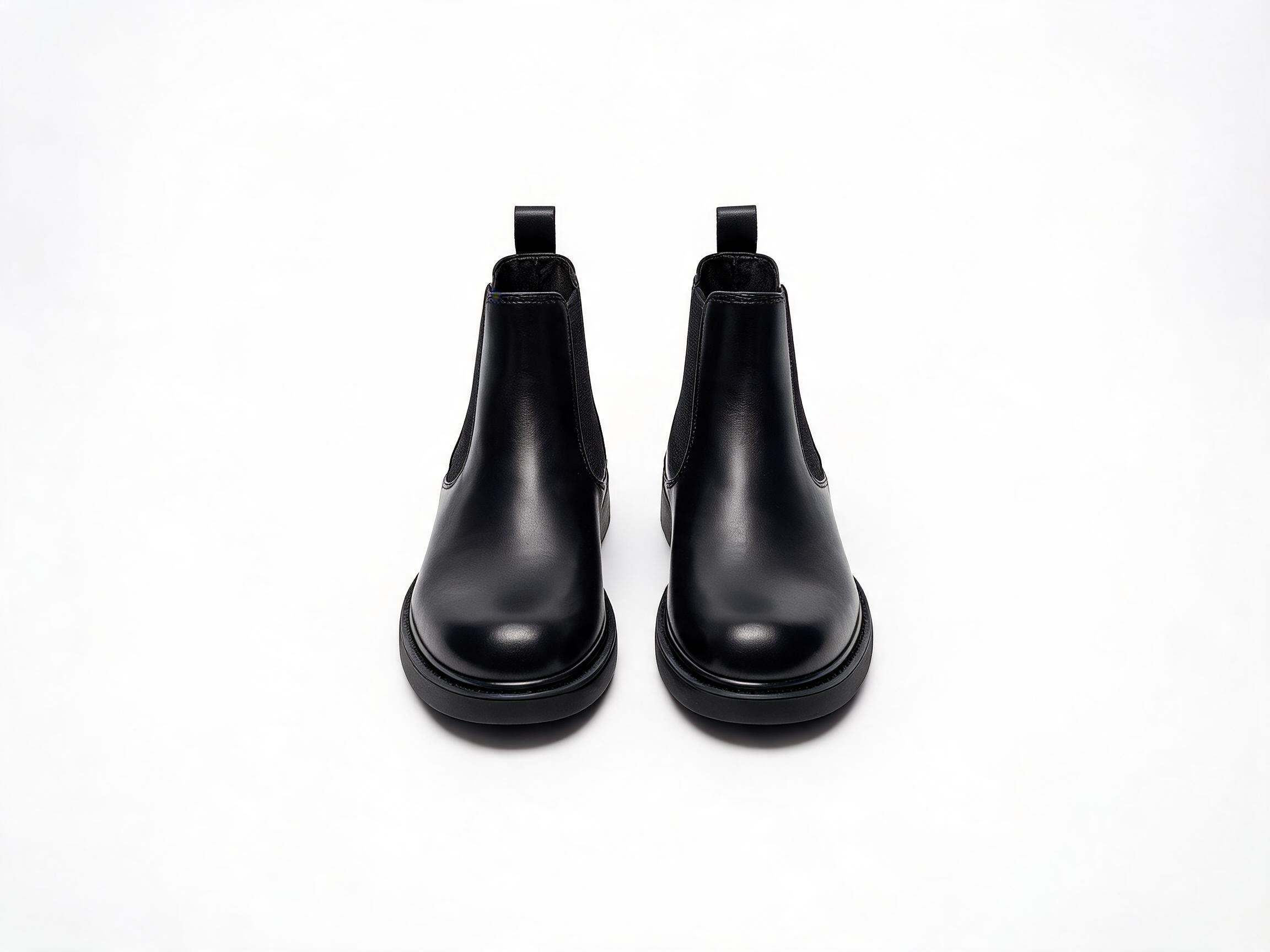
| Black Chelsea boot (men's) | Men's boot line | Black upper leather sourcing; lining family; some finishing stations | Boot last; shaft pattern; elastic side panel insertion; pull tab; boot bottoming and inspection |
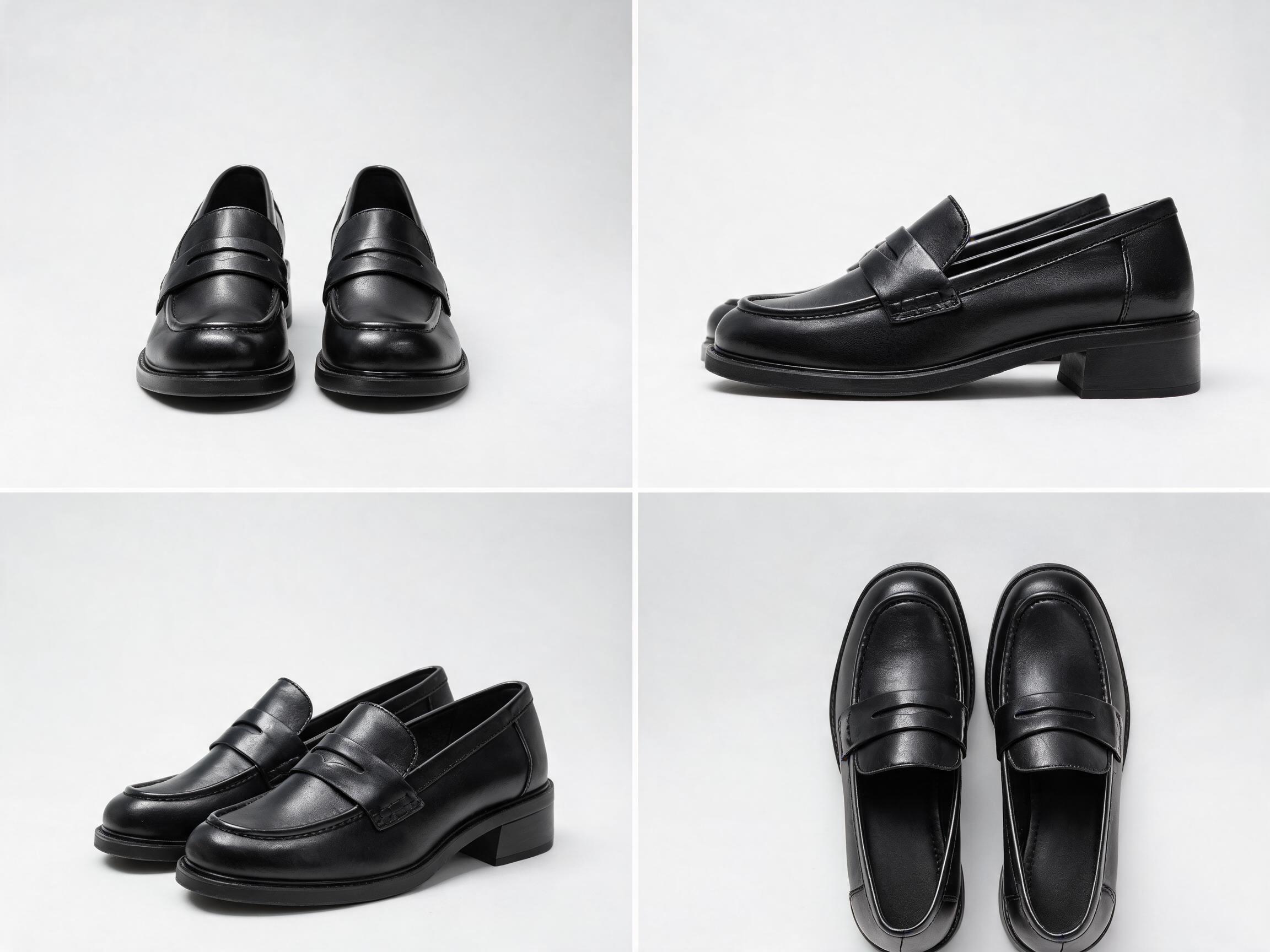
| Black leather loafers (women's) | Women's casual line | Black upper leather shade matching; lining family | Women's casual last and grading; penny-strap pattern; low block heel attachment; slip-on construction checks |
| Brown ankle boots (women's) | Women's boot line | Brown leather sourcing channel; lining family | Women's boot last and grading; side zipper setting; 6 cm block heel attachment; separate shade approval |
| Brown work boots (men's) | Men's boot line | Brown leather sourcing channel; lining family where specified | Work boot last and grading; reinforced toe; lug outsole attachment; dedicated inspection for toe and outsole |
Why two close-looking styles sit on different lines
Buyers often ask why a men's dress shoe and a men's Chelsea boot, both black leather, cannot simply run together. The answer is tooling and construction, not aesthetics. The last differs, the pattern differs, the bottoming differs, and the inspection points differ. Sharing a leather colour and a lining family does not make them the same product to make.
The same logic applies within women's styles. A loafer and an ankle boot may share brown or black leather sourcing, but the heel attachment and shaft construction put them on separate flows. When a factory quotes a mixed range as if it were a single line, ask which lasts, patterns and bottoming flows are involved. The answer tells you whether the quote reflects the real production plan.
What to document per line in the tech pack
The tech pack is where the share/dedicate map becomes enforceable. For each line in the range, document the following before sampling begins:
- Material family and shade reference per style, with a note on which styles may share a shade approval and which need their own.
- Lining and footbed specification by material and by panel shape, so the factory knows what is shared and what is cut per style.
- Last identification per style family, plus the size range and grading scale that applies — for example, the men's Oxford's listed EU 39–45 and US 6.5–12 conversion, and the separate women's grading.
- Sole attachment and heel specification per style, including any stitched sole edge, block heel height such as the 6 cm on the women's ankle boot, or lug outsole.
- Inspection checkpoints listed per construction, not per range.
Where a figure would normally appear — sampling rounds, last development time, order quantities per line — state the decision principle and mark the figure for confirmation per order. A tech pack that leaves these open invites late surprises.
Questions that expose whether a factory really runs these lines
Ask these in the factory meeting. The answers show whether the share/dedicate map is understood or whether the range will be quietly split after sampling.
- How many distinct lasts will this range require, and which styles share one?
- Which styles share a leather shade approval, and which need separate approvals?
- Which sole attachment methods are involved, and which inspection checkpoints are unique to each?
- Will these styles run on the same line or different lines, and at what stage do they separate?
- How will sample comments be tracked per line so feedback on one style is not applied to another?
FAQ
Can one factory really make a mixed men's and women's leather range?
Yes, provided the buyer and factory agree on the share/dedicate map up front. The range will use shared sourcing and some shared components, but dedicated lasts, patterns and grading. A factory with in-house design and pattern teams can manage that split; the risk is planning the range as a single flow.
Do dress shoes and boots ever share a last?
Rarely. Last shape, instep and heel seat differ between dress and boot constructions. Treat every boot style as a dedicated last unless the factory confirms otherwise for a specific order.
What is the most common cause of late sampling surprises in a mixed range?
Assuming a single size chart, a single shade approval or a single QC sheet covers the whole range. Each of those is usually dedicated by style family, and the gap surfaces when samples come back with comments that do not transfer between lines.
Should the tech pack specify line assignment?
It should specify the tooling, materials and inspection points per line, and note which styles may share them. The factory decides the physical line schedule; the tech pack defines what must be true for each style.
How do we keep one range consistent if it runs on several lines?
Standardise what is genuinely shareable — material families, lining specifications where appropriate, and a common finishing standard — and keep lasts, patterns, sole attachment and inspection checkpoints dedicated. Consistency comes from the shared elements, not from forcing every style through one flow.
Aurevia's capability for mixed leather ranges
Aurevia Footwear Co., Ltd. is a B2B manufacturer and exporter of high-end footwear based in Quanzhou, China, established in 2011, with a 260-person team and in-house design and pattern teams. The company exports to Europe, North America and the Middle East, and supports OEM/ODM and private-label work including logo, packaging and size grading. Its product range includes men's dress shoes, women's leather casuals and men's and women's boots — the kind of mixed range that requires a clear share/dedicate plan. Leather sourcing runs through stable channels with multi-stage inspection, and pattern development can start from sketches, references or tech packs. For buyers planning a range that spans dress, casual and boot lines, the practical next step is to bring the assignment table above to the first factory meeting and confirm each line, last and inspection point before sampling begins.
Tooling, sampling and order figures are not stated in this article because they must be confirmed per order with the factory.