
A practical range-building guide for wholesale buyers sourcing men's shoes in bulk: anchor categories, market-oriented range splits, factory verification steps, and bulk QC checkpoints tied to a three-stage inspection process.
Building a men's footwear range with a China factory is not about picking individual styles from a catalog. Wholesale buyers who get it right start with a category anchor, split the range for the markets they actually sell into, verify the factory on specifics, and lock QC checkpoints into production before volume is committed. This guide walks through that sequence, using examples from a real manufacturer—Aurevia Footwear Co., Ltd., based in Quanzhou, China, established in 2011 with about 260 staff—so you can apply the same logic to your supplier search.
1. Anchor the range on three categories
A balanced men's wholesale range typically rests on three footwear categories: dress, boots, and loafers or casual. Each serves a different buying occasion, and together they cover the bulk of what retailers and distributors order in men's leather shoes.
Dress shoes
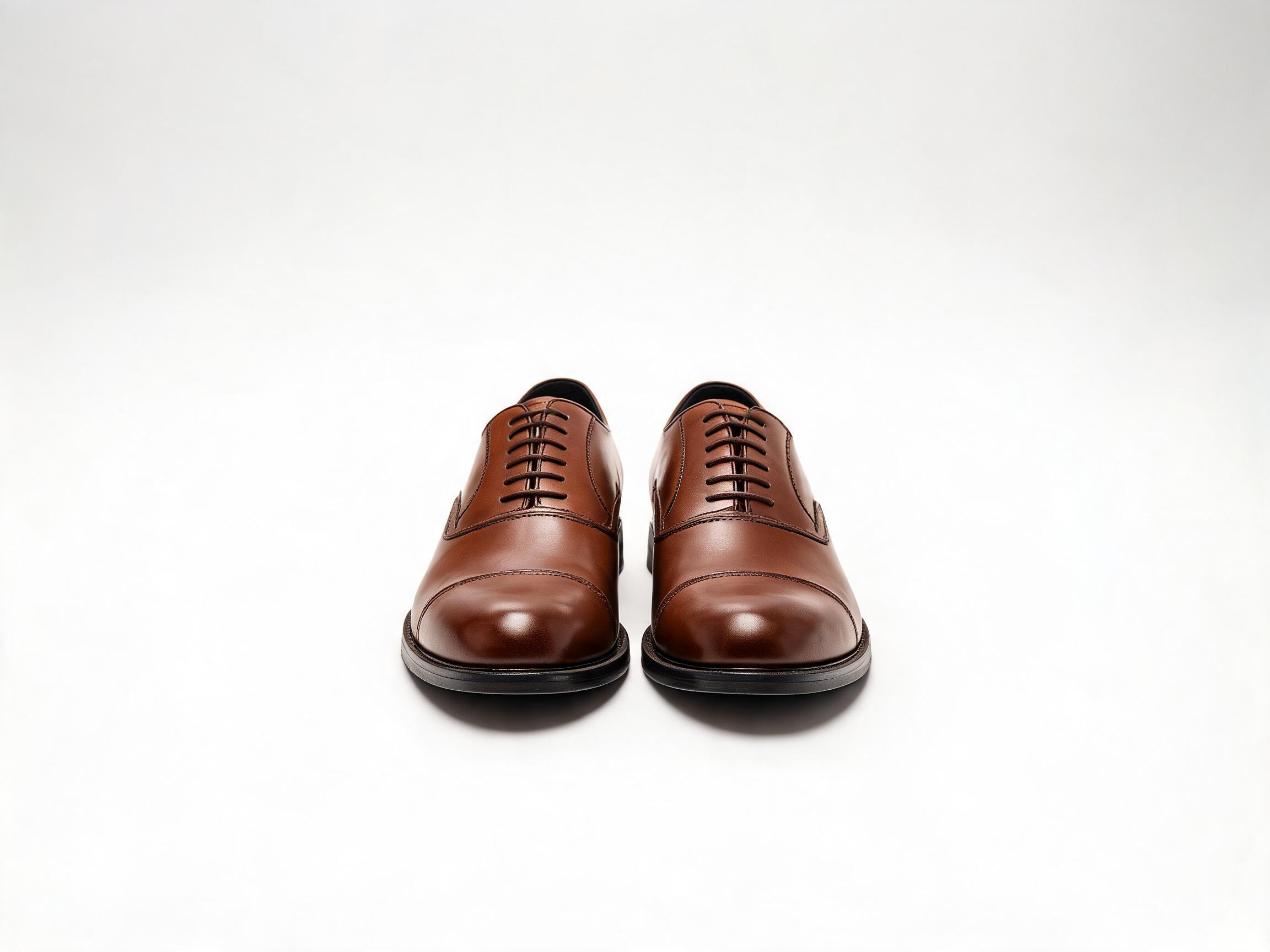
Dress shoes are the anchor for formal and business ranges. A versatile derby is a practical starting point because open lacing fits a wider range of foot shapes and is easier to wear across occasions. For example, the Brown Derby Dress Shoes use a polished full-grain leather upper, leather lining, cushioned footbed, and a stitched sole with rubber insert, available in EU sizes 39–45. That size range already covers most adult men in Europe and North America, which simplifies stock planning.
Boots
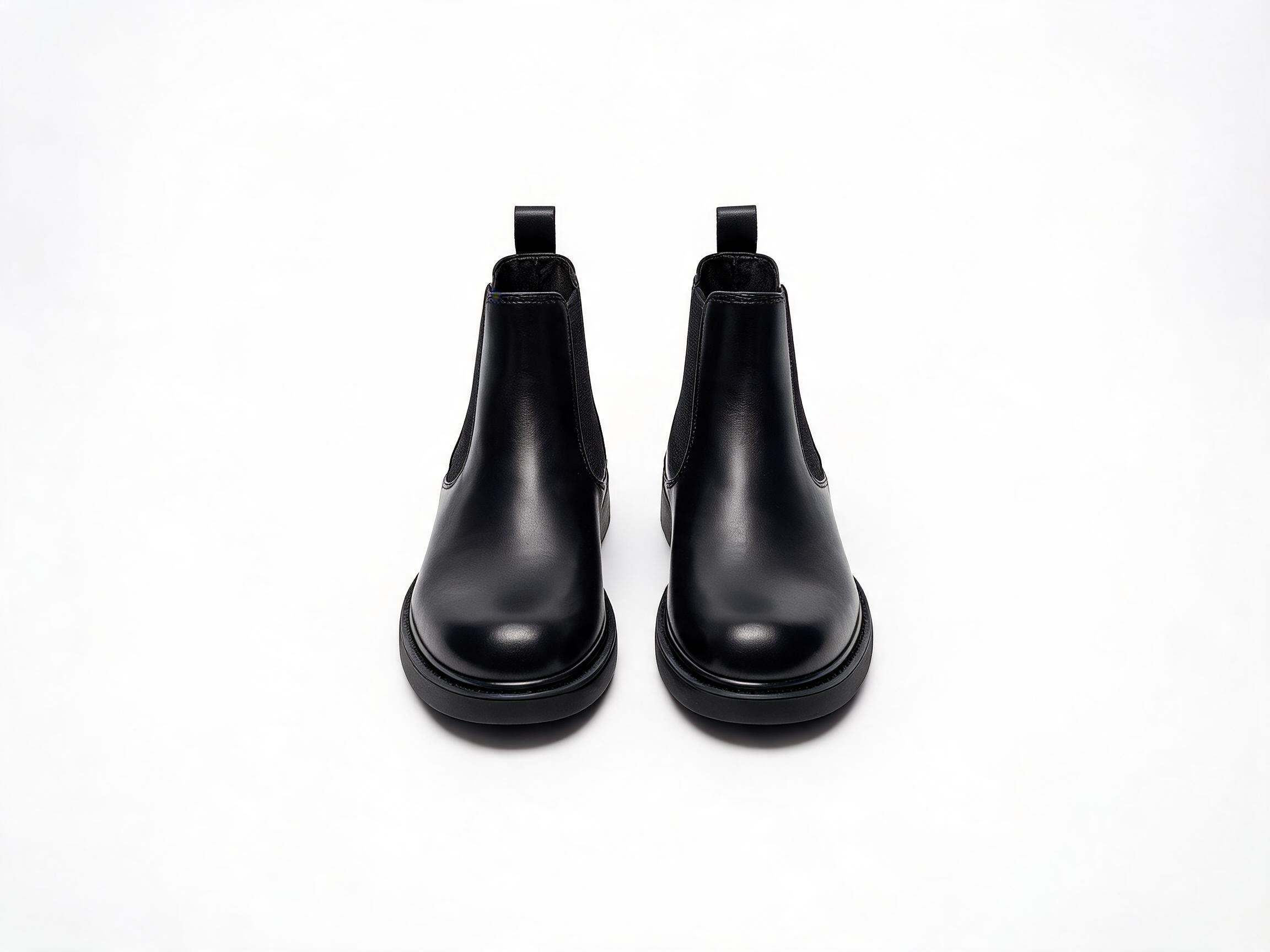
Boots extend the range into autumn and winter seasons and often carry higher perceived value. The Black Chelsea Boot Shoes with elastic side panels are a classic example: easy to wear, broad market appeal, and a natural companion to a dress shoe offering. If you order boots, confirm with the supplier which leathers and linings are used, and whether the sole construction matches your target market's expectations for durability.
Loafers and business-casual
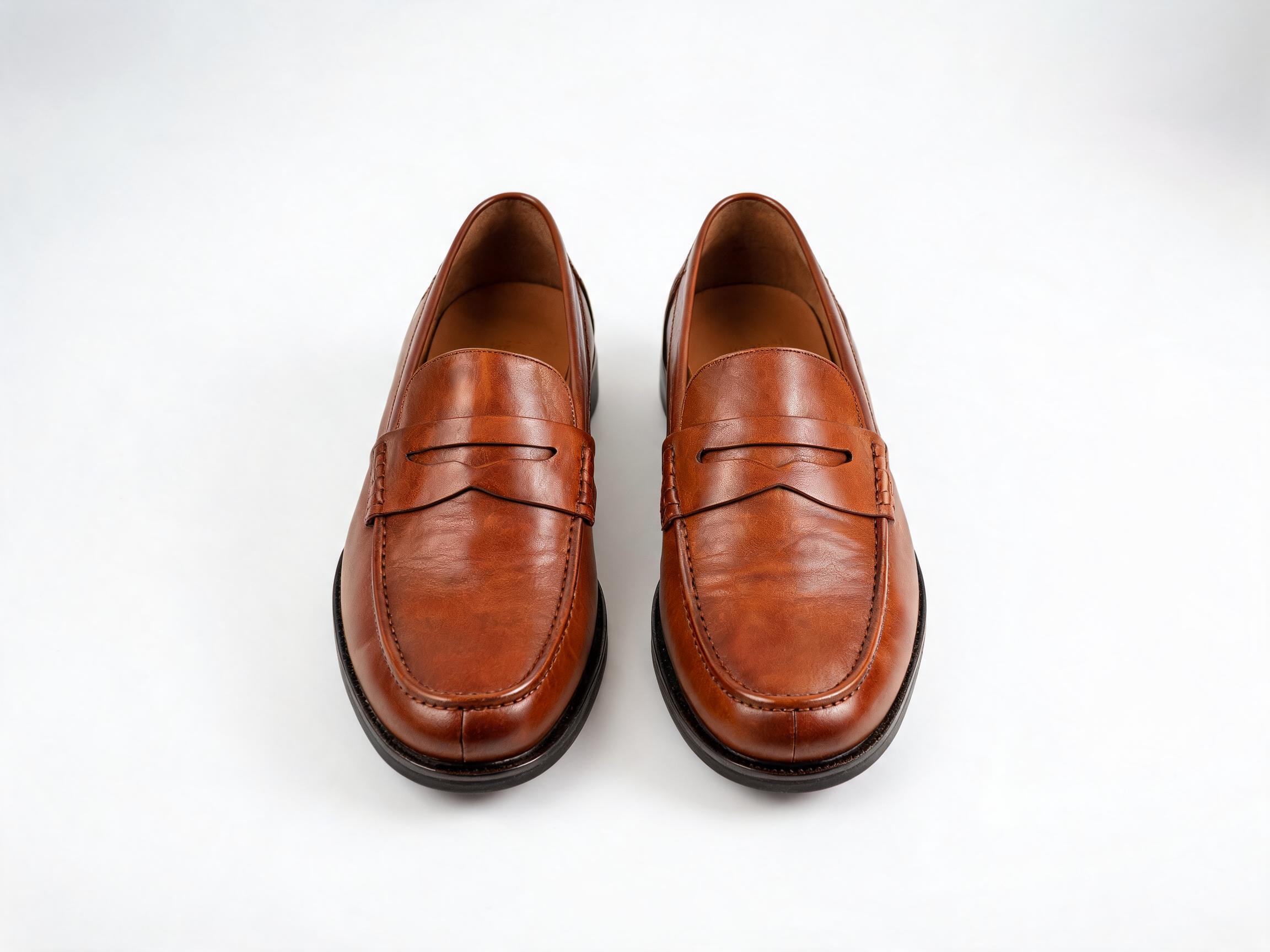
Loafers and business-casual styles fill the gap between formal and casual, and they often sell well in markets where dress codes are relaxed. The Cognac Penny Loafer Shoes with hand-stitched detail are a good example of a business-casual profile that works across seasons. When building your range, treat loafers as the style that broadens your offer without competing directly with your dress anchor.
What to confirm with the supplier: for each anchor category, ask for the exact leather type, lining material, sole construction, and available size range. A supplier that can document these details in writing is easier to hold to spec later.
2. Group the range per target market
Europe, North America, and the Middle East do not buy the same men's shoes. Preferences for formality, color, and fit vary, and a range that sells in one region may sit on shelves in another. The table below summarizes common differences buyers should plan for, but treat it as a starting point: confirm local preferences with your retail partners and check size charts before production.
| Market | Typical preference notes | What to confirm with the factory |
|---|---|---|
| Europe | Strong demand for classic dress shoes and Chelsea boots; narrower fits and refined finishes often preferred; seasonal color palettes matter. | EU size chart compliance, leather finish and color consistency, availability of narrow widths if required. |
| North America | Broader casual and business-casual mix; larger average foot sizes; comfort features such as cushioned footbeds are valued. | US-to-EU size conversion, footbed construction, availability of extended sizes, packaging and labeling requirements. |
| Middle East | Formal and semi-formal styles with darker colors; breathable linings and durable soles for hot climates; larger sizes common. | Leather breathability, lining materials, sole heat resistance, size range coverage, and any regional labeling needs. |
Once you have a market split, allocate your anchor styles accordingly: a European range might lean on derbies and Chelsea boots, while a North American range could give more space to loafers and casual profiles. The key is to confirm size charts and fit expectations with the factory before production starts, because size discrepancies are one of the most common reasons a wholesale order fails at retail.
3. Verify the factory before committing volume
Not every trading company is a factory, and not every factory is set up for the category mix you need. Aurevia Footwear Co., Ltd. is a B2B manufacturer and exporter of high-end footwear and fashion accessories, with in-house design and sampling, OEM/ODM and private-label support, and exports mainly to Europe, North America, and the Middle East. When you evaluate a similar supplier, request the following:
- Production lines and process: ask for a walkthrough (virtual or in-person) of the stitching, lasting, and finishing areas. Confirm which steps are done in-house versus outsourced.
- Leather sourcing: ask where the leather comes from, what tannery standards apply, and whether you can see material certificates or test reports for the specific leather used in your styles.
- In-house sampling: a supplier with its own sampling team can turn around samples faster and control quality before bulk. Aurevia, for example, can ship existing samples within 3–5 days and typically prepares customized samples in about 7–12 days after details are confirmed.
- Trade terms and communication: confirm whether the supplier works on EXW, FOB, or CIF terms, and how quickly after-sales questions are answered. Aurevia's after-sales team responds within 48 hours, and a 6-month quality warranty covering manufacturing defects is stated on product pages.
Ask for references or buyer contacts only if you need them; many factories will not share client names, and that is normal. More important is a clear written specification and a sample you have approved.
4. Set bulk QC checkpoints tied to a three-stage inspection
Quality control should not be a final inspection alone. A three-stage inspection process—incoming material checks, in-line construction checks during stitching and lasting, and final finished-shoe inspection—catches problems where they occur. Here is how to tie each stage to a buyer checkpoint:
| Stage | What happens | Buyer checkpoint |
|---|---|---|
| Incoming material | Leather, lining, soles, and components are checked against approved samples. | Confirm the inspection report covers color, thickness, and defects; request photos if you cannot visit. |
| In-line construction | Stitching and lasting are monitored during production. | Ask for in-line checks on stitch density, alignment, and lasting tension; spot-check a few pairs if you visit. |
| Final inspection | Finished shoes are checked for appearance, sizing, and function. | Request forefoot flex testing, color-fastness, and sole-adhesion checks on random pairs; inspection reports can be shared on request, and third-party inspection is welcome. |
Aurevia's QC includes these three stages and the specific checks above. When you work with any factory, agree in writing which tests will be performed, on how many pairs, and what the acceptance criteria are. If you use a third-party inspection company, confirm the factory will cooperate with access and documentation.
5. A practical checklist before committing volume
Before you place a bulk order, run through this checklist with your supplier:
- Approve a production sample for each style, including leather, lining, sole, and color.
- Confirm the size chart and fit for each target market; request measurement specs if needed.
- Verify the factory's production capacity for your mix and season.
- Agree on QC stages, tests, and reporting format.
- Confirm the minimum order quantity and production lead time for your target styles with the supplier before ordering.
- Clarify trade terms (EXW, FOB, CIF) and Incoterms version.
- Review the warranty terms and after-sales response time.
- Check labeling and packaging requirements for each destination market.
This list is not exhaustive, but it covers the points that most often cause delays or disputes. A supplier that answers these clearly and in writing is easier to work with long-term.
FAQ
- What categories should a men's wholesale footwear range include?
- A balanced range typically includes dress shoes (such as a versatile derby), boots (such as Chelsea boots), and loafers or business-casual styles. This mix covers formal, seasonal, and smart-casual demand.
- How do I verify a China footwear factory before ordering?
- Request a production walkthrough, ask about leather sourcing and in-house sampling, confirm trade terms and after-sales response times, and review QC procedures. A factory that provides written specifications and welcomes third-party inspection is generally a safer partner.
- What quality checks should be done on bulk men's shoes?
- Use a three-stage inspection: incoming material checks, in-line construction checks during stitching and lasting, and final finished-shoe inspection including forefoot flex, color-fastness, and sole-adhesion tests on random pairs.
- How long does sampling take?
- Existing samples can ship within 3–5 days; customized samples are typically ready in about 7–12 days after details are confirmed. Confirm current timelines with the supplier when you inquire.
Building a men's footwear wholesale range with a China factory comes down to sequence: anchor your categories, split the range by market, verify the factory on specifics, and lock QC checkpoints into production. Start with a sample conversation—most factories, including Aurevia Footwear Co., Ltd., will discuss styles, materials, and terms before you commit to volume.