
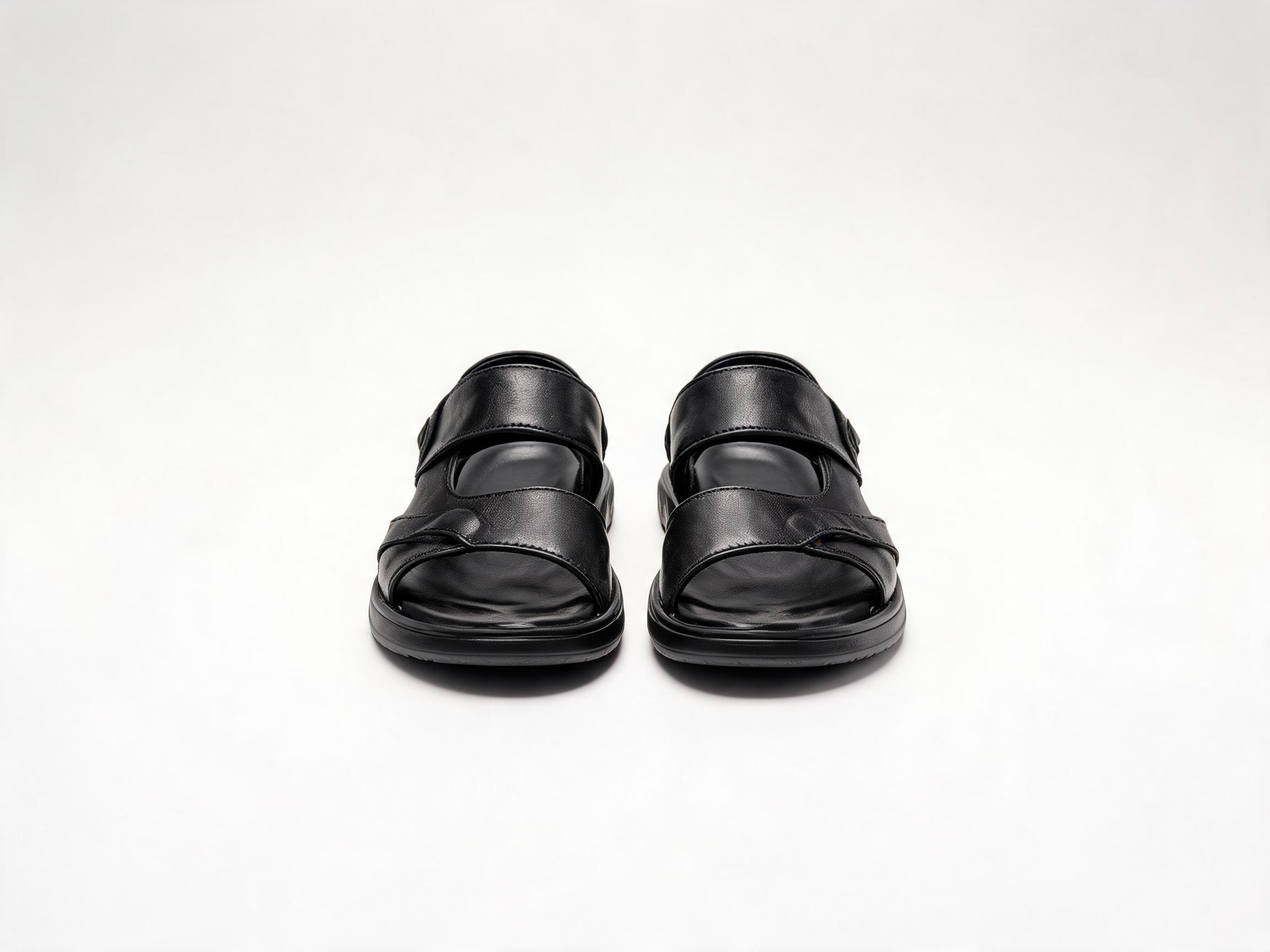
A practical season-planning guide for wholesale buyers sourcing summer sandals. Learn how to work backward from your selling season, weigh leather against fabric uppers, plan color assortments, and structure a small trial order. Includes a product anchor on black leather casual sandals and factory facts from a Quanzhou-based OEM/ODM supplier.
Season Planning Guide
Buyers sourcing wholesale summer sandals usually start with the same question: when do I need to place orders so stock lands before my selling season? The answer depends on your own calendar, not a fixed factory date. This guide walks through working backward from your season, choosing between leather and fabric uppers, planning color assortments, and structuring a small trial order to test a new style before committing to volume.
Key takeaways
- Start with your selling season and subtract production lead time (25–35 days for the black leather casual sandal) plus transit and customs clearance.
- Leather uppers offer a premium look and adjustability; fabric uppers can be lighter and may suit lower price points. The right mix depends on your customer and climate.
- Color planning should reflect your market's preferences and your ability to reorder; a small trial order (MOQ 100 pairs per color for the anchor style) lets you test before scaling.
- Confirm current MOQ and lead time with the sales team before ordering.
Contents
Working backward from your selling season
Factory lead time is only one part of the timeline. To avoid air freight or missed sales, map your own season backward. For example, if your retail season begins in May, you need goods in your warehouse by April. That means shipment must leave the factory in March. With a 25–35 day production lead time for the black leather casual sandal, your order should be confirmed by late January or early February. Add buffer for sample approval, material sourcing, and potential port congestion.
Every buyer's calendar differs. Some markets have an earlier summer onset; others extend into September. Use the following framework to build your own schedule.
| Step | What to decide | Typical buffer |
|---|---|---|
| 1. Define season start | First date you need stock available for sale | — |
| 2. Subtract transit & customs | Port-to-warehouse time for your route | Varies by route; confirm with your forwarder |
| 3. Subtract production lead time | Confirmed lead time from supplier | 25–35 days (anchor style) |
| 4. Subtract sample & approval | Sample production, feedback, revisions | 3–12 days for samples; add approval time |
| 5. Set order deadline | Date to place purchase order | Calculated |
Sample timing: stock samples ship in 3–5 days; customized samples take 7–12 days. Use these figures when planning your development window. Confirm current MOQ and lead time with the sales team before ordering.
Material mix: leather vs fabric uppers
Summer sandals typically use leather or fabric uppers. Each has trade-offs in look, feel, cost, and care. The table below compares common considerations. These are general industry characteristics, not performance guarantees for any specific product.
| Consideration | Leather upper | Fabric upper |
|---|---|---|
| Appearance | Premium, natural grain; develops patina | Can be printed or woven; wide range of effects |
| Breathability | Good when unlined or perforated | Depends on weave; can be very breathable |
| Adjustability | Often paired with adjustable straps (e.g., buckles) | May use elastic or laces; less structure |
| Care | Requires conditioning; susceptible to water stains | Often machine washable or spot-clean |
| Cost position | Generally higher material cost | Can be lower cost, depending on fabric |
| Best for | Buyers targeting durability and a classic look | Buyers targeting fashion, light weight, or lower price points |
Many assortments combine both: leather for core styles and fabric for fashion accents. Your choice should reflect your customer's climate, price expectations, and care preferences. For a leather option with adjustable straps, see the black leather casual sandals.
Color planning for summer sandals
Summer color palettes often favor neutrals (black, tan, white, navy) as core, with seasonal accents (coral, mint, yellow) for trend. Order core colors in larger quantities and accents in smaller runs. If you plan to reorder, confirm that the supplier can match dye lots or hold color consistency across production runs.
A common approach for a new style is to start with two or three colors: one dark neutral, one light neutral, and one accent. This limits inventory risk while giving your buyers choice. For the anchor style, MOQ is 100 pairs per color, which supports this approach. Confirm current MOQ and lead time with the sales team before ordering.
Structuring a small trial order
A trial order lets you test a new style, fit, or color with limited capital. Structure it to gather sell-through data before committing to volume. Key considerations:
- Quantity per color: Start at the minimum per color (e.g., 100 pairs for the anchor style) to spread risk across colors.
- Size run: Confirm the size distribution you need. Suppliers can often adjust ratios within an order.
- Packaging: Clarify polybags, shoe boxes, or hangtags; these affect landed cost and shelf appeal.
- Reorder window: Ask how quickly a repeat order can be produced. If lead time is 25–35 days, plan your reorder trigger accordingly. Confirm current MOQ and lead time with the sales team before ordering.
Trial orders also test the supplier's communication, sample accuracy, and quality consistency. Use the three-stage QC (incoming material, in-line, final inspection) as a checkpoint: request inspection reports or schedule a third-party check if your volume justifies it.
Product anchor: black leather casual sandals
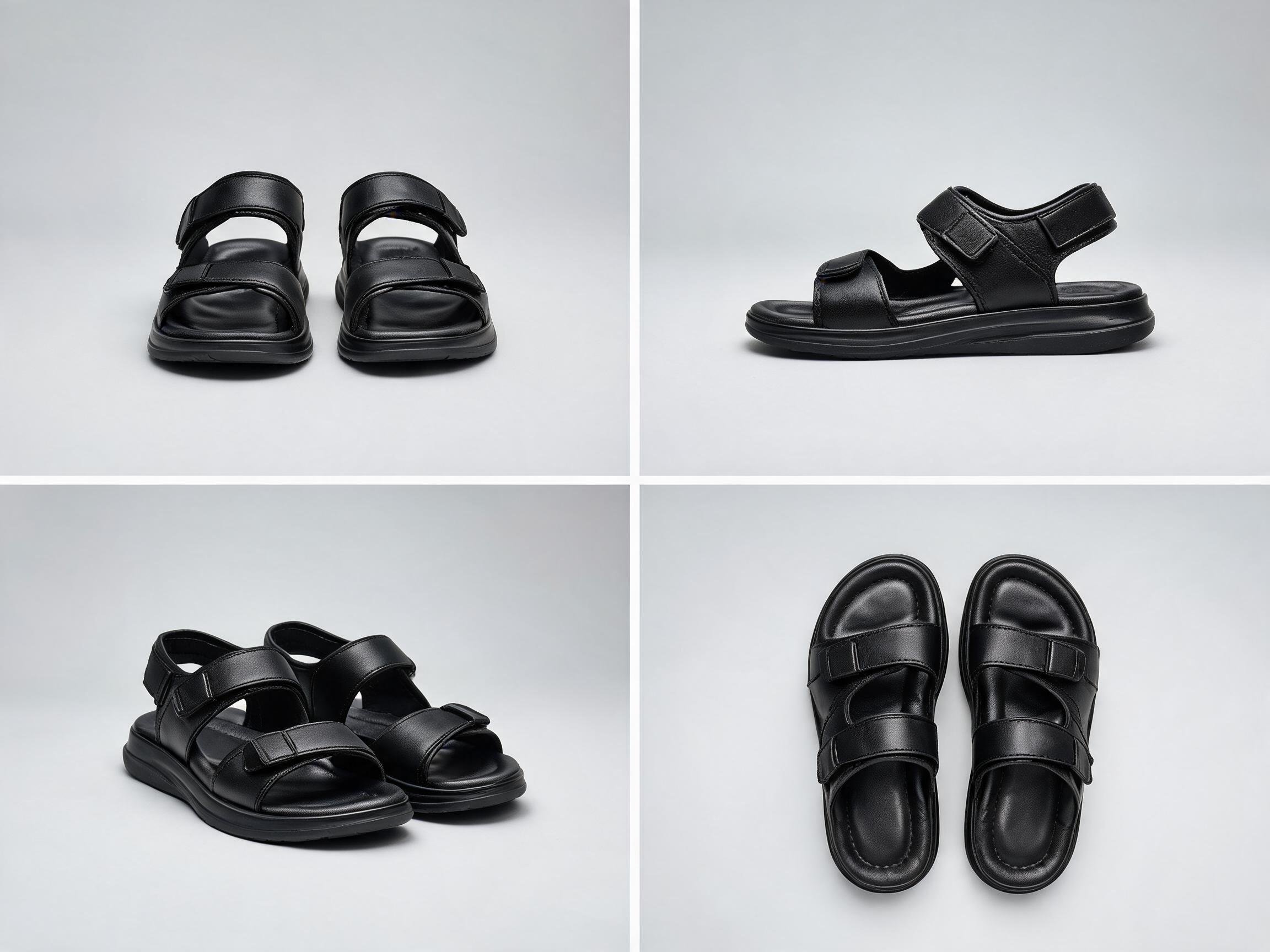
The Black Leather Casual Sandals are a leather-upper casual sandal with adjustable straps. They suit buyers who want a versatile, unisex-friendly style for summer casual wear. Listed specifications:
- Upper: leather
- Straps: adjustable
- MOQ: 100 pairs per color
- Lead time: 25–35 days
These specifications are from the product page; confirm current MOQ and lead time with the sales team before ordering. The adjustable straps allow fit adjustment across a range of foot shapes, which can reduce size-related returns in your market.
Supplier facts for your planning
When evaluating a supplier for summer sandal programs, consider these confirmed facts about our company:
- Founded in 2011 in Quanzhou, China, with a 260-person team.
- Exports to Europe, North America, and the Middle East.
- OEM/ODM services available.
- Sample shoes: 3–5 days; customized samples: 7–12 days.
- Three-stage QC: incoming material, in-line, final inspection.
- 6-month warranty.
- 48-hour after-sales response.
These facts can help you plan development and production timelines. For specific project requirements, contact the sales team to discuss your season window, material preferences, and trial order structure.
Planning wholesale summer sandals starts with your own selling calendar and a clear material strategy. Use the framework above to set order deadlines, choose a leather/fabric mix, plan colors, and test with a small order. Confirm all lead times and MOQs before committing.