
A practical decision explainer for buyers building their own athletic shoe line: how full-grain leather and engineered knit uppers differ as catalogue options, what to specify about the midsole, and how each sample round should narrow the next. Based on the actual build specs Aurevia Footwear lists for its leather and knit sneakers.
When you put your own brand on a running or sneaker line, the two decisions that reach furthest into your cost, tooling and sampling timeline are the upper material and the midsole. Everything downstream — pattern, stitch plan, mould, colour approvals, packaging — follows from those two. This piece walks through how those choices actually play out across catalogue examples, and how to make each sample round do a specific job instead of restarting the conversation.
- Full-grain leather versus engineered knit uppers, using two real in-catalogue builds as reference points.
- What to pin down about the midsole before a sample is ordered.
- How to structure sample rounds so each one resolves an open question.
- Size ranges, MOQ and lead time as currently listed — to be reconfirmed with the sales team before ordering.
- Why upper and midsole are the private label decisions that matter
- Upper materials: full-grain leather and engineered knit
- Midsole considerations
- Sample rounds: what each one should settle
- Specifying your own build
Why upper and midsole drive everything else
In private label athletic shoes, the upper and midsole together set the shape of the shoe, the tooling you need, the number of construction steps and therefore the sampling cycle. Change the upper from leather to knit and you are not swapping a cosmetic layer — you are changing how the panels are cut and assembled, how the shoe holds its shape, and what your finished look communicates on shelf or online.
This is why it pays to freeze those two variables early. A brand that settles the upper and midsole first can then iterate on colourways, trims, logos and packaging without reopening construction questions. A brand that leaves them open through three sample rounds usually ends up paying for rework.
Upper materials: full-grain leather and engineered knit
Two catalogue builds at Aurevia Footwear show the trade-off concretely. Both are men's athletic sneakers, both list EU 39–45, both list MOQ 200 pairs and a lead time of 30–40 days, and both require you to confirm current MOQ and lead time with the sales team before ordering.
| Build | Upper | Sole build listed | Size range | MOQ | Lead time |
|---|---|---|---|---|---|
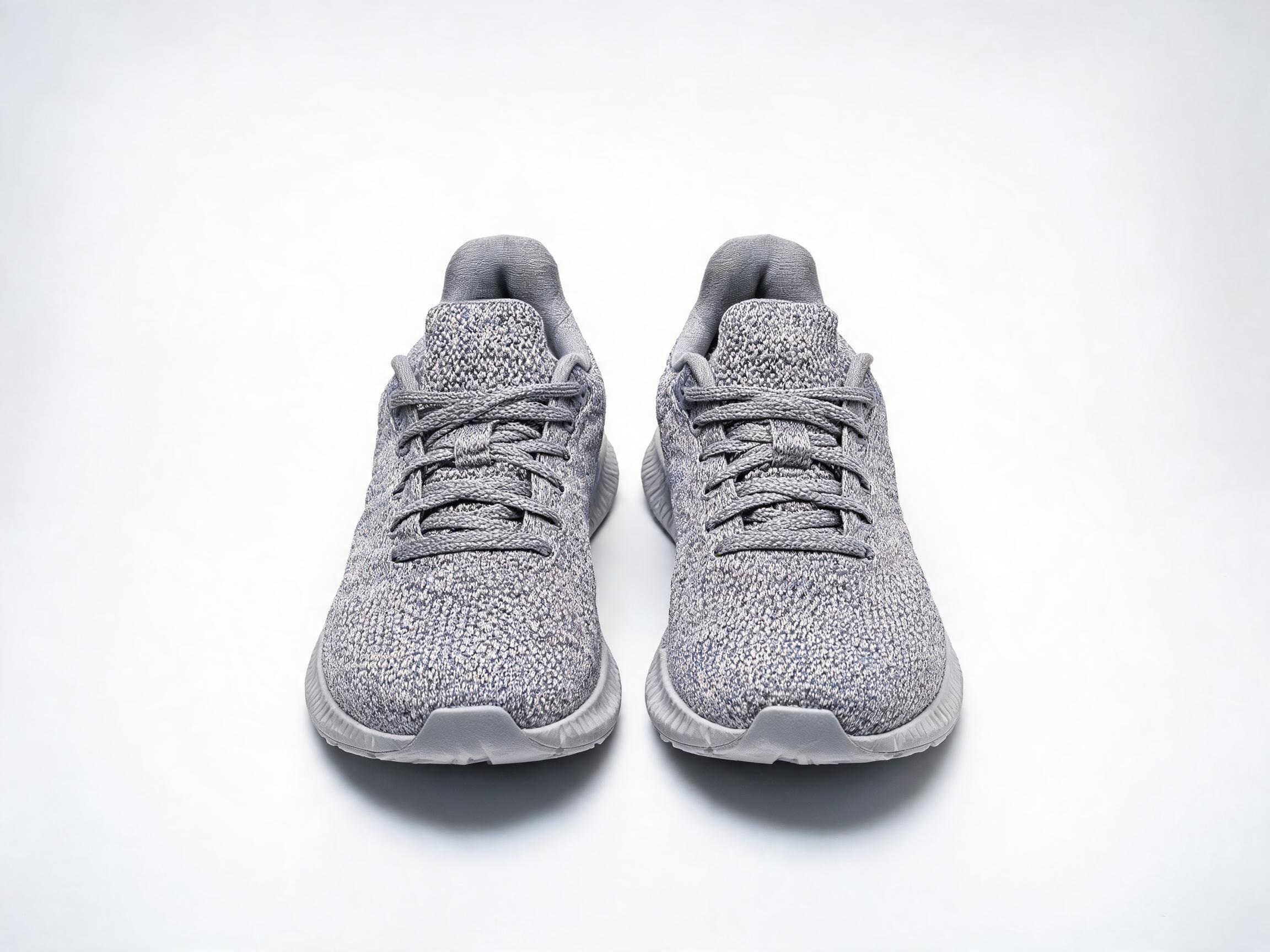
| Grey Knit Running Sneakers | Engineered knit | EVA midsole | EU 39–45 | 200 pairs | 30–40 days |
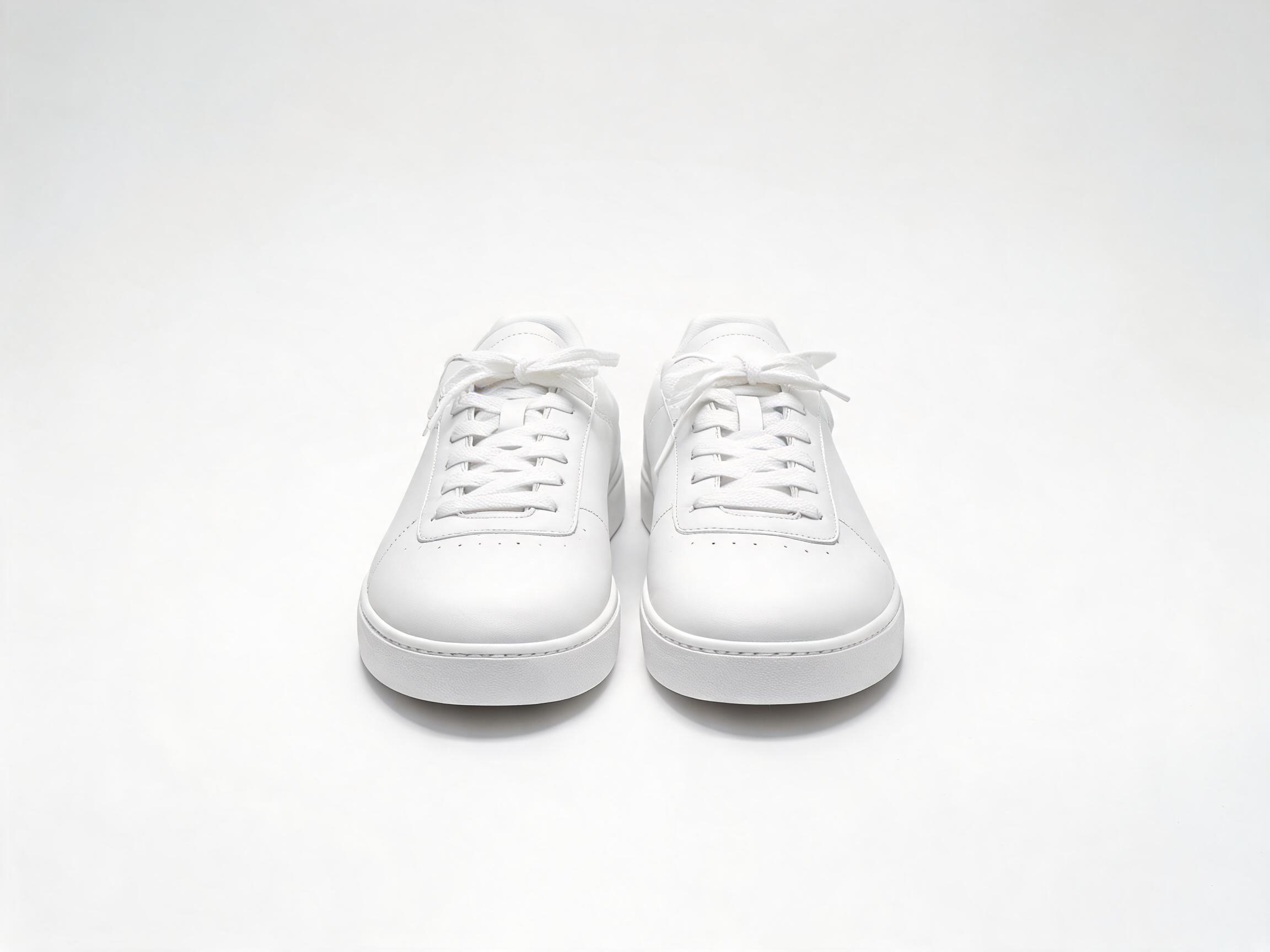
| White Leather Low-Top Sneakers | Full-grain leather | Rubber cupsole | EU 39–45 / US 6.5–12 | 200 pairs | 30–40 days |
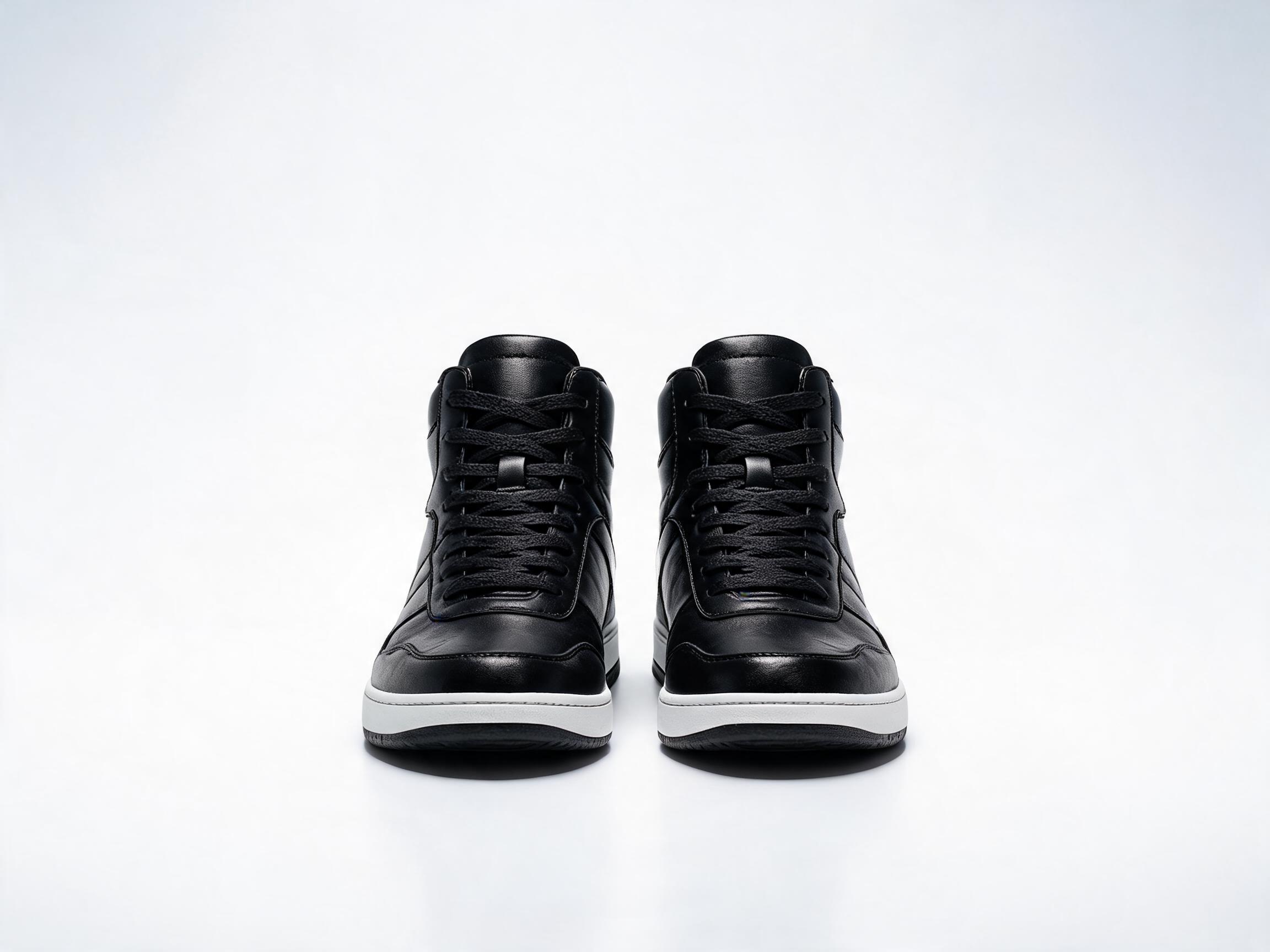
| Black Leather High-Top Sneakers | Leather | Not stated in the listing field quoted here | EU 39–45 | 200 pairs | 30–40 days |
MOQ and lead time figures above are as currently listed. Confirm current MOQ and lead time with the sales team before ordering.
Full-grain leather: structured, premium, panel-based
Full-grain leather — as listed on the White Leather Low-Top and the Black Leather High-Top — gives an upper that holds its form. That matters if your brand positions on a dress-casual or premium lifestyle look rather than pure performance. The construction is panel-driven: the upper is cut from leather pieces and assembled, so the pattern becomes a design asset you can control in detail, and logo placement, stitch lines and colour blocking are easier to treat as brand elements.
The practical consequences to plan around:
- Hide variation. Leather is a natural material; grain and shade can vary between lots. If your brand needs tight colour consistency, agree the acceptance criteria and reference swatches early, and clarify with the supplier how lots are matched.
- Care and communication. Leather uppers carry care expectations you should reflect in your packaging and product copy.
- Panel count and labour. More panels mean more cutting and stitching steps. That interacts with your lead time and with how much design refinement you can afford — confirm current MOQ and lead time with the sales team before ordering.
Engineered knit: one-piece character, lighter construction
Engineered knit — as listed on the Grey Knit Running Sneakers — is a different animal. The upper is built as a knit structure, which suits running-oriented, sock-like silhouettes and lets the pattern work in the knit itself: zoning, texture and colour changes can be engineered into the fabric rather than stitched on as separate panels.
Trade-offs to weigh:
- Shape retention. A knit upper is soft and form-fitting. If your brand needs a rigid, structured look, confirm with the supplier how the upper is reinforced and how it holds shape over the wear cycle.
- Colour and texture design. Knit rewards design decisions made in the yarn and knit structure. This is generally where knit brands differentiate, but it also means your design brief needs to speak in those terms rather than in cut-and-sew terms.
- Sampling behaviour. Knit and leather behave differently in sampling; a design that looks right on paper may need more knit iterations to land the texture you want. Build that into your sample schedule — confirm current MOQ and lead time with the sales team before ordering.
Choosing between them
There is no universal winner. The useful question is what your brand needs the shoe to do at the point of sale:
- If the story is premium, structured, dress-casual or heritage-flavoured, leather is the more natural fit.
- If the story is running-first, lightweight-feel, sock-fit and texture-led, engineered knit is the fit.
- If your line needs both, running them as two SKUs off the same brand identity is a common pattern — the catalogue itself shows leather and knit builds listed side by side at the same MOQ and lead-time band.
Midsole considerations
The midsole is where athletic shoes earn the descriptor "athletic". The catalogue lists EVA for the Grey Knit Running Sneakers and a rubber cupsole for the White Leather Low-Top, which is a useful reminder that the midsole/outsole decision is tied to the upper's intent rather than picked independently.
Before a sample is ordered, settle these points with your supplier:
- Construction. Is the sole a cupsole, a midsole-plus-outsole assembly, or something else? The construction determines your tooling and the shape the upper must be built to.
- Tooling ownership and reuse. If you are commissioning private label athletic shoes, ask who owns the sole mould and whether it can be reused across colourways and future seasons. This affects your cost per SKU over time.
- Consistency across sizes. A sole unit has to scale across your full size run — EU 39–45 in the catalogue listings. Confirm how the sole is scaled and that it is graded, not just stretched.
- Attachment method. How the upper is bonded or stitched to the sole affects both the look and the risk of separation. Ask what the attachment method is and how it is checked.
None of these can be answered from a photo. They are questions to put in writing at the brief stage, and the answers should shape the first sample round.
Sample rounds: what each one should settle
Sample rounds get expensive when each one is a general "show me what it looks like" request. A tighter structure is to make every round answer a specific question. The following pattern works for both leather and knit builds.
Round 1 — construction and proportion
The first sample confirms whether the upper and sole can be built the way the brief describes. Questions to answer: does the tooling produce the silhouette you want? Is the panel layout (leather) or knit zoning (knit) readable? Does the sole sit correctly under the upper? At this stage, colour and trim should be treated as provisional.
Round 2 — materials and colour
Once construction is settled, the second round confirms the actual materials against your approved swatches: the leather's grain and shade, or the knit's texture and colour zones. This is the round where acceptance criteria for hide variation (leather) or knit consistency should be agreed in writing. Colour and material approvals that slip past this round tend to come back during bulk.
Round 3 — branding, fit and packaging
The third round should be about the things that make it your shoe: logo execution, labels, insole branding, packaging, and the fit across the size run. If your line spans EU 39–45, ask for confirmation across that range rather than a single sample size. At this point you are checking a product, not designing one.
Two practical rules apply throughout:
- One variable per round. If you change material and colour at once, you will not know which change caused a problem.
- Sign off in writing. A sample round should end with an approved reference sample and a written note of what was agreed, because that reference is what bulk is judged against.
Every sample round also consumes part of your lead-time budget. The catalogue lists 30–40 days for the products above, but that is the listed production lead time for a released order — confirm current MOQ and lead time with the sales team before ordering, and plan your sample rounds separately from it.
Specifying your own build
If you are briefing a supplier for private label athletic shoes, a brief that answers the following moves faster than one that describes a mood:
- Upper material — full-grain leather, engineered knit, or both as separate SKUs.
- Sole construction — EVA midsole, rubber cupsole, or as specified, with any tooling-ownership arrangement named.
- Size range — the catalogue builds run EU 39–45; the White Leather Low-Top also lists US 6.5–12.
- MOQ and lead time expectation — 200 pairs and 30–40 days are the listed figures; confirm current MOQ and lead time with the sales team before ordering.
- Sample plan — how many rounds you expect and what each must approve.
Aurevia Footwear Co., Ltd. is a genuine-leather footwear OEM/ODM exporter founded in 2011, with a team of about 260 staff and markets in Europe, North America and the Middle East. The catalogue examples linked above are a practical starting point for the upper and midsole conversation: the engineered knit running sneaker for a knit-led line, and the full-grain leather low-top or leather high-top for a leather-led line. Take those two construction paths to the sales team as your first decision, and let the sample rounds resolve the rest.