
A planning guide for retail buyers sourcing sandals wholesale from China. Covers range architecture, private label vs OEM/ODM, colour and size ratio planning, sampling workflow, quality inspection, and delivery rhythm — with reference to Aurevia Footwear Co., Ltd. (Quanzhou, founded 2011, 260-person team).
A sandal range is one of the hardest seasonal buys to get right. It has a short selling window, it depends on fit and colour more than most footwear categories, and if the delivery lands late the season is gone. This guide walks through how to plan a sandal programme with a Chinese manufacturer — from range architecture and private label versus OEM/ODM, to colour and size ratios, sampling, inspection, and replenishment rhythm.
What this guide covers
- Planning the range before you request quotes
- Private label vs OEM/ODM: which fits your programme
- MOQ and colour/size ratio planning
- Sampling, documentation, and quality inspection
- Delivery and replenishment rhythm
- FAQ for first-time sandal buyers
Start With the Range, Not the Quote
Most sourcing problems in sandals begin before the factory is contacted. Buyers who send a loose brief — "women's sandals, summer, mid-price" — get back a catalogue and a price list, and then spend weeks narrowing it down. Buyers who send a structured brief get a costed, buildable range back.
A workable sandal brief for a wholesale or private-label programme usually defines:
- Retail channel and price band. Department store, independent boutique, online marketplace, or discount chain. The channel determines material expectations more than any other input.
- Construction families. For example: flat casual sandals, espadrille soles, strappy dress sandals, or sport-influenced slides. Each family uses different lasts, tooling, and assembly lines.
- Material direction. Genuine leather, textile, jute, or mixed construction. Leather sandals carry a different cost and care story than canvas or synthetic uppers.
- Size market. EU sizing for Europe and the Middle East, US sizing for North America. Size grading must be confirmed before sampling, not after.
- Season window. When the goods must be on the shelf, working backwards to the ship date and the order confirmation date.
Once these five points are fixed, a manufacturer can tell you which constructions are realistic for your price band, and which will require a compromise on material or hardware.
Private Label vs OEM/ODM: Choosing the Right Model
These two terms are often used interchangeably, but they describe different levels of involvement, and they suit different buyers.
Private label
You select an existing construction and apply your own brand: logo on the footbed or strap, branded packaging, branded hangtags, and your own size grading and colourway selection. The tooling already exists, so development time and risk are lower. This is the usual starting point for retailers launching their own sandal line, and for buyers testing a new market.
OEM
You supply the design — a sketch, a reference sample, or a technical drawing — and the factory builds it to your specification. Tooling and pattern work are developed for your order. This suits buyers with an established design team and a clear product identity, and it is the right model when the sandal must match an existing range precisely.
ODM
The manufacturer's in-house design and pattern teams develop the product from a trend board, a mood reference, or a category gap you describe. You then review samples and select. This is useful when you know the market position you want but not the exact construction, and it can shorten the front end of a seasonal calendar considerably.
Aurevia Footwear Co., Ltd., based in Quanzhou, China and founded in 2011, works across all three models. The company's in-house design and pattern teams turn buyer sketches, references, or trend boards into production-ready samples, and the same teams handle logo, packaging, and size grading for private-label programmes. Buyers who want to compare concrete starting points can review the black leather casual sandals, which use adjustable straps, a cushioned leather footbed, and a lightweight anti-slip rubber outsole, and the beige espadrille flats, built on a natural jute sole with a cotton canvas upper and cushioned insole. Both accept OEM/ODM changes to strap or trim design, colour, logo, and packaging.
Which model fits your programme?
| Your situation | Recommended model | Why |
|---|---|---|
| Launching an own-brand sandal line for the first time | Private label | Existing construction, lower development risk, faster to shelf |
| Design team already produces technical drawings | OEM | Full control of construction and fit; tooling built to your spec |
| Need a seasonal range but no in-house design capacity | ODM | Factory design team develops from your trend direction |
| Testing a new market with limited budget | Private label, trial order | Validate sell-through before committing to tooling |
MOQ and Colour/Size Ratio Planning
MOQ in sandals is not a single number. It is a combination of construction, material, and colour. A plain leather sandal in one colour can often be produced at a lower minimum than the same silhouette in four colours with two hardware finishes, because colour changes drive cutting, lining, and thread changes on the line.
When planning a range, separate your order into three tiers:
- Core colours. Black, tan, and one neutral. These carry the volume and should be ordered deepest.
- Fashion colours. Two to four seasonal shades. Order these at moderate depth and expect them to sell through faster.
- Trial colours. One or two experimental shades, ordered shallow. Use these to test response before the next season.
Size ratio is the other half of the planning. A common mistake is to order a flat size run across all colours. In practice, size demand differs by construction: a strappy dress sandal often skews smaller, while a flat casual sandal skews slightly larger. Ask your supplier for a size ratio recommendation based on the construction, then adjust using your own historical sell-through data.
A practical ratio-planning checklist
- Confirm the size system (EU or US) and the grading before sampling.
- Decide the colour count per construction, then set depth per colour.
- Reserve a shallow trial quantity for new colours.
- Confirm whether packaging differs by colourway — it affects the packing list and the carton count.
- Ask what the factory needs in writing to lock the ratio: a size breakdown sheet, a colour reference, or both.
Sampling, Documentation, and Quality Inspection
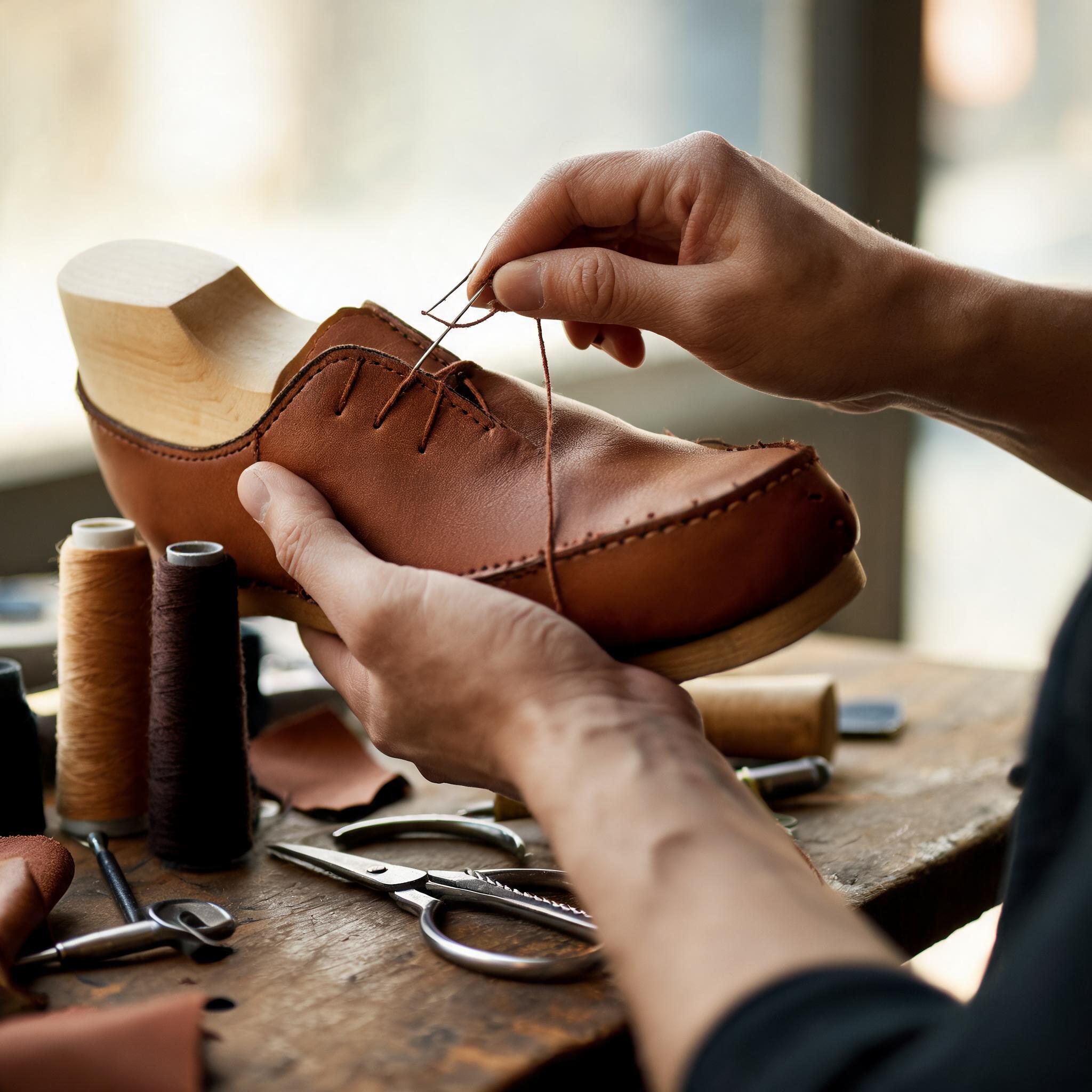
Sampling is where a sandal programme is either confirmed or quietly derailed. Two things matter: the sample must be built on the correct last and size grading, and the sample must be documented well enough that bulk production can be checked against it.
The sampling sequence
- Brief and reference. Send sketches, reference samples, or trend boards, plus your size grading and colour direction.
- Development sample. The factory's pattern and design teams build a production-ready sample. Review fit, strap placement, footbed cushioning, and outsole.
- Revision round. Mark up the sample and return it. Confirm which comments are binding for bulk.
- Approved sample and specification sheet. The approved sample becomes the reference for inspection. Keep a signed copy.
What to check on an approved sample
- Strap length and adjustability across the full size range, not just the middle size.
- Footbed cushioning and edge finishing.
- Outsole bonding and tread pattern.
- Colour consistency between the upper, lining, and any trim.
- Logo placement, size and clarity — especially on private-label orders.
- Packaging, including box or polybag, hangtag, and carton marking.
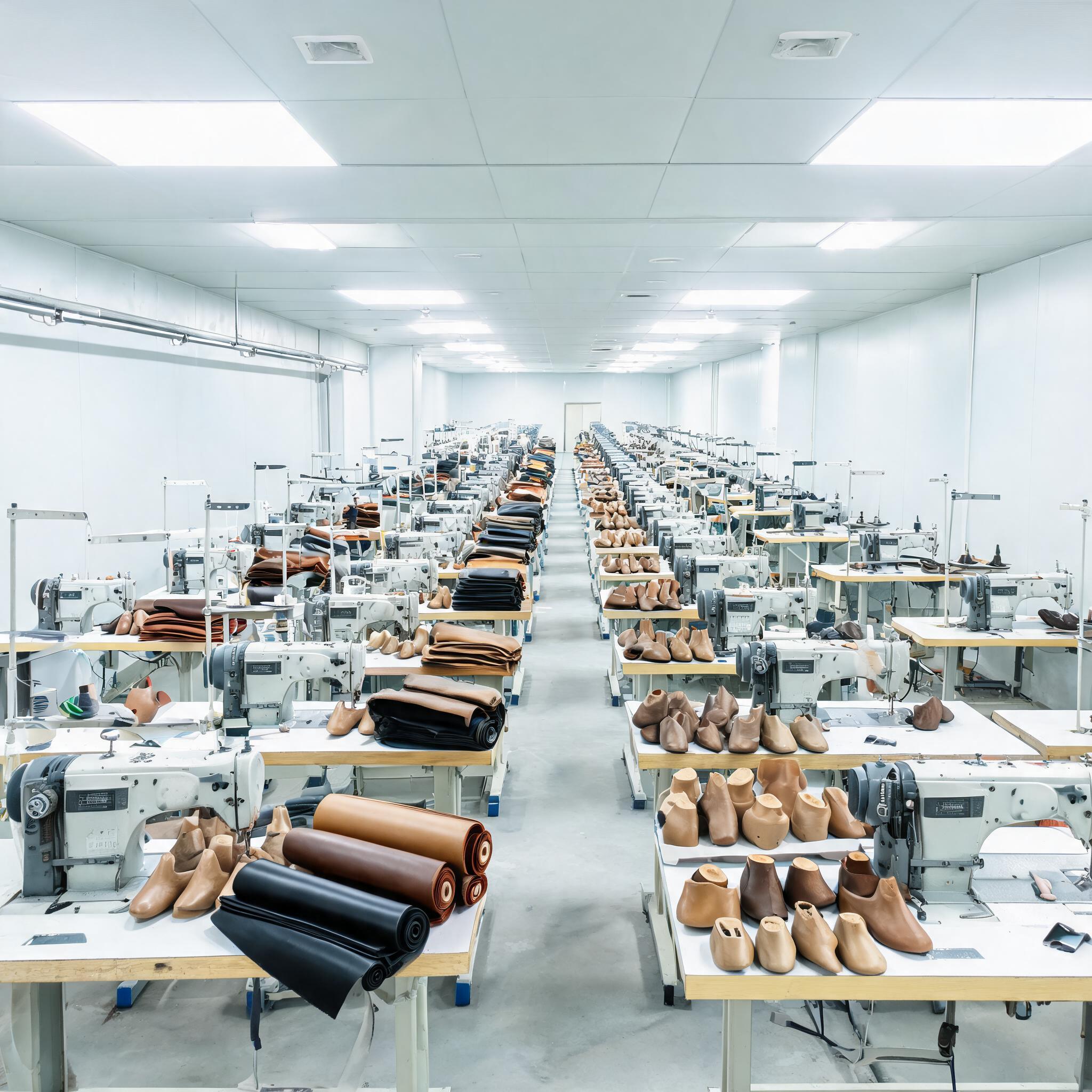
On the production side, quality control should be staged rather than a single final check. Aurevia runs material, construction, and finished-shoe inspections against international quality standards before shipment, and sources genuine leather and premium materials through stable supply channels with multi-stage inspection intended to keep colour, texture, and durability consistent across repeat orders. For a buyer, the practical question to ask any supplier is simple: at which stages does inspection happen, and what document do I receive at each stage?
Delivery and Replenishment Rhythm
Sandal seasons are short and unforgiving. The delivery plan should be built backwards from the shelf date, not forwards from the order date.
A typical planning sequence looks like this:
- Shelf date — when the product must be available to sell.
- In-store date — allow for inland transport and distribution from the port.
- Ship date — allow for ocean transit to your market.
- Order confirmation date — allow for production time after the approved sample is signed off.
- Sample approval date — allow for development and revision rounds.
Working through these five dates usually reveals that the sampling round is the tightest constraint, not production. That is why buyers who start sampling early — often a full season ahead — have more room to negotiate colour depth and delivery windows later.
Replenishment
Replenishment in sandals is different from core footwear. The window is narrow, and reordering a single colourway mid-season is often uneconomical unless the construction is already in production. Two approaches work:
- Pre-planned replenishment. Reserve a portion of the order as a second production run against the same approved sample, with the colour and size ratio confirmed in advance.
- Carry-forward. Treat unsold core colours as next-season stock and plan the following range around them, rather than discounting mid-season.
Aurevia supports stable lead times and flexible customisation for private-label programmes, from logo and packaging through to full seasonal collections, with clear communication and production-ready documentation. For buyers planning a multi-season sandal programme, that documentation is what makes replenishment repeatable rather than a fresh negotiation each time.
FAQ: Sandals Wholesale and Private Label
Can I order sandals under my own brand without supplying a design?
Yes. Under a private-label arrangement you select an existing construction and apply your logo, packaging, and size grading. You do not need to supply a technical drawing. If you want the construction itself changed, that moves into OEM or ODM territory.
What should I send to get an accurate quotation?
Send the construction family, material direction, target size market, colour count, approximate quantity per colour, packaging requirements, and your required shelf date. The more of these are fixed, the more precise the quotation and the fewer revision rounds later.
How do I keep colour consistent across repeat orders?
Approve a physical colour standard alongside the sample, and confirm that the factory inspects material colour against it at the material stage — not only at finished-shoe stage. Multi-stage inspection is what keeps repeat orders matching the original.
Is a trial order possible before committing to a full season?
Low minimum order quantities for seasonal trial orders are available on selected constructions, including the black leather casual sandals. Trial orders are the standard way to validate sell-through before committing to a full colour range.
How early should I start sampling for a summer season?
Start the sampling round a full season ahead of the shelf date. Sampling and revision rounds are usually the tightest part of the calendar, not production.
Next Step
If you are planning a sandal range for an upcoming season, the most useful thing you can send is a structured brief: construction families, material direction, size market, colour count, and shelf date. Aurevia Footwear's design and pattern teams can turn that brief into production-ready samples, and the company supports OEM, ODM, and private-label programmes for buyers in Europe, North America, and the Middle East.
Send your brief or reference material through the contact page and ask for a sampling plan alongside your quotation — it makes the delivery timeline visible from the first reply.